LEADER 03624nam a22005775i 4500
001 841539
003 TR_AnAIT
005 20260715025750
007 cr nn 008mamaa
008 211108s2021 sz | s |||| 0|eng d
020 |a9783030861261|9978-3-030-86126-1
024 7 |a10.1007/978-3-030-86126-1|2doi
041 |aeng
049 |aTürk Dil Kurumu Kütüphanesi
050 4|aPN760.5-769
072 7|aDSBF|2bicssc
072 7|aLIT024040|2bisacsh
072 7|aDSBF|2thema
082 04|a809.034|223
090 |aEK/4826
100 1 |aRichardson, LeeAnne M.|eauthor.|4aut|4http://id.loc.gov/vocabulary/relators/aut
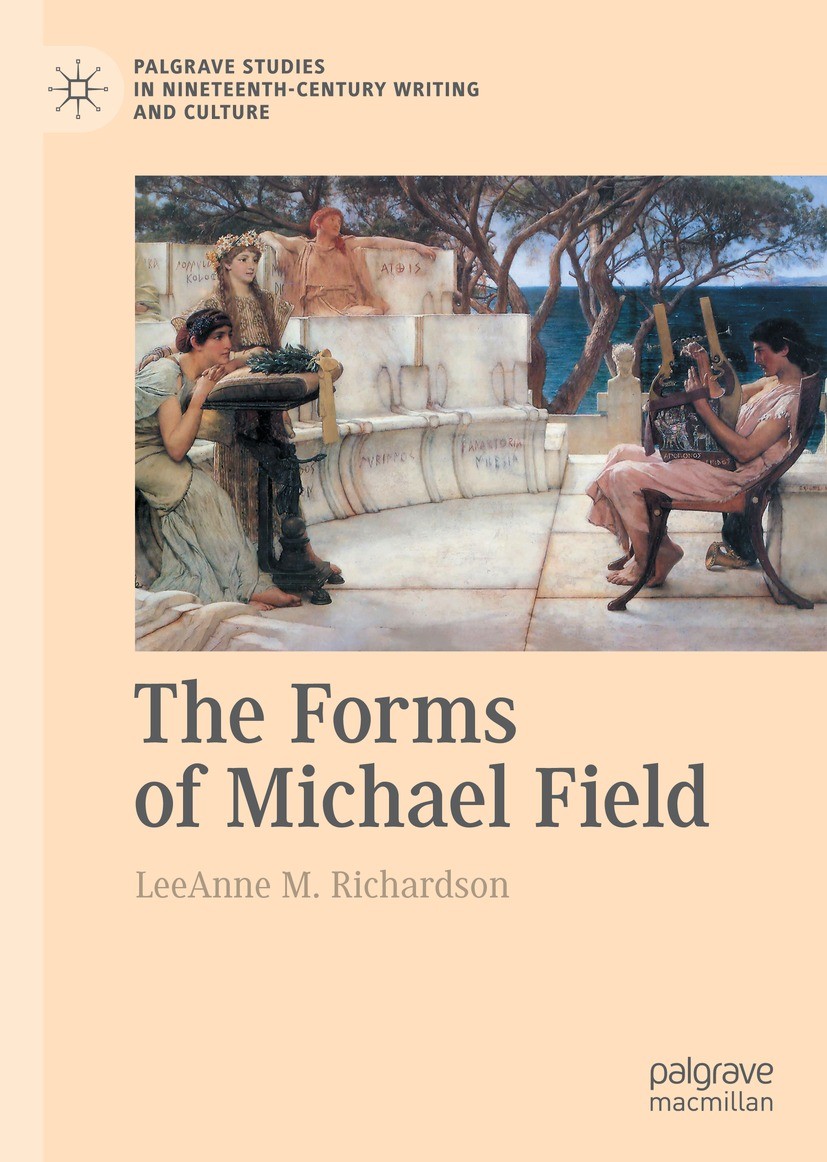
245 14|aThe Forms of Michael Field|h[electronic resource] /|cby LeeAnne M. Richardson.
250 |a1st ed. 2021.
264 1|aCham :|bSpringer International Publishing :|bImprint: Palgrave Macmillan,|c2021.
300 |aXI, 282 p. 5 illus.|bonline resource.
336 |atext|btxt|2rdacontent
337 |acomputer|bc|2rdamedia
338 |aonline resource|bcr|2rdacarrier
347 |atext file|bPDF|2rda
490 1 |aPalgrave Studies in Nineteenth-Century Writing and Culture,|x2634-6508
505 0 |a1. Introduction -- 2. Forming Michael Field -- 3. Verse Tragedy/Closet Drama: Callirrhoë (1884) -- 4. Songs: Underneath the Bough (1893/1898) -- 5. The Masque: Noontide Branches (1899) -- 6. Sonnets and Sonnet Sequences: Wild Honey from Various Thyme (1908) -- 7. Devotional Poetry: Poems of Adoration (1912) -- 8. Devotional Poetry II: Mystic Trees (1913) -- 9. Conclusion.
520 |aMichael Field, the poetic identity created by Katharine Bradley (1846-1914) and her niece Edith Cooper (1862-1913), ceaselessly experimented with forms of identity and forms of literary expression. The Forms of Michael Field argues that their modes of self-creation are analogous to their poetic creations, and that exploring them in tandem is the best way to understand Michael Field’s cultural and literary importance. Michael Field deploys a different form in each volume of their lyric poetry: translations of Sappho, ekphrasis, songs, sonnets, and devotional verse. They also appropriate and revise the dramatic genres of verse tragedy and the masque. Each of these experiments in form enable Michael Field to differently address the cultural questions that beset late-Victorian women writers. Drawing on the insights of new lyric studies and new formalism, this book analyzes Michael Field’s continual quest for the aesthetic forms that best express their evolving ideas about identity and sexuality, gender and sacrifice, lyric voice and authority. LeeAnne M. Richardson is Associate Professor of English at Georgia State University in Atlanta, Georgia, USA.
650 0|aLiterature, Modern|x19th century.
650 0|aLiterature|xPhilosophy.
650 0|aFeminism and literature.
650 0|aPoetry.
650 0|aCulture|xStudy and teaching.
650 0|aSex.
650 14|aNineteenth-Century Literature.
650 24|aFeminist Literary Theory.
650 24|aPoetry and Poetics.
650 24|aCultural Theory.
650 24|aGender Studies.
710 2 |aSpringerLink (Online service)
773 0 |tSpringer Nature eBook
776 08|iPrinted edition:|z9783030861254
776 08|iPrinted edition:|z9783030861278
776 08|iPrinted edition:|z9783030861285
830 0|aPalgrave Studies in Nineteenth-Century Writing and Culture,|x2634-6508
856 40|uhttps://doi.org/10.1007/978-3-030-86126-1
912 |aZDB-2-LCM
912 |aZDB-2-SXL
950 |aLiterature, Cultural and Media Studies (SpringerNature-41173)
950 |aLiterature, Cultural and Media Studies (R0) (SpringerNature-43723)