LEADER 03291nam a22004935i 4500
001 841626
003 TR_AnAIT
005 20260715025550
007 cr nn 008mamaa
008 210210s2021 sz | s |||| 0|eng d
020 |a9783030527501|9978-3-030-52750-1
024 7 |a10.1007/978-3-030-52750-1|2doi
041 |aeng
049 |aTürk Dil Kurumu Kütüphanesi
050 4|aPN770-779
072 7|aDSBH|2bicssc
072 7|aLIT024050|2bisacsh
072 7|aDSBH|2thema
082 04|a809.04|223
090 |aEK/4944
100 1 |aEbury, Katherine.|eauthor.|4aut|4http://id.loc.gov/vocabulary/relators/aut
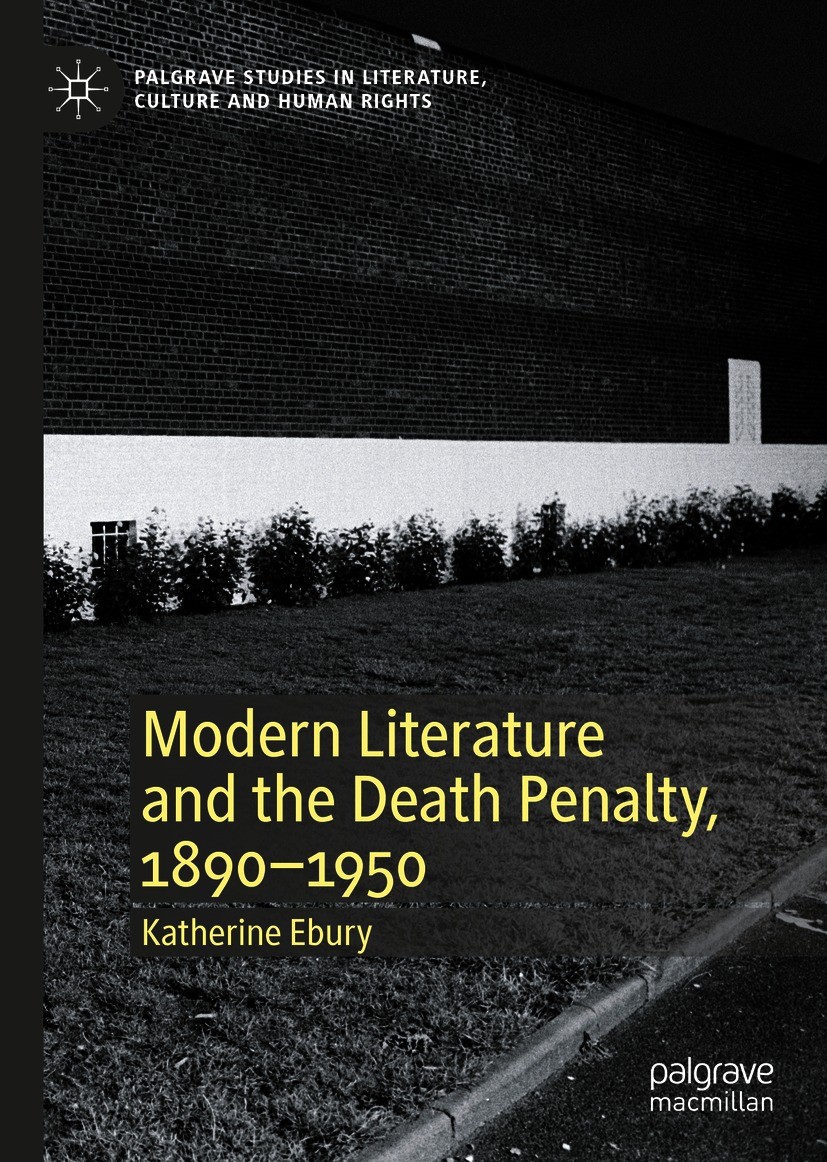
245 10|aModern Literature and the Death Penalty, 1890-1950|h[electronic resource] /|cby Katherine Ebury.
250 |a1st ed. 2021.
264 1|aCham :|bSpringer International Publishing :|bImprint: Palgrave Macmillan,|c2021.
300 |aIX, 282 p.|bonline resource.
336 |atext|btxt|2rdacontent
337 |acomputer|bc|2rdamedia
338 |aonline resource|bcr|2rdacarrier
347 |atext file|bPDF|2rda
490 1 |aPalgrave Studies in Literature, Culture and Human Rights,|x2524-8839
505 0 |aIntroduction: Modern Cultures of the Death Penalty -- Chapter 2: Confession and the Self in a Death Penalty Context -- Chapter 3: Psychoanalysis and the gothic death penalty -- Chapter 4: Life-writing and Capital Punishment -- Chapter 5: Animal Pain and Capital Punishment -- Chapter 6: Sex, Gender and the Death Penalty in Joyce, Yeats and the 1916 Generation -- Chapter 7: ‘Literature, the Death Penalty, and War Trauma’.
520 |aThis book examines how the cultural and ethical power of literature offered early twentieth-century readers opportunities for thinking through capital punishment in the UK, Ireland and the US in the period between 1890 and 1950. Modern Literature and the Death Penalty, 1890-1950 therefore considers how connections between ‘high’ and ‘popular’ culture seem particularly inextricable where the death penalty is at stake. This book will consider a range of forms, including: short stories; pulp fiction; detective fiction; plays; polemic; criminological and psychoanalytic tracts; letters and memoirs by condemned persons and by executioners; and major works of canonical literature by authors including James Joyce, Theodore Dreiser, Elizabeth Bowen, Graham Greene, Flann O’Brien. Cases of the death penalty that sparked particular public debate and had substantial literary influence are explored, including the Roger Casement Case (UK (Ireland) 1916), the Edith Thompson case (UK,1923) and the Leopold and Loeb case (USA, 1924). .
650 0|aLiterature, Modern|x20th century.
650 0|aHuman rights.
650 14|aTwentieth-Century Literature.
650 24|aHuman Rights.
710 2 |aSpringerLink (Online service)
773 0 |tSpringer Nature eBook
776 08|iPrinted edition:|z9783030527495
776 08|iPrinted edition:|z9783030527518
776 08|iPrinted edition:|z9783030527525
830 0|aPalgrave Studies in Literature, Culture and Human Rights,|x2524-8839
856 40|uhttps://doi.org/10.1007/978-3-030-52750-1
912 |aZDB-2-LCM
912 |aZDB-2-SXL
950 |aLiterature, Cultural and Media Studies (SpringerNature-41173)
950 |aLiterature, Cultural and Media Studies (R0) (SpringerNature-43723)