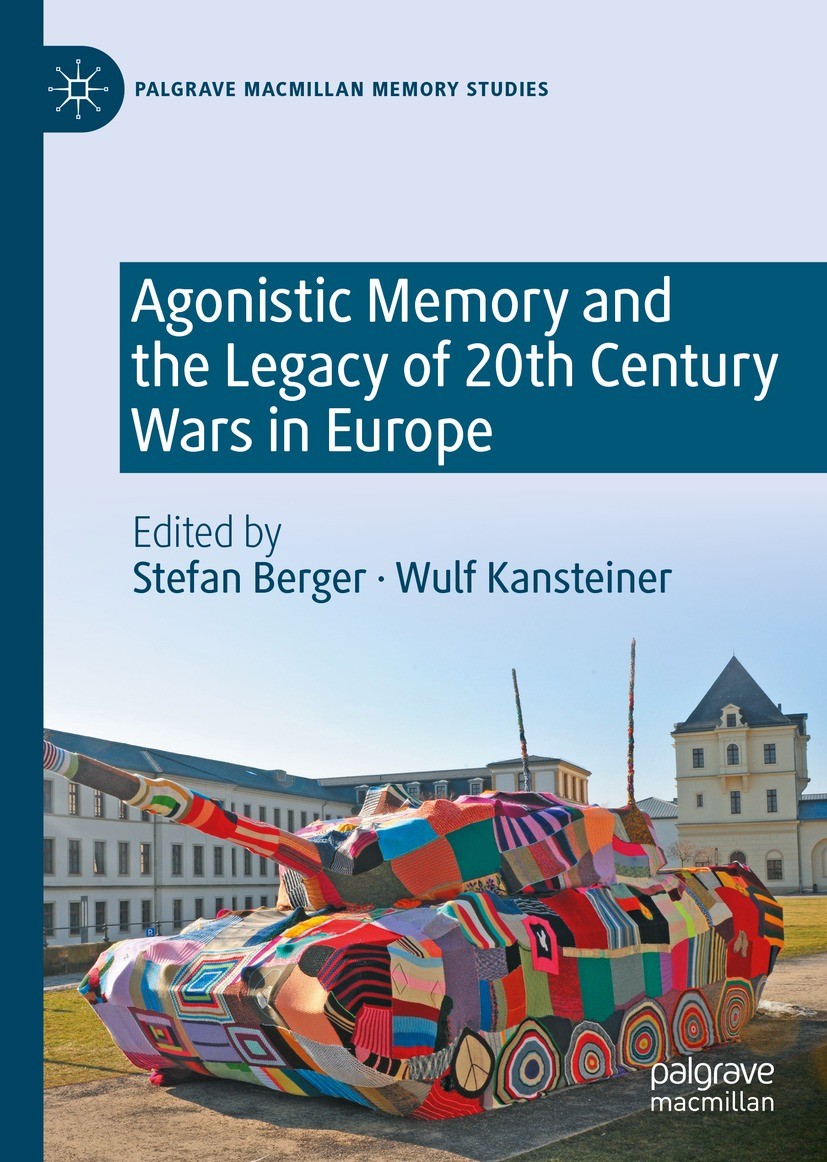
Agonistic Memory and the Legacy of 20th Century Wars in Europe [electronic resource] / edited by Stefan Berger, Wulf Kansteiner.
Erişim Adresi
ISBN
9783030860554
Dil Kodu
İngilizce
Yer Numarası
EK/4949
Basım Bildirimi
1st ed. 2021.
Yayın Bilgisi
Cham : Springer International Publishing : Imprint: Palgrave Macmillan, 2021.
Fiziksel Niteleme
XVII, 260 p. 2 illus. online resource.
Dizi
Palgrave Macmillan Memory Studies, 2634-6265
İçindekiler Notu
Chapter 1: Introduction -- Stefan Berger and Wulf Kansteiner -- Chapter 2: Agonistic Memory Revisited -- Anna Cento Bull, Hans Lauge Hansen, Francisco Colom González -- Chapter 3: Mass Grave Exhumation Site as Agonistic Fora: a Comparative Study of Spain, Poland and Bosnia -- Francisco Ferrándiz and Marije Hristova -- Chapter 4: Memory Cultures of War in European War Museums -- Stefan Berger, Anna Cento Bull, Cristian Cercel, David Clarke, Nina Parish, Eleanor Rowley, Zofia Wóycicka -- Chapter 5: ‘Krieg.Macht.Sinn’ The Making of an Agonistic Exhibition on War in the Ruhr Museum Essen -- Cristian Cercel, Daniela de Angeli, Wulf Kansteiner, Stefan Berger and Eamonn O’Neill -- Chapter 6: ‘To understand does not mean that you will approve’: Transnational Audience Research on a Theatre Representation of Evil -- Diana Gonzáles Martin and Hans Lauge Hansen -- Chapter 7: Taking Agonism Online: Creating a Mass Open Online Course to Disseminate the Findings of the UNREST Project -- David Clarke, Nina Parish and Aysha Séne.
Özet, vb.
This book discusses the merits of the theory of agonistic memory in relation to the memory of war. After explaining the theory in detail it provides two case studies, one on war museums in contemporary Europe and one on mass graves exhumations, which both focus on analyzing to what extent these memory sites produce different regimes of memory. Furthermore, the book provides insights into the making of an agonistic exhibition at the Ruhr Museum in Essen, Germany. It also analyses audience reaction to a theatre play scripted and performed by the Spanish theatre company Micomicion that was supposed to put agonism on stage. There is also an analysis of a Massive Open Online Course (MOOC) designed and delivered on the theory of agonistic memory and its impact on the memory of war. Finally, the book provides a personal review of the history, problems and accomplishments of the theory of agonistic memory by the two editors of the volume. Stefan Berger is Professor of Social History and Director of the Institute for Social Movements at Ruhr-Universitaet Bochum, Germany. He is also executive chair of the Foundation History of the Ruhr and Honorary Professor at Cardiff University, UK. He has published widely on the history of memory, the history of deindustrialization, industrial heritage, the history of social movements and labour movements, the history of historiography, historical theory and the history of nationalism and national identity. Wulf Kansteiner is Professor of Memory Studies and Historical Theory at Aarhus University, Denmark. His research interests include the methods and theories of memory studies; the role of visual media—TV, film, digital culture—in the formation of cultural memory; post-narrativist historical theory; and Holocaust history, memory, and historiography. His recent publications include ‘Prime Time Nationalism: Patterns of Prejudice in TV Crime Fiction’ in National Stereotyping, Identity, Politics, European Crises (2021) and ‘Media and Technology,” in The Twentieth Century, vol. 6 of A Cultural History of Memory (2020).
Konu
Collective memory.
Europe __ History.
World War, 1939-1945.
Memory Studies.
European History.
History of World War II and the Holocaust.
Europe __ History.
World War, 1939-1945.
Memory Studies.
European History.
History of World War II and the Holocaust.
Diğer Yazarlar
Kurum Adı

Eseri Alıntıla
Referansları kullanmadan önce gözden geçirmeniz ve varsa gerekli düzeltmeleri yapmanız önerilir.
Dijital Kaynak
MARC Görünümü
LEADER 05112nam a22005295i 4500
001 841651
003 TR_AnAIT
005 20260715025457
007 cr nn 008mamaa
008 220102s2021 sz | s |||| 0|eng d
020 |a9783030860554|9978-3-030-86055-4
024 7 |a10.1007/978-3-030-86055-4|2doi
041 |aeng
049 |aTürk Dil Kurumu Kütüphanesi
050 4|aD16.9
072 7|aHBAH|2bicssc
072 7|aHIS016000|2bisacsh
072 7|aNHAH|2thema
082 04|a907.2|223
090 |aEK/4949
245 10|aAgonistic Memory and the Legacy of 20th Century Wars in Europe|h[electronic resource] /|cedited by Stefan Berger, Wulf Kansteiner.
250 |a1st ed. 2021.
264 1|aCham :|bSpringer International Publishing :|bImprint: Palgrave Macmillan,|c2021.
300 |aXVII, 260 p. 2 illus.|bonline resource.
336 |atext|btxt|2rdacontent
337 |acomputer|bc|2rdamedia
338 |aonline resource|bcr|2rdacarrier
347 |atext file|bPDF|2rda
490 1 |aPalgrave Macmillan Memory Studies,|x2634-6265
505 0 |aChapter 1: Introduction -- Stefan Berger and Wulf Kansteiner -- Chapter 2: Agonistic Memory Revisited -- Anna Cento Bull, Hans Lauge Hansen, Francisco Colom González -- Chapter 3: Mass Grave Exhumation Site as Agonistic Fora: a Comparative Study of Spain, Poland and Bosnia -- Francisco Ferrándiz and Marije Hristova -- Chapter 4: Memory Cultures of War in European War Museums -- Stefan Berger, Anna Cento Bull, Cristian Cercel, David Clarke, Nina Parish, Eleanor Rowley, Zofia Wóycicka -- Chapter 5: ‘Krieg.Macht.Sinn’ The Making of an Agonistic Exhibition on War in the Ruhr Museum Essen -- Cristian Cercel, Daniela de Angeli, Wulf Kansteiner, Stefan Berger and Eamonn O’Neill -- Chapter 6: ‘To understand does not mean that you will approve’: Transnational Audience Research on a Theatre Representation of Evil -- Diana Gonzáles Martin and Hans Lauge Hansen -- Chapter 7: Taking Agonism Online: Creating a Mass Open Online Course to Disseminate the Findings of the UNREST Project -- David Clarke, Nina Parish and Aysha Séne.
520 |aThis book discusses the merits of the theory of agonistic memory in relation to the memory of war. After explaining the theory in detail it provides two case studies, one on war museums in contemporary Europe and one on mass graves exhumations, which both focus on analyzing to what extent these memory sites produce different regimes of memory. Furthermore, the book provides insights into the making of an agonistic exhibition at the Ruhr Museum in Essen, Germany. It also analyses audience reaction to a theatre play scripted and performed by the Spanish theatre company Micomicion that was supposed to put agonism on stage. There is also an analysis of a Massive Open Online Course (MOOC) designed and delivered on the theory of agonistic memory and its impact on the memory of war. Finally, the book provides a personal review of the history, problems and accomplishments of the theory of agonistic memory by the two editors of the volume. Stefan Berger is Professor of Social History and Director of the Institute for Social Movements at Ruhr-Universitaet Bochum, Germany. He is also executive chair of the Foundation History of the Ruhr and Honorary Professor at Cardiff University, UK. He has published widely on the history of memory, the history of deindustrialization, industrial heritage, the history of social movements and labour movements, the history of historiography, historical theory and the history of nationalism and national identity. Wulf Kansteiner is Professor of Memory Studies and Historical Theory at Aarhus University, Denmark. His research interests include the methods and theories of memory studies; the role of visual media—TV, film, digital culture—in the formation of cultural memory; post-narrativist historical theory; and Holocaust history, memory, and historiography. His recent publications include ‘Prime Time Nationalism: Patterns of Prejudice in TV Crime Fiction’ in National Stereotyping, Identity, Politics, European Crises (2021) and ‘Media and Technology,” in The Twentieth Century, vol. 6 of A Cultural History of Memory (2020).
650 0|aCollective memory.
650 0|aEurope|xHistory.
650 0|aWorld War, 1939-1945.
650 14|aMemory Studies.
650 24|aEuropean History.
650 24|aHistory of World War II and the Holocaust.
700 1 |aBerger, Stefan.|eeditor.|4edt|4http://id.loc.gov/vocabulary/relators/edt
700 1 |aKansteiner, Wulf.|eeditor.|4edt|4http://id.loc.gov/vocabulary/relators/edt
710 2 |aSpringerLink (Online service)
773 0 |tSpringer Nature eBook
776 08|iPrinted edition:|z9783030860547
776 08|iPrinted edition:|z9783030860561
776 08|iPrinted edition:|z9783030860578
830 0|aPalgrave Macmillan Memory Studies,|x2634-6265
856 40|uhttps://doi.org/10.1007/978-3-030-86055-4
912 |aZDB-2-LCM
912 |aZDB-2-SXL
950 |aLiterature, Cultural and Media Studies (SpringerNature-41173)
950 |aLiterature, Cultural and Media Studies (R0) (SpringerNature-43723)
001 841651
003 TR_AnAIT
005 20260715025457
007 cr nn 008mamaa
008 220102s2021 sz | s |||| 0|eng d
020 |a9783030860554|9978-3-030-86055-4
024 7 |a10.1007/978-3-030-86055-4|2doi
041 |aeng
049 |aTürk Dil Kurumu Kütüphanesi
050 4|aD16.9
072 7|aHBAH|2bicssc
072 7|aHIS016000|2bisacsh
072 7|aNHAH|2thema
082 04|a907.2|223
090 |aEK/4949
245 10|aAgonistic Memory and the Legacy of 20th Century Wars in Europe|h[electronic resource] /|cedited by Stefan Berger, Wulf Kansteiner.
250 |a1st ed. 2021.
264 1|aCham :|bSpringer International Publishing :|bImprint: Palgrave Macmillan,|c2021.
300 |aXVII, 260 p. 2 illus.|bonline resource.
336 |atext|btxt|2rdacontent
337 |acomputer|bc|2rdamedia
338 |aonline resource|bcr|2rdacarrier
347 |atext file|bPDF|2rda
490 1 |aPalgrave Macmillan Memory Studies,|x2634-6265
505 0 |aChapter 1: Introduction -- Stefan Berger and Wulf Kansteiner -- Chapter 2: Agonistic Memory Revisited -- Anna Cento Bull, Hans Lauge Hansen, Francisco Colom González -- Chapter 3: Mass Grave Exhumation Site as Agonistic Fora: a Comparative Study of Spain, Poland and Bosnia -- Francisco Ferrándiz and Marije Hristova -- Chapter 4: Memory Cultures of War in European War Museums -- Stefan Berger, Anna Cento Bull, Cristian Cercel, David Clarke, Nina Parish, Eleanor Rowley, Zofia Wóycicka -- Chapter 5: ‘Krieg.Macht.Sinn’ The Making of an Agonistic Exhibition on War in the Ruhr Museum Essen -- Cristian Cercel, Daniela de Angeli, Wulf Kansteiner, Stefan Berger and Eamonn O’Neill -- Chapter 6: ‘To understand does not mean that you will approve’: Transnational Audience Research on a Theatre Representation of Evil -- Diana Gonzáles Martin and Hans Lauge Hansen -- Chapter 7: Taking Agonism Online: Creating a Mass Open Online Course to Disseminate the Findings of the UNREST Project -- David Clarke, Nina Parish and Aysha Séne.
520 |aThis book discusses the merits of the theory of agonistic memory in relation to the memory of war. After explaining the theory in detail it provides two case studies, one on war museums in contemporary Europe and one on mass graves exhumations, which both focus on analyzing to what extent these memory sites produce different regimes of memory. Furthermore, the book provides insights into the making of an agonistic exhibition at the Ruhr Museum in Essen, Germany. It also analyses audience reaction to a theatre play scripted and performed by the Spanish theatre company Micomicion that was supposed to put agonism on stage. There is also an analysis of a Massive Open Online Course (MOOC) designed and delivered on the theory of agonistic memory and its impact on the memory of war. Finally, the book provides a personal review of the history, problems and accomplishments of the theory of agonistic memory by the two editors of the volume. Stefan Berger is Professor of Social History and Director of the Institute for Social Movements at Ruhr-Universitaet Bochum, Germany. He is also executive chair of the Foundation History of the Ruhr and Honorary Professor at Cardiff University, UK. He has published widely on the history of memory, the history of deindustrialization, industrial heritage, the history of social movements and labour movements, the history of historiography, historical theory and the history of nationalism and national identity. Wulf Kansteiner is Professor of Memory Studies and Historical Theory at Aarhus University, Denmark. His research interests include the methods and theories of memory studies; the role of visual media—TV, film, digital culture—in the formation of cultural memory; post-narrativist historical theory; and Holocaust history, memory, and historiography. His recent publications include ‘Prime Time Nationalism: Patterns of Prejudice in TV Crime Fiction’ in National Stereotyping, Identity, Politics, European Crises (2021) and ‘Media and Technology,” in The Twentieth Century, vol. 6 of A Cultural History of Memory (2020).
650 0|aCollective memory.
650 0|aEurope|xHistory.
650 0|aWorld War, 1939-1945.
650 14|aMemory Studies.
650 24|aEuropean History.
650 24|aHistory of World War II and the Holocaust.
700 1 |aBerger, Stefan.|eeditor.|4edt|4http://id.loc.gov/vocabulary/relators/edt
700 1 |aKansteiner, Wulf.|eeditor.|4edt|4http://id.loc.gov/vocabulary/relators/edt
710 2 |aSpringerLink (Online service)
773 0 |tSpringer Nature eBook
776 08|iPrinted edition:|z9783030860547
776 08|iPrinted edition:|z9783030860561
776 08|iPrinted edition:|z9783030860578
830 0|aPalgrave Macmillan Memory Studies,|x2634-6265
856 40|uhttps://doi.org/10.1007/978-3-030-86055-4
912 |aZDB-2-LCM
912 |aZDB-2-SXL
950 |aLiterature, Cultural and Media Studies (SpringerNature-41173)
950 |aLiterature, Cultural and Media Studies (R0) (SpringerNature-43723)
Materyaller
Depodan talep edilen materyal sadece kütüphane içerisinde kullanılmaktadır.
Materyal dışarıya ödünç verilmemektedir.
