LEADER 04054nam a22005895i 4500
001 841717
003 TR_AnAIT
005 20260715025230
007 cr nn 008mamaa
008 181226s2019 sz | s |||| 0|eng d
020 |a9783030048044|9978-3-030-04804-4
024 7 |a10.1007/978-3-030-04804-4|2doi
041 |aeng
049 |aTürk Dil Kurumu Kütüphanesi
050 4|aD1-2027
072 7|aJFC|2bicssc
072 7|aGM|2bicssc
072 7|aSOC002010|2bisacsh
072 7|aJBCC|2thema
072 7|aGLZ|2thema
082 04|a363.69|223
090 |aEK/5016
100 1 |aClarke, David.|eauthor.|4aut|4http://id.loc.gov/vocabulary/relators/aut
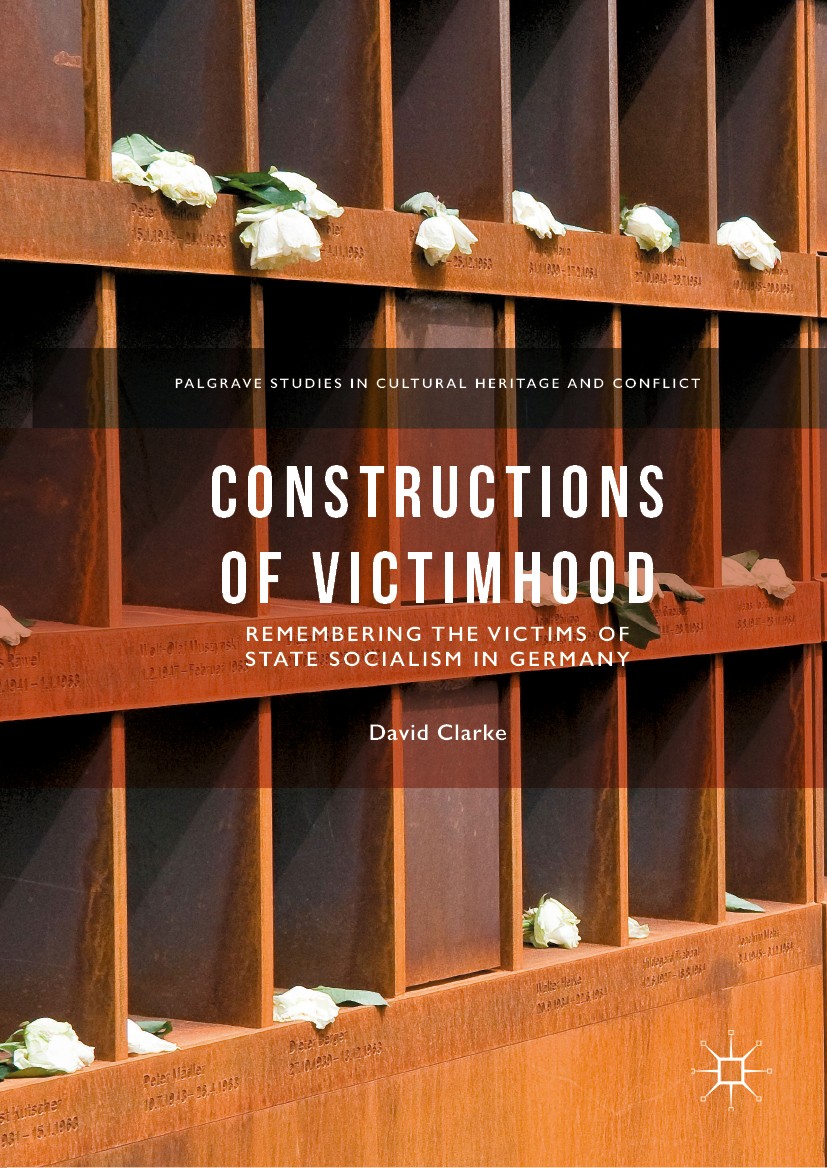
245 10|aConstructions of Victimhood|h[electronic resource] :|bRemembering the Victims of State Socialism in Germany /|cby David Clarke.
250 |a1st ed. 2019.
264 1|aCham :|bSpringer International Publishing :|bImprint: Palgrave Macmillan,|c2019.
300 |aVIII, 315 p. 2 illus.|bonline resource.
336 |atext|btxt|2rdacontent
337 |acomputer|bc|2rdamedia
338 |aonline resource|bcr|2rdacarrier
347 |atext file|bPDF|2rda
490 1 |aPalgrave Studies in Cultural Heritage and Conflict,|x2634-6427
505 0 |a1. Introduction: Thinking about the victims of state socialism -- 2. Victimhood and the politics of memory and transitional justice -- 3. Victims’ organizations and the construction of victimhood -- 4. Compensating the victims of state socialism -- 5. Memorial museums for the victims of state socialism: controversies and conflicts -- 6. Conclusion: The Future of Victimhood.
520 |aThe post-war Federal Republic of Germany faced the task of addressing the plight of the victims of state socialism under the Soviet occupation of eastern Germany and in the German Democratic Republic, many of whom fled to the west. These victims were not passive objects of the West German state’s policy, but organized themselves into associations that fought for recognition of their contribution to the fight against communism. After German unification, the task of commemorating and compensating these victims continued under entirely new political circumstances, yet also in the context of global trends in memory politics and transitional justice that give priority to addressing the fate of victims of non-democratic regimes. Constructions of Victimhood: Remembering the Victims of State Socialism in Germany draws on the constructivist systems theory of Niklas Luhmann to analyze the role of victims organizations, the political system, and historians and heritage professionals in the struggle over the memory of suffering under state socialism, from the Cold War to the present day. The book argues that the identity and social role of victims has undergone a process of constant renegotiation in this period, offering an innovative theoretical framework for understanding how restorative measures are formulated to address the situation of victims. As such, it offers not only insights into a neglected aspect of post-war German history, but also contributes to the ongoing academic debate about the role of victims in process of transitional justice and the politics of memory.
650 0|aCultural property.
650 0|aEthnology|xEurope.
650 0|aCulture.
650 0|aCollective memory.
650 0|aTransnational crime.
650 0|aEurope|xPolitics and government.
650 14|aCultural Heritage.
650 24|aEuropean Culture.
650 24|aMemory Studies.
650 24|aTransnational Crime.
650 24|aEuropean Politics.
710 2 |aSpringerLink (Online service)
773 0 |tSpringer Nature eBook
776 08|iPrinted edition:|z9783030048037
776 08|iPrinted edition:|z9783030048051
830 0|aPalgrave Studies in Cultural Heritage and Conflict,|x2634-6427
856 40|uhttps://doi.org/10.1007/978-3-030-04804-4
912 |aZDB-2-LCM
912 |aZDB-2-SXL
950 |aLiterature, Cultural and Media Studies (SpringerNature-41173)
950 |aLiterature, Cultural and Media Studies (R0) (SpringerNature-43723)