

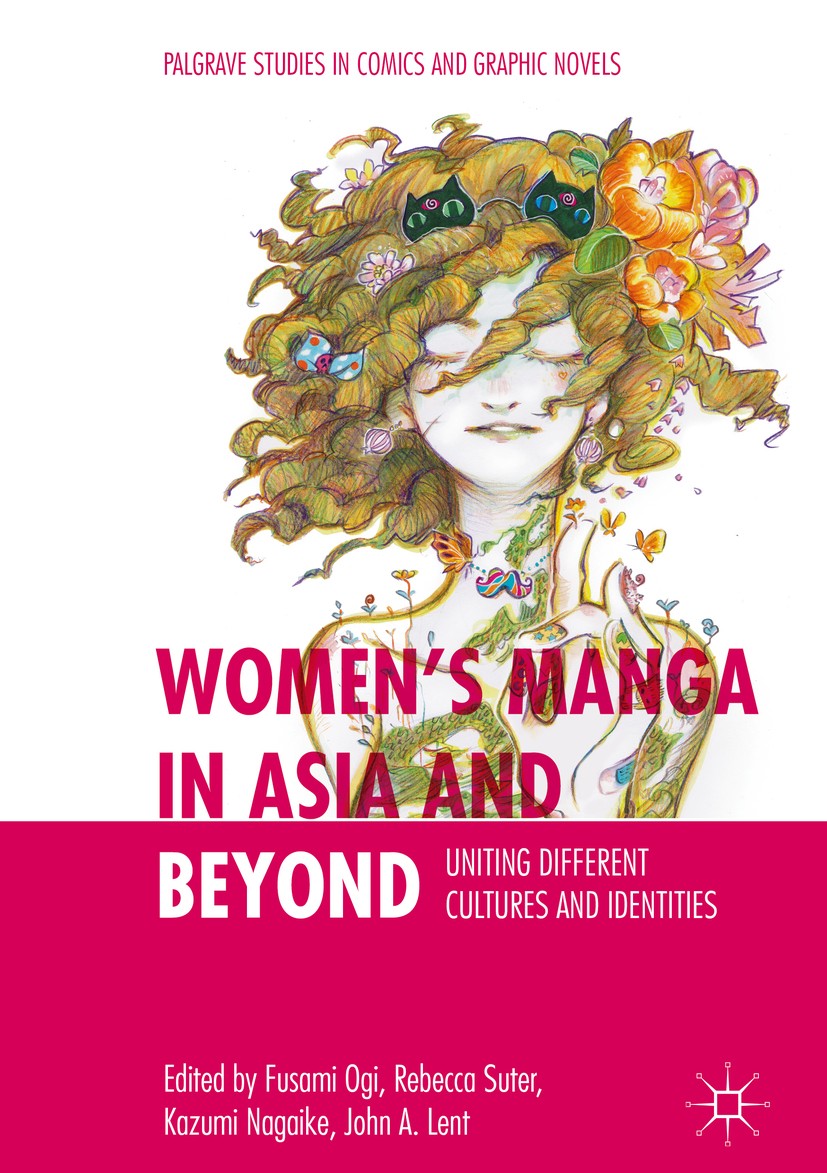
Women’s Manga in Asia and Beyond [electronic resource] : Uniting Different Cultures and Identities / edited by Fusami Ogi, Rebecca Suter, Kazumi Nagaike, John A. Lent.
Erişim Adresi
ISBN
9783319972299
Dil Kodu
İngilizce
Yer Numarası
EK/5188
Basım Bildirimi
1st ed. 2019.
Yayın Bilgisi
Cham : Springer International Publishing : Imprint: Palgrave Macmillan, 2019.
Fiziksel Niteleme
XXXI, 366 p. 109 illus. online resource.
Dizi
Palgrave Studies in Comics and Graphic Novels, 2634-6389
İçindekiler Notu
Section I. Rethinking Women, Queering Asia -- 1. Japanese Homoerotic Manga in Taiwan: Same-Sex Love and Utopian Imagination – Fran Martin -- 2. Hailing the Subject: Visual Progression and Queer Reading in Nananan’s Blue – Monica Chiu -- 3. Queering Democracy Activism and Online Obscenities: Hong Kong Women’s Boys’ Love Protest – Katrien Jacob -- 4. Pleasurable Interplay in the 2.5-Dimensional World: Women’s Cosplay Performances in Singapore and the Philippines – Akiko Shimada-Sugawa -- 5. Fundanshi (“Rotten Boys”) in Asia: A Cross-Cultural Analysis of Male Readings of BL and Concepts of Masculinity – Kazumi Kagaike -- 6. Writing Boys’ Love Comics in the Philippines – Scott WuMing -- Section II. Transnationalization/Globalization in Women and Shōjo Manga -- 7. How Women’s Manga Has Performed the Image of ASIAs, Globally and Locally – Fusami Ogi -- 8. Saving the World with Tiny Little Boxes – Ace Vitangcol -- 9. Environmental and Cultural Influences on an Artist – FSc -- 10. Recentering Australia in the Shōjo Imagination – Rebecca Suter -- 11. Manga in Australia – Madeleine Rosca -- 12. Manga and Shakespeare – Yukari Yoshihara -- 13. Yoko Tsuno and Franco-Belgian Girl Readers of Bande Dessinée – Jessica Bauwens -- 14. Matsumoto Katsuji: Modern Tomboys and Early Shōjo Manga – Ryan Holmberg -- Section III. Asian Women Comics Artists and Their Careers -- 15. Chinese Women Cartoonists: A Brief, Generational Perspective – John A. Lent and Xu Ying -- 16. Reading the Fifty Years of Popularity of Theresa Lee Wai-chun and Her Comic, 13-Dot Cartoon: Changing Identities of Women in Hong Kong – Wendy Siuyi Wong -- 17. A Conversation with Theresa Lee, the Creator of Miss 13 Dogs – Theresa Lee Wai-chun (interviewed by Connie Lam of HK Arts Centre) -- 18. Witness to a Transition: The Manga of Kyoko Okazaki and the Feminine Self in the Shift toward “Flat Culture” in Japanese Consumer Society – Takeshi Hamano -- 19. Reviving the Power of Storytelling: Post-3/11 Online‘Amateur’ Manga – Shige (CJ) Suzuki -- 20. Comics-Prose: Evolving Manga in the 21st Century – Queenie Chan -- 21. Manga in Hong Kong – Stella So.
Özet, vb.
Women’s Manga in Asia and Beyond offers a variety of perspectives on women’s manga and the nature, scope, and significance of the relationship between women and comics/manga, both globally as well as locally. Based on the activities since 2009 of the Women’s MANGA Research Project in Asia (WMRPA), the edited volume elucidates social and historical aspects of the Asian wave of manga from ever-broader perspectives of transnationalization and glocalization. With a specific focus on women’s direct roles in manga creation, it illustrates how the globalization of manga has united different cultures and identities, focusing on networks of women creators and readerships. Taking an Asian regional approach combined with investigations of non-Asian cultures which have felt manga’s impact, the book details manga’s shift to a global medium, developing, uniting, and involving increasing numbers of participants worldwide. Unveiling diverse Asian identities and showing ways to unite them, the contributors to this volume recognize the overlaps and unique trends that emerge as a result.
Konu
Communication.
Ethnology __ Asia.
Culture.
Popular Culture.
Comparative literature.
Oriental literature.
Globalization.
Media and Communication.
Asian Culture.
Popular Culture.
Comparative Literature.
Asian Literature.
Globalization.
Ethnology __ Asia.
Culture.
Popular Culture.
Comparative literature.
Oriental literature.
Globalization.
Media and Communication.
Asian Culture.
Popular Culture.
Comparative Literature.
Asian Literature.
Globalization.
Diğer Yazarlar
Kurum Adı
Eseri Alıntıla
Referansları kullanmadan önce gözden geçirmeniz ve varsa gerekli düzeltmeleri yapmanız önerilir.
Dijital Kaynak
MARC Görünümü
LEADER 06909nam a22007455i 4500
001 841718
003 TR_AnAIT
005 20260715025229
007 cr nn 008mamaa
008 190314s2019 sz | s |||| 0|eng d
020 |a9783319972299|9978-3-319-97229-9
024 7 |a10.1007/978-3-319-97229-9|2doi
041 |aeng
049 |aTürk Dil Kurumu Kütüphanesi
050 4|aP87-96
072 7|aJFD|2bicssc
072 7|aSOC052000|2bisacsh
072 7|aJBCT|2thema
082 04|a302.2|223
090 |aEK/5188
245 10|aWomen’s Manga in Asia and Beyond|h[electronic resource] :|bUniting Different Cultures and Identities /|cedited by Fusami Ogi, Rebecca Suter, Kazumi Nagaike, John A. Lent.
250 |a1st ed. 2019.
264 1|aCham :|bSpringer International Publishing :|bImprint: Palgrave Macmillan,|c2019.
300 |aXXXI, 366 p. 109 illus.|bonline resource.
336 |atext|btxt|2rdacontent
337 |acomputer|bc|2rdamedia
338 |aonline resource|bcr|2rdacarrier
341 0 |bTable of contents navigation|2onix
341 0 |bSingle logical reading order|2onix
341 0 |bShort alternative textual descriptions|2onix
341 0 |bUse of color is not sole means of conveying information|2onix
341 0 |bUse of high contrast between text and background color|2onix
341 0 |bNext / Previous structural navigation|2onix
341 0 |bAll non-decorative content supports reading without sight|2onix
347 |atext file|bPDF|2rda
490 1 |aPalgrave Studies in Comics and Graphic Novels,|x2634-6389
505 0 |aSection I. Rethinking Women, Queering Asia -- 1. Japanese Homoerotic Manga in Taiwan: Same-Sex Love and Utopian Imagination – Fran Martin -- 2. Hailing the Subject: Visual Progression and Queer Reading in Nananan’s Blue – Monica Chiu -- 3. Queering Democracy Activism and Online Obscenities: Hong Kong Women’s Boys’ Love Protest – Katrien Jacob -- 4. Pleasurable Interplay in the 2.5-Dimensional World: Women’s Cosplay Performances in Singapore and the Philippines – Akiko Shimada-Sugawa -- 5. Fundanshi (“Rotten Boys”) in Asia: A Cross-Cultural Analysis of Male Readings of BL and Concepts of Masculinity – Kazumi Kagaike -- 6. Writing Boys’ Love Comics in the Philippines – Scott WuMing -- Section II. Transnationalization/Globalization in Women and Shōjo Manga -- 7. How Women’s Manga Has Performed the Image of ASIAs, Globally and Locally – Fusami Ogi -- 8. Saving the World with Tiny Little Boxes – Ace Vitangcol -- 9. Environmental and Cultural Influences on an Artist – FSc -- 10. Recentering Australia in the Shōjo Imagination – Rebecca Suter -- 11. Manga in Australia – Madeleine Rosca -- 12. Manga and Shakespeare – Yukari Yoshihara -- 13. Yoko Tsuno and Franco-Belgian Girl Readers of Bande Dessinée – Jessica Bauwens -- 14. Matsumoto Katsuji: Modern Tomboys and Early Shōjo Manga – Ryan Holmberg -- Section III. Asian Women Comics Artists and Their Careers -- 15. Chinese Women Cartoonists: A Brief, Generational Perspective – John A. Lent and Xu Ying -- 16. Reading the Fifty Years of Popularity of Theresa Lee Wai-chun and Her Comic, 13-Dot Cartoon: Changing Identities of Women in Hong Kong – Wendy Siuyi Wong -- 17. A Conversation with Theresa Lee, the Creator of Miss 13 Dogs – Theresa Lee Wai-chun (interviewed by Connie Lam of HK Arts Centre) -- 18. Witness to a Transition: The Manga of Kyoko Okazaki and the Feminine Self in the Shift toward “Flat Culture” in Japanese Consumer Society – Takeshi Hamano -- 19. Reviving the Power of Storytelling: Post-3/11 Online‘Amateur’ Manga – Shige (CJ) Suzuki -- 20. Comics-Prose: Evolving Manga in the 21st Century – Queenie Chan -- 21. Manga in Hong Kong – Stella So.
520 |aWomen’s Manga in Asia and Beyond offers a variety of perspectives on women’s manga and the nature, scope, and significance of the relationship between women and comics/manga, both globally as well as locally. Based on the activities since 2009 of the Women’s MANGA Research Project in Asia (WMRPA), the edited volume elucidates social and historical aspects of the Asian wave of manga from ever-broader perspectives of transnationalization and glocalization. With a specific focus on women’s direct roles in manga creation, it illustrates how the globalization of manga has united different cultures and identities, focusing on networks of women creators and readerships. Taking an Asian regional approach combined with investigations of non-Asian cultures which have felt manga’s impact, the book details manga’s shift to a global medium, developing, uniting, and involving increasing numbers of participants worldwide. Unveiling diverse Asian identities and showing ways to unite them, the contributors to this volume recognize the overlaps and unique trends that emerge as a result.
532 8 |aAccessibility summary: This PDF does not fully comply with PDF/UA standards, but does feature limited screen reader support, described non-text content (images, graphs), bookmarks for easy navigation and searchable, selectable text. Users of assistive technologies may experience difficulty navigating or interpreting content in this document. We recognize the importance of accessibility, and we welcome queries about accessibility for any of our products. If you have a question or an access need, please get in touch with us at accessibilitysupport@springernature.com.
532 8 |aNo reading system accessibility options actively disabled
532 8 |aPublisher contact for further accessibility information: accessibilitysupport@springernature.com
650 0|aCommunication.
650 0|aEthnology|xAsia.
650 0|aCulture.
650 0|aPopular Culture.
650 0|aComparative literature.
650 0|aOriental literature.
650 0|aGlobalization.
650 14|aMedia and Communication.
650 24|aAsian Culture.
650 24|aPopular Culture.
650 24|aComparative Literature.
650 24|aAsian Literature.
650 24|aGlobalization.
700 1 |aOgi, Fusami.|eeditor.|4edt|4http://id.loc.gov/vocabulary/relators/edt
700 1 |aSuter, Rebecca.|eeditor.|4edt|4http://id.loc.gov/vocabulary/relators/edt
700 1 |aNagaike, Kazumi.|eeditor.|4edt|4http://id.loc.gov/vocabulary/relators/edt
700 1 |aLent, John A.|eeditor.|4edt|4http://id.loc.gov/vocabulary/relators/edt
710 2 |aSpringerLink (Online service)
773 0 |tSpringer Nature eBook
776 08|iPrinted edition:|z9783319972282
776 08|iPrinted edition:|z9783319972305
830 0|aPalgrave Studies in Comics and Graphic Novels,|x2634-6389
856 40|uhttps://doi.org/10.1007/978-3-319-97229-9
912 |aZDB-2-LCM
912 |aZDB-2-SXL
950 |aLiterature, Cultural and Media Studies (SpringerNature-41173)
950 |aLiterature, Cultural and Media Studies (R0) (SpringerNature-43723)
001 841718
003 TR_AnAIT
005 20260715025229
007 cr nn 008mamaa
008 190314s2019 sz | s |||| 0|eng d
020 |a9783319972299|9978-3-319-97229-9
024 7 |a10.1007/978-3-319-97229-9|2doi
041 |aeng
049 |aTürk Dil Kurumu Kütüphanesi
050 4|aP87-96
072 7|aJFD|2bicssc
072 7|aSOC052000|2bisacsh
072 7|aJBCT|2thema
082 04|a302.2|223
090 |aEK/5188
245 10|aWomen’s Manga in Asia and Beyond|h[electronic resource] :|bUniting Different Cultures and Identities /|cedited by Fusami Ogi, Rebecca Suter, Kazumi Nagaike, John A. Lent.
250 |a1st ed. 2019.
264 1|aCham :|bSpringer International Publishing :|bImprint: Palgrave Macmillan,|c2019.
300 |aXXXI, 366 p. 109 illus.|bonline resource.
336 |atext|btxt|2rdacontent
337 |acomputer|bc|2rdamedia
338 |aonline resource|bcr|2rdacarrier
341 0 |bTable of contents navigation|2onix
341 0 |bSingle logical reading order|2onix
341 0 |bShort alternative textual descriptions|2onix
341 0 |bUse of color is not sole means of conveying information|2onix
341 0 |bUse of high contrast between text and background color|2onix
341 0 |bNext / Previous structural navigation|2onix
341 0 |bAll non-decorative content supports reading without sight|2onix
347 |atext file|bPDF|2rda
490 1 |aPalgrave Studies in Comics and Graphic Novels,|x2634-6389
505 0 |aSection I. Rethinking Women, Queering Asia -- 1. Japanese Homoerotic Manga in Taiwan: Same-Sex Love and Utopian Imagination – Fran Martin -- 2. Hailing the Subject: Visual Progression and Queer Reading in Nananan’s Blue – Monica Chiu -- 3. Queering Democracy Activism and Online Obscenities: Hong Kong Women’s Boys’ Love Protest – Katrien Jacob -- 4. Pleasurable Interplay in the 2.5-Dimensional World: Women’s Cosplay Performances in Singapore and the Philippines – Akiko Shimada-Sugawa -- 5. Fundanshi (“Rotten Boys”) in Asia: A Cross-Cultural Analysis of Male Readings of BL and Concepts of Masculinity – Kazumi Kagaike -- 6. Writing Boys’ Love Comics in the Philippines – Scott WuMing -- Section II. Transnationalization/Globalization in Women and Shōjo Manga -- 7. How Women’s Manga Has Performed the Image of ASIAs, Globally and Locally – Fusami Ogi -- 8. Saving the World with Tiny Little Boxes – Ace Vitangcol -- 9. Environmental and Cultural Influences on an Artist – FSc -- 10. Recentering Australia in the Shōjo Imagination – Rebecca Suter -- 11. Manga in Australia – Madeleine Rosca -- 12. Manga and Shakespeare – Yukari Yoshihara -- 13. Yoko Tsuno and Franco-Belgian Girl Readers of Bande Dessinée – Jessica Bauwens -- 14. Matsumoto Katsuji: Modern Tomboys and Early Shōjo Manga – Ryan Holmberg -- Section III. Asian Women Comics Artists and Their Careers -- 15. Chinese Women Cartoonists: A Brief, Generational Perspective – John A. Lent and Xu Ying -- 16. Reading the Fifty Years of Popularity of Theresa Lee Wai-chun and Her Comic, 13-Dot Cartoon: Changing Identities of Women in Hong Kong – Wendy Siuyi Wong -- 17. A Conversation with Theresa Lee, the Creator of Miss 13 Dogs – Theresa Lee Wai-chun (interviewed by Connie Lam of HK Arts Centre) -- 18. Witness to a Transition: The Manga of Kyoko Okazaki and the Feminine Self in the Shift toward “Flat Culture” in Japanese Consumer Society – Takeshi Hamano -- 19. Reviving the Power of Storytelling: Post-3/11 Online‘Amateur’ Manga – Shige (CJ) Suzuki -- 20. Comics-Prose: Evolving Manga in the 21st Century – Queenie Chan -- 21. Manga in Hong Kong – Stella So.
520 |aWomen’s Manga in Asia and Beyond offers a variety of perspectives on women’s manga and the nature, scope, and significance of the relationship between women and comics/manga, both globally as well as locally. Based on the activities since 2009 of the Women’s MANGA Research Project in Asia (WMRPA), the edited volume elucidates social and historical aspects of the Asian wave of manga from ever-broader perspectives of transnationalization and glocalization. With a specific focus on women’s direct roles in manga creation, it illustrates how the globalization of manga has united different cultures and identities, focusing on networks of women creators and readerships. Taking an Asian regional approach combined with investigations of non-Asian cultures which have felt manga’s impact, the book details manga’s shift to a global medium, developing, uniting, and involving increasing numbers of participants worldwide. Unveiling diverse Asian identities and showing ways to unite them, the contributors to this volume recognize the overlaps and unique trends that emerge as a result.
532 8 |aAccessibility summary: This PDF does not fully comply with PDF/UA standards, but does feature limited screen reader support, described non-text content (images, graphs), bookmarks for easy navigation and searchable, selectable text. Users of assistive technologies may experience difficulty navigating or interpreting content in this document. We recognize the importance of accessibility, and we welcome queries about accessibility for any of our products. If you have a question or an access need, please get in touch with us at accessibilitysupport@springernature.com.
532 8 |aNo reading system accessibility options actively disabled
532 8 |aPublisher contact for further accessibility information: accessibilitysupport@springernature.com
650 0|aCommunication.
650 0|aEthnology|xAsia.
650 0|aCulture.
650 0|aPopular Culture.
650 0|aComparative literature.
650 0|aOriental literature.
650 0|aGlobalization.
650 14|aMedia and Communication.
650 24|aAsian Culture.
650 24|aPopular Culture.
650 24|aComparative Literature.
650 24|aAsian Literature.
650 24|aGlobalization.
700 1 |aOgi, Fusami.|eeditor.|4edt|4http://id.loc.gov/vocabulary/relators/edt
700 1 |aSuter, Rebecca.|eeditor.|4edt|4http://id.loc.gov/vocabulary/relators/edt
700 1 |aNagaike, Kazumi.|eeditor.|4edt|4http://id.loc.gov/vocabulary/relators/edt
700 1 |aLent, John A.|eeditor.|4edt|4http://id.loc.gov/vocabulary/relators/edt
710 2 |aSpringerLink (Online service)
773 0 |tSpringer Nature eBook
776 08|iPrinted edition:|z9783319972282
776 08|iPrinted edition:|z9783319972305
830 0|aPalgrave Studies in Comics and Graphic Novels,|x2634-6389
856 40|uhttps://doi.org/10.1007/978-3-319-97229-9
912 |aZDB-2-LCM
912 |aZDB-2-SXL
950 |aLiterature, Cultural and Media Studies (SpringerNature-41173)
950 |aLiterature, Cultural and Media Studies (R0) (SpringerNature-43723)
Materyaller
Depodan talep edilen materyal sadece kütüphane içerisinde kullanılmaktadır.
Materyal dışarıya ödünç verilmemektedir.
Materyal dışarıya ödünç verilmemektedir.
