

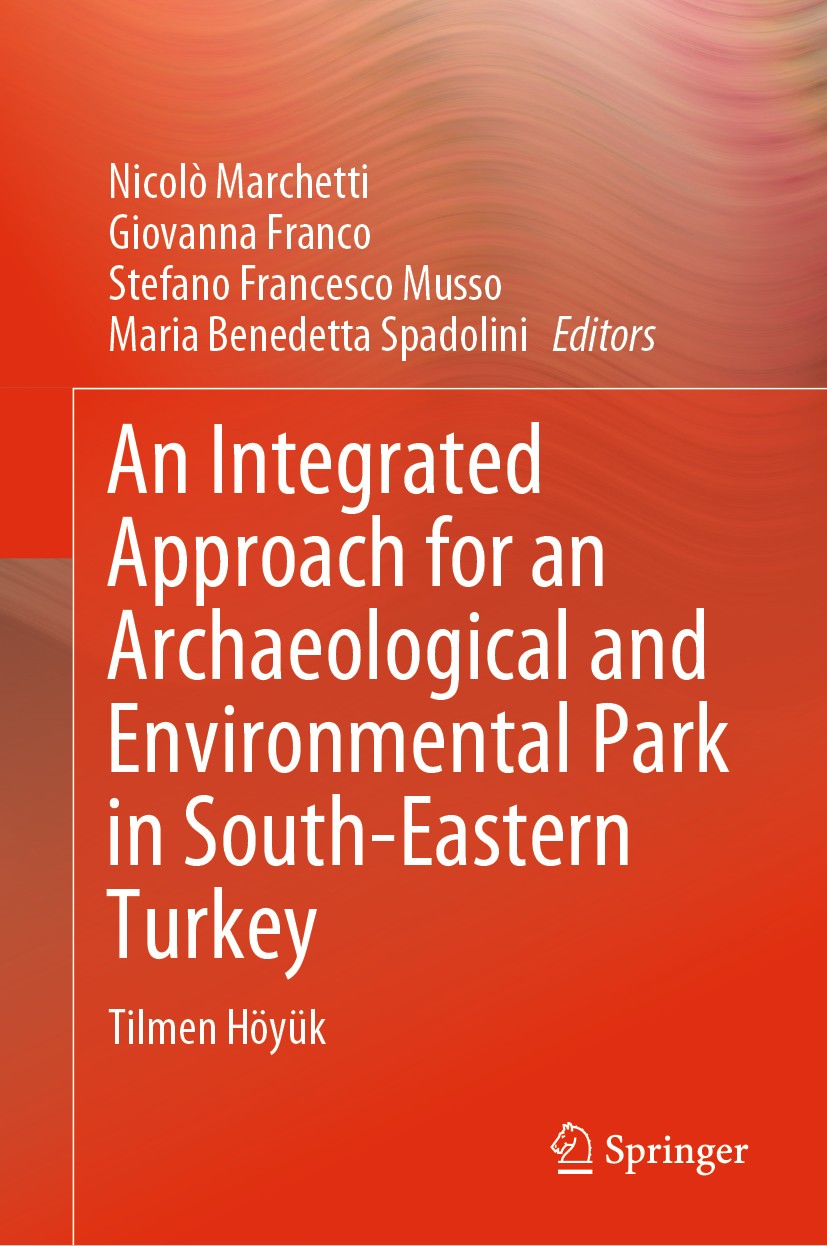
An Integrated Approach for an Archaeological and Environmental Park in South-Eastern Turkey [electronic resource] : Tilmen Höyük / edited by Nicolò Marchetti, Giovanna Franco, Stefano Francesco Musso, Maria Benedetta Spadolini.
Erişim Adresi
ISBN
9783030327545
Dil Kodu
İngilizce
Yer Numarası
EK/5077
Basım Bildirimi
1st ed. 2020.
Yayın Bilgisi
Cham : Springer International Publishing : Imprint: Springer, 2020.
Fiziksel Niteleme
XVI, 217 p. 213 illus., 176 illus. in color. online resource.
İçindekiler Notu
The research framework: the archaeological site, its landscape, a vision -- Conservation and accessibility: planning, designing, acting -- Environmental characterization of the site. .
Özet, vb.
This book reports on a public archaeology project carried out at the ancient site of Tilmen Höyük in south-eastern Turkey. The project developed and applied new methodologies and advanced technologies for the planning, design, conservation and management of an archaeological park at a site of high cultural, environmental and touristic interest, representing a significant study case for other archaeological sites in the Mediterranean area and beyond. It highlights state-of-the-art techniques of remote sensing, both for archaeological surveying and for territorial and environmental analysis through the study of high-definition aerial photos and digital photogrammetry. It also takes into account the ecological and environmental characterization data elaborated by environmental and botanic experts, fundamental for the purposes of eco-sustainability and management of the site, through climate and ground measurements aiming at vegetation control and a management model for the archaeological site itself and its green areas of outstanding naturalistic interest. Further, the book comprehensively discusses the analysis of the state of preservation of the archaeological remains and their effective conservation based on a set of measures guided by the principles of minimum intervention, feasibility and low impact on the remains, the site and its landscape. Moreover, it presents novel devices and fixed structures aimed at protecting the fragile archaeological remains and allowing safe access to visitors to the newly created archaeological park. At the intersection of archaeology, architecture and natural sciences, this book appeals to researchers and specialists in archaeology, social sciences, environmental sciences, conservation, architecture and engineering disciplines.
Konu
Cultural property.
Archaeology.
Environmental management.
Cultural Heritage.
Archaeology.
Environmental Management.
Archaeology.
Environmental management.
Cultural Heritage.
Archaeology.
Environmental Management.
Diğer Yazarlar
Kurum Adı
