

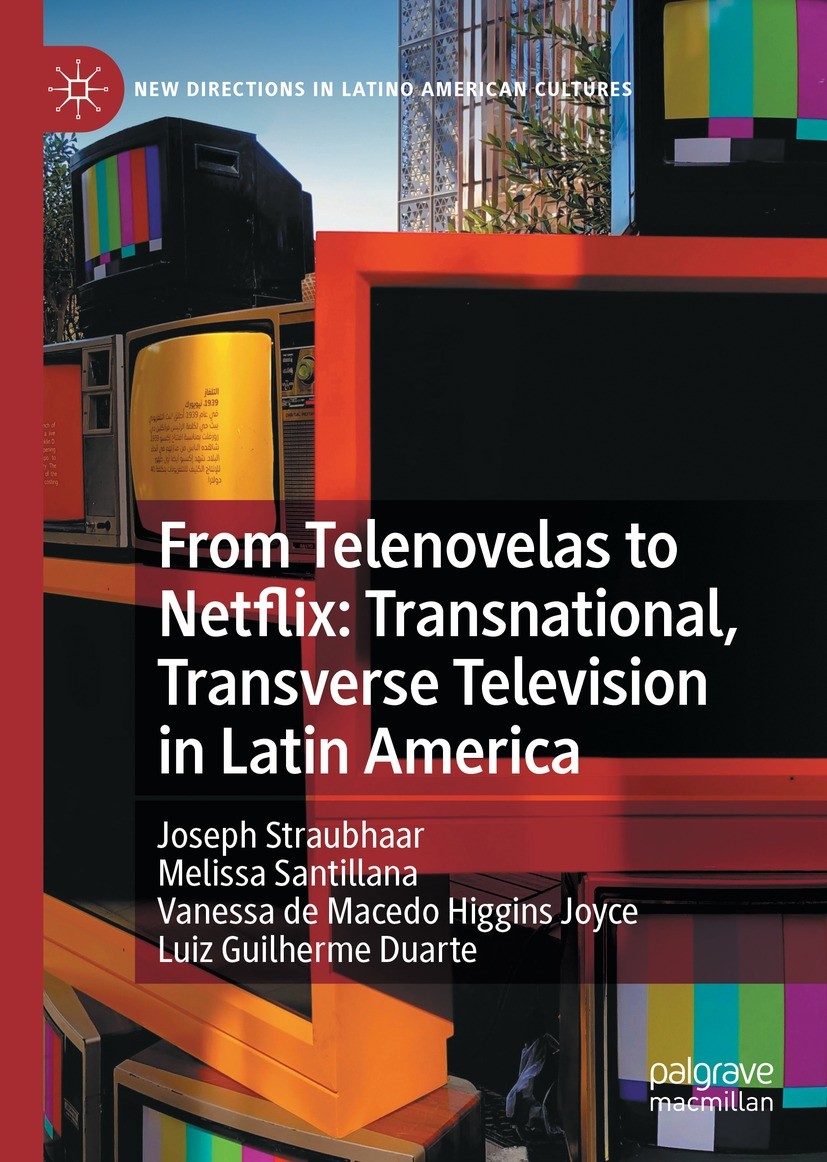
From Telenovelas to Netflix: Transnational, Transverse Television in Latin America [electronic resource] / by Joseph Straubhaar, Melissa Santillana, Vanessa de Macedo Higgins Joyce, Luiz Guilherme Duarte.
Erişim Adresi
ISBN
9783030774707
Dil Kodu
İngilizce
Yer Numarası
EK/5117
Yazar
Basım Bildirimi
1st ed. 2021.
Yayın Bilgisi
Cham : Springer International Publishing : Imprint: Palgrave Macmillan, 2021.
Fiziksel Niteleme
XVII, 265 p. 60 illus. online resource.
Dizi
New Directions in Latino American Cultures, 2634-520X
İçindekiler Notu
1. Introduction -- 2. The Growth of Latin American Television -- 3. Why Latin American Audiences Stay Loyal to National Broadcast Television -- 4. The Persistence of the Popularity of US television -- 5. Changing Class Formations and Changing Television Viewing: The New Middle Class, Television and Pay Television in Eight Latin American Countries 2004–2020 -- 6. Streaming Television, Netflix, and Transverse Transnationalism -- 7. Netflix, Distinction, and Cosmopolitanism Among Latin American Middle Class and Elite Audiences -- 8. Conclusion.
Özet, vb.
This book is about television in Latin America. Its national and regional industries create most television programming there within genres developed over time in the region. However, part of the programming has always come from the U.S., Europe and elsewhere. With cable, satellite and now streaming TV, that inflow of foreign programming has increased substantially. While many in the audience still prefer national or regional programs for their cultural proximity, an increasing number among the upper-middle and middle classes, particularly the young, are turning to the new foreign services, like Netflix, Amazon and Disney for class distinction, cosmopolitanism or other motives. Among the television industries global regional and national actors are creating a variety of programs and channels (broadcast, pay-TV and streaming) to segment and appeal to different parts of the audience. Joseph Straubhaar is the Amon G. Carter, Sr. Centennial Professor of Communication in the Moody College of Communication at the University of Texas at Austin. He was previously Director of the Brazil Center in the Lozano Long Institute of Latin American Studies. He was co-author of Latin American Television Industries. His research focuses on global media, television in Latin America, and the digital divide in Texas and Latin America. Melissa Santillana is a doctoral candidate in the Department of Radio-Television-Film at the University of Texas at Austin. Her research focuses on international media flows, border studies, activist movements, feminist activism, digital media, and digital inequality. Vanessa de Macedo Higgins Joyce is an Associate Professor in the School of Journalism and Mass Communication at Texas State University and a Research Fellow at the Knight Center for Journalism in the Americas. Her research lies in the intersection of transnational media, digital journalism, consensus building, and Latin America. Luiz Guilherme Duarte is an international media research executive with awards for the developments of pioneer television measurement services. He is also adjunct professor at University of Central Florida.
Konu
Motion pictures, American.
Ethnology __ Latin America.
Culture.
Motion picture industry.
Television broadcasting.
Popular Culture.
Latin American Film and TV.
Latin American Culture.
Film and Television Industry.
Popular Culture.
Ethnology __ Latin America.
Culture.
Motion picture industry.
Television broadcasting.
Popular Culture.
Latin American Film and TV.
Latin American Culture.
Film and Television Industry.
Popular Culture.
Diğer Yazarlar
Kurum Adı
Eseri Alıntıla
Referansları kullanmadan önce gözden geçirmeniz ve varsa gerekli düzeltmeleri yapmanız önerilir.
Dijital Kaynak
MARC Görünümü
LEADER 05206nam a22006015i 4500
001 841747
003 TR_AnAIT
005 20260715025152
007 cr nn 008mamaa
008 211206s2021 sz | s |||| 0|eng d
020 |a9783030774707|9978-3-030-77470-7
024 7 |a10.1007/978-3-030-77470-7|2doi
041 |aeng
049 |aTürk Dil Kurumu Kütüphanesi
050 4|aPN1600-3307.2
072 7|aAP|2bicssc
072 7|aPER004000|2bisacsh
072 7|aAT|2thema
082 04|a791.4098|223
090 |aEK/5117
100 1 |aStraubhaar, Joseph.|eauthor.|4aut|4http://id.loc.gov/vocabulary/relators/aut
245 10|aFrom Telenovelas to Netflix: Transnational, Transverse Television in Latin America|h[electronic resource] /|cby Joseph Straubhaar, Melissa Santillana, Vanessa de Macedo Higgins Joyce, Luiz Guilherme Duarte.
250 |a1st ed. 2021.
264 1|aCham :|bSpringer International Publishing :|bImprint: Palgrave Macmillan,|c2021.
300 |aXVII, 265 p. 60 illus.|bonline resource.
336 |atext|btxt|2rdacontent
337 |acomputer|bc|2rdamedia
338 |aonline resource|bcr|2rdacarrier
347 |atext file|bPDF|2rda
490 1 |aNew Directions in Latino American Cultures,|x2634-520X
505 0 |a1. Introduction -- 2. The Growth of Latin American Television -- 3. Why Latin American Audiences Stay Loyal to National Broadcast Television -- 4. The Persistence of the Popularity of US television -- 5. Changing Class Formations and Changing Television Viewing: The New Middle Class, Television and Pay Television in Eight Latin American Countries 2004–2020 -- 6. Streaming Television, Netflix, and Transverse Transnationalism -- 7. Netflix, Distinction, and Cosmopolitanism Among Latin American Middle Class and Elite Audiences -- 8. Conclusion.
520 |aThis book is about television in Latin America. Its national and regional industries create most television programming there within genres developed over time in the region. However, part of the programming has always come from the U.S., Europe and elsewhere. With cable, satellite and now streaming TV, that inflow of foreign programming has increased substantially. While many in the audience still prefer national or regional programs for their cultural proximity, an increasing number among the upper-middle and middle classes, particularly the young, are turning to the new foreign services, like Netflix, Amazon and Disney for class distinction, cosmopolitanism or other motives. Among the television industries global regional and national actors are creating a variety of programs and channels (broadcast, pay-TV and streaming) to segment and appeal to different parts of the audience. Joseph Straubhaar is the Amon G. Carter, Sr. Centennial Professor of Communication in the Moody College of Communication at the University of Texas at Austin. He was previously Director of the Brazil Center in the Lozano Long Institute of Latin American Studies. He was co-author of Latin American Television Industries. His research focuses on global media, television in Latin America, and the digital divide in Texas and Latin America. Melissa Santillana is a doctoral candidate in the Department of Radio-Television-Film at the University of Texas at Austin. Her research focuses on international media flows, border studies, activist movements, feminist activism, digital media, and digital inequality. Vanessa de Macedo Higgins Joyce is an Associate Professor in the School of Journalism and Mass Communication at Texas State University and a Research Fellow at the Knight Center for Journalism in the Americas. Her research lies in the intersection of transnational media, digital journalism, consensus building, and Latin America. Luiz Guilherme Duarte is an international media research executive with awards for the developments of pioneer television measurement services. He is also adjunct professor at University of Central Florida.
650 0|aMotion pictures, American.
650 0|aEthnology|xLatin America.
650 0|aCulture.
650 0|aMotion picture industry.
650 0|aTelevision broadcasting.
650 0|aPopular Culture.
650 14|aLatin American Film and TV.
650 24|aLatin American Culture.
650 24|aFilm and Television Industry.
650 24|aPopular Culture.
700 1 |aSantillana, Melissa.|eauthor.|4aut|4http://id.loc.gov/vocabulary/relators/aut
700 1 |ade Macedo Higgins Joyce, Vanessa.|eauthor.|0(orcid)0000-0001-5812-5912|1https://orcid.org/0000-0001-5812-5912|4aut|4http://id.loc.gov/vocabulary/relators/aut
700 1 |aDuarte, Luiz Guilherme.|eauthor.|4aut|4http://id.loc.gov/vocabulary/relators/aut
710 2 |aSpringerLink (Online service)
773 0 |tSpringer Nature eBook
776 08|iPrinted edition:|z9783030774691
776 08|iPrinted edition:|z9783030774714
776 08|iPrinted edition:|z9783030774721
830 0|aNew Directions in Latino American Cultures,|x2634-520X
856 40|uhttps://doi.org/10.1007/978-3-030-77470-7
912 |aZDB-2-LCM
912 |aZDB-2-SXL
950 |aLiterature, Cultural and Media Studies (SpringerNature-41173)
950 |aLiterature, Cultural and Media Studies (R0) (SpringerNature-43723)
001 841747
003 TR_AnAIT
005 20260715025152
007 cr nn 008mamaa
008 211206s2021 sz | s |||| 0|eng d
020 |a9783030774707|9978-3-030-77470-7
024 7 |a10.1007/978-3-030-77470-7|2doi
041 |aeng
049 |aTürk Dil Kurumu Kütüphanesi
050 4|aPN1600-3307.2
072 7|aAP|2bicssc
072 7|aPER004000|2bisacsh
072 7|aAT|2thema
082 04|a791.4098|223
090 |aEK/5117
100 1 |aStraubhaar, Joseph.|eauthor.|4aut|4http://id.loc.gov/vocabulary/relators/aut
245 10|aFrom Telenovelas to Netflix: Transnational, Transverse Television in Latin America|h[electronic resource] /|cby Joseph Straubhaar, Melissa Santillana, Vanessa de Macedo Higgins Joyce, Luiz Guilherme Duarte.
250 |a1st ed. 2021.
264 1|aCham :|bSpringer International Publishing :|bImprint: Palgrave Macmillan,|c2021.
300 |aXVII, 265 p. 60 illus.|bonline resource.
336 |atext|btxt|2rdacontent
337 |acomputer|bc|2rdamedia
338 |aonline resource|bcr|2rdacarrier
347 |atext file|bPDF|2rda
490 1 |aNew Directions in Latino American Cultures,|x2634-520X
505 0 |a1. Introduction -- 2. The Growth of Latin American Television -- 3. Why Latin American Audiences Stay Loyal to National Broadcast Television -- 4. The Persistence of the Popularity of US television -- 5. Changing Class Formations and Changing Television Viewing: The New Middle Class, Television and Pay Television in Eight Latin American Countries 2004–2020 -- 6. Streaming Television, Netflix, and Transverse Transnationalism -- 7. Netflix, Distinction, and Cosmopolitanism Among Latin American Middle Class and Elite Audiences -- 8. Conclusion.
520 |aThis book is about television in Latin America. Its national and regional industries create most television programming there within genres developed over time in the region. However, part of the programming has always come from the U.S., Europe and elsewhere. With cable, satellite and now streaming TV, that inflow of foreign programming has increased substantially. While many in the audience still prefer national or regional programs for their cultural proximity, an increasing number among the upper-middle and middle classes, particularly the young, are turning to the new foreign services, like Netflix, Amazon and Disney for class distinction, cosmopolitanism or other motives. Among the television industries global regional and national actors are creating a variety of programs and channels (broadcast, pay-TV and streaming) to segment and appeal to different parts of the audience. Joseph Straubhaar is the Amon G. Carter, Sr. Centennial Professor of Communication in the Moody College of Communication at the University of Texas at Austin. He was previously Director of the Brazil Center in the Lozano Long Institute of Latin American Studies. He was co-author of Latin American Television Industries. His research focuses on global media, television in Latin America, and the digital divide in Texas and Latin America. Melissa Santillana is a doctoral candidate in the Department of Radio-Television-Film at the University of Texas at Austin. Her research focuses on international media flows, border studies, activist movements, feminist activism, digital media, and digital inequality. Vanessa de Macedo Higgins Joyce is an Associate Professor in the School of Journalism and Mass Communication at Texas State University and a Research Fellow at the Knight Center for Journalism in the Americas. Her research lies in the intersection of transnational media, digital journalism, consensus building, and Latin America. Luiz Guilherme Duarte is an international media research executive with awards for the developments of pioneer television measurement services. He is also adjunct professor at University of Central Florida.
650 0|aMotion pictures, American.
650 0|aEthnology|xLatin America.
650 0|aCulture.
650 0|aMotion picture industry.
650 0|aTelevision broadcasting.
650 0|aPopular Culture.
650 14|aLatin American Film and TV.
650 24|aLatin American Culture.
650 24|aFilm and Television Industry.
650 24|aPopular Culture.
700 1 |aSantillana, Melissa.|eauthor.|4aut|4http://id.loc.gov/vocabulary/relators/aut
700 1 |ade Macedo Higgins Joyce, Vanessa.|eauthor.|0(orcid)0000-0001-5812-5912|1https://orcid.org/0000-0001-5812-5912|4aut|4http://id.loc.gov/vocabulary/relators/aut
700 1 |aDuarte, Luiz Guilherme.|eauthor.|4aut|4http://id.loc.gov/vocabulary/relators/aut
710 2 |aSpringerLink (Online service)
773 0 |tSpringer Nature eBook
776 08|iPrinted edition:|z9783030774691
776 08|iPrinted edition:|z9783030774714
776 08|iPrinted edition:|z9783030774721
830 0|aNew Directions in Latino American Cultures,|x2634-520X
856 40|uhttps://doi.org/10.1007/978-3-030-77470-7
912 |aZDB-2-LCM
912 |aZDB-2-SXL
950 |aLiterature, Cultural and Media Studies (SpringerNature-41173)
950 |aLiterature, Cultural and Media Studies (R0) (SpringerNature-43723)
Materyaller
Depodan talep edilen materyal sadece kütüphane içerisinde kullanılmaktadır.
Materyal dışarıya ödünç verilmemektedir.
Materyal dışarıya ödünç verilmemektedir.
