LEADER 04013nam a22005295i 4500
001 841851
003 TR_AnAIT
005 20260715025039
007 cr nn 008mamaa
008 180627s2018 sz | s |||| 0|eng d
020 |a9783319897882|9978-3-319-89788-2
024 7 |a10.1007/978-3-319-89788-2|2doi
041 |aeng
049 |aTürk Dil Kurumu Kütüphanesi
050 4|aPN1010-1551
072 7|aDSC|2bicssc
072 7|aLIT014000|2bisacsh
072 7|aDSC|2thema
082 04|a808.1|223
090 |aEK/4992
245 10|aBeastly Blake|h[electronic resource] /|cedited by Helen P. Bruder, Tristanne Connolly.
250 |a1st ed. 2018.
264 1|aCham :|bSpringer International Publishing :|bImprint: Palgrave Macmillan,|c2018.
300 |aXIX, 298 p. 21 illus.|bonline resource.
336 |atext|btxt|2rdacontent
337 |acomputer|bc|2rdamedia
338 |aonline resource|bcr|2rdacarrier
347 |atext file|bPDF|2rda
490 1 |aPalgrave Studies in Animals and Literature,|x2634-6346
505 0 |a1. Introduction: ‘Conversing with the Animal forms of wisdom’: Helen P. Bruder and Tristanne Connolly -- 2. Blake’s ‘Horses of Instruction’: Kurt Fosso -- 3. Blake’s ‘Auguries of Innocence’ as / in Radical Animal Politics c. 1800: Anne Milne -- 4. In the Company of Wolves: Blake’s Lyca Poems as Political Fable: Elizabeth Effinger -- 5. Apocalyptic Visions, Heroism, and Intersections of the Human and ‘the Not Human’ in Blake’s Milton: Diane Piccitto -- 6. Blake as Shaman: The Neuroscience of Hallucinations and Milton’s Lark: David Worrall -- 7. Bestial Metamorphoses: Blake’s Variations on Trans-human Change in Dante’s Hell: Luisa Calè -- 8. ‘How sweet is the Shepherds sweet lot’?: Sheep in Blake’s Designs: Hayley Flynn -- 9. ‘Train of Elephants’: Blake’s (Un)tamed Beasts and Hayley’s Animal Ballads: Mark Crosby -- 10. From Vampire to Apollo: William Blake’s Ghosts of the Flea (c. 1819-20): Sibylle Erle -- 11. News from the Thames (Blake! There’s Something in the Water): Bethan Stevens.
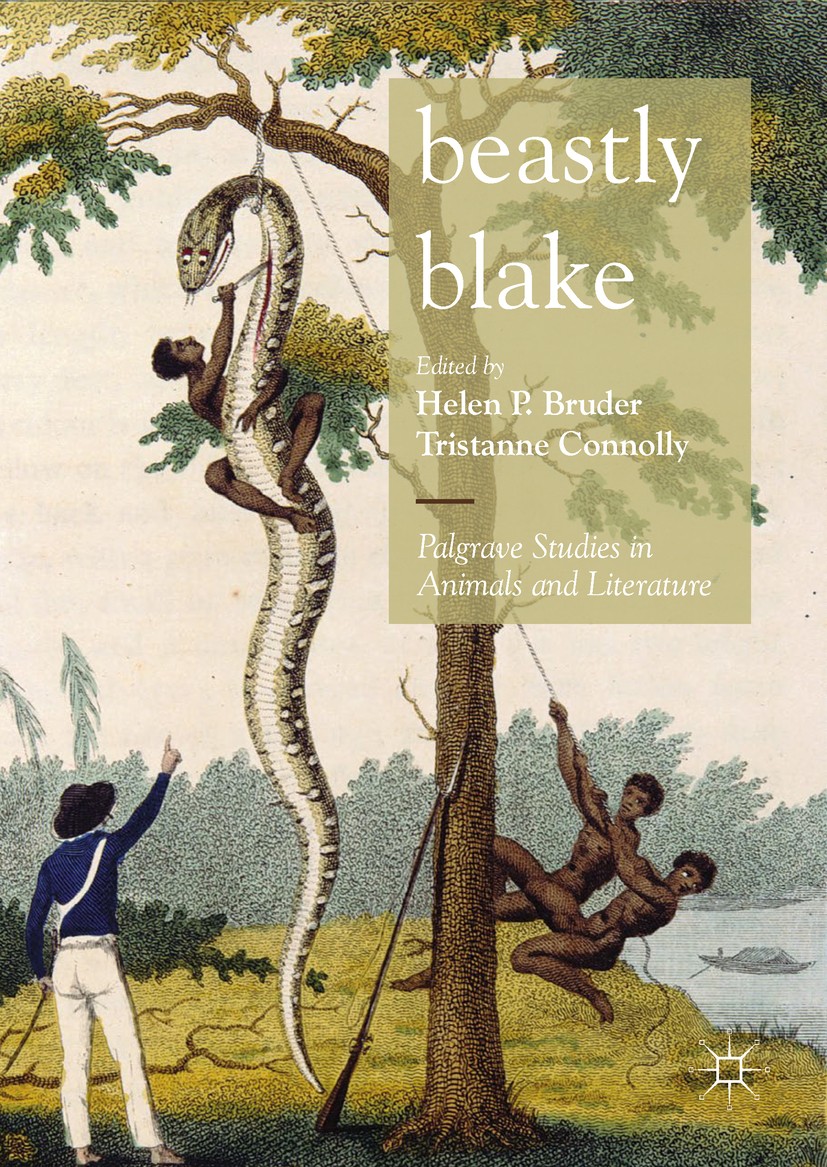
520 |aBlake’s ‘Human Form Divine’ has long commanded the spotlight. Beastly Blake shifts focus to the non-human creatures who populate Blake’s poetry and designs. The author of ‘The Tyger’ and ‘The Lamb’ was equally struck by the ‘beastliness’ and the beauty of the animal kingdom, the utter otherness of animal subjectivity and the meaningful relationships between humans and other creatures. ‘Conversing with the Animal forms of wisdom night & day’, Blake fathomed how much they have to teach us about creation and eternity. This collection ranges from real animals in Blake’s surroundings, to symbolic creatures in his mythology, to animal presences in his illustrations of Virgil, Dante, Hayley, and Stedman. It makes a third to follow Queer Blake and Sexy Blake in irreverently illuminating blind spots in Blake criticism. Beastly Blake will reward lovers of Blake’s writing and visual art, as well as those interested in Romanticism and animal studies.
650 0|aPoetry.
650 0|aLiterature, Modern|x18th century.
650 0|aLiterature, Modern|x19th century.
650 14|aPoetry and Poetics.
650 24|aEighteenth-Century Literature.
650 24|aNineteenth-Century Literature.
700 1 |aBruder, Helen P.|eeditor.|4edt|4http://id.loc.gov/vocabulary/relators/edt
700 1 |aConnolly, Tristanne.|eeditor.|4edt|4http://id.loc.gov/vocabulary/relators/edt
710 2 |aSpringerLink (Online service)
773 0 |tSpringer Nature eBook
776 08|iPrinted edition:|z9783319897875
776 08|iPrinted edition:|z9783319897899
776 08|iPrinted edition:|z9783030078584
830 0|aPalgrave Studies in Animals and Literature,|x2634-6346
856 40|uhttps://doi.org/10.1007/978-3-319-89788-2
912 |aZDB-2-LCM
912 |aZDB-2-SXL
950 |aLiterature, Cultural and Media Studies (SpringerNature-41173)
950 |aLiterature, Cultural and Media Studies (R0) (SpringerNature-43723)