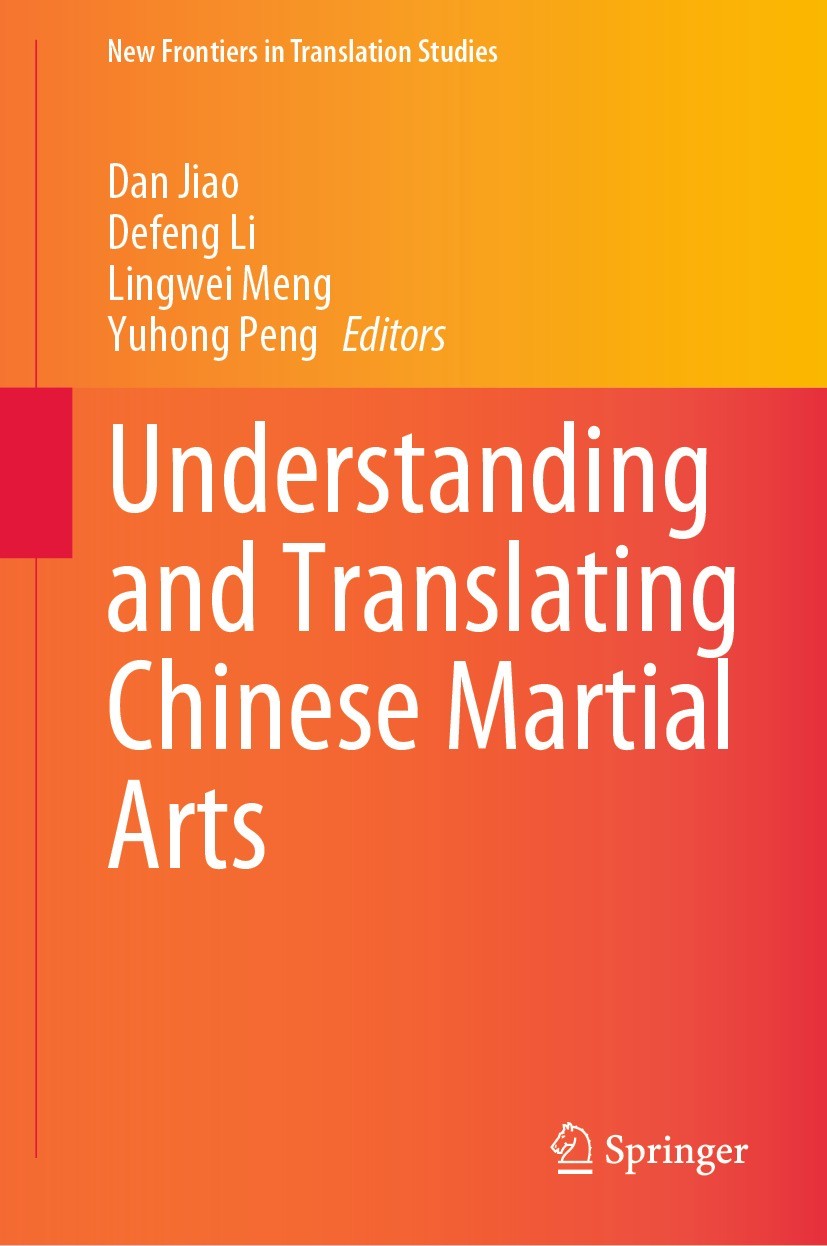
Understanding and Translating Chinese Martial Arts [electronic resource] / edited by Dan Jiao, Defeng Li, Lingwei Meng, Yuhong Peng.
Erişim Adresi
ISBN
9789811984259
Dil Kodu
İngilizce
Yer Numarası
EK/5338
Basım Bildirimi
1st ed. 2023.
Yayın Bilgisi
Singapore : Springer Nature Singapore : Imprint: Springer, 2023.
Fiziksel Niteleme
XIV, 138 p. 14 illus., 4 illus. in color. online resource.
Dizi
New Frontiers in Translation Studies, 2197-8697
İçindekiler Notu
Kungfu – Musings on the Philosophical background of Chinese Martial Arts -- Cross-cultural Communication of Chinese Wushu in an Omnimedia Context: Problems and Solutions -- The Mythology of Chinese Martial Arts Tourism:A Case study of the Shaolin Temple on Multiple Dimensions -- Translating Chinese martial arts for a global audience: A multimodal perspective -- A Survey of English Translations of Jin Yong’s Wuxia Fiction and Relevant Research.-Translation of Chinese Martial Arts: Principles and Methods -- Translating Shendiao Yingxiong Zhuan: A Dialogue between Two Translators -- Neural machine translation systems and Chinese martial arts movies: Moving into uncharted territory -- When Chinese Martial Artists Meet Western Heroes: A Stylometric Comparison of Translated Wuxia Fiction and Western Heroic Literature. .
Özet, vb.
The present book features some introductory discussions on martial arts for the international audience and highlights in brief the complexities of translating the genre into English, often from a comparative literature perspective. Martial arts, also known as Kungfu or Wushu, refer to different families of Chinese fighting styles over many centuries. Martial arts fiction, or Wuxia literature, is a unique genre that depicts adventures of martial artists in ancient China. Understanding martial arts and the Chinese culture and philosophy behind them creates an intriguing experience, particularly, for non-Chinese readers; translating the literature into English poses unparalleled challenges for translators not only because of the culture embedded in it but also the fascinating martial arts moves and captivating names of many characters therein.
Konu
Translating and interpreting.
Intercultural communication.
Fiction.
Literary form.
Language Translation.
Intercultural Communication.
Fiction Literature.
Literary Genre.
Intercultural communication.
Fiction.
Literary form.
Language Translation.
Intercultural Communication.
Fiction Literature.
Literary Genre.
Diğer Yazarlar
Kurum Adı

Eseri Alıntıla
Referansları kullanmadan önce gözden geçirmeniz ve varsa gerekli düzeltmeleri yapmanız önerilir.
Dijital Kaynak
MARC Görünümü
LEADER 05146nam a22006975i 4500
001 841992
003 TR_AnAIT
005 20260715024623
007 cr nn 008mamaa
008 230201s2023 si | s |||| 0|eng d
020 |a9789811984259|9978-981-19-8425-9
024 7 |a10.1007/978-981-19-8425-9|2doi
041 |aeng
049 |aTürk Dil Kurumu Kütüphanesi
050 4|aP306-310
072 7|aCFP|2bicssc
072 7|aLAN023000|2bisacsh
072 7|aCFP|2thema
082 04|a418.02|223
090 |aEK/5338
245 10|aUnderstanding and Translating Chinese Martial Arts|h[electronic resource] /|cedited by Dan Jiao, Defeng Li, Lingwei Meng, Yuhong Peng.
250 |a1st ed. 2023.
264 1|aSingapore :|bSpringer Nature Singapore :|bImprint: Springer,|c2023.
300 |aXIV, 138 p. 14 illus., 4 illus. in color.|bonline resource.
336 |atext|btxt|2rdacontent
337 |acomputer|bc|2rdamedia
338 |aonline resource|bcr|2rdacarrier
341 0 |bTable of contents navigation|2onix
341 0 |bSingle logical reading order|2onix
341 0 |bShort alternative textual descriptions|2onix
341 0 |bUse of color is not sole means of conveying information|2onix
341 0 |bUse of high contrast between text and background color|2onix
341 0 |bNext / Previous structural navigation|2onix
341 0 |bAll non-decorative content supports reading without sight|2onix
347 |atext file|bPDF|2rda
490 1 |aNew Frontiers in Translation Studies,|x2197-8697
505 0 |aKungfu – Musings on the Philosophical background of Chinese Martial Arts -- Cross-cultural Communication of Chinese Wushu in an Omnimedia Context: Problems and Solutions -- The Mythology of Chinese Martial Arts Tourism:A Case study of the Shaolin Temple on Multiple Dimensions -- Translating Chinese martial arts for a global audience: A multimodal perspective -- A Survey of English Translations of Jin Yong’s Wuxia Fiction and Relevant Research.-Translation of Chinese Martial Arts: Principles and Methods -- Translating Shendiao Yingxiong Zhuan: A Dialogue between Two Translators -- Neural machine translation systems and Chinese martial arts movies: Moving into uncharted territory -- When Chinese Martial Artists Meet Western Heroes: A Stylometric Comparison of Translated Wuxia Fiction and Western Heroic Literature. .
520 |aThe present book features some introductory discussions on martial arts for the international audience and highlights in brief the complexities of translating the genre into English, often from a comparative literature perspective. Martial arts, also known as Kungfu or Wushu, refer to different families of Chinese fighting styles over many centuries. Martial arts fiction, or Wuxia literature, is a unique genre that depicts adventures of martial artists in ancient China. Understanding martial arts and the Chinese culture and philosophy behind them creates an intriguing experience, particularly, for non-Chinese readers; translating the literature into English poses unparalleled challenges for translators not only because of the culture embedded in it but also the fascinating martial arts moves and captivating names of many characters therein.
532 8 |aAccessibility summary: This PDF does not fully comply with PDF/UA standards, but does feature limited screen reader support, described non-text content (images, graphs), bookmarks for easy navigation and searchable, selectable text. Users of assistive technologies may experience difficulty navigating or interpreting content in this document. We recognize the importance of accessibility, and we welcome queries about accessibility for any of our products. If you have a question or an access need, please get in touch with us at accessibilitysupport@springernature.com.
532 8 |aNo reading system accessibility options actively disabled
532 8 |aPublisher contact for further accessibility information: accessibilitysupport@springernature.com
650 0|aTranslating and interpreting.
650 0|aIntercultural communication.
650 0|aFiction.
650 0|aLiterary form.
650 14|aLanguage Translation.
650 24|aIntercultural Communication.
650 24|aFiction Literature.
650 24|aLiterary Genre.
700 1 |aJiao, Dan.|eeditor.|4edt|4http://id.loc.gov/vocabulary/relators/edt
700 1 |aLi, Defeng.|eeditor.|4edt|4http://id.loc.gov/vocabulary/relators/edt
700 1 |aMeng, Lingwei.|eeditor.|4edt|4http://id.loc.gov/vocabulary/relators/edt
700 1 |aPeng, Yuhong.|eeditor.|4edt|4http://id.loc.gov/vocabulary/relators/edt
710 2 |aSpringerLink (Online service)
773 0 |tSpringer Nature eBook
776 08|iPrinted edition:|z9789811984242
776 08|iPrinted edition:|z9789811984266
776 08|iPrinted edition:|z9789811984273
830 0|aNew Frontiers in Translation Studies,|x2197-8697
856 40|uhttps://doi.org/10.1007/978-981-19-8425-9
912 |aZDB-2-LCM
912 |aZDB-2-SXL
950 |aLiterature, Cultural and Media Studies (SpringerNature-41173)
950 |aLiterature, Cultural and Media Studies (R0) (SpringerNature-43723)
001 841992
003 TR_AnAIT
005 20260715024623
007 cr nn 008mamaa
008 230201s2023 si | s |||| 0|eng d
020 |a9789811984259|9978-981-19-8425-9
024 7 |a10.1007/978-981-19-8425-9|2doi
041 |aeng
049 |aTürk Dil Kurumu Kütüphanesi
050 4|aP306-310
072 7|aCFP|2bicssc
072 7|aLAN023000|2bisacsh
072 7|aCFP|2thema
082 04|a418.02|223
090 |aEK/5338
245 10|aUnderstanding and Translating Chinese Martial Arts|h[electronic resource] /|cedited by Dan Jiao, Defeng Li, Lingwei Meng, Yuhong Peng.
250 |a1st ed. 2023.
264 1|aSingapore :|bSpringer Nature Singapore :|bImprint: Springer,|c2023.
300 |aXIV, 138 p. 14 illus., 4 illus. in color.|bonline resource.
336 |atext|btxt|2rdacontent
337 |acomputer|bc|2rdamedia
338 |aonline resource|bcr|2rdacarrier
341 0 |bTable of contents navigation|2onix
341 0 |bSingle logical reading order|2onix
341 0 |bShort alternative textual descriptions|2onix
341 0 |bUse of color is not sole means of conveying information|2onix
341 0 |bUse of high contrast between text and background color|2onix
341 0 |bNext / Previous structural navigation|2onix
341 0 |bAll non-decorative content supports reading without sight|2onix
347 |atext file|bPDF|2rda
490 1 |aNew Frontiers in Translation Studies,|x2197-8697
505 0 |aKungfu – Musings on the Philosophical background of Chinese Martial Arts -- Cross-cultural Communication of Chinese Wushu in an Omnimedia Context: Problems and Solutions -- The Mythology of Chinese Martial Arts Tourism:A Case study of the Shaolin Temple on Multiple Dimensions -- Translating Chinese martial arts for a global audience: A multimodal perspective -- A Survey of English Translations of Jin Yong’s Wuxia Fiction and Relevant Research.-Translation of Chinese Martial Arts: Principles and Methods -- Translating Shendiao Yingxiong Zhuan: A Dialogue between Two Translators -- Neural machine translation systems and Chinese martial arts movies: Moving into uncharted territory -- When Chinese Martial Artists Meet Western Heroes: A Stylometric Comparison of Translated Wuxia Fiction and Western Heroic Literature. .
520 |aThe present book features some introductory discussions on martial arts for the international audience and highlights in brief the complexities of translating the genre into English, often from a comparative literature perspective. Martial arts, also known as Kungfu or Wushu, refer to different families of Chinese fighting styles over many centuries. Martial arts fiction, or Wuxia literature, is a unique genre that depicts adventures of martial artists in ancient China. Understanding martial arts and the Chinese culture and philosophy behind them creates an intriguing experience, particularly, for non-Chinese readers; translating the literature into English poses unparalleled challenges for translators not only because of the culture embedded in it but also the fascinating martial arts moves and captivating names of many characters therein.
532 8 |aAccessibility summary: This PDF does not fully comply with PDF/UA standards, but does feature limited screen reader support, described non-text content (images, graphs), bookmarks for easy navigation and searchable, selectable text. Users of assistive technologies may experience difficulty navigating or interpreting content in this document. We recognize the importance of accessibility, and we welcome queries about accessibility for any of our products. If you have a question or an access need, please get in touch with us at accessibilitysupport@springernature.com.
532 8 |aNo reading system accessibility options actively disabled
532 8 |aPublisher contact for further accessibility information: accessibilitysupport@springernature.com
650 0|aTranslating and interpreting.
650 0|aIntercultural communication.
650 0|aFiction.
650 0|aLiterary form.
650 14|aLanguage Translation.
650 24|aIntercultural Communication.
650 24|aFiction Literature.
650 24|aLiterary Genre.
700 1 |aJiao, Dan.|eeditor.|4edt|4http://id.loc.gov/vocabulary/relators/edt
700 1 |aLi, Defeng.|eeditor.|4edt|4http://id.loc.gov/vocabulary/relators/edt
700 1 |aMeng, Lingwei.|eeditor.|4edt|4http://id.loc.gov/vocabulary/relators/edt
700 1 |aPeng, Yuhong.|eeditor.|4edt|4http://id.loc.gov/vocabulary/relators/edt
710 2 |aSpringerLink (Online service)
773 0 |tSpringer Nature eBook
776 08|iPrinted edition:|z9789811984242
776 08|iPrinted edition:|z9789811984266
776 08|iPrinted edition:|z9789811984273
830 0|aNew Frontiers in Translation Studies,|x2197-8697
856 40|uhttps://doi.org/10.1007/978-981-19-8425-9
912 |aZDB-2-LCM
912 |aZDB-2-SXL
950 |aLiterature, Cultural and Media Studies (SpringerNature-41173)
950 |aLiterature, Cultural and Media Studies (R0) (SpringerNature-43723)
Materyaller
Depodan talep edilen materyal sadece kütüphane içerisinde kullanılmaktadır.
Materyal dışarıya ödünç verilmemektedir.
