

Chihera in Zimbabwe [electronic resource] : A Radical African Feminist Principle / edited by Ezra Chitando, Sophia Chirongoma, Munyaradzi Nyakudya.
Erişim Adresi
ISBN
9783031124662
Dil Kodu
İngilizce
Yer Numarası
EK/5297
Basım Bildirimi
1st ed. 2023.
Yayın Bilgisi
Cham : Springer International Publishing : Imprint: Palgrave Macmillan, 2023.
Fiziksel Niteleme
XVII, 355 p. 13 illus. online resource.
İçindekiler Notu
Introducing a Radical African Indigenous Feminist Principle: Chihera in Zimbabwe -- Part I Chihera in the Spiritual Hierarchy: Traversing Patriarchy -- 2 Chihera in the Ancestral Realm: Exploring Female Ancestry Among the Hera People in Buhera, Zimbabwe -- 3 VaChihera: A Profile of Ndakaziva -- 4 Chihera: Renegotiating the Status of Women in Shona Indigenous Culture in Zimbabwe -- 5 Chiheras’ Twenty-First-Century Profiling: Re-converging from Past Divisions in Monolithic Defying of Traditional Patriarchal Culture -- Part II From the mouths of Chiheras and Mhofuyokuno: Disrupting Patriarchy -- 6 Ndini Chihera (I Am Chihera): An African Womanist Perspective on the Chihera Identity in Zimbabwe -- 7 Ndini Baba vaChihera (I Am Chihera’s Father): A Narrative of the Chihera Persona -- 8 “Please Understand Me, I Am Chihera”: Issues of Character and Traits Among the Indigenous Zimbabwean Women of the Chihera Totem -- 9 Chihera’s Story: Keeping Ubuntu Alive Amidst the COVID-19 Pandemic -- 10 Revisiting Totemic Praise Names: Chihera as Metaphor of Addressing Gender-Based and Sexual Violence in Post-colonial Zimbabwe -- Part III Subverting Patriarchy: Chihera Persona in the Film Industry and Advocacy for Gender Parity -- 11 Chihera in Film: The Subversion of Patriarchal and Customary Laws of Inheritance as Depicted in the Zimbabwean Feature Film Neria (1991) -- 12 Genderising the Social Media: Analysing Chihera’s Antics in the Zimbabwean Context -- 13 Socially Constructed Discourse on Chihera: An Asset or Liability in Zimbabwe’s Envisioned Gender Equal Society -- Part IV Chihera Prototype Navigating the Zimbabwean Genderised Economic Sector -- 14 “If only it wasn’t for me” Chihera as Head of the Family in a Time of Economic Crisis -- 15 Patriarchy and Disability: A Culture of Ubuntu, African Women with Disabilities and Sustainable Livelihoods in Matetsi Community, Zimbabwe -- Part V Confounding Chihera: Patriarchy Fights Back -- 16 The Chihera Mystique in Selected Writings by African Women Theologians -- 17 Chihera as a Game Changer in the African Churches’ Masculine Leadership Hierarchy: A Case Study of the Apostolic Faith Mission in Zimbabwe -- 18 Chihera’s Matriarchal Traits: A Mirror of Reverse Patriarchy -- 19 Implications of Consolidating Patriarchy Through Exploitation of “Better” Ways of Conveying Disagreeable Practices to Chihera, the Epitome of Empowered Women in Zimbabwe -- .
Özet, vb.
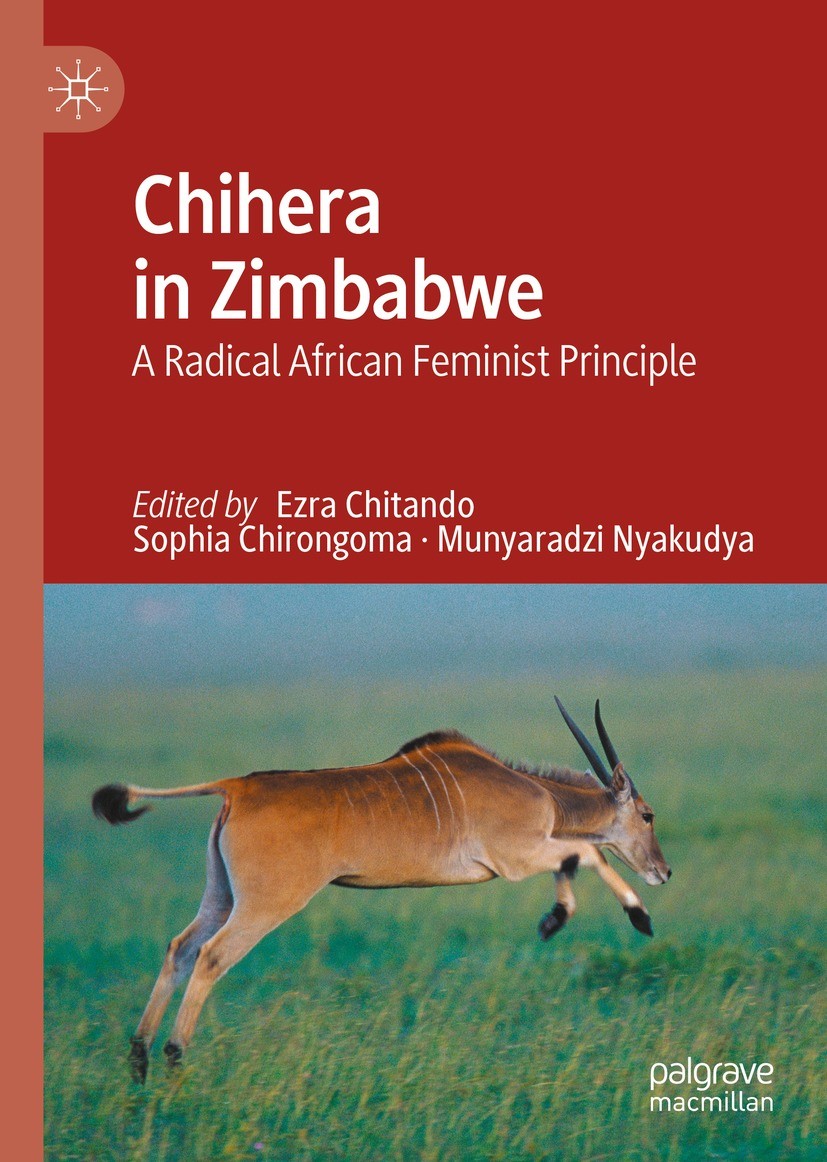
Zimbabwean social media has been awash with images of a woman character, spirit, or concept called Chihera. Traditionally, a woman descending from the Mhofu (Eland) lineage/totem is known as Chihera. In the cumulative tradition of the Shona (a Zimbabwean ethnic group), Chihera is a fiercely independent, assertive, free spirited, and no nonsense woman. This volume seeks to deepen reflections on the Chihera phenomenon in the context of the search for gender justice in Zimbabwe and Africa. The authors reflect on how this radical indigenous feminist ethic circulating on social media can animate the quest for Zimbabwean and African women’s full liberation from patriarchy and all oppressive forces. They grapple with the issue of generating culturally sensitive theories and approaches to galvanize the struggle for African women’s liberation in post-colonial settings. Second, they locate the Chihera mystique in the context of the practical struggle for women’s empowerment.Third, the volume illustrates how the Chihera phenomenon could be utilized for gender justice in Zimbabwe and beyond. Ezra Chitando is Professor of History and Phenomenology of Religion and World Council of Churches Theology Consultant on HIV and AIDS in Africa. Sophia Chirongoma is a senior lecturer in the Religious Studies Department at Midlands State University, Zimbabwe. She is also an academic associate/research fellow at the Research Institute for Theology and Religion (RITR) at UNISA. Munyaradzi Nyakudya is a senior lecturer in the History, Heritage and Knowledge Systems Department at the University of Zimbabwe. He has research interests in, among other areas, history, ethnomusicology, and human security.
Konu
Sex.
Ethnology __ Africa.
Culture.
Indigenous peoples __ Religion.
Gender Studies.
African Culture.
Indigenous Religion.
Ethnology __ Africa.
Culture.
Indigenous peoples __ Religion.
Gender Studies.
African Culture.
Indigenous Religion.
Diğer Yazarlar
Kurum Adı
Eseri Alıntıla
Referansları kullanmadan önce gözden geçirmeniz ve varsa gerekli düzeltmeleri yapmanız önerilir.
Dijital Kaynak
MARC Görünümü
LEADER 07359nam a22006495i 4500
001 841994
003 TR_AnAIT
005 20260715024622
007 cr nn 008mamaa
008 230227s2023 sz | s |||| 0|eng d
020 |a9783031124662|9978-3-031-12466-2
024 7 |a10.1007/978-3-031-12466-2|2doi
041 |aeng
049 |aTürk Dil Kurumu Kütüphanesi
050 4|aHQ12-449
072 7|aJFSJ|2bicssc
072 7|aSOC032000|2bisacsh
072 7|aJBSF|2thema
082 04|a305.3|223
090 |aEK/5297
245 10|aChihera in Zimbabwe|h[electronic resource] :|bA Radical African Feminist Principle /|cedited by Ezra Chitando, Sophia Chirongoma, Munyaradzi Nyakudya.
250 |a1st ed. 2023.
264 1|aCham :|bSpringer International Publishing :|bImprint: Palgrave Macmillan,|c2023.
300 |aXVII, 355 p. 13 illus.|bonline resource.
336 |atext|btxt|2rdacontent
337 |acomputer|bc|2rdamedia
338 |aonline resource|bcr|2rdacarrier
341 0 |bTable of contents navigation|2onix
341 0 |bSingle logical reading order|2onix
341 0 |bShort alternative textual descriptions|2onix
341 0 |bUse of color is not sole means of conveying information|2onix
341 0 |bUse of high contrast between text and background color|2onix
341 0 |bNext / Previous structural navigation|2onix
341 0 |bAll non-decorative content supports reading without sight|2onix
347 |atext file|bPDF|2rda
505 0 |aIntroducing a Radical African Indigenous Feminist Principle: Chihera in Zimbabwe -- Part I Chihera in the Spiritual Hierarchy: Traversing Patriarchy -- 2 Chihera in the Ancestral Realm: Exploring Female Ancestry Among the Hera People in Buhera, Zimbabwe -- 3 VaChihera: A Profile of Ndakaziva -- 4 Chihera: Renegotiating the Status of Women in Shona Indigenous Culture in Zimbabwe -- 5 Chiheras’ Twenty-First-Century Profiling: Re-converging from Past Divisions in Monolithic Defying of Traditional Patriarchal Culture -- Part II From the mouths of Chiheras and Mhofuyokuno: Disrupting Patriarchy -- 6 Ndini Chihera (I Am Chihera): An African Womanist Perspective on the Chihera Identity in Zimbabwe -- 7 Ndini Baba vaChihera (I Am Chihera’s Father): A Narrative of the Chihera Persona -- 8 “Please Understand Me, I Am Chihera”: Issues of Character and Traits Among the Indigenous Zimbabwean Women of the Chihera Totem -- 9 Chihera’s Story: Keeping Ubuntu Alive Amidst the COVID-19 Pandemic -- 10 Revisiting Totemic Praise Names: Chihera as Metaphor of Addressing Gender-Based and Sexual Violence in Post-colonial Zimbabwe -- Part III Subverting Patriarchy: Chihera Persona in the Film Industry and Advocacy for Gender Parity -- 11 Chihera in Film: The Subversion of Patriarchal and Customary Laws of Inheritance as Depicted in the Zimbabwean Feature Film Neria (1991) -- 12 Genderising the Social Media: Analysing Chihera’s Antics in the Zimbabwean Context -- 13 Socially Constructed Discourse on Chihera: An Asset or Liability in Zimbabwe’s Envisioned Gender Equal Society -- Part IV Chihera Prototype Navigating the Zimbabwean Genderised Economic Sector -- 14 “If only it wasn’t for me” Chihera as Head of the Family in a Time of Economic Crisis -- 15 Patriarchy and Disability: A Culture of Ubuntu, African Women with Disabilities and Sustainable Livelihoods in Matetsi Community, Zimbabwe -- Part V Confounding Chihera: Patriarchy Fights Back -- 16 The Chihera Mystique in Selected Writings by African Women Theologians -- 17 Chihera as a Game Changer in the African Churches’ Masculine Leadership Hierarchy: A Case Study of the Apostolic Faith Mission in Zimbabwe -- 18 Chihera’s Matriarchal Traits: A Mirror of Reverse Patriarchy -- 19 Implications of Consolidating Patriarchy Through Exploitation of “Better” Ways of Conveying Disagreeable Practices to Chihera, the Epitome of Empowered Women in Zimbabwe -- .
520 |aZimbabwean social media has been awash with images of a woman character, spirit, or concept called Chihera. Traditionally, a woman descending from the Mhofu (Eland) lineage/totem is known as Chihera. In the cumulative tradition of the Shona (a Zimbabwean ethnic group), Chihera is a fiercely independent, assertive, free spirited, and no nonsense woman. This volume seeks to deepen reflections on the Chihera phenomenon in the context of the search for gender justice in Zimbabwe and Africa. The authors reflect on how this radical indigenous feminist ethic circulating on social media can animate the quest for Zimbabwean and African women’s full liberation from patriarchy and all oppressive forces. They grapple with the issue of generating culturally sensitive theories and approaches to galvanize the struggle for African women’s liberation in post-colonial settings. Second, they locate the Chihera mystique in the context of the practical struggle for women’s empowerment.Third, the volume illustrates how the Chihera phenomenon could be utilized for gender justice in Zimbabwe and beyond. Ezra Chitando is Professor of History and Phenomenology of Religion and World Council of Churches Theology Consultant on HIV and AIDS in Africa. Sophia Chirongoma is a senior lecturer in the Religious Studies Department at Midlands State University, Zimbabwe. She is also an academic associate/research fellow at the Research Institute for Theology and Religion (RITR) at UNISA. Munyaradzi Nyakudya is a senior lecturer in the History, Heritage and Knowledge Systems Department at the University of Zimbabwe. He has research interests in, among other areas, history, ethnomusicology, and human security.
532 8 |aAccessibility summary: This PDF does not fully comply with PDF/UA standards, but does feature limited screen reader support, described non-text content (images, graphs), bookmarks for easy navigation and searchable, selectable text. Users of assistive technologies may experience difficulty navigating or interpreting content in this document. We recognize the importance of accessibility, and we welcome queries about accessibility for any of our products. If you have a question or an access need, please get in touch with us at accessibilitysupport@springernature.com.
532 8 |aNo reading system accessibility options actively disabled
532 8 |aPublisher contact for further accessibility information: accessibilitysupport@springernature.com
650 0|aSex.
650 0|aEthnology|xAfrica.
650 0|aCulture.
650 0|aIndigenous peoples|xReligion.
650 14|aGender Studies.
650 24|aAfrican Culture.
650 24|aIndigenous Religion.
700 1 |aChitando, Ezra.|eeditor.|4edt|4http://id.loc.gov/vocabulary/relators/edt
700 1 |aChirongoma, Sophia.|eeditor.|4edt|4http://id.loc.gov/vocabulary/relators/edt
700 1 |aNyakudya, Munyaradzi.|eeditor.|4edt|4http://id.loc.gov/vocabulary/relators/edt
710 2 |aSpringerLink (Online service)
773 0 |tSpringer Nature eBook
776 08|iPrinted edition:|z9783031124655
776 08|iPrinted edition:|z9783031124679
776 08|iPrinted edition:|z9783031124686
856 40|uhttps://doi.org/10.1007/978-3-031-12466-2
912 |aZDB-2-LCM
912 |aZDB-2-SXL
950 |aLiterature, Cultural and Media Studies (SpringerNature-41173)
950 |aLiterature, Cultural and Media Studies (R0) (SpringerNature-43723)
001 841994
003 TR_AnAIT
005 20260715024622
007 cr nn 008mamaa
008 230227s2023 sz | s |||| 0|eng d
020 |a9783031124662|9978-3-031-12466-2
024 7 |a10.1007/978-3-031-12466-2|2doi
041 |aeng
049 |aTürk Dil Kurumu Kütüphanesi
050 4|aHQ12-449
072 7|aJFSJ|2bicssc
072 7|aSOC032000|2bisacsh
072 7|aJBSF|2thema
082 04|a305.3|223
090 |aEK/5297
245 10|aChihera in Zimbabwe|h[electronic resource] :|bA Radical African Feminist Principle /|cedited by Ezra Chitando, Sophia Chirongoma, Munyaradzi Nyakudya.
250 |a1st ed. 2023.
264 1|aCham :|bSpringer International Publishing :|bImprint: Palgrave Macmillan,|c2023.
300 |aXVII, 355 p. 13 illus.|bonline resource.
336 |atext|btxt|2rdacontent
337 |acomputer|bc|2rdamedia
338 |aonline resource|bcr|2rdacarrier
341 0 |bTable of contents navigation|2onix
341 0 |bSingle logical reading order|2onix
341 0 |bShort alternative textual descriptions|2onix
341 0 |bUse of color is not sole means of conveying information|2onix
341 0 |bUse of high contrast between text and background color|2onix
341 0 |bNext / Previous structural navigation|2onix
341 0 |bAll non-decorative content supports reading without sight|2onix
347 |atext file|bPDF|2rda
505 0 |aIntroducing a Radical African Indigenous Feminist Principle: Chihera in Zimbabwe -- Part I Chihera in the Spiritual Hierarchy: Traversing Patriarchy -- 2 Chihera in the Ancestral Realm: Exploring Female Ancestry Among the Hera People in Buhera, Zimbabwe -- 3 VaChihera: A Profile of Ndakaziva -- 4 Chihera: Renegotiating the Status of Women in Shona Indigenous Culture in Zimbabwe -- 5 Chiheras’ Twenty-First-Century Profiling: Re-converging from Past Divisions in Monolithic Defying of Traditional Patriarchal Culture -- Part II From the mouths of Chiheras and Mhofuyokuno: Disrupting Patriarchy -- 6 Ndini Chihera (I Am Chihera): An African Womanist Perspective on the Chihera Identity in Zimbabwe -- 7 Ndini Baba vaChihera (I Am Chihera’s Father): A Narrative of the Chihera Persona -- 8 “Please Understand Me, I Am Chihera”: Issues of Character and Traits Among the Indigenous Zimbabwean Women of the Chihera Totem -- 9 Chihera’s Story: Keeping Ubuntu Alive Amidst the COVID-19 Pandemic -- 10 Revisiting Totemic Praise Names: Chihera as Metaphor of Addressing Gender-Based and Sexual Violence in Post-colonial Zimbabwe -- Part III Subverting Patriarchy: Chihera Persona in the Film Industry and Advocacy for Gender Parity -- 11 Chihera in Film: The Subversion of Patriarchal and Customary Laws of Inheritance as Depicted in the Zimbabwean Feature Film Neria (1991) -- 12 Genderising the Social Media: Analysing Chihera’s Antics in the Zimbabwean Context -- 13 Socially Constructed Discourse on Chihera: An Asset or Liability in Zimbabwe’s Envisioned Gender Equal Society -- Part IV Chihera Prototype Navigating the Zimbabwean Genderised Economic Sector -- 14 “If only it wasn’t for me” Chihera as Head of the Family in a Time of Economic Crisis -- 15 Patriarchy and Disability: A Culture of Ubuntu, African Women with Disabilities and Sustainable Livelihoods in Matetsi Community, Zimbabwe -- Part V Confounding Chihera: Patriarchy Fights Back -- 16 The Chihera Mystique in Selected Writings by African Women Theologians -- 17 Chihera as a Game Changer in the African Churches’ Masculine Leadership Hierarchy: A Case Study of the Apostolic Faith Mission in Zimbabwe -- 18 Chihera’s Matriarchal Traits: A Mirror of Reverse Patriarchy -- 19 Implications of Consolidating Patriarchy Through Exploitation of “Better” Ways of Conveying Disagreeable Practices to Chihera, the Epitome of Empowered Women in Zimbabwe -- .
520 |aZimbabwean social media has been awash with images of a woman character, spirit, or concept called Chihera. Traditionally, a woman descending from the Mhofu (Eland) lineage/totem is known as Chihera. In the cumulative tradition of the Shona (a Zimbabwean ethnic group), Chihera is a fiercely independent, assertive, free spirited, and no nonsense woman. This volume seeks to deepen reflections on the Chihera phenomenon in the context of the search for gender justice in Zimbabwe and Africa. The authors reflect on how this radical indigenous feminist ethic circulating on social media can animate the quest for Zimbabwean and African women’s full liberation from patriarchy and all oppressive forces. They grapple with the issue of generating culturally sensitive theories and approaches to galvanize the struggle for African women’s liberation in post-colonial settings. Second, they locate the Chihera mystique in the context of the practical struggle for women’s empowerment.Third, the volume illustrates how the Chihera phenomenon could be utilized for gender justice in Zimbabwe and beyond. Ezra Chitando is Professor of History and Phenomenology of Religion and World Council of Churches Theology Consultant on HIV and AIDS in Africa. Sophia Chirongoma is a senior lecturer in the Religious Studies Department at Midlands State University, Zimbabwe. She is also an academic associate/research fellow at the Research Institute for Theology and Religion (RITR) at UNISA. Munyaradzi Nyakudya is a senior lecturer in the History, Heritage and Knowledge Systems Department at the University of Zimbabwe. He has research interests in, among other areas, history, ethnomusicology, and human security.
532 8 |aAccessibility summary: This PDF does not fully comply with PDF/UA standards, but does feature limited screen reader support, described non-text content (images, graphs), bookmarks for easy navigation and searchable, selectable text. Users of assistive technologies may experience difficulty navigating or interpreting content in this document. We recognize the importance of accessibility, and we welcome queries about accessibility for any of our products. If you have a question or an access need, please get in touch with us at accessibilitysupport@springernature.com.
532 8 |aNo reading system accessibility options actively disabled
532 8 |aPublisher contact for further accessibility information: accessibilitysupport@springernature.com
650 0|aSex.
650 0|aEthnology|xAfrica.
650 0|aCulture.
650 0|aIndigenous peoples|xReligion.
650 14|aGender Studies.
650 24|aAfrican Culture.
650 24|aIndigenous Religion.
700 1 |aChitando, Ezra.|eeditor.|4edt|4http://id.loc.gov/vocabulary/relators/edt
700 1 |aChirongoma, Sophia.|eeditor.|4edt|4http://id.loc.gov/vocabulary/relators/edt
700 1 |aNyakudya, Munyaradzi.|eeditor.|4edt|4http://id.loc.gov/vocabulary/relators/edt
710 2 |aSpringerLink (Online service)
773 0 |tSpringer Nature eBook
776 08|iPrinted edition:|z9783031124655
776 08|iPrinted edition:|z9783031124679
776 08|iPrinted edition:|z9783031124686
856 40|uhttps://doi.org/10.1007/978-3-031-12466-2
912 |aZDB-2-LCM
912 |aZDB-2-SXL
950 |aLiterature, Cultural and Media Studies (SpringerNature-41173)
950 |aLiterature, Cultural and Media Studies (R0) (SpringerNature-43723)
Materyaller
Depodan talep edilen materyal sadece kütüphane içerisinde kullanılmaktadır.
Materyal dışarıya ödünç verilmemektedir.
Materyal dışarıya ödünç verilmemektedir.
