

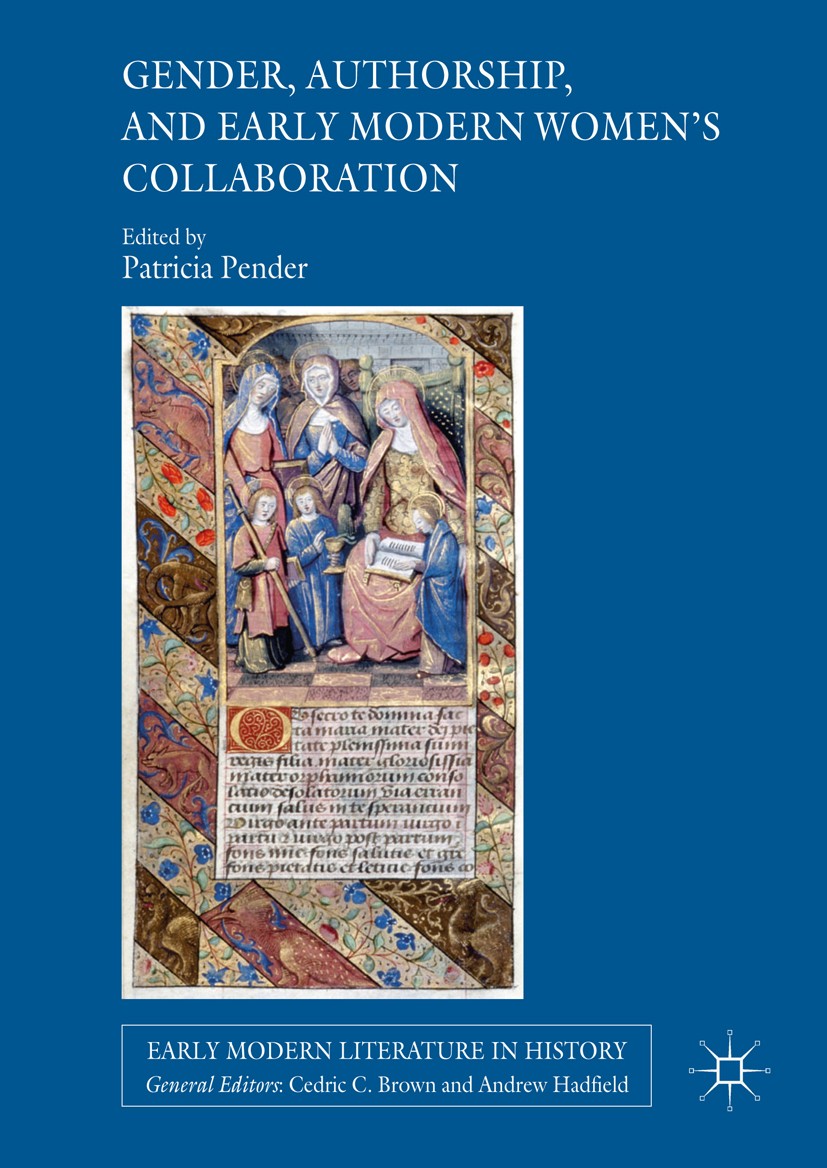
Gender, Authorship, and Early Modern Women’s Collaboration [electronic resource] / edited by Patricia Pender.
Erişim Adresi
ISBN
9783319587776
Dil Kodu
İngilizce
Yer Numarası
EK/5318
Basım Bildirimi
1st ed. 2017.
Yayın Bilgisi
Cham : Springer International Publishing : Imprint: Palgrave Macmillan, 2017.
Fiziksel Niteleme
XVII, 291 p. 14 illus. online resource.
Dizi
Early Modern Literature in History, 2634-5927
İçindekiler Notu
Introduction: Patricia Pender -- “A veray patronesse”: Margaret Beaufort and the Early English Printers: Patricia Pender -- Henry VIII, Katherine Parr, and Literary Collaboration: Micheline White -- “The Learning of a Cleric, the Life of a Saint”: Collaboration and Collusion in the Construction of Lady Jane Grey: Louise Horton -- Collaboration and the Lumley/ Fitzalan family manuscripts: Alexandra Day -- Early modern women’s marginalia as collaborative textual practice: Rosalind Smith -- Collaborative Authorship and the Speeches of Queen Elizabeth I: Leah S. Marcus -- Notions of Gender, Authorship, and Collaboration in Paratexts Prefacing Early Modern Englishwomen’s Translations: Brenda M. Hosington -- Is literary patronage a form of literary collaboration?: Julie Crawford -- Correcting The Mothers Legacy: The Rationale of Goad’s Emendations: Rebecca Stark-Gendrano -- “Mercurial Women”: Late Seventeenth-Century English Women and the Print Ephemera Trades: Margaret J.M. Ezell.
Özet, vb.
This book explores the collaborative practices – both literary and material – that women undertook in the production of early modern texts. It confronts two ongoing methodological dilemmas. How does conceiving women’s texts as collaborations between authors, readers, annotators, editors, printers, and patrons uphold or disrupt current understandings of authorship? And how does reconceiving such texts as collaborative illuminate some of the unresolved discontinuities and competing agendas in early modern women’s studies? From one perspective, viewing early modern women’s writing as collaborative seems to threaten the hard-won legitimacy of the authors we have already recovered; from another, developing our understanding of literary agency beyond capital “A” authorship opens the field to the surprising range of roles that women played in the history of early modern books. Instead of trying to simply shift, disaggregate or adjudicate between competing claims for male or female priority in the production of early modern texts, Gender, Authorship, and Early Modern Women’s Collaboration investigates the role that gender has played – and might continue to play – in understanding early modern collaboration and its consequences for women’s literary history. .
Konu
European literature __ Renaissance, 1450-1600.
Literature __ History and criticism.
European literature.
Europe __ History __ 1492-.
Early Modern and Renaissance Literature.
Literary History.
European Literature.
History of Early Modern Europe.
Literature __ History and criticism.
European literature.
Europe __ History __ 1492-.
Early Modern and Renaissance Literature.
Literary History.
European Literature.
History of Early Modern Europe.
Diğer Yazarlar
Kurum Adı
Eseri Alıntıla
Referansları kullanmadan önce gözden geçirmeniz ve varsa gerekli düzeltmeleri yapmanız önerilir.
Dijital Kaynak
MARC Görünümü
LEADER 04321nam a22005415i 4500
001 842024
003 TR_AnAIT
005 20260715024520
007 cr nn 008mamaa
008 171110s2017 sz | s |||| 0|eng d
020 |a9783319587776|9978-3-319-58777-6
024 7 |a10.1007/978-3-319-58777-6|2doi
041 |aeng
049 |aTürk Dil Kurumu Kütüphanesi
050 4|aPN715-749
072 7|aDSB|2bicssc
072 7|aLIT024000|2bisacsh
072 7|aDSB|2thema
082 04|a809.03|223
090 |aEK/5318
245 10|aGender, Authorship, and Early Modern Women’s Collaboration|h[electronic resource] /|cedited by Patricia Pender.
250 |a1st ed. 2017.
264 1|aCham :|bSpringer International Publishing :|bImprint: Palgrave Macmillan,|c2017.
300 |aXVII, 291 p. 14 illus.|bonline resource.
336 |atext|btxt|2rdacontent
337 |acomputer|bc|2rdamedia
338 |aonline resource|bcr|2rdacarrier
347 |atext file|bPDF|2rda
490 1 |aEarly Modern Literature in History,|x2634-5927
505 0 |aIntroduction: Patricia Pender -- “A veray patronesse”: Margaret Beaufort and the Early English Printers: Patricia Pender -- Henry VIII, Katherine Parr, and Literary Collaboration: Micheline White -- “The Learning of a Cleric, the Life of a Saint”: Collaboration and Collusion in the Construction of Lady Jane Grey: Louise Horton -- Collaboration and the Lumley/ Fitzalan family manuscripts: Alexandra Day -- Early modern women’s marginalia as collaborative textual practice: Rosalind Smith -- Collaborative Authorship and the Speeches of Queen Elizabeth I: Leah S. Marcus -- Notions of Gender, Authorship, and Collaboration in Paratexts Prefacing Early Modern Englishwomen’s Translations: Brenda M. Hosington -- Is literary patronage a form of literary collaboration?: Julie Crawford -- Correcting The Mothers Legacy: The Rationale of Goad’s Emendations: Rebecca Stark-Gendrano -- “Mercurial Women”: Late Seventeenth-Century English Women and the Print Ephemera Trades: Margaret J.M. Ezell.
520 |aThis book explores the collaborative practices – both literary and material – that women undertook in the production of early modern texts. It confronts two ongoing methodological dilemmas. How does conceiving women’s texts as collaborations between authors, readers, annotators, editors, printers, and patrons uphold or disrupt current understandings of authorship? And how does reconceiving such texts as collaborative illuminate some of the unresolved discontinuities and competing agendas in early modern women’s studies? From one perspective, viewing early modern women’s writing as collaborative seems to threaten the hard-won legitimacy of the authors we have already recovered; from another, developing our understanding of literary agency beyond capital “A” authorship opens the field to the surprising range of roles that women played in the history of early modern books. Instead of trying to simply shift, disaggregate or adjudicate between competing claims for male or female priority in the production of early modern texts, Gender, Authorship, and Early Modern Women’s Collaboration investigates the role that gender has played – and might continue to play – in understanding early modern collaboration and its consequences for women’s literary history. .
650 0|aEuropean literature|xRenaissance, 1450-1600.
650 0|aLiterature|xHistory and criticism.
650 0|aEuropean literature.
650 0|aEurope|xHistory|x1492-.
650 14|aEarly Modern and Renaissance Literature.
650 24|aLiterary History.
650 24|aEuropean Literature.
650 24|aHistory of Early Modern Europe.
700 1 |aPender, Patricia.|eeditor.|4edt|4http://id.loc.gov/vocabulary/relators/edt
710 2 |aSpringerLink (Online service)
773 0 |tSpringer Nature eBook
776 08|iPrinted edition:|z9783319587769
776 08|iPrinted edition:|z9783319587783
776 08|iPrinted edition:|z9783319864730
830 0|aEarly Modern Literature in History,|x2634-5927
856 40|uhttps://doi.org/10.1007/978-3-319-58777-6
912 |aZDB-2-LCM
912 |aZDB-2-SXL
950 |aLiterature, Cultural and Media Studies (SpringerNature-41173)
950 |aLiterature, Cultural and Media Studies (R0) (SpringerNature-43723)
001 842024
003 TR_AnAIT
005 20260715024520
007 cr nn 008mamaa
008 171110s2017 sz | s |||| 0|eng d
020 |a9783319587776|9978-3-319-58777-6
024 7 |a10.1007/978-3-319-58777-6|2doi
041 |aeng
049 |aTürk Dil Kurumu Kütüphanesi
050 4|aPN715-749
072 7|aDSB|2bicssc
072 7|aLIT024000|2bisacsh
072 7|aDSB|2thema
082 04|a809.03|223
090 |aEK/5318
245 10|aGender, Authorship, and Early Modern Women’s Collaboration|h[electronic resource] /|cedited by Patricia Pender.
250 |a1st ed. 2017.
264 1|aCham :|bSpringer International Publishing :|bImprint: Palgrave Macmillan,|c2017.
300 |aXVII, 291 p. 14 illus.|bonline resource.
336 |atext|btxt|2rdacontent
337 |acomputer|bc|2rdamedia
338 |aonline resource|bcr|2rdacarrier
347 |atext file|bPDF|2rda
490 1 |aEarly Modern Literature in History,|x2634-5927
505 0 |aIntroduction: Patricia Pender -- “A veray patronesse”: Margaret Beaufort and the Early English Printers: Patricia Pender -- Henry VIII, Katherine Parr, and Literary Collaboration: Micheline White -- “The Learning of a Cleric, the Life of a Saint”: Collaboration and Collusion in the Construction of Lady Jane Grey: Louise Horton -- Collaboration and the Lumley/ Fitzalan family manuscripts: Alexandra Day -- Early modern women’s marginalia as collaborative textual practice: Rosalind Smith -- Collaborative Authorship and the Speeches of Queen Elizabeth I: Leah S. Marcus -- Notions of Gender, Authorship, and Collaboration in Paratexts Prefacing Early Modern Englishwomen’s Translations: Brenda M. Hosington -- Is literary patronage a form of literary collaboration?: Julie Crawford -- Correcting The Mothers Legacy: The Rationale of Goad’s Emendations: Rebecca Stark-Gendrano -- “Mercurial Women”: Late Seventeenth-Century English Women and the Print Ephemera Trades: Margaret J.M. Ezell.
520 |aThis book explores the collaborative practices – both literary and material – that women undertook in the production of early modern texts. It confronts two ongoing methodological dilemmas. How does conceiving women’s texts as collaborations between authors, readers, annotators, editors, printers, and patrons uphold or disrupt current understandings of authorship? And how does reconceiving such texts as collaborative illuminate some of the unresolved discontinuities and competing agendas in early modern women’s studies? From one perspective, viewing early modern women’s writing as collaborative seems to threaten the hard-won legitimacy of the authors we have already recovered; from another, developing our understanding of literary agency beyond capital “A” authorship opens the field to the surprising range of roles that women played in the history of early modern books. Instead of trying to simply shift, disaggregate or adjudicate between competing claims for male or female priority in the production of early modern texts, Gender, Authorship, and Early Modern Women’s Collaboration investigates the role that gender has played – and might continue to play – in understanding early modern collaboration and its consequences for women’s literary history. .
650 0|aEuropean literature|xRenaissance, 1450-1600.
650 0|aLiterature|xHistory and criticism.
650 0|aEuropean literature.
650 0|aEurope|xHistory|x1492-.
650 14|aEarly Modern and Renaissance Literature.
650 24|aLiterary History.
650 24|aEuropean Literature.
650 24|aHistory of Early Modern Europe.
700 1 |aPender, Patricia.|eeditor.|4edt|4http://id.loc.gov/vocabulary/relators/edt
710 2 |aSpringerLink (Online service)
773 0 |tSpringer Nature eBook
776 08|iPrinted edition:|z9783319587769
776 08|iPrinted edition:|z9783319587783
776 08|iPrinted edition:|z9783319864730
830 0|aEarly Modern Literature in History,|x2634-5927
856 40|uhttps://doi.org/10.1007/978-3-319-58777-6
912 |aZDB-2-LCM
912 |aZDB-2-SXL
950 |aLiterature, Cultural and Media Studies (SpringerNature-41173)
950 |aLiterature, Cultural and Media Studies (R0) (SpringerNature-43723)
Materyaller
Depodan talep edilen materyal sadece kütüphane içerisinde kullanılmaktadır.
Materyal dışarıya ödünç verilmemektedir.
Materyal dışarıya ödünç verilmemektedir.
