LEADER 03725nam a22005415i 4500
001 842106
003 TR_AnAIT
005 20260715024204
007 cr nn 008mamaa
008 170817s2017 xxk| s |||| 0|eng d
020 |a9781137332127|9978-1-137-33212-7
024 7 |a10.1057/978-1-137-33212-7|2doi
041 |aeng
049 |aTürk Dil Kurumu Kütüphanesi
050 4|aPN849.E87-.E872
072 7|aDS|2bicssc
072 7|a1D|2bicssc
072 7|aLIT004130|2bisacsh
072 7|aDS|x1D|2thema
082 04|a809.894|223
090 |aEK/5415
100 1 |aLovesey, Oliver.|eauthor.|4aut|4http://id.loc.gov/vocabulary/relators/aut
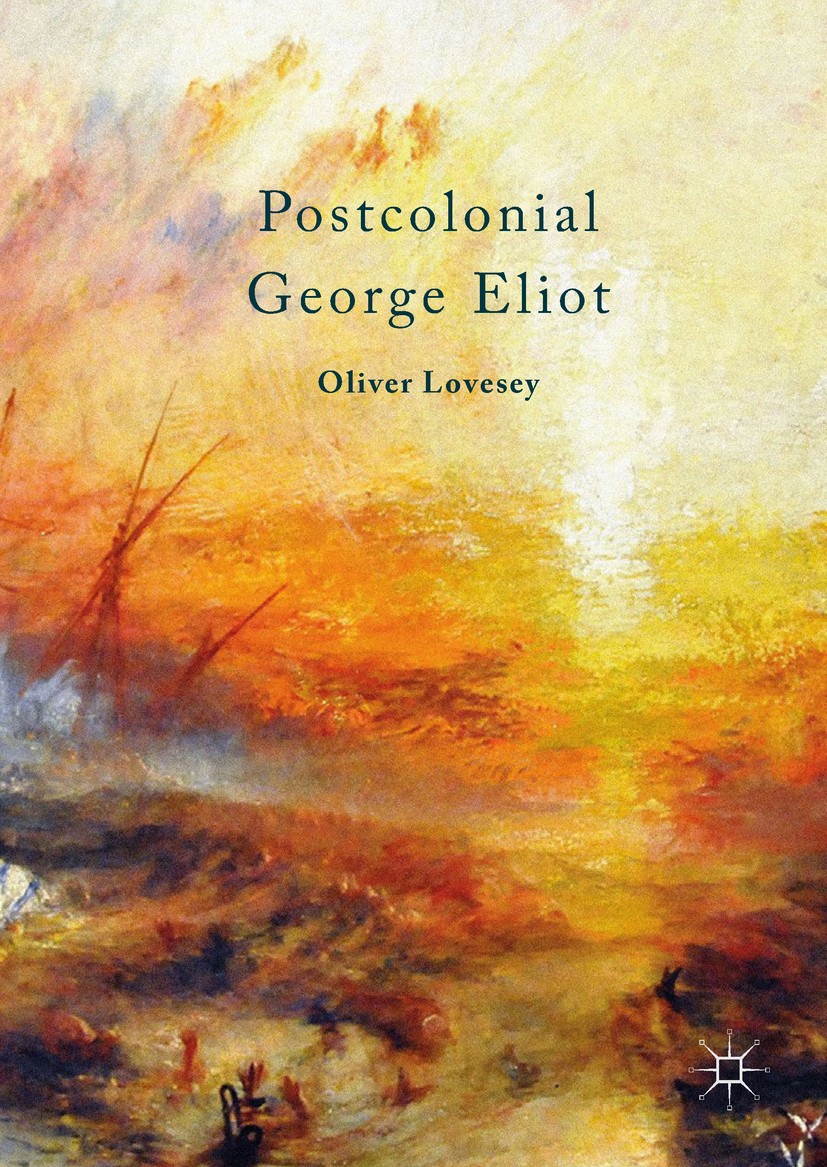
245 10|aPostcolonial George Eliot|h[electronic resource] /|cby Oliver Lovesey.
250 |a1st ed. 2017.
264 1|aLondon :|bPalgrave Macmillan UK :|bImprint: Palgrave Macmillan,|c2017.
300 |aVII, 310 p.|bonline resource.
336 |atext|btxt|2rdacontent
337 |acomputer|bc|2rdamedia
338 |aonline resource|bcr|2rdacarrier
347 |atext file|bPDF|2rda
505 0 |a1. Introduction: George Eliot and the Victorian Postcolonial -- 2. Decolonizing Victorian Anthropology (Scenes of Clerical Life and Adam Bede) -- 3. George Eliot and Victorian Islamophobia (Felix Holt's Colonial Subject -- 4. Middlemarch's Colonial Imaginary -- 5. Conclusion: The Leavis Tradition, Educational Assessment, and the Postcolonial Library -- Works Cited.
520 |aThis book examines the range of the colonial imaginary in Eliot’s works, from the domestic and regional to ancient and speculative colonialisms. It challenges monolithic, hegemonic views of George Eliot — whose novelistic career paralleled the creation of British India — and also dismissals of the postcolonial as ahistorical. It uncovers often-overlooked colonized figures in the novels. It also investigates Victorian Islamophobia in light of Eliot’s impatience with ignorance, intolerance, and xenophobia as well as her interrogation of the make-believe of endings. Drawing on a range of sources from Eugène Bodichon’s Algerian anthropological texts, the Persian journals of John Martyn, and postmodern re-engagements, Postcolonial George Eliot has implications for an understanding of the globalization of English, the decolonization of disciplinarity and periodization, and the roots of present-day conflict in the wider Mediterranean world.
532 8 |aAccessibility summary: This PDF was produced prior to the implementation of current accessibility best practices. It supports searchable and selectable text. It may or may not include elements such as described non-text content (images, graphs etc), reflowable text or screen reader compatibility. Users with accessibility needs may experience limitations. Please contact us at accessibilitysupport@springernature.com if you require assistance or an alternative format.
532 8 |aNo reading system accessibility options actively disabled
532 8 |aPublisher contact for further accessibility information: accessibilitysupport@springernature.com
650 0|aEuropean literature.
650 0|aLiterature, Modern|x19th century.
650 0|aLiterature.
650 14|aEuropean Literature.
650 24|aNineteenth-Century Literature.
650 24|aWorld Literature.
710 2 |aSpringerLink (Online service)
773 0 |tSpringer Nature eBook
776 08|iPrinted edition:|z9781137332110
776 08|iPrinted edition:|z9781349673490
776 08|iPrinted edition:|z9781349673483
856 40|uhttps://doi.org/10.1057/978-1-137-33212-7
912 |aZDB-2-LCM
912 |aZDB-2-SXL
950 |aLiterature, Cultural and Media Studies (SpringerNature-41173)
950 |aLiterature, Cultural and Media Studies (R0) (SpringerNature-43723)