LEADER 03319nam a22005295i 4500
001 842115
003 TR_AnAIT
005 20260715024205
007 cr nn 008mamaa
008 170831s2017 sz | s |||| 0|eng d
020 |a9783319634715|9978-3-319-63471-5
024 7 |a10.1007/978-3-319-63471-5|2doi
041 |aeng
049 |aTürk Dil Kurumu Kütüphanesi
050 4|aPN849.E87-.E872
072 7|aDS|2bicssc
072 7|a1D|2bicssc
072 7|aLIT004130|2bisacsh
072 7|aDS|x1D|2thema
082 04|a809.894|223
090 |aEK/5443
100 1 |aSalmons, Kim.|eauthor.|4aut|4http://id.loc.gov/vocabulary/relators/aut
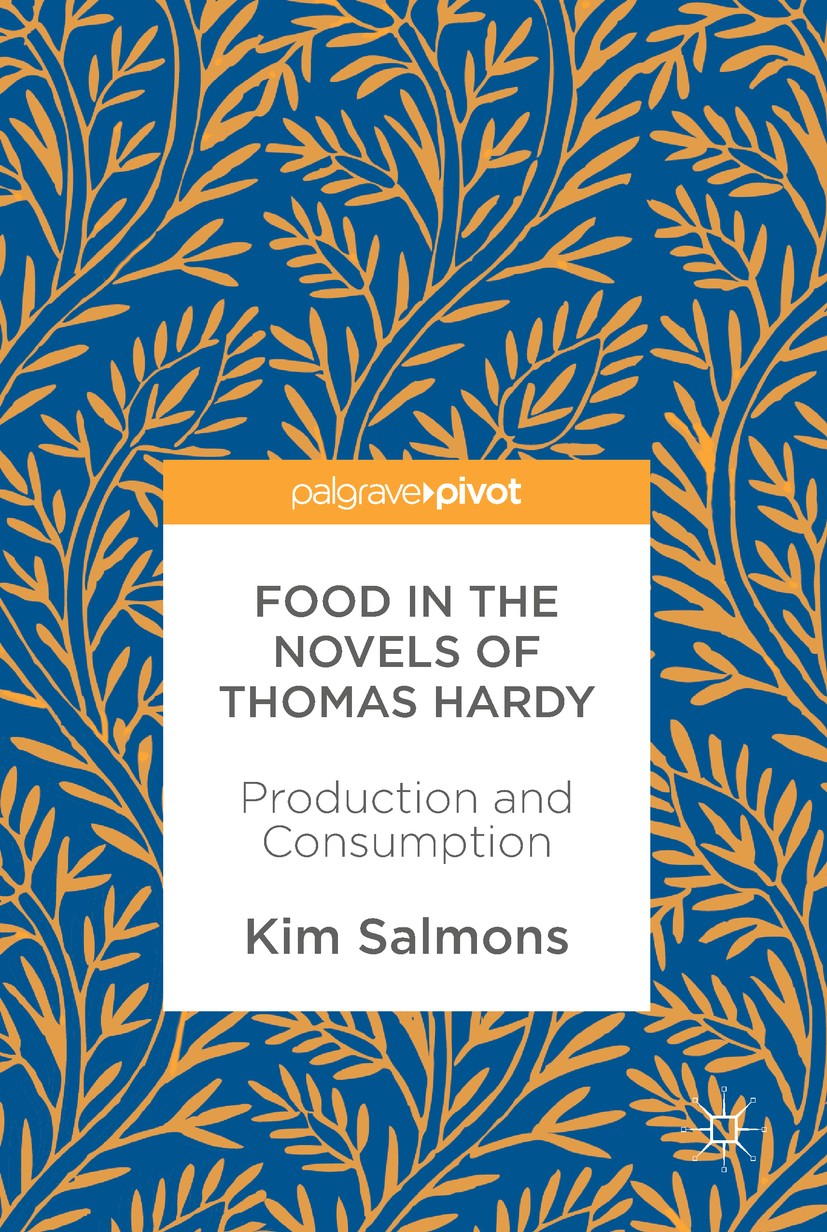
245 10|aFood in the Novels of Thomas Hardy|h[electronic resource] :|bProduction and Consumption /|cby Kim Salmons.
250 |a1st ed. 2017.
264 1|aCham :|bSpringer International Publishing :|bImprint: Palgrave Macmillan,|c2017.
300 |aXIII, 133 p.|bonline resource.
336 |atext|btxt|2rdacontent
337 |acomputer|bc|2rdamedia
338 |aonline resource|bcr|2rdacarrier
347 |atext file|bPDF|2rda
505 0 |a1. Introduction -- 2. Historical Context -- 3. Undermining the Pastoral ‘Idyll’: The Trumpet-Major and Under the Greenwood Tree -- 4. The Decline and Fall of the Corn King: The Mayor of Casterbridge -- 5. Food Production and the Feminine Pastoral: Tess of the d’Urbervilles -- 6. Pig Killing and Surviving Modernity: Jude the Obscure -- Conclusion.
520 |aThis book examines the role of food in the life and works of Thomas Hardy, analysing the social, political and historical context of references to meals, eating and food production during the nineteenth century. It demonstrates how Hardy’s personal relationship to the ‘rustic’ food of his childhood provides the impetus for his fiction, and provides a historical breakdown of the key factors which influenced food regulation and production from the beginning of the nineteenth century to the fin de siècle. This study explores how a sub-textual narrative of food references in The Trumpet-Major and Under the Greenwood Tree captures the instability of the pre-industrial era, and how food and eating act as a means of delineating and exploring ‘character’ and ‘environment’ in The Mayor of Casterbridge. As well as this, it considers rural femininity and the myth of the feminine pastoral in Tess of the d’Urbervilles, and charts the anxieties brought about by the shift in population from a rural to a predominantly urban one and its impact on food production in Jude the Obscure.
650 0|aEuropean literature.
650 0|aFiction.
650 0|aLiterature, Modern|x19th century.
650 0|aLiterature, Modern|x20th century.
650 14|aEuropean Literature.
650 24|aFiction Literature.
650 24|aNineteenth-Century Literature.
650 24|aTwentieth-Century Literature.
710 2 |aSpringerLink (Online service)
773 0 |tSpringer Nature eBook
776 08|iPrinted edition:|z9783319634708
776 08|iPrinted edition:|z9783319634722
776 08|iPrinted edition:|z9783319875668
856 40|uhttps://doi.org/10.1007/978-3-319-63471-5
912 |aZDB-2-LCM
912 |aZDB-2-SXL
950 |aLiterature, Cultural and Media Studies (SpringerNature-41173)
950 |aLiterature, Cultural and Media Studies (R0) (SpringerNature-43723)