LEADER 03735nam a22004935i 4500
001 842184
003 TR_AnAIT
005 20260715024515
007 cr nn 008mamaa
008 180412s2018 sz | s |||| 0|eng d
020 |a9783319718293|9978-3-319-71829-3
024 7 |a10.1007/978-3-319-71829-3|2doi
041 |aeng
049 |aTürk Dil Kurumu Kütüphanesi
050 4|aPN45-57
072 7|aDSA|2bicssc
072 7|aLIT006000|2bisacsh
072 7|aDSA|2thema
082 04|a801|223
090 |aEK/5527
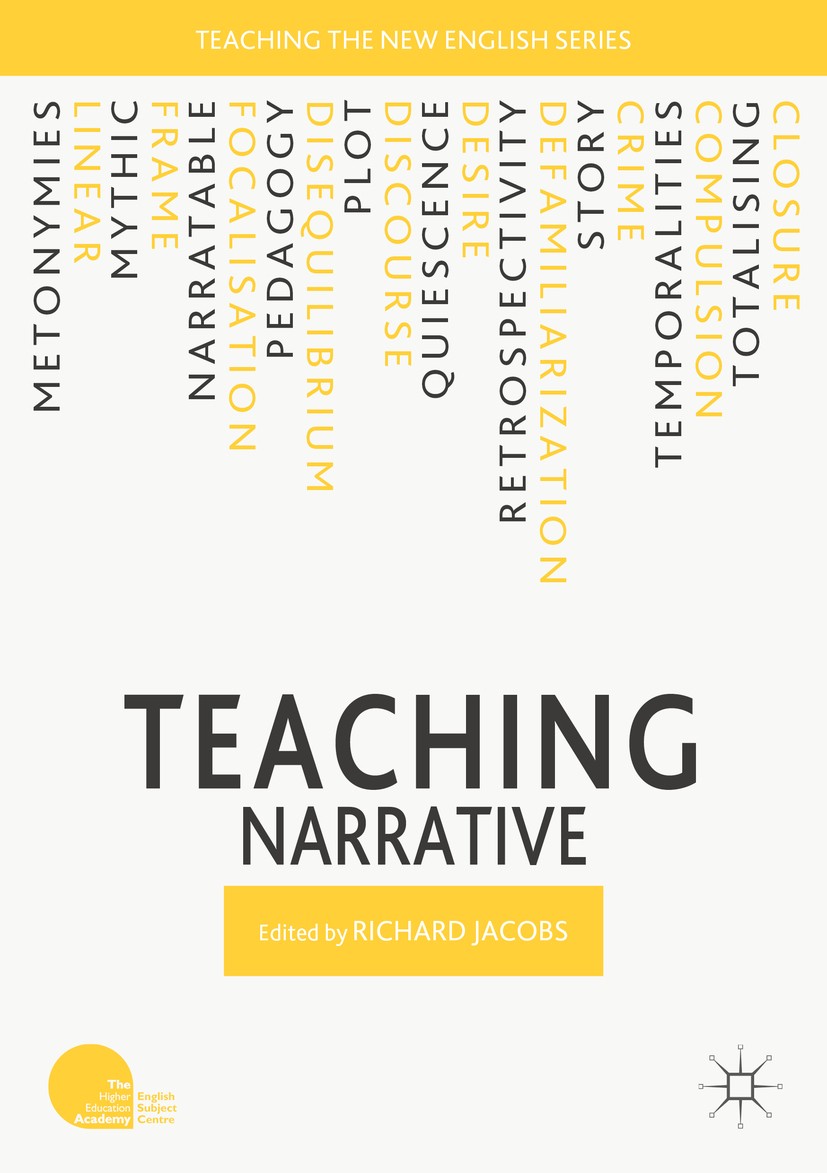
245 10|aTeaching Narrative|h[electronic resource] /|cedited by Richard Jacobs.
250 |a1st ed. 2018.
264 1|aCham :|bSpringer International Publishing :|bImprint: Palgrave Macmillan,|c2018.
300 |aXV, 214 p.|bonline resource.
336 |atext|btxt|2rdacontent
337 |acomputer|bc|2rdamedia
338 |aonline resource|bcr|2rdacarrier
347 |atext file|bPDF|2rda
490 1 |aTeaching the New English,|x2947-9266
505 0 |a1. Introduction; Richard Jacobs -- 2. Time, Narrative and Culture; Mark Currie -- 3. Talking Race and Narrative with Undergraduate Students; Sue J. Kim -- 4. The Ethics of Teaching Tragedy; Sean McEvoy -- 5. Teaching Comic Narrative; Rachel Trousdale -- 6. Teaching Crime Narratives: Historicizing Genre and the Politics of Form; Will Norman -- 7.Teaching Historical Fiction: Hilary Mantel and the Protestant Reformation; Mark Eaton -- 8.The Way They Lived Then: Using Wikis to Teach Victorian Novels; Ellen Rosenman -- 9. Digital Humanities in the Teaching of Narrative; Suzanne Keen -- 10.The Work of Narrative in the Age of Digital Interaction: Revolutions in Practice and Pedagogy; Alec Charles -- 11. Empowering Students as Researchers: Autoethnographic Approaches to Teaching and Learning Creative Writing; Jess Moriarty -- 12. Narrative and Narratives: Designing and Delivering a First-year Undergraduate Narrative Module; Richard Jacobs.
520 |aNarrative is everywhere and has unique powers: to enchant and inspire, to make sense of our lives and ourselves and to afford us an enriched understanding of alternative worlds and lives and of better futures – though narrative also has the potential to coerce and oppress. Narrative is at the centre at all stages of the English curriculum and has been the subject of a burgeoning critical industry. This timely volume addresses the many ways in which recent thinking has informed the teaching of narrative in university classrooms in the UK and the USA. Distinguished teachers from both countries range widely across narrative topics and genres, including the opportunities opened up by new technologies, and chapters articulate students’ own individual and collaborative experiences in the teaching/learning process. The result is a volume that explores the pleasurable challenges of working with students to help them appreciate and assess the power that narrative exerts, to become reflectivecritics of its inner workings as well as exponents of narrative themselves. .
650 0|aLiterature|xPhilosophy.
650 0|aMotion pictures.
650 0|aTelevision broadcasting.
650 14|aLiterary Theory.
650 24|aFilm and Television Studies.
700 1 |aJacobs, Richard.|eeditor.|4edt|4http://id.loc.gov/vocabulary/relators/edt
710 2 |aSpringerLink (Online service)
773 0 |tSpringer Nature eBook
776 08|iPrinted edition:|z9783319714783
776 08|iPrinted edition:|z9783319706771
830 0|aTeaching the New English,|x2947-9266
856 40|uhttps://doi.org/10.1007/978-3-319-71829-3
912 |aZDB-2-LCM
912 |aZDB-2-SXL
950 |aLiterature, Cultural and Media Studies (SpringerNature-41173)
950 |aLiterature, Cultural and Media Studies (R0) (SpringerNature-43723)