

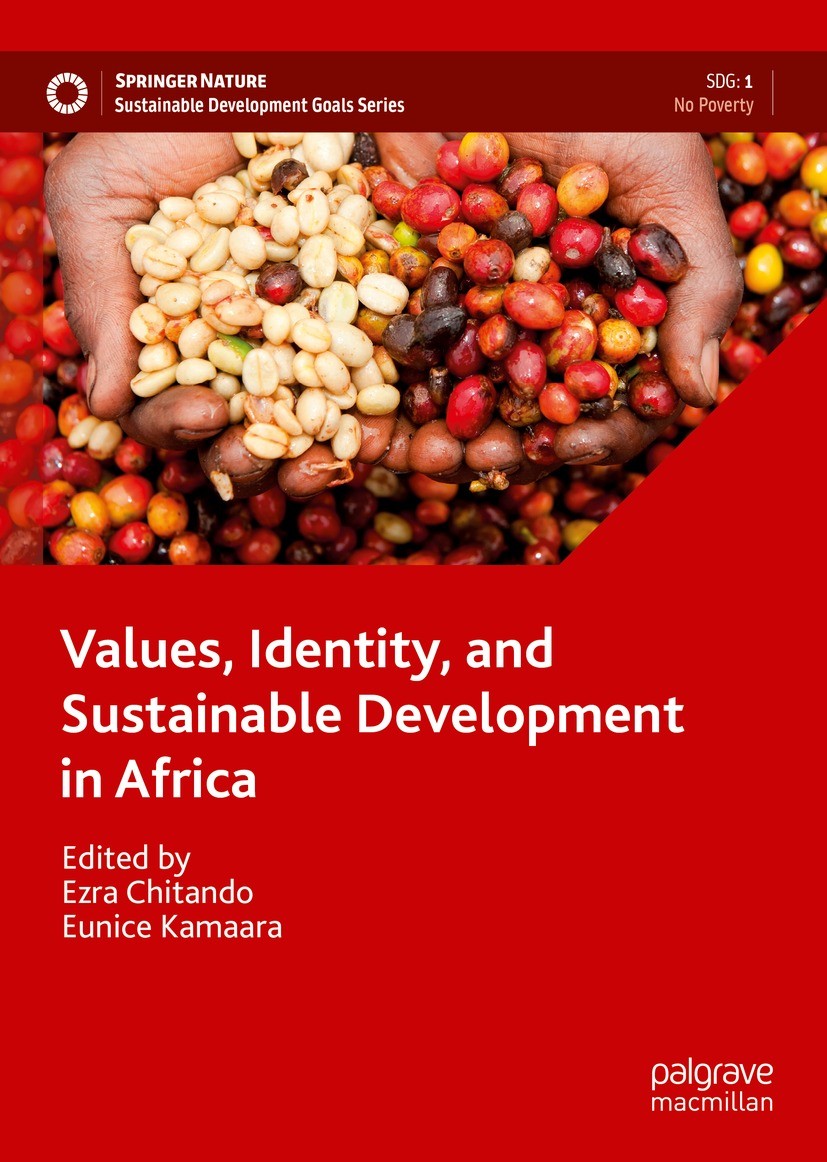
Values, Identity, and Sustainable Development in Africa [electronic resource] / edited by Ezra Chitando, Eunice Kamaara.
Erişim Adresi
ISBN
9783031129384
Dil Kodu
İngilizce
Yer Numarası
EK/5427
Basım Bildirimi
1st ed. 2022.
Yayın Bilgisi
Cham : Springer International Publishing : Imprint: Palgrave Macmillan, 2022.
Fiziksel Niteleme
XI, 332 p. online resource.
Dizi
Sustainable Development Goals Series, 2523-3092
İçindekiler Notu
1 Introduction: Values and Sustainable Development in Africa -- 2 The Ethics and Politics of Conceptualizing Values in Africa -- 3 Africa and the Quest for Sustainable Development: A Critical Review -- 4 Race, Colonialism, Ubuntu and Africa’s Development -- 5 African Identity, Morality and Well-Being -- 6 Identity, Religion/Spirituality, Character Values, and Development in Youthful Africa -- 7 Street-Level Pan-African Solidarity and Development: Nigerian Netizens and the COVID-19 Drug from Madagascar -- 8 Moral Values and Personhood: The Missing Link in International Development Interventions -- 9 “Balancing the Ticket”: Ethnicity and Regional Politics in Ghana’s Fourth Republic (1992–2016) -- 10 Tolerance and Development in Africa: A Look at Ethnicity, Xenophobia and Religious Conflict -- 11 Corruption and Under-Development in Africa: An Indictment of African Religiosity? -- 12 “Witches” of the Twenty-First Century: Invoking the Relevance and Resilient Character of African Spirituality in Changing Times -- 13 Towards an Alternative Notion of ‘Hard Work’ for Africa’s Development -- 14 Social Development and Leadership in Africa -- 15 Re-conceptualising Womanhood and Development in Post-colonial Zimbabwe: A Social Conflict Perspective -- 16 Personhood in African Philosophy: Beyond Hasty Generalisations -- 17 Identity Dispositions, Development and Economic Progress in Africa.
Özet, vb.
This book contends that Africa’s sustainable development must be built on African identity and values. Contributors reflect of the role of values in Africa’s effort to overcome poverty, the focus of SDG 1. The volume reflects on how indigenous values such as Ubuntu constitute a critical resource in addressing poverty. It reiterates the importance of positioning the response to poverty in Africa on the continent’s own, home grown values. Contributors also interrogate how values such as integrity, hard work, tolerance, solidarity, respect and others serve to position Africa strategically to overcome poverty. The volume focuses on how values can help Africa to overcome challenges such as corruption, violence, intolerance, competitive ethnicity, xenophobia, misplaced priorities and others. It provides fresh and critical reflections on the role of values and identity in anchoring Africa’s development in the light of SDG 1. Ezra Chitando is a Professor of History of Religions at the University of Zimbabwe and Theology Consultant on HIV for the World Council of Churches. Eunice Kamaara is Professor of Religion at Moi University, Eldoret, Kenya.
Konu
Philosophy, African.
Ethnology __ Africa.
Culture.
Sustainability.
African Philosophy.
African Culture.
Sustainability.
Ethnology __ Africa.
Culture.
Sustainability.
African Philosophy.
African Culture.
Sustainability.
Diğer Yazarlar
Kurum Adı
Eseri Alıntıla
Referansları kullanmadan önce gözden geçirmeniz ve varsa gerekli düzeltmeleri yapmanız önerilir.
Dijital Kaynak
MARC Görünümü
LEADER 05848nam a22006615i 4500
001 842201
003 TR_AnAIT
005 20260715024551
007 cr nn 008mamaa
008 221104s2022 sz | s |||| 0|eng d
020 |a9783031129384|9978-3-031-12938-4
024 7 |a10.1007/978-3-031-12938-4|2doi
041 |aeng
049 |aTürk Dil Kurumu Kütüphanesi
050 4|aB5300-5320
072 7|aHPD|2bicssc
072 7|aPHI000000|2bisacsh
072 7|aQDH|2thema
082 04|a199.6|223
090 |aEK/5427
245 10|aValues, Identity, and Sustainable Development in Africa|h[electronic resource] /|cedited by Ezra Chitando, Eunice Kamaara.
250 |a1st ed. 2022.
264 1|aCham :|bSpringer International Publishing :|bImprint: Palgrave Macmillan,|c2022.
300 |aXI, 332 p.|bonline resource.
336 |atext|btxt|2rdacontent
337 |acomputer|bc|2rdamedia
338 |aonline resource|bcr|2rdacarrier
341 0 |bTable of contents navigation|2onix
341 0 |bSingle logical reading order|2onix
341 0 |bShort alternative textual descriptions|2onix
341 0 |bUse of color is not sole means of conveying information|2onix
341 0 |bUse of high contrast between text and background color|2onix
341 0 |bNext / Previous structural navigation|2onix
341 0 |bAll non-decorative content supports reading without sight|2onix
347 |atext file|bPDF|2rda
490 1 |aSustainable Development Goals Series,|x2523-3092
505 0 |a1 Introduction: Values and Sustainable Development in Africa -- 2 The Ethics and Politics of Conceptualizing Values in Africa -- 3 Africa and the Quest for Sustainable Development: A Critical Review -- 4 Race, Colonialism, Ubuntu and Africa’s Development -- 5 African Identity, Morality and Well-Being -- 6 Identity, Religion/Spirituality, Character Values, and Development in Youthful Africa -- 7 Street-Level Pan-African Solidarity and Development: Nigerian Netizens and the COVID-19 Drug from Madagascar -- 8 Moral Values and Personhood: The Missing Link in International Development Interventions -- 9 “Balancing the Ticket”: Ethnicity and Regional Politics in Ghana’s Fourth Republic (1992–2016) -- 10 Tolerance and Development in Africa: A Look at Ethnicity, Xenophobia and Religious Conflict -- 11 Corruption and Under-Development in Africa: An Indictment of African Religiosity? -- 12 “Witches” of the Twenty-First Century: Invoking the Relevance and Resilient Character of African Spirituality in Changing Times -- 13 Towards an Alternative Notion of ‘Hard Work’ for Africa’s Development -- 14 Social Development and Leadership in Africa -- 15 Re-conceptualising Womanhood and Development in Post-colonial Zimbabwe: A Social Conflict Perspective -- 16 Personhood in African Philosophy: Beyond Hasty Generalisations -- 17 Identity Dispositions, Development and Economic Progress in Africa.
520 |aThis book contends that Africa’s sustainable development must be built on African identity and values. Contributors reflect of the role of values in Africa’s effort to overcome poverty, the focus of SDG 1. The volume reflects on how indigenous values such as Ubuntu constitute a critical resource in addressing poverty. It reiterates the importance of positioning the response to poverty in Africa on the continent’s own, home grown values. Contributors also interrogate how values such as integrity, hard work, tolerance, solidarity, respect and others serve to position Africa strategically to overcome poverty. The volume focuses on how values can help Africa to overcome challenges such as corruption, violence, intolerance, competitive ethnicity, xenophobia, misplaced priorities and others. It provides fresh and critical reflections on the role of values and identity in anchoring Africa’s development in the light of SDG 1. Ezra Chitando is a Professor of History of Religions at the University of Zimbabwe and Theology Consultant on HIV for the World Council of Churches. Eunice Kamaara is Professor of Religion at Moi University, Eldoret, Kenya.
532 8 |aAccessibility summary: This PDF does not fully comply with PDF/UA standards, but does feature limited screen reader support, described non-text content (images, graphs), bookmarks for easy navigation and searchable, selectable text. Users of assistive technologies may experience difficulty navigating or interpreting content in this document. We recognize the importance of accessibility, and we welcome queries about accessibility for any of our products. If you have a question or an access need, please get in touch with us at accessibilitysupport@springernature.com.
532 8 |aNo reading system accessibility options actively disabled
532 8 |aPublisher contact for further accessibility information: accessibilitysupport@springernature.com
650 0|aPhilosophy, African.
650 0|aEthnology|xAfrica.
650 0|aCulture.
650 0|aSustainability.
650 14|aAfrican Philosophy.
650 24|aAfrican Culture.
650 24|aSustainability.
700 1 |aChitando, Ezra.|eeditor.|4edt|4http://id.loc.gov/vocabulary/relators/edt
700 1 |aKamaara, Eunice.|eeditor.|0(orcid)0000-0003-2233-5365|1https://orcid.org/0000-0003-2233-5365|4edt|4http://id.loc.gov/vocabulary/relators/edt
710 2 |aSpringerLink (Online service)
773 0 |tSpringer Nature eBook
776 08|iPrinted edition:|z9783031129377
776 08|iPrinted edition:|z9783031129391
776 08|iPrinted edition:|z9783031129407
830 0|aSustainable Development Goals Series,|x2523-3092
856 40|uhttps://doi.org/10.1007/978-3-031-12938-4
912 |aZDB-2-LCM
912 |aZDB-2-SXL
950 |aLiterature, Cultural and Media Studies (SpringerNature-41173)
950 |aLiterature, Cultural and Media Studies (R0) (SpringerNature-43723)
001 842201
003 TR_AnAIT
005 20260715024551
007 cr nn 008mamaa
008 221104s2022 sz | s |||| 0|eng d
020 |a9783031129384|9978-3-031-12938-4
024 7 |a10.1007/978-3-031-12938-4|2doi
041 |aeng
049 |aTürk Dil Kurumu Kütüphanesi
050 4|aB5300-5320
072 7|aHPD|2bicssc
072 7|aPHI000000|2bisacsh
072 7|aQDH|2thema
082 04|a199.6|223
090 |aEK/5427
245 10|aValues, Identity, and Sustainable Development in Africa|h[electronic resource] /|cedited by Ezra Chitando, Eunice Kamaara.
250 |a1st ed. 2022.
264 1|aCham :|bSpringer International Publishing :|bImprint: Palgrave Macmillan,|c2022.
300 |aXI, 332 p.|bonline resource.
336 |atext|btxt|2rdacontent
337 |acomputer|bc|2rdamedia
338 |aonline resource|bcr|2rdacarrier
341 0 |bTable of contents navigation|2onix
341 0 |bSingle logical reading order|2onix
341 0 |bShort alternative textual descriptions|2onix
341 0 |bUse of color is not sole means of conveying information|2onix
341 0 |bUse of high contrast between text and background color|2onix
341 0 |bNext / Previous structural navigation|2onix
341 0 |bAll non-decorative content supports reading without sight|2onix
347 |atext file|bPDF|2rda
490 1 |aSustainable Development Goals Series,|x2523-3092
505 0 |a1 Introduction: Values and Sustainable Development in Africa -- 2 The Ethics and Politics of Conceptualizing Values in Africa -- 3 Africa and the Quest for Sustainable Development: A Critical Review -- 4 Race, Colonialism, Ubuntu and Africa’s Development -- 5 African Identity, Morality and Well-Being -- 6 Identity, Religion/Spirituality, Character Values, and Development in Youthful Africa -- 7 Street-Level Pan-African Solidarity and Development: Nigerian Netizens and the COVID-19 Drug from Madagascar -- 8 Moral Values and Personhood: The Missing Link in International Development Interventions -- 9 “Balancing the Ticket”: Ethnicity and Regional Politics in Ghana’s Fourth Republic (1992–2016) -- 10 Tolerance and Development in Africa: A Look at Ethnicity, Xenophobia and Religious Conflict -- 11 Corruption and Under-Development in Africa: An Indictment of African Religiosity? -- 12 “Witches” of the Twenty-First Century: Invoking the Relevance and Resilient Character of African Spirituality in Changing Times -- 13 Towards an Alternative Notion of ‘Hard Work’ for Africa’s Development -- 14 Social Development and Leadership in Africa -- 15 Re-conceptualising Womanhood and Development in Post-colonial Zimbabwe: A Social Conflict Perspective -- 16 Personhood in African Philosophy: Beyond Hasty Generalisations -- 17 Identity Dispositions, Development and Economic Progress in Africa.
520 |aThis book contends that Africa’s sustainable development must be built on African identity and values. Contributors reflect of the role of values in Africa’s effort to overcome poverty, the focus of SDG 1. The volume reflects on how indigenous values such as Ubuntu constitute a critical resource in addressing poverty. It reiterates the importance of positioning the response to poverty in Africa on the continent’s own, home grown values. Contributors also interrogate how values such as integrity, hard work, tolerance, solidarity, respect and others serve to position Africa strategically to overcome poverty. The volume focuses on how values can help Africa to overcome challenges such as corruption, violence, intolerance, competitive ethnicity, xenophobia, misplaced priorities and others. It provides fresh and critical reflections on the role of values and identity in anchoring Africa’s development in the light of SDG 1. Ezra Chitando is a Professor of History of Religions at the University of Zimbabwe and Theology Consultant on HIV for the World Council of Churches. Eunice Kamaara is Professor of Religion at Moi University, Eldoret, Kenya.
532 8 |aAccessibility summary: This PDF does not fully comply with PDF/UA standards, but does feature limited screen reader support, described non-text content (images, graphs), bookmarks for easy navigation and searchable, selectable text. Users of assistive technologies may experience difficulty navigating or interpreting content in this document. We recognize the importance of accessibility, and we welcome queries about accessibility for any of our products. If you have a question or an access need, please get in touch with us at accessibilitysupport@springernature.com.
532 8 |aNo reading system accessibility options actively disabled
532 8 |aPublisher contact for further accessibility information: accessibilitysupport@springernature.com
650 0|aPhilosophy, African.
650 0|aEthnology|xAfrica.
650 0|aCulture.
650 0|aSustainability.
650 14|aAfrican Philosophy.
650 24|aAfrican Culture.
650 24|aSustainability.
700 1 |aChitando, Ezra.|eeditor.|4edt|4http://id.loc.gov/vocabulary/relators/edt
700 1 |aKamaara, Eunice.|eeditor.|0(orcid)0000-0003-2233-5365|1https://orcid.org/0000-0003-2233-5365|4edt|4http://id.loc.gov/vocabulary/relators/edt
710 2 |aSpringerLink (Online service)
773 0 |tSpringer Nature eBook
776 08|iPrinted edition:|z9783031129377
776 08|iPrinted edition:|z9783031129391
776 08|iPrinted edition:|z9783031129407
830 0|aSustainable Development Goals Series,|x2523-3092
856 40|uhttps://doi.org/10.1007/978-3-031-12938-4
912 |aZDB-2-LCM
912 |aZDB-2-SXL
950 |aLiterature, Cultural and Media Studies (SpringerNature-41173)
950 |aLiterature, Cultural and Media Studies (R0) (SpringerNature-43723)
Materyaller
Depodan talep edilen materyal sadece kütüphane içerisinde kullanılmaktadır.
Materyal dışarıya ödünç verilmemektedir.
Materyal dışarıya ödünç verilmemektedir.
