

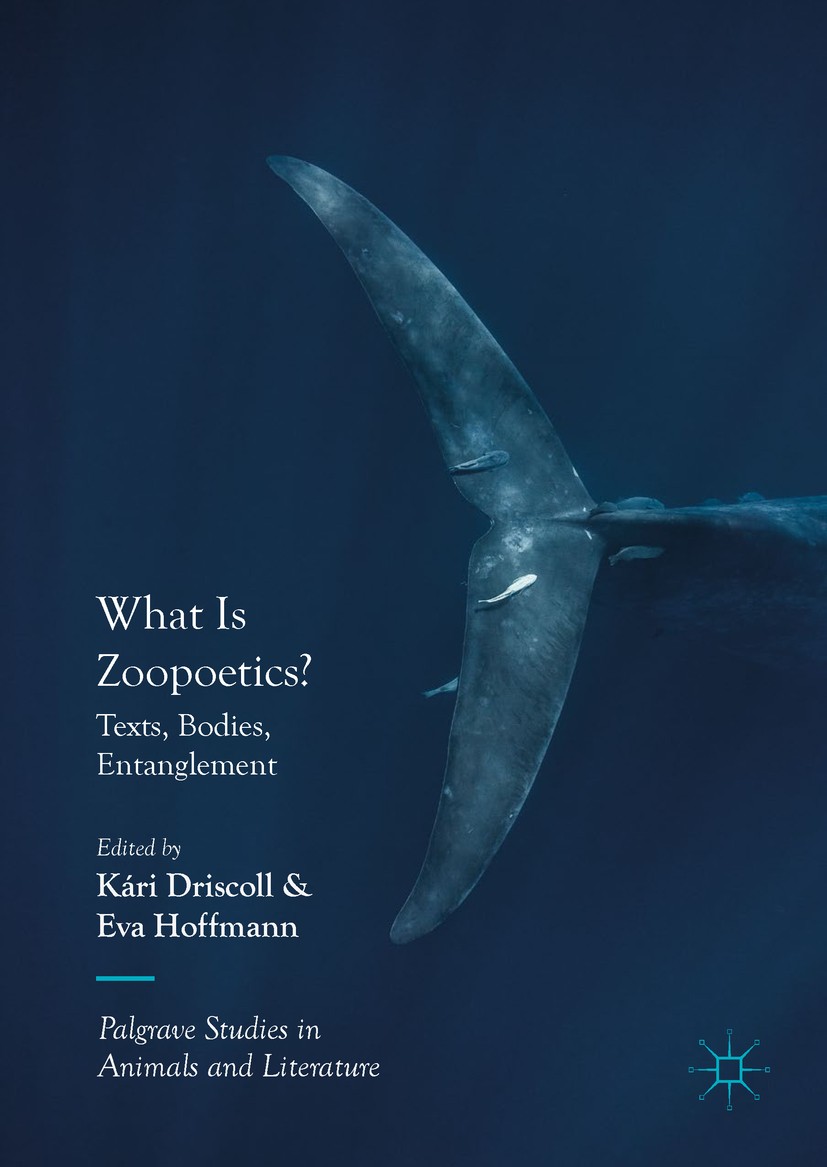
What Is Zoopoetics? [electronic resource] : Texts, Bodies, Entanglement / edited by Kári Driscoll, Eva Hoffmann.
Erişim Adresi
ISBN
9783319644165
Dil Kodu
İngilizce
Yer Numarası
EK/4724
Basım Bildirimi
1st ed. 2018.
Yayın Bilgisi
Cham : Springer International Publishing : Imprint: Palgrave Macmillan, 2018.
Fiziksel Niteleme
XI, 284 p. online resource.
Dizi
Palgrave Studies in Animals and Literature, 2634-6346
İçindekiler Notu
1. Introduction: What is Zoopoetics? - Kári Driscoll & Eva Hoffmann -- 2. Prelude: "I Observe with My Pen" - Marcel Beyer -- 3. Hunting Narratives: Capturing the Lives of Animals - Nicolas Picard -- 4. 'You Cannot Escape from Your Moles': The Becoming-Animal of Günter Eich’s Late Literary Texts - Belinda Kleinhans, -- 5. The Grammar of Zoopoetics: Human and Canine Language Play - Joela Jacobs -- 6. 'Sire, says the fox’: Zoopoetics and Zoopolitics of the Fable in Kleist’s ‘On the Gradual Production of Thoughts Whilst Speaking’ - Sebastian Schönbeck -- 7. 'The Light That Therefore I Give (to)': Paleonymy and Animal Supplementarity in Clarice Lispector’s The Apple in the Dark - Rodolfo Piskorski -- 8. Constituents of a Chaos: Whale Bodies and the Zoopoetics of Moby-Dick - Michaela Castellanos -- 9. Queering the Interspecies Encounter: Yoko Tawada’s Memoirs of a Polar Bear - Eva Hoffmann -- 10. Myth, Absence, Haunting: Towards a Zoopoetics of Extinction - Paul Sheehan -- 11. Spinning Theory: Three Figures of Arachnopoetics - Matthias Preuss -- 12. Impersonal Love: Nightwood's Poetics of Mournful Entanglement -- 13. Between Encounter and Release: Animal Presences in Two Contemporary American Poems - Ann Marie Thornburg -- 14. Heading South into Town: ipipipipipipip, ah yeah, um, we’re gonna, yeah, ip - Catherine Clover -- 15. Coda: Speaking, Reading, Writing - Marcel Beyer.
Özet, vb.
This book brings together essays dealing with the question of zoopoetics both as an object of study—i.e. texts from various traditions and periods that reflect, explicitly or implicitly, on the relationship between animality, language and representation—and as a methodological problem for animal studies, and, indeed, for literary studies more generally. What can literary animal studies tell us about literature that conventional literary studies might be blind to? How can literary studies resist the tendency to press animals into symbolic service as metaphors and allegories for the human whilst also avoiding a naïve literalism with respect to the literary animal? The volume is divided into three sections: “Texts,” which focuses on the linguistic and metaphorical dimensions of zoopoetics; “Bodies,” which is primarily concerned with mimesis and questions of embodiment, performance, and lived experience; and “Entanglement,” which focuses on interspecies encounters and the complex interplay between word and world that emerges from them. The volume will appeal to scholars and students in the fields of animal studies, area studies and comparative literature, gender studies, environmental humanities, ecocriticism, and the broader field of posthumanism. .
Konu
Literature, Modern __ 20th century.
Literature, Modern __ 21st century.
Ethics.
Contemporary Literature.
Twentieth-Century Literature.
Moral Philosophy and Applied Ethics.
Literature, Modern __ 21st century.
Ethics.
Contemporary Literature.
Twentieth-Century Literature.
Moral Philosophy and Applied Ethics.
Diğer Yazarlar
Kurum Adı
Eseri Alıntıla
Referansları kullanmadan önce gözden geçirmeniz ve varsa gerekli düzeltmeleri yapmanız önerilir.
Dijital Kaynak
MARC Görünümü
LEADER 04702nam a22005295i 4500
001 842234
003 TR_AnAIT
005 20260715024642
007 cr nn 008mamaa
008 180321s2018 sz | s |||| 0|eng d
020 |a9783319644165|9978-3-319-64416-5
024 7 |a10.1007/978-3-319-64416-5|2doi
041 |aeng
049 |aTürk Dil Kurumu Kütüphanesi
050 4|aPN695-779
072 7|aDSBH|2bicssc
072 7|aLIT024000|2bisacsh
072 7|aDSBH|2thema
082 04|a809.05|223
090 |aEK/4724
245 10|aWhat Is Zoopoetics?|h[electronic resource] :|bTexts, Bodies, Entanglement /|cedited by Kári Driscoll, Eva Hoffmann.
250 |a1st ed. 2018.
264 1|aCham :|bSpringer International Publishing :|bImprint: Palgrave Macmillan,|c2018.
300 |aXI, 284 p.|bonline resource.
336 |atext|btxt|2rdacontent
337 |acomputer|bc|2rdamedia
338 |aonline resource|bcr|2rdacarrier
347 |atext file|bPDF|2rda
490 1 |aPalgrave Studies in Animals and Literature,|x2634-6346
505 0 |a1. Introduction: What is Zoopoetics? - Kári Driscoll & Eva Hoffmann -- 2. Prelude: "I Observe with My Pen" - Marcel Beyer -- 3. Hunting Narratives: Capturing the Lives of Animals - Nicolas Picard -- 4. 'You Cannot Escape from Your Moles': The Becoming-Animal of Günter Eich’s Late Literary Texts - Belinda Kleinhans, -- 5. The Grammar of Zoopoetics: Human and Canine Language Play - Joela Jacobs -- 6. 'Sire, says the fox’: Zoopoetics and Zoopolitics of the Fable in Kleist’s ‘On the Gradual Production of Thoughts Whilst Speaking’ - Sebastian Schönbeck -- 7. 'The Light That Therefore I Give (to)': Paleonymy and Animal Supplementarity in Clarice Lispector’s The Apple in the Dark - Rodolfo Piskorski -- 8. Constituents of a Chaos: Whale Bodies and the Zoopoetics of Moby-Dick - Michaela Castellanos -- 9. Queering the Interspecies Encounter: Yoko Tawada’s Memoirs of a Polar Bear - Eva Hoffmann -- 10. Myth, Absence, Haunting: Towards a Zoopoetics of Extinction - Paul Sheehan -- 11. Spinning Theory: Three Figures of Arachnopoetics - Matthias Preuss -- 12. Impersonal Love: Nightwood's Poetics of Mournful Entanglement -- 13. Between Encounter and Release: Animal Presences in Two Contemporary American Poems - Ann Marie Thornburg -- 14. Heading South into Town: ipipipipipipip, ah yeah, um, we’re gonna, yeah, ip - Catherine Clover -- 15. Coda: Speaking, Reading, Writing - Marcel Beyer.
520 |aThis book brings together essays dealing with the question of zoopoetics both as an object of study—i.e. texts from various traditions and periods that reflect, explicitly or implicitly, on the relationship between animality, language and representation—and as a methodological problem for animal studies, and, indeed, for literary studies more generally. What can literary animal studies tell us about literature that conventional literary studies might be blind to? How can literary studies resist the tendency to press animals into symbolic service as metaphors and allegories for the human whilst also avoiding a naïve literalism with respect to the literary animal? The volume is divided into three sections: “Texts,” which focuses on the linguistic and metaphorical dimensions of zoopoetics; “Bodies,” which is primarily concerned with mimesis and questions of embodiment, performance, and lived experience; and “Entanglement,” which focuses on interspecies encounters and the complex interplay between word and world that emerges from them. The volume will appeal to scholars and students in the fields of animal studies, area studies and comparative literature, gender studies, environmental humanities, ecocriticism, and the broader field of posthumanism. .
650 0|aLiterature, Modern|x20th century.
650 0|aLiterature, Modern|x21st century.
650 0|aEthics.
650 14|aContemporary Literature.
650 24|aTwentieth-Century Literature.
650 24|aMoral Philosophy and Applied Ethics.
700 1 |aDriscoll, Kári.|eeditor.|4edt|4http://id.loc.gov/vocabulary/relators/edt
700 1 |aHoffmann, Eva.|eeditor.|4edt|4http://id.loc.gov/vocabulary/relators/edt
710 2 |aSpringerLink (Online service)
773 0 |tSpringer Nature eBook
776 08|iPrinted edition:|z9783319644158
776 08|iPrinted edition:|z9783319644172
776 08|iPrinted edition:|z9783030097189
830 0|aPalgrave Studies in Animals and Literature,|x2634-6346
856 40|uhttps://doi.org/10.1007/978-3-319-64416-5
912 |aZDB-2-LCM
912 |aZDB-2-SXL
950 |aLiterature, Cultural and Media Studies (SpringerNature-41173)
950 |aLiterature, Cultural and Media Studies (R0) (SpringerNature-43723)
001 842234
003 TR_AnAIT
005 20260715024642
007 cr nn 008mamaa
008 180321s2018 sz | s |||| 0|eng d
020 |a9783319644165|9978-3-319-64416-5
024 7 |a10.1007/978-3-319-64416-5|2doi
041 |aeng
049 |aTürk Dil Kurumu Kütüphanesi
050 4|aPN695-779
072 7|aDSBH|2bicssc
072 7|aLIT024000|2bisacsh
072 7|aDSBH|2thema
082 04|a809.05|223
090 |aEK/4724
245 10|aWhat Is Zoopoetics?|h[electronic resource] :|bTexts, Bodies, Entanglement /|cedited by Kári Driscoll, Eva Hoffmann.
250 |a1st ed. 2018.
264 1|aCham :|bSpringer International Publishing :|bImprint: Palgrave Macmillan,|c2018.
300 |aXI, 284 p.|bonline resource.
336 |atext|btxt|2rdacontent
337 |acomputer|bc|2rdamedia
338 |aonline resource|bcr|2rdacarrier
347 |atext file|bPDF|2rda
490 1 |aPalgrave Studies in Animals and Literature,|x2634-6346
505 0 |a1. Introduction: What is Zoopoetics? - Kári Driscoll & Eva Hoffmann -- 2. Prelude: "I Observe with My Pen" - Marcel Beyer -- 3. Hunting Narratives: Capturing the Lives of Animals - Nicolas Picard -- 4. 'You Cannot Escape from Your Moles': The Becoming-Animal of Günter Eich’s Late Literary Texts - Belinda Kleinhans, -- 5. The Grammar of Zoopoetics: Human and Canine Language Play - Joela Jacobs -- 6. 'Sire, says the fox’: Zoopoetics and Zoopolitics of the Fable in Kleist’s ‘On the Gradual Production of Thoughts Whilst Speaking’ - Sebastian Schönbeck -- 7. 'The Light That Therefore I Give (to)': Paleonymy and Animal Supplementarity in Clarice Lispector’s The Apple in the Dark - Rodolfo Piskorski -- 8. Constituents of a Chaos: Whale Bodies and the Zoopoetics of Moby-Dick - Michaela Castellanos -- 9. Queering the Interspecies Encounter: Yoko Tawada’s Memoirs of a Polar Bear - Eva Hoffmann -- 10. Myth, Absence, Haunting: Towards a Zoopoetics of Extinction - Paul Sheehan -- 11. Spinning Theory: Three Figures of Arachnopoetics - Matthias Preuss -- 12. Impersonal Love: Nightwood's Poetics of Mournful Entanglement -- 13. Between Encounter and Release: Animal Presences in Two Contemporary American Poems - Ann Marie Thornburg -- 14. Heading South into Town: ipipipipipipip, ah yeah, um, we’re gonna, yeah, ip - Catherine Clover -- 15. Coda: Speaking, Reading, Writing - Marcel Beyer.
520 |aThis book brings together essays dealing with the question of zoopoetics both as an object of study—i.e. texts from various traditions and periods that reflect, explicitly or implicitly, on the relationship between animality, language and representation—and as a methodological problem for animal studies, and, indeed, for literary studies more generally. What can literary animal studies tell us about literature that conventional literary studies might be blind to? How can literary studies resist the tendency to press animals into symbolic service as metaphors and allegories for the human whilst also avoiding a naïve literalism with respect to the literary animal? The volume is divided into three sections: “Texts,” which focuses on the linguistic and metaphorical dimensions of zoopoetics; “Bodies,” which is primarily concerned with mimesis and questions of embodiment, performance, and lived experience; and “Entanglement,” which focuses on interspecies encounters and the complex interplay between word and world that emerges from them. The volume will appeal to scholars and students in the fields of animal studies, area studies and comparative literature, gender studies, environmental humanities, ecocriticism, and the broader field of posthumanism. .
650 0|aLiterature, Modern|x20th century.
650 0|aLiterature, Modern|x21st century.
650 0|aEthics.
650 14|aContemporary Literature.
650 24|aTwentieth-Century Literature.
650 24|aMoral Philosophy and Applied Ethics.
700 1 |aDriscoll, Kári.|eeditor.|4edt|4http://id.loc.gov/vocabulary/relators/edt
700 1 |aHoffmann, Eva.|eeditor.|4edt|4http://id.loc.gov/vocabulary/relators/edt
710 2 |aSpringerLink (Online service)
773 0 |tSpringer Nature eBook
776 08|iPrinted edition:|z9783319644158
776 08|iPrinted edition:|z9783319644172
776 08|iPrinted edition:|z9783030097189
830 0|aPalgrave Studies in Animals and Literature,|x2634-6346
856 40|uhttps://doi.org/10.1007/978-3-319-64416-5
912 |aZDB-2-LCM
912 |aZDB-2-SXL
950 |aLiterature, Cultural and Media Studies (SpringerNature-41173)
950 |aLiterature, Cultural and Media Studies (R0) (SpringerNature-43723)
Materyaller
Depodan talep edilen materyal sadece kütüphane içerisinde kullanılmaktadır.
Materyal dışarıya ödünç verilmemektedir.
Materyal dışarıya ödünç verilmemektedir.
