LEADER 03588nam a22005175i 4500
001 842246
003 TR_AnAIT
005 20260715024656
007 cr nn 008mamaa
008 180627s2018 sz | s |||| 0|eng d
020 |a9783319713861|9978-3-319-71386-1
024 7 |a10.1007/978-3-319-71386-1|2doi
041 |aeng
049 |aTürk Dil Kurumu Kütüphanesi
050 4|aPN770-779
072 7|aDSBH|2bicssc
072 7|aLIT024050|2bisacsh
072 7|aDSBH|2thema
082 04|a809.04|223
090 |aEK/5932
100 1 |aHeilmann, Ann.|eauthor.|4aut|4http://id.loc.gov/vocabulary/relators/aut
245 10|aNeo-/Victorian Biographilia and James Miranda Barry|h[electronic resource] :|bA Study in Transgender and Transgenre /|cby Ann Heilmann.
250 |a1st ed. 2018.
264 1|aCham :|bSpringer International Publishing :|bImprint: Palgrave Macmillan,|c2018.
300 |aXXIV, 402 p. 32 illus.|bonline resource.
336 |atext|btxt|2rdacontent
337 |acomputer|bc|2rdamedia
338 |aonline resource|bcr|2rdacarrier
347 |atext file|bPDF|2rda
505 0 |a1 Writing Barry – Writing Gender/Genre Crossing:An Introduction -- 2 ‘Tell Me Your Secret, Doctor James’: A Cultural History of James Barry -- 3 Myths and Afterlives: Foundation Stories and Body Plots -- 4 Performances in Gender and Genre: Barry in Contemporary Postmodernist Biodrama, Biography and Biofiction -- 5 TransFormations: Transgender and Transgenre in Victorian and Neo-Victorian Life-Writing – A Conclusion.
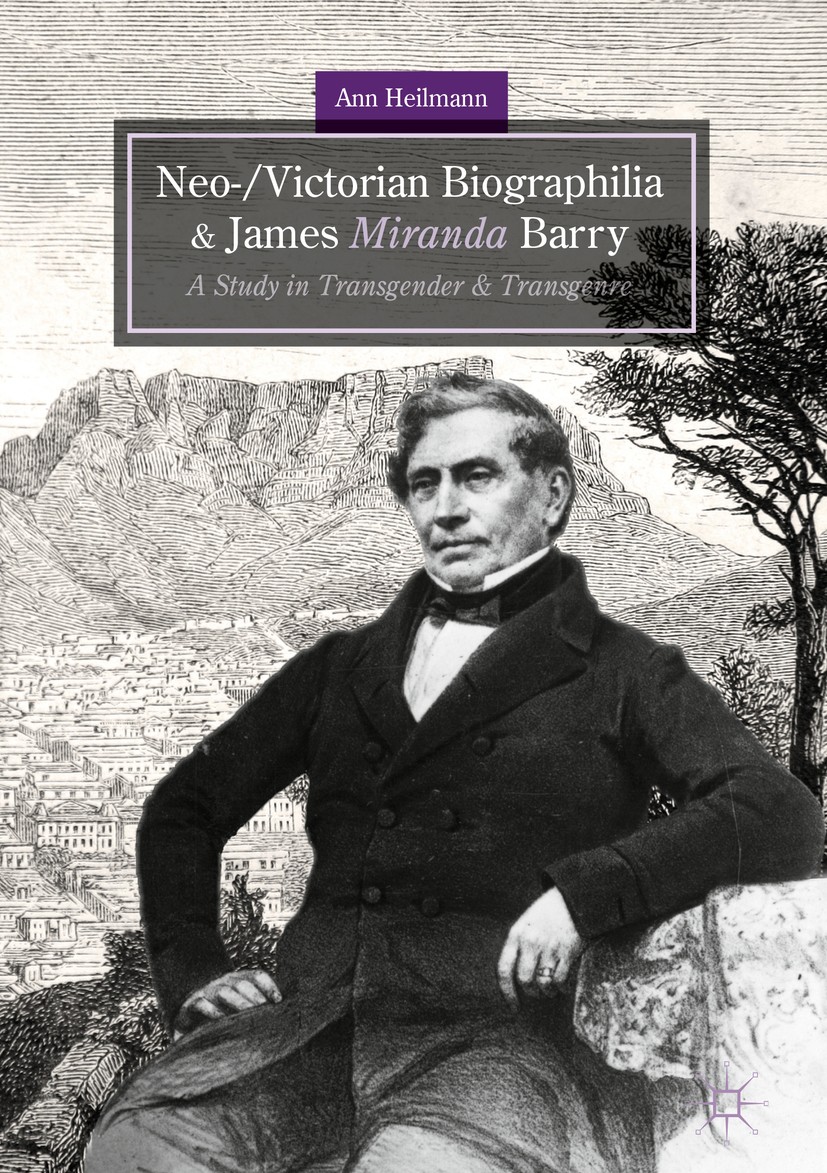
520 |aSenior colonial officer from 1813 to 1859, Inspector General James Barry was a pioneering medical reformer who after his death in 1865 became the object of intense speculation when rumours arose about his sex. This cultural history of Barry’s afterlives in Victorian to contemporary (neo-Victorian) life-writing (‘biographilia’) examines the textual and performative strategies of biography, biofiction and biodrama of the last one and a half centuries. In exploring the varied reconstructions and re-imaginations of the historical personality across time, the book illustrates (not least with its cover image) that the ‘real’ James Barry does not exist, any more than does the ‘faithful’ biographical, biofictional or biodramatic rendering of a life in a generically ‘stable’ and discrete form. What Barry represents and how he is represented invariably pinpoints the imaginative, the speculative and the performative: reflections and refractions in the looking glass of genre. Just as ‘James Miranda Barry’, as a subject of cultural inquiry, comes into being and remains in view in the act of crossing gender, so neo-Victorian life-writing constitutes itself through similar acts of boundary transgression. Transgender thus finds its most typical expression in transgenre. .
650 0|aLiterature, Modern|x20th century.
650 0|aLiterature, Modern|x19th century.
650 0|aSex.
650 0|aCivilization|xHistory.
650 14|aTwentieth-Century Literature.
650 24|aNineteenth-Century Literature.
650 24|aGender Studies.
650 24|aCultural History.
710 2 |aSpringerLink (Online service)
773 0 |tSpringer Nature eBook
776 08|iPrinted edition:|z9783319713854
776 08|iPrinted edition:|z9783319713878
776 08|iPrinted edition:|z9783030100483
856 40|uhttps://doi.org/10.1007/978-3-319-71386-1
912 |aZDB-2-LCM
912 |aZDB-2-SXL
950 |aLiterature, Cultural and Media Studies (SpringerNature-41173)
950 |aLiterature, Cultural and Media Studies (R0) (SpringerNature-43723)