LEADER 03732nam a22005175i 4500
001 842258
003 TR_AnAIT
005 20260715024711
007 cr nn 008mamaa
008 220124s2022 sz | s |||| 0|eng d
020 |a9783030917524|9978-3-030-91752-4
024 7 |a10.1007/978-3-030-91752-4|2doi
041 |aeng
049 |aTürk Dil Kurumu Kütüphanesi
050 4|aPN851-884
072 7|aDS|2bicssc
072 7|aLIT020000|2bisacsh
072 7|aDSM|2thema
082 04|a809|223
090 |aEK/5596
100 1 |aSáez Delgado, Antonio.|eauthor.|4aut|4http://id.loc.gov/vocabulary/relators/aut
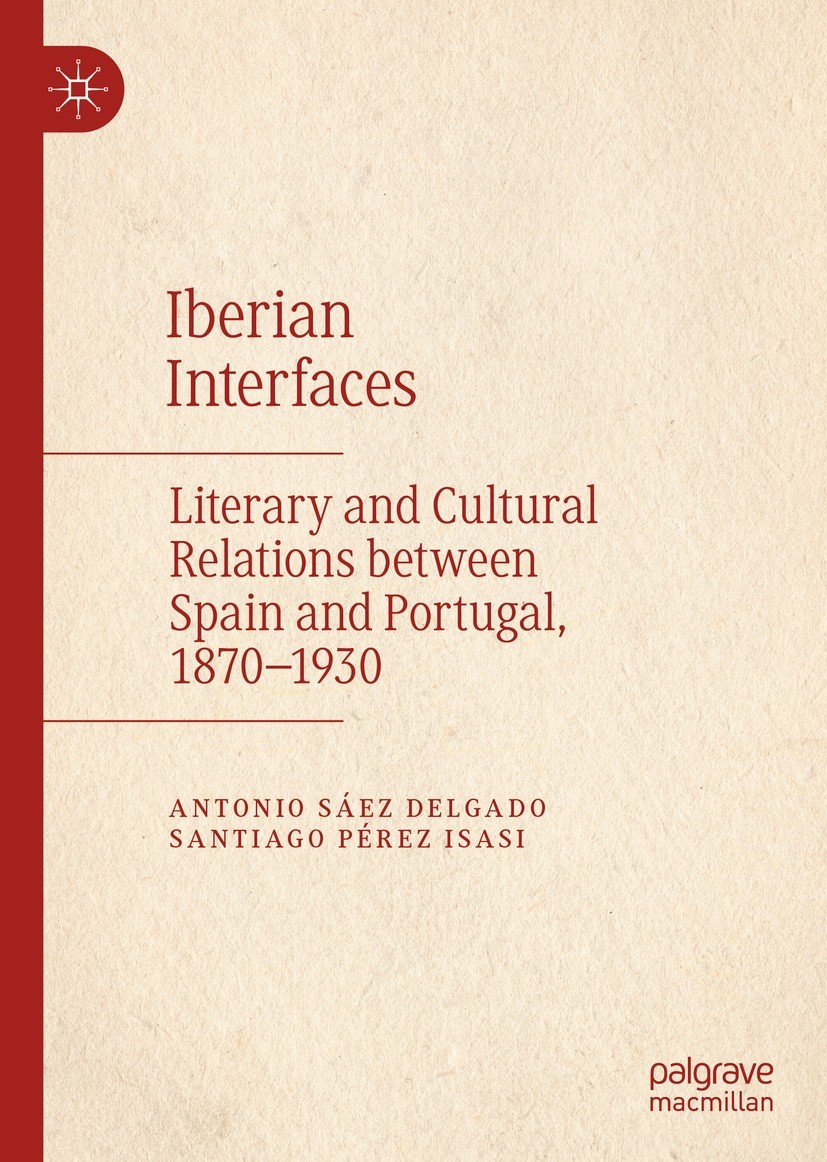
245 10|aIberian Interfaces|h[electronic resource] :|bLiterary and Cultural Relations between Spain and Portugal, 1870-1930 /|cby Antonio Sáez Delgado, Santiago Pérez Isasi.
250 |a1st ed. 2022.
264 1|aCham :|bSpringer International Publishing :|bImprint: Palgrave Macmillan,|c2022.
300 |aX, 183 p.|bonline resource.
336 |atext|btxt|2rdacontent
337 |acomputer|bc|2rdamedia
338 |aonline resource|bcr|2rdacarrier
347 |atext file|bPDF|2rda
505 0 |aChapter 1: Introduction -- Chapter 2: The age of cultural Iberisms (1870-1890) -- Chapter 3: The age of symbolism and modernismo -- Chapter 4: The first Portuguese modernism and the first avant-garde -- Chapter 5: The second Portuguese modernism and the generation of 1927: some open-ended reflections.
520 |aThis book explores a key historical moment for literary and cultural relations between Spain and Portugal. Focusing on the period between 1870 and 1930, it analyses the contacts between Portuguese and Spanish writers and artists of this period, showing that, at least among the cultural elites, there were intense and fruitful dialogues across political and linguistic borders. The book presents the Iberian Peninsula as a complex and multilingual cultural polysystem in which diverse literary cultures coexist and are mutually dependent upon each other. It offers a panoramic view of Iberian literary and cultural history, encompassing not just Portuguese and Spanish literary productions, but also Catalan, Galician and Basque works. Combining a clear theoretical foundation with deep historical knowledge and references to specific texts and works, the book offers a thorough introduction to Iberian literature in the late nineteenth and early twentieth century. Antonio Sáez Delgado is Associate Professor at the University of Évora, Portugal, an integrated researcher at the Interdisciplinary Center of History, Cultures and Societies, and a collaborator researcher at the Centre for Comparative Studies in the Faculty of Humanities at the University of Lisbon. Santiago Pérez Isasi is Principal Researcher at the Center for Comparative Studies at the University of Lisbon, Portugal, with a research contract offered by the Fundação para a Ciência e a Tecnologia (FCT) from the Portuguese Ministry of Science.
650 0|aComparative literature.
650 0|aEuropean literature.
650 0|aEthnology|xEurope.
650 0|aCulture.
650 14|aComparative Literature.
650 24|aEuropean Literature.
650 24|aEuropean Culture.
700 1 |aPérez Isasi, Santiago.|eauthor.|4aut|4http://id.loc.gov/vocabulary/relators/aut
710 2 |aSpringerLink (Online service)
773 0 |tSpringer Nature eBook
776 08|iPrinted edition:|z9783030917517
776 08|iPrinted edition:|z9783030917531
776 08|iPrinted edition:|z9783030917548
856 40|uhttps://doi.org/10.1007/978-3-030-91752-4
912 |aZDB-2-LCM
912 |aZDB-2-SXL
950 |aLiterature, Cultural and Media Studies (SpringerNature-41173)
950 |aLiterature, Cultural and Media Studies (R0) (SpringerNature-43723)