

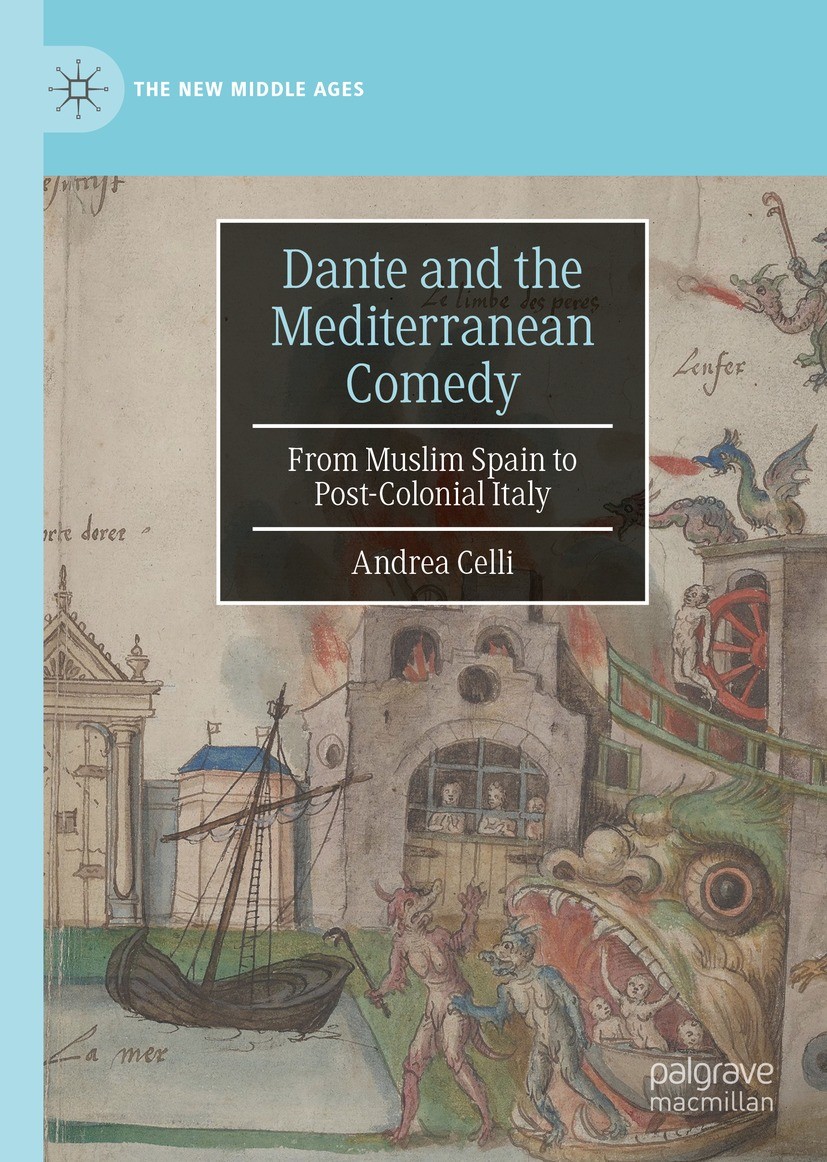
Dante and the Mediterranean Comedy [electronic resource] : From Muslim Spain to Post-Colonial Italy / by Andrea Celli.
Erişim Adresi
ISBN
9783031074028
Dil Kodu
İngilizce
Yer Numarası
EK/3412
Basım Bildirimi
1st ed. 2022.
Yayın Bilgisi
Cham : Springer International Publishing : Imprint: Palgrave Macmillan, 2022.
Fiziksel Niteleme
XIII, 278 p. 6 illus. in color. online resource.
Dizi
The New Middle Ages, 2945-5944
İçindekiler Notu
1. Introduction: A Mediterranean Comedy -- Part I. History of Criticism -- 2. A Post-Colonial Comedy: Enrico Cerulli on Dante -- 3. Beyond Good and Evil? More on Cerulli and Italian Orientalism -- Part II. Exercises in Criticism -- 4. Exposing Maometto’s Contrapasso: The Arabic Sources from Spain and the Early Commentators on the Commedia -- 5. A Transreligious Hell: Dante in the Prisons of the Inquisition in Palermo -- 6. The City Lament: Mediterranean Microecologies of Courtly Love -- 7. Conclusion: A Sea of Differences.
Özet, vb.
“Celli’s work stands at the forefront of a new generation of scholars who seek to revise fundamentally our understanding of Dante, and literary works more generally, in terms of the broader Mediterranean world and across religious traditions and historical eras. The originality of Celli’s approach cannot be overstated, and indeed it renders difficult any attempt to confine him to a specific disciplinary category.” —William Caferro, Gertrude Conaway Vanderbilt Professor of History, Vanderbilt University “One of the most notable aspects of Celli’s scholarship, at work in this book, is the ease with which he moves from the most minute detail to the large picture. Or rather, he is remarkably adept at showing how the smallest action-such as an anonymous reader’s substituting a word in the margin of a printed obituary-can expose what is at stake not only across someone’s academic career but also across distinct disciplines and historical time periods.” —Jo Ann Cavallo, Professor of Italian, Columbia University In recent decades the concept of Mediterranean has been cited with increasing frequency in relation to the study of medieval literatures. And yet, in what sense would Dante’s Comedy be ‘Mediterranean’? Is it because of its Greek-Arabic and Islamic sources? Dante and the Mediterranean Comedy analyzes the ideological function of references to the sea in the study of the Comedy undertaken by Enrico Cerulli, a scholar of Somali-Ethiopian languages, and a colonial governor of ‘Italian East Africa.’ Then it presents novel lines of inquiry on the reception and appropriation of the poem, such as the presence of Islamic sources in early commentaries of the Comedy, and cross-cultural allusions to Dante’s Hell in some graffiti on the walls of the Spanish Inquisition prison in Palermo. The image of the Mediterranean that seeps through the poem and through the history of its circulation is vivid yet hardly idyllic. Andrea Celli is Associate Professor of Italian and Mediterranean Studies at the University of Connecticut, USA.
Konu
Literature, Medieval.
European literature.
Europe __ History __ 476-1492.
Islam __ Study and teaching.
Medieval Literature.
European Literature.
History of Medieval Europe.
Islamic Studies.
European literature.
Europe __ History __ 476-1492.
Islam __ Study and teaching.
Medieval Literature.
European Literature.
History of Medieval Europe.
Islamic Studies.
Kurum Adı
Eseri Alıntıla
Referansları kullanmadan önce gözden geçirmeniz ve varsa gerekli düzeltmeleri yapmanız önerilir.
Dijital Kaynak
MARC Görünümü
LEADER 05858nam a22006615i 4500
001 842277
003 TR_AnAIT
005 20260715024747
007 cr nn 008mamaa
008 220910s2022 sz | s |||| 0|eng d
020 |a9783031074028|9978-3-031-07402-8
024 7 |a10.1007/978-3-031-07402-8|2doi
041 |aeng
049 |aTürk Dil Kurumu Kütüphanesi
050 4|aPN661-694
072 7|aDSBB|2bicssc
072 7|aLIT011000|2bisacsh
072 7|aDSBB|2thema
082 04|a809.02|223
090 |aEK/3412
100 1 |aCelli, Andrea.|eauthor.|0(orcid)0000-0001-7848-957X|1https://orcid.org/0000-0001-7848-957X|4aut|4http://id.loc.gov/vocabulary/relators/aut
245 10|aDante and the Mediterranean Comedy|h[electronic resource] :|bFrom Muslim Spain to Post-Colonial Italy /|cby Andrea Celli.
250 |a1st ed. 2022.
264 1|aCham :|bSpringer International Publishing :|bImprint: Palgrave Macmillan,|c2022.
300 |aXIII, 278 p. 6 illus. in color.|bonline resource.
336 |atext|btxt|2rdacontent
337 |acomputer|bc|2rdamedia
338 |aonline resource|bcr|2rdacarrier
341 0 |bTable of contents navigation|2onix
341 0 |bSingle logical reading order|2onix
341 0 |bShort alternative textual descriptions|2onix
341 0 |bUse of color is not sole means of conveying information|2onix
341 0 |bUse of high contrast between text and background color|2onix
341 0 |bNext / Previous structural navigation|2onix
341 0 |bAll non-decorative content supports reading without sight|2onix
347 |atext file|bPDF|2rda
490 1 |aThe New Middle Ages,|x2945-5944
505 0 |a1. Introduction: A Mediterranean Comedy -- Part I. History of Criticism -- 2. A Post-Colonial Comedy: Enrico Cerulli on Dante -- 3. Beyond Good and Evil? More on Cerulli and Italian Orientalism -- Part II. Exercises in Criticism -- 4. Exposing Maometto’s Contrapasso: The Arabic Sources from Spain and the Early Commentators on the Commedia -- 5. A Transreligious Hell: Dante in the Prisons of the Inquisition in Palermo -- 6. The City Lament: Mediterranean Microecologies of Courtly Love -- 7. Conclusion: A Sea of Differences.
520 |a“Celli’s work stands at the forefront of a new generation of scholars who seek to revise fundamentally our understanding of Dante, and literary works more generally, in terms of the broader Mediterranean world and across religious traditions and historical eras. The originality of Celli’s approach cannot be overstated, and indeed it renders difficult any attempt to confine him to a specific disciplinary category.” —William Caferro, Gertrude Conaway Vanderbilt Professor of History, Vanderbilt University “One of the most notable aspects of Celli’s scholarship, at work in this book, is the ease with which he moves from the most minute detail to the large picture. Or rather, he is remarkably adept at showing how the smallest action-such as an anonymous reader’s substituting a word in the margin of a printed obituary-can expose what is at stake not only across someone’s academic career but also across distinct disciplines and historical time periods.” —Jo Ann Cavallo, Professor of Italian, Columbia University In recent decades the concept of Mediterranean has been cited with increasing frequency in relation to the study of medieval literatures. And yet, in what sense would Dante’s Comedy be ‘Mediterranean’? Is it because of its Greek-Arabic and Islamic sources? Dante and the Mediterranean Comedy analyzes the ideological function of references to the sea in the study of the Comedy undertaken by Enrico Cerulli, a scholar of Somali-Ethiopian languages, and a colonial governor of ‘Italian East Africa.’ Then it presents novel lines of inquiry on the reception and appropriation of the poem, such as the presence of Islamic sources in early commentaries of the Comedy, and cross-cultural allusions to Dante’s Hell in some graffiti on the walls of the Spanish Inquisition prison in Palermo. The image of the Mediterranean that seeps through the poem and through the history of its circulation is vivid yet hardly idyllic. Andrea Celli is Associate Professor of Italian and Mediterranean Studies at the University of Connecticut, USA.
532 8 |aAccessibility summary: This PDF does not fully comply with PDF/UA standards, but does feature limited screen reader support, described non-text content (images, graphs), bookmarks for easy navigation and searchable, selectable text. Users of assistive technologies may experience difficulty navigating or interpreting content in this document. We recognize the importance of accessibility, and we welcome queries about accessibility for any of our products. If you have a question or an access need, please get in touch with us at accessibilitysupport@springernature.com.
532 8 |aNo reading system accessibility options actively disabled
532 8 |aPublisher contact for further accessibility information: accessibilitysupport@springernature.com
650 0|aLiterature, Medieval.
650 0|aEuropean literature.
650 0|aEurope|xHistory|x476-1492.
650 0|aIslam|xStudy and teaching.
650 14|aMedieval Literature.
650 24|aEuropean Literature.
650 24|aHistory of Medieval Europe.
650 24|aIslamic Studies.
710 2 |aSpringerLink (Online service)
773 0 |tSpringer Nature eBook
776 08|iPrinted edition:|z9783031074011
776 08|iPrinted edition:|z9783031074035
776 08|iPrinted edition:|z9783031074042
830 0|aThe New Middle Ages,|x2945-5944
856 40|uhttps://doi.org/10.1007/978-3-031-07402-8
912 |aZDB-2-LCM
912 |aZDB-2-SXL
950 |aLiterature, Cultural and Media Studies (SpringerNature-41173)
950 |aLiterature, Cultural and Media Studies (R0) (SpringerNature-43723)
001 842277
003 TR_AnAIT
005 20260715024747
007 cr nn 008mamaa
008 220910s2022 sz | s |||| 0|eng d
020 |a9783031074028|9978-3-031-07402-8
024 7 |a10.1007/978-3-031-07402-8|2doi
041 |aeng
049 |aTürk Dil Kurumu Kütüphanesi
050 4|aPN661-694
072 7|aDSBB|2bicssc
072 7|aLIT011000|2bisacsh
072 7|aDSBB|2thema
082 04|a809.02|223
090 |aEK/3412
100 1 |aCelli, Andrea.|eauthor.|0(orcid)0000-0001-7848-957X|1https://orcid.org/0000-0001-7848-957X|4aut|4http://id.loc.gov/vocabulary/relators/aut
245 10|aDante and the Mediterranean Comedy|h[electronic resource] :|bFrom Muslim Spain to Post-Colonial Italy /|cby Andrea Celli.
250 |a1st ed. 2022.
264 1|aCham :|bSpringer International Publishing :|bImprint: Palgrave Macmillan,|c2022.
300 |aXIII, 278 p. 6 illus. in color.|bonline resource.
336 |atext|btxt|2rdacontent
337 |acomputer|bc|2rdamedia
338 |aonline resource|bcr|2rdacarrier
341 0 |bTable of contents navigation|2onix
341 0 |bSingle logical reading order|2onix
341 0 |bShort alternative textual descriptions|2onix
341 0 |bUse of color is not sole means of conveying information|2onix
341 0 |bUse of high contrast between text and background color|2onix
341 0 |bNext / Previous structural navigation|2onix
341 0 |bAll non-decorative content supports reading without sight|2onix
347 |atext file|bPDF|2rda
490 1 |aThe New Middle Ages,|x2945-5944
505 0 |a1. Introduction: A Mediterranean Comedy -- Part I. History of Criticism -- 2. A Post-Colonial Comedy: Enrico Cerulli on Dante -- 3. Beyond Good and Evil? More on Cerulli and Italian Orientalism -- Part II. Exercises in Criticism -- 4. Exposing Maometto’s Contrapasso: The Arabic Sources from Spain and the Early Commentators on the Commedia -- 5. A Transreligious Hell: Dante in the Prisons of the Inquisition in Palermo -- 6. The City Lament: Mediterranean Microecologies of Courtly Love -- 7. Conclusion: A Sea of Differences.
520 |a“Celli’s work stands at the forefront of a new generation of scholars who seek to revise fundamentally our understanding of Dante, and literary works more generally, in terms of the broader Mediterranean world and across religious traditions and historical eras. The originality of Celli’s approach cannot be overstated, and indeed it renders difficult any attempt to confine him to a specific disciplinary category.” —William Caferro, Gertrude Conaway Vanderbilt Professor of History, Vanderbilt University “One of the most notable aspects of Celli’s scholarship, at work in this book, is the ease with which he moves from the most minute detail to the large picture. Or rather, he is remarkably adept at showing how the smallest action-such as an anonymous reader’s substituting a word in the margin of a printed obituary-can expose what is at stake not only across someone’s academic career but also across distinct disciplines and historical time periods.” —Jo Ann Cavallo, Professor of Italian, Columbia University In recent decades the concept of Mediterranean has been cited with increasing frequency in relation to the study of medieval literatures. And yet, in what sense would Dante’s Comedy be ‘Mediterranean’? Is it because of its Greek-Arabic and Islamic sources? Dante and the Mediterranean Comedy analyzes the ideological function of references to the sea in the study of the Comedy undertaken by Enrico Cerulli, a scholar of Somali-Ethiopian languages, and a colonial governor of ‘Italian East Africa.’ Then it presents novel lines of inquiry on the reception and appropriation of the poem, such as the presence of Islamic sources in early commentaries of the Comedy, and cross-cultural allusions to Dante’s Hell in some graffiti on the walls of the Spanish Inquisition prison in Palermo. The image of the Mediterranean that seeps through the poem and through the history of its circulation is vivid yet hardly idyllic. Andrea Celli is Associate Professor of Italian and Mediterranean Studies at the University of Connecticut, USA.
532 8 |aAccessibility summary: This PDF does not fully comply with PDF/UA standards, but does feature limited screen reader support, described non-text content (images, graphs), bookmarks for easy navigation and searchable, selectable text. Users of assistive technologies may experience difficulty navigating or interpreting content in this document. We recognize the importance of accessibility, and we welcome queries about accessibility for any of our products. If you have a question or an access need, please get in touch with us at accessibilitysupport@springernature.com.
532 8 |aNo reading system accessibility options actively disabled
532 8 |aPublisher contact for further accessibility information: accessibilitysupport@springernature.com
650 0|aLiterature, Medieval.
650 0|aEuropean literature.
650 0|aEurope|xHistory|x476-1492.
650 0|aIslam|xStudy and teaching.
650 14|aMedieval Literature.
650 24|aEuropean Literature.
650 24|aHistory of Medieval Europe.
650 24|aIslamic Studies.
710 2 |aSpringerLink (Online service)
773 0 |tSpringer Nature eBook
776 08|iPrinted edition:|z9783031074011
776 08|iPrinted edition:|z9783031074035
776 08|iPrinted edition:|z9783031074042
830 0|aThe New Middle Ages,|x2945-5944
856 40|uhttps://doi.org/10.1007/978-3-031-07402-8
912 |aZDB-2-LCM
912 |aZDB-2-SXL
950 |aLiterature, Cultural and Media Studies (SpringerNature-41173)
950 |aLiterature, Cultural and Media Studies (R0) (SpringerNature-43723)
Materyaller
Depodan talep edilen materyal sadece kütüphane içerisinde kullanılmaktadır.
Materyal dışarıya ödünç verilmemektedir.
Materyal dışarıya ödünç verilmemektedir.
