

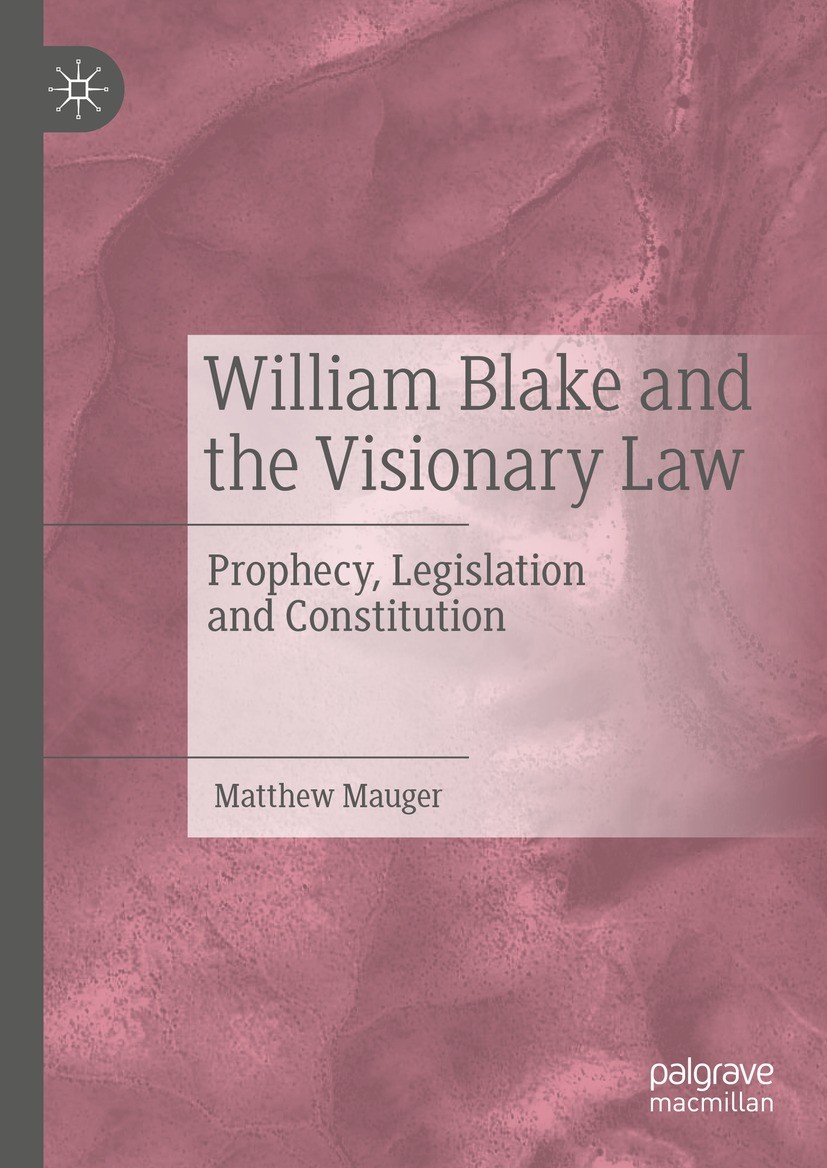
William Blake and the Visionary Law [electronic resource] : Prophecy, Legislation and Constitution / by Matthew Mauger.
Erişim Adresi
ISBN
9783031377235
Dil Kodu
İngilizce
Yer Numarası
EK/5947
Yazar
Basım Bildirimi
1st ed. 2023.
Yayın Bilgisi
Cham : Springer International Publishing : Imprint: Palgrave Macmillan, 2023.
Fiziksel Niteleme
XIII, 231 p. 12 illus. online resource.
İçindekiler Notu
1 – Introduction -- 2 – Laws Ancient and Modern: Nation, Custom and Legislative Renewal -- 3 – One Law for the Lion and the Ox is Oppression: the Emergence of Universal Law -- 4 – One King, One God, One Law: Building Constitutions in the Lambeth Books -- 5 – The Heavens Squared by a Line: Legal Architecture and Mystery -- 6 – Such are the Laws of Eternity: Recovery, Redemption, and Prophecy -- 7 – Creating Nature from this Fiery Law: Towards Visionary Legislation? -- 8 – Conclusion.
Özet, vb.
This book examines the difficult relationship between individual intellectual freedom and the legal structures which govern human societies in William Blake’s works, showing that this tension carries a political urgency that has not yet been recognised by scholars in the field. In doing so, it offers a new approach to Blake’s corpus that builds on the literary and cultural historical work of recent decades. Blake’s pronouncements about law may often sound biblical in tone; but this book argues that they directly address (and are informed by) eighteenth-century legal debates concerning the origin of the English common law, the autonomy of the judicature, the increasing legislative role of Parliament, and the emergence of the notions of constitutionalism and natural rights. Through a study of his illuminated books, manuscript works, notebook drafts and annotations, this study considers Blake’s understanding that law is both integral to humanity itself and a core component of its potential fulfilment of the ‘Human Form Divine’. Matthew Mauger is Senior Lecturer in English at Queen Mary University of London, UK. His research focuses on the intellectual, literary and commercial life of London in the eighteenth century, with a particular interest in how the administrative frameworks associated with the city – civil, legal, political, financial – provide contexts for literary expression. He is co-author of Stealing Books in Eighteenth-Century London (2016) and of Empire of Tea: The Asian Leaf that Conquered the World (2015).
Konu
Literature, Modern __ 18th century.
Law __ History.
Poetry.
European literature.
Eighteenth-Century Literature.
Legal History.
Poetry and Poetics.
European Literature.
Law __ History.
Poetry.
European literature.
Eighteenth-Century Literature.
Legal History.
Poetry and Poetics.
European Literature.
Kurum Adı
Eseri Alıntıla
Referansları kullanmadan önce gözden geçirmeniz ve varsa gerekli düzeltmeleri yapmanız önerilir.
Dijital Kaynak
MARC Görünümü
LEADER 05127nam a22006375i 4500
001 842310
003 TR_AnAIT
005 20260715024933
007 cr nn 008mamaa
008 230913s2023 sz | s |||| 0|eng d
020 |a9783031377235|9978-3-031-37723-5
024 7 |a10.1007/978-3-031-37723-5|2doi
041 |aeng
049 |aTürk Dil Kurumu Kütüphanesi
050 4|aPN750-759
072 7|aDSBD|2bicssc
072 7|aLIT024030|2bisacsh
072 7|aDSBD|x3ML|2thema
082 04|a809.033|223
090 |aEK/5947
100 1 |aMauger, Matthew.|eauthor.|4aut|4http://id.loc.gov/vocabulary/relators/aut
245 10|aWilliam Blake and the Visionary Law|h[electronic resource] :|bProphecy, Legislation and Constitution /|cby Matthew Mauger.
250 |a1st ed. 2023.
264 1|aCham :|bSpringer International Publishing :|bImprint: Palgrave Macmillan,|c2023.
300 |aXIII, 231 p. 12 illus.|bonline resource.
336 |atext|btxt|2rdacontent
337 |acomputer|bc|2rdamedia
338 |aonline resource|bcr|2rdacarrier
341 0 |bTable of contents navigation|2onix
341 0 |bSingle logical reading order|2onix
341 0 |bShort alternative textual descriptions|2onix
341 0 |bUse of color is not sole means of conveying information|2onix
341 0 |bUse of high contrast between text and background color|2onix
341 0 |bNext / Previous structural navigation|2onix
341 0 |bAll non-decorative content supports reading without sight|2onix
347 |atext file|bPDF|2rda
505 0 |a 1 – Introduction -- 2 – Laws Ancient and Modern: Nation, Custom and Legislative Renewal -- 3 – One Law for the Lion and the Ox is Oppression: the Emergence of Universal Law -- 4 – One King, One God, One Law: Building Constitutions in the Lambeth Books -- 5 – The Heavens Squared by a Line: Legal Architecture and Mystery -- 6 – Such are the Laws of Eternity: Recovery, Redemption, and Prophecy -- 7 – Creating Nature from this Fiery Law: Towards Visionary Legislation? -- 8 – Conclusion.
520 |aThis book examines the difficult relationship between individual intellectual freedom and the legal structures which govern human societies in William Blake’s works, showing that this tension carries a political urgency that has not yet been recognised by scholars in the field. In doing so, it offers a new approach to Blake’s corpus that builds on the literary and cultural historical work of recent decades. Blake’s pronouncements about law may often sound biblical in tone; but this book argues that they directly address (and are informed by) eighteenth-century legal debates concerning the origin of the English common law, the autonomy of the judicature, the increasing legislative role of Parliament, and the emergence of the notions of constitutionalism and natural rights. Through a study of his illuminated books, manuscript works, notebook drafts and annotations, this study considers Blake’s understanding that law is both integral to humanity itself and a core component of its potential fulfilment of the ‘Human Form Divine’. Matthew Mauger is Senior Lecturer in English at Queen Mary University of London, UK. His research focuses on the intellectual, literary and commercial life of London in the eighteenth century, with a particular interest in how the administrative frameworks associated with the city – civil, legal, political, financial – provide contexts for literary expression. He is co-author of Stealing Books in Eighteenth-Century London (2016) and of Empire of Tea: The Asian Leaf that Conquered the World (2015).
532 8 |aAccessibility summary: This PDF does not fully comply with PDF/UA standards, but does feature limited screen reader support, described non-text content (images, graphs), bookmarks for easy navigation and searchable, selectable text. Users of assistive technologies may experience difficulty navigating or interpreting content in this document. We recognize the importance of accessibility, and we welcome queries about accessibility for any of our products. If you have a question or an access need, please get in touch with us at accessibilitysupport@springernature.com.
532 8 |aNo reading system accessibility options actively disabled
532 8 |aPublisher contact for further accessibility information: accessibilitysupport@springernature.com
650 0|aLiterature, Modern|x18th century.
650 0|aLaw|xHistory.
650 0|aPoetry.
650 0|aEuropean literature.
650 14|aEighteenth-Century Literature.
650 24|aLegal History.
650 24|aPoetry and Poetics.
650 24|aEuropean Literature.
710 2 |aSpringerLink (Online service)
773 0 |tSpringer Nature eBook
776 08|iPrinted edition:|z9783031377228
776 08|iPrinted edition:|z9783031377242
776 08|iPrinted edition:|z9783031377259
856 40|uhttps://doi.org/10.1007/978-3-031-37723-5
912 |aZDB-2-LCM
912 |aZDB-2-SXL
950 |aLiterature, Cultural and Media Studies (SpringerNature-41173)
950 |aLiterature, Cultural and Media Studies (R0) (SpringerNature-43723)
001 842310
003 TR_AnAIT
005 20260715024933
007 cr nn 008mamaa
008 230913s2023 sz | s |||| 0|eng d
020 |a9783031377235|9978-3-031-37723-5
024 7 |a10.1007/978-3-031-37723-5|2doi
041 |aeng
049 |aTürk Dil Kurumu Kütüphanesi
050 4|aPN750-759
072 7|aDSBD|2bicssc
072 7|aLIT024030|2bisacsh
072 7|aDSBD|x3ML|2thema
082 04|a809.033|223
090 |aEK/5947
100 1 |aMauger, Matthew.|eauthor.|4aut|4http://id.loc.gov/vocabulary/relators/aut
245 10|aWilliam Blake and the Visionary Law|h[electronic resource] :|bProphecy, Legislation and Constitution /|cby Matthew Mauger.
250 |a1st ed. 2023.
264 1|aCham :|bSpringer International Publishing :|bImprint: Palgrave Macmillan,|c2023.
300 |aXIII, 231 p. 12 illus.|bonline resource.
336 |atext|btxt|2rdacontent
337 |acomputer|bc|2rdamedia
338 |aonline resource|bcr|2rdacarrier
341 0 |bTable of contents navigation|2onix
341 0 |bSingle logical reading order|2onix
341 0 |bShort alternative textual descriptions|2onix
341 0 |bUse of color is not sole means of conveying information|2onix
341 0 |bUse of high contrast between text and background color|2onix
341 0 |bNext / Previous structural navigation|2onix
341 0 |bAll non-decorative content supports reading without sight|2onix
347 |atext file|bPDF|2rda
505 0 |a 1 – Introduction -- 2 – Laws Ancient and Modern: Nation, Custom and Legislative Renewal -- 3 – One Law for the Lion and the Ox is Oppression: the Emergence of Universal Law -- 4 – One King, One God, One Law: Building Constitutions in the Lambeth Books -- 5 – The Heavens Squared by a Line: Legal Architecture and Mystery -- 6 – Such are the Laws of Eternity: Recovery, Redemption, and Prophecy -- 7 – Creating Nature from this Fiery Law: Towards Visionary Legislation? -- 8 – Conclusion.
520 |aThis book examines the difficult relationship between individual intellectual freedom and the legal structures which govern human societies in William Blake’s works, showing that this tension carries a political urgency that has not yet been recognised by scholars in the field. In doing so, it offers a new approach to Blake’s corpus that builds on the literary and cultural historical work of recent decades. Blake’s pronouncements about law may often sound biblical in tone; but this book argues that they directly address (and are informed by) eighteenth-century legal debates concerning the origin of the English common law, the autonomy of the judicature, the increasing legislative role of Parliament, and the emergence of the notions of constitutionalism and natural rights. Through a study of his illuminated books, manuscript works, notebook drafts and annotations, this study considers Blake’s understanding that law is both integral to humanity itself and a core component of its potential fulfilment of the ‘Human Form Divine’. Matthew Mauger is Senior Lecturer in English at Queen Mary University of London, UK. His research focuses on the intellectual, literary and commercial life of London in the eighteenth century, with a particular interest in how the administrative frameworks associated with the city – civil, legal, political, financial – provide contexts for literary expression. He is co-author of Stealing Books in Eighteenth-Century London (2016) and of Empire of Tea: The Asian Leaf that Conquered the World (2015).
532 8 |aAccessibility summary: This PDF does not fully comply with PDF/UA standards, but does feature limited screen reader support, described non-text content (images, graphs), bookmarks for easy navigation and searchable, selectable text. Users of assistive technologies may experience difficulty navigating or interpreting content in this document. We recognize the importance of accessibility, and we welcome queries about accessibility for any of our products. If you have a question or an access need, please get in touch with us at accessibilitysupport@springernature.com.
532 8 |aNo reading system accessibility options actively disabled
532 8 |aPublisher contact for further accessibility information: accessibilitysupport@springernature.com
650 0|aLiterature, Modern|x18th century.
650 0|aLaw|xHistory.
650 0|aPoetry.
650 0|aEuropean literature.
650 14|aEighteenth-Century Literature.
650 24|aLegal History.
650 24|aPoetry and Poetics.
650 24|aEuropean Literature.
710 2 |aSpringerLink (Online service)
773 0 |tSpringer Nature eBook
776 08|iPrinted edition:|z9783031377228
776 08|iPrinted edition:|z9783031377242
776 08|iPrinted edition:|z9783031377259
856 40|uhttps://doi.org/10.1007/978-3-031-37723-5
912 |aZDB-2-LCM
912 |aZDB-2-SXL
950 |aLiterature, Cultural and Media Studies (SpringerNature-41173)
950 |aLiterature, Cultural and Media Studies (R0) (SpringerNature-43723)
Materyaller
Depodan talep edilen materyal sadece kütüphane içerisinde kullanılmaktadır.
Materyal dışarıya ödünç verilmemektedir.
Materyal dışarıya ödünç verilmemektedir.
