LEADER 03947nam a22005895i 4500
001 842321
003 TR_AnAIT
005 20260715024941
007 cr nn 008mamaa
008 161210s2017 xxk| s |||| 0|eng d
020 |a9781137595157|9978-1-137-59515-7
024 7 |a10.1057/978-1-137-59515-7|2doi
041 |aeng
049 |aTürk Dil Kurumu Kütüphanesi
050 4|aPN849.E87-.E872
072 7|aDS|2bicssc
072 7|a1D|2bicssc
072 7|aLIT004130|2bisacsh
072 7|aDS|x1D|2thema
082 04|a809.894|223
090 |aEK/4718
100 1 |aYeandle, Heidi.|eauthor.|4aut|4http://id.loc.gov/vocabulary/relators/aut
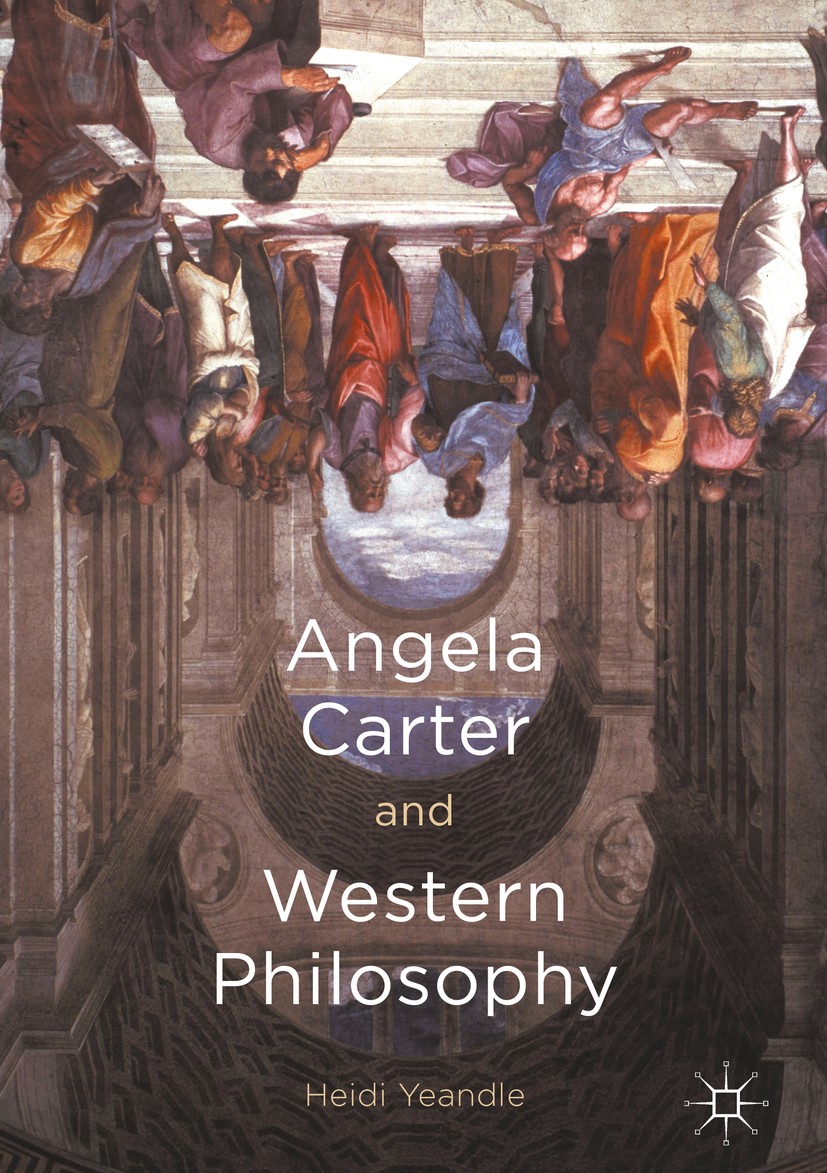
245 10|aAngela Carter and Western Philosophy|h[electronic resource] /|cby Heidi Yeandle.
250 |a1st ed. 2017.
264 1|aLondon :|bPalgrave Macmillan UK :|bImprint: Palgrave Macmillan,|c2017.
300 |aVII, 215 p.|bonline resource.
336 |atext|btxt|2rdacontent
337 |acomputer|bc|2rdamedia
338 |aonline resource|bcr|2rdacarrier
347 |atext file|bPDF|2rda
505 0 |aIntroduction. Angela Carter’s (de)philosophising Business -- Chapter 1. ‘The father of lies, Plato’ -- Chapter 2. Hobbes and Rousseau in Heroes and Villains -- Chapter 3. Descartes, Locke, and Hume -- Chapter 4. Wittgenstein and Ryle in Doctor Hoffman -- Chapter 5. Kant, Sade, and Moral Philosophy -- Conclusion.
520 |aThis book unearths Carter’s deconstruction of the male-dominated discipline of Western thought. Revealing the extensive philosophical research that underpins Carter’s intertextual work, this book offers new readings of her fiction in relation to a range of philosophical texts and ideas. By re-examining Carter’s writing with reference to the archived collection of her notes that has recently become available at the British Library, Angela Carter and Western Philosophy puts forward new interpretations of Carter’s writing practices. With chapters examining her allusions to Plato, Hobbes and Rousseau, Descartes, Locke and Hume, Wittgenstein and Ryle, as well as Kant and Sade, this book illuminates Carter’s engagement with different areas of Western thought, and discusses how this shapes her portrayal of reality, identity, civilisation, and morality. Angela Carter and Western Philosophy will be of interest to researchers, lecturers, and students working on contemporary women’swriting, philosophy and literature, and intertextual literary practices. .
532 8 |aAccessibility summary: This PDF was produced prior to the implementation of current accessibility best practices. It supports searchable and selectable text. It may or may not include elements such as described non-text content (images, graphs etc), reflowable text or screen reader compatibility. Users with accessibility needs may experience limitations. Please contact us at accessibilitysupport@springernature.com if you require assistance or an alternative format.
532 8 |aNo reading system accessibility options actively disabled
532 8 |aPublisher contact for further accessibility information: accessibilitysupport@springernature.com
650 0|aEuropean literature.
650 0|aLiterature, Modern|x20th century.
650 0|aPhilosophy|xHistory.
650 0|aLiterature|xPhilosophy.
650 0|aFiction.
650 14|aEuropean Literature.
650 24|aTwentieth-Century Literature.
650 24|aHistory of Philosophy.
650 24|aLiterary Theory.
650 24|aFiction Literature.
710 2 |aSpringerLink (Online service)
773 0 |tSpringer Nature eBook
776 08|iPrinted edition:|z9781137595140
776 08|iPrinted edition:|z9781349997459
776 08|iPrinted edition:|z9781349955435
856 40|uhttps://doi.org/10.1057/978-1-137-59515-7
912 |aZDB-2-LCM
912 |aZDB-2-SXL
950 |aLiterature, Cultural and Media Studies (SpringerNature-41173)
950 |aLiterature, Cultural and Media Studies (R0) (SpringerNature-43723)