LEADER 03929nam a22005535i 4500
001 842371
003 TR_AnAIT
005 20260715025055
007 cr nn 008mamaa
008 171117s2018 sz | s |||| 0|eng d
020 |a9783319694900|9978-3-319-69490-0
024 7 |a10.1007/978-3-319-69490-0|2doi
041 |aeng
049 |aTürk Dil Kurumu Kütüphanesi
050 4|aP87-96
072 7|aJFD|2bicssc
072 7|aSOC052000|2bisacsh
072 7|aJBCT|2thema
082 04|a302.2|223
090 |aEK/3903
100 1 |aVarughese, E. Dawson.|eauthor.|4aut|4http://id.loc.gov/vocabulary/relators/aut
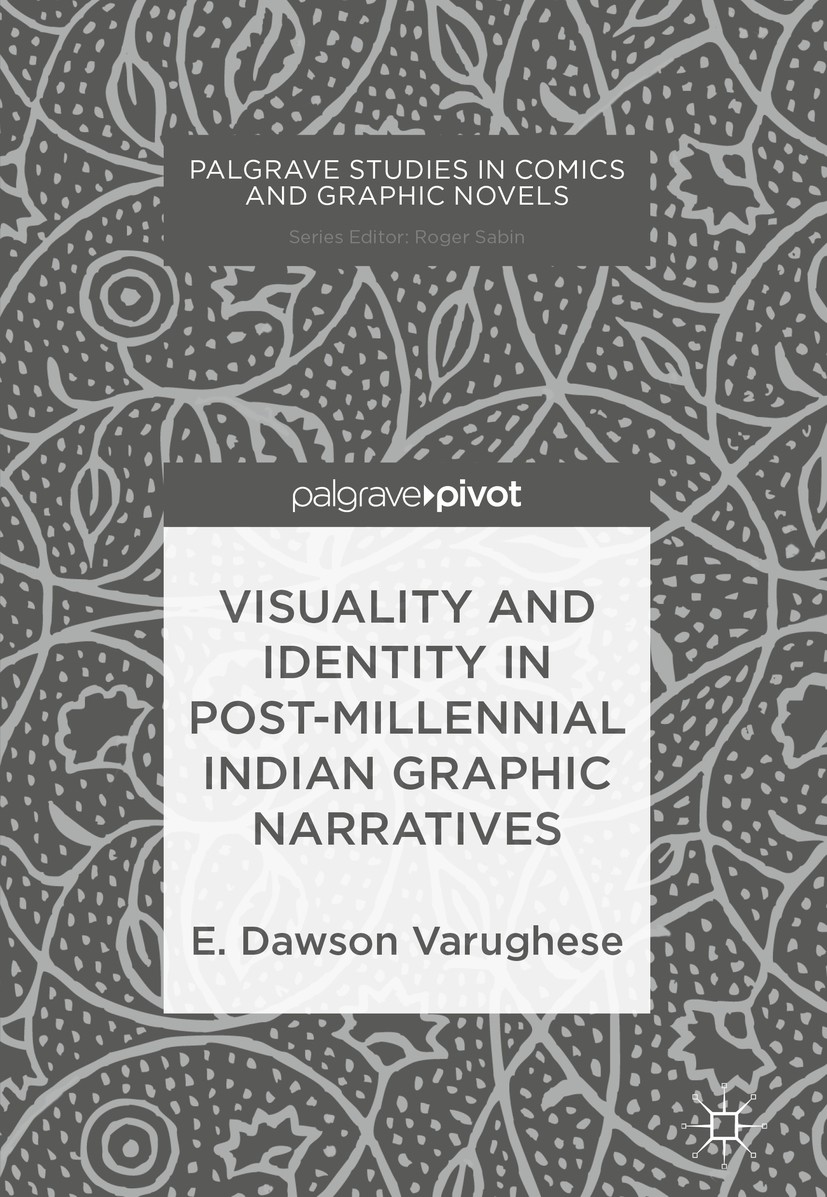
245 10|aVisuality and Identity in Post-millennial Indian Graphic Narratives|h[electronic resource] /|cby E. Dawson Varughese.
250 |a1st ed. 2018.
264 1|aCham :|bSpringer International Publishing :|bImprint: Palgrave Macmillan,|c2018.
300 |aXXVI, 119 p. 9 illus.|bonline resource.
336 |atext|btxt|2rdacontent
337 |acomputer|bc|2rdamedia
338 |aonline resource|bcr|2rdacarrier
347 |atext file|bPDF|2rda
490 1 |aPalgrave Studies in Comics and Graphic Novels,|x2634-6389
505 0 |a1. Publishing Indian Graphic Narratives Post Millennium -- 2. Modes of Visuality in New India -- 3. Visuality: "Seeing" the Inauspicious -- 4. Identity: Representations of "Indianness" -- 5. Conclusions: Decoding Current Lines and Future Spaces.
520 |a“E. Dawson Varughese’s in-depth readings of the form and content of lesser known narratives that powerfully enrich the range and scope of alternative comics foreground the importance of a corpus that tackles all basic issues of post-millennial modernity in India.” —Jan Baetens, co-author with Hugo Frey of The Graphic Novel “The ‘old’ and the ‘new’ are brought together in interesting ways in her understanding of post-millennial Indian identities through the graphic novel and other visual cultural forms. Varughese offers us a compelling read and invaluable insights.” —Rajinder Dudrah, Birmingham City University, UK This book investigates the intersection of Indian society, the encoding of post-millennial modernity and ‘ways of seeing’ through the medium of Indian graphic narratives. If seeing in Indian cultures is a mode of knowing then what might we decode and know from the Indian graphic narratives examined here? The book posits that the ‘seeing’ of post-millennial Indian graphic narratives revolves around a visuality of the inauspicious, complemented by narratives of the same. Examining both form and content across nine Indian, post-millennial graphic narratives, this book will appeal to those working in South Asian visual studies, cultural studies and comics-graphic novel studies more broadly. E. Dawson Varughese is an independent, global cultural studies scholar, specialising in post-millennial Indian visual and literary cultures. She publishes on genre fiction, book cover design and public wall art. Her latest book is Genre Fiction of New India (Routledge, 2016). She was a Visiting Fellow at the University of Delhi in 2017. www.beyondthepostcolonial.com.
650 0|aCommunication.
650 0|aEthnology|xAsia.
650 0|aCulture.
650 0|aLiterature.
650 0|aAsia|xHistory.
650 14|aMedia and Communication.
650 24|aAsian Culture.
650 24|aWorld Literature.
650 24|aHistory of South Asia.
710 2 |aSpringerLink (Online service)
773 0 |tSpringer Nature eBook
776 08|iPrinted edition:|z9783319694894
776 08|iPrinted edition:|z9783319694917
776 08|iPrinted edition:|z9783319887869
830 0|aPalgrave Studies in Comics and Graphic Novels,|x2634-6389
856 40|uhttps://doi.org/10.1007/978-3-319-69490-0
912 |aZDB-2-LCM
912 |aZDB-2-SXL
950 |aLiterature, Cultural and Media Studies (SpringerNature-41173)
950 |aLiterature, Cultural and Media Studies (R0) (SpringerNature-43723)