LEADER 03298nam a22005175i 4500
001 842430
003 TR_AnAIT
005 20260715025138
007 cr nn 008mamaa
008 180618s2018 sz | s |||| 0|eng d
020 |a9783319902180|9978-3-319-90218-0
024 7 |a10.1007/978-3-319-90218-0|2doi
041 |aeng
049 |aTürk Dil Kurumu Kütüphanesi
050 4|aPN661-694
072 7|aDSBB|2bicssc
072 7|aLIT011000|2bisacsh
072 7|aDSBB|2thema
082 04|a809.02|223
090 |aEK/5644
100 1 |aThomas, Alfred.|eauthor.|4aut|4http://id.loc.gov/vocabulary/relators/aut
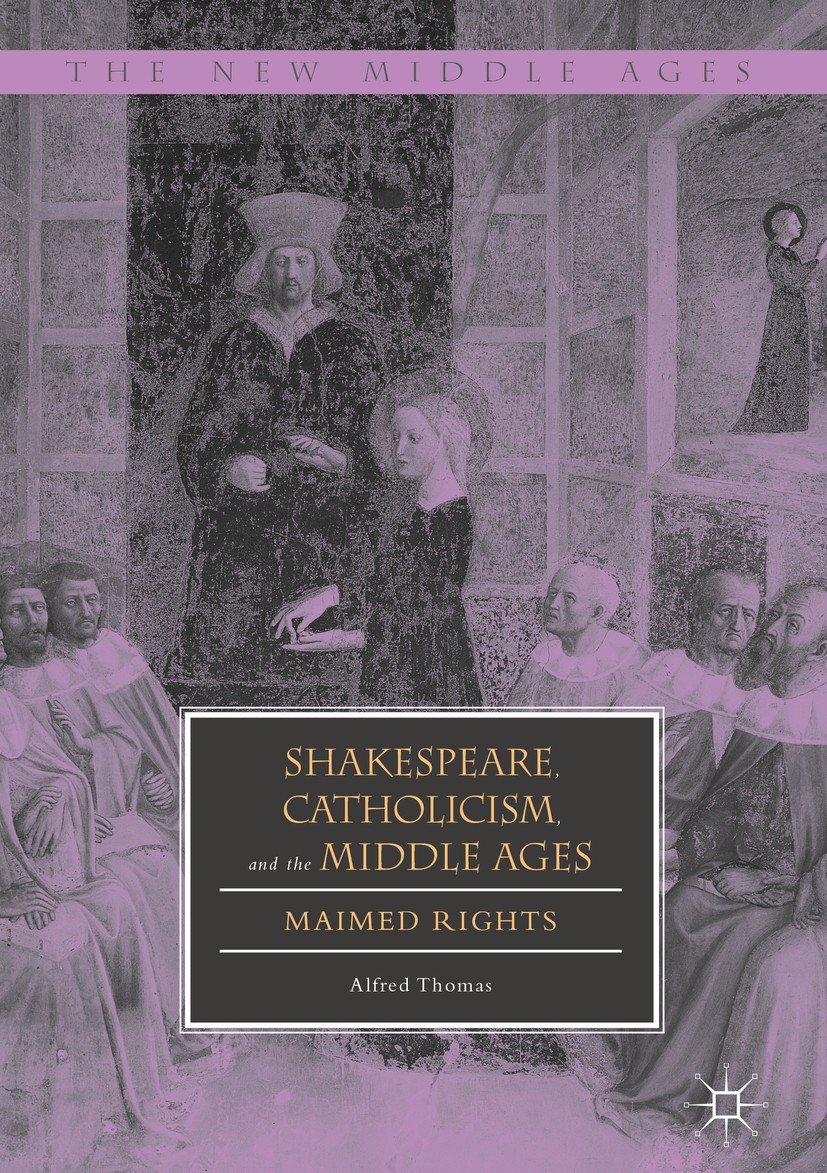
245 10|aShakespeare, Catholicism, and the Middle Ages|h[electronic resource] :|bMaimed Rights /|cby Alfred Thomas.
250 |a1st ed. 2018.
264 1|aCham :|bSpringer International Publishing :|bImprint: Palgrave Macmillan,|c2018.
300 |aXV, 260 p. 13 illus. in color.|bonline resource.
336 |atext|btxt|2rdacontent
337 |acomputer|bc|2rdamedia
338 |aonline resource|bcr|2rdacarrier
347 |atext file|bPDF|2rda
490 1 |aThe New Middle Ages,|x2945-5944
505 0 |a1. Introduction: Maimed Rights in Shakespeare’s England -- 2. Pride and Penitence: Political and Moral Allegory in Medieval Arthurian Romance and Richard II -- 3. Demonizing the Other: “The Prioress’s Tale,” The Jew of Malta, and The Merchant of Venice -- 4. Writing, Memory, and Revenge in Beowulf, Sir Gawain and the Green Knight, and Hamlet -- 5. Afterlives of the Martyrs: King Lear, The Duchess of Malfi, and The Virgin Martyr -- 6. “Remember the Porter”: Memorializing the Medieval Drama and the Gunpowder Plot in Macbeth -- 7. Conclusion: Shakespeare “Our Contemporary”.
520 |aWhereas traditional scholarship assumed that William Shakespeare used the medieval past as a negative foil to legitimate the present, Shakespeare, Catholicism, and the Middle Ages offers a revisionist perspective, arguing that the playwright valorizes the Middle Ages in order to critique the oppressive nature of the Tudor-Stuart state. In examining Shakespeare’s Richard II, The Merchant of Venice, Hamlet, King Lear, Macbeth, and The Winter’s Tale, the text explores how Shakespeare repossessed the medieval past to articulate political and religious dissent. By comparing these and other plays by Shakespeare’s contemporaries with their medieval analogues, Alfred Thomas argues that Shakespeare was an ecumenical writer concerned with promoting tolerance in a highly intolerant and partisan age. .
650 0|aLiterature, Medieval.
650 0|aEuropean literature|xRenaissance, 1450-1600.
650 0|aLiterature|xHistory and criticism.
650 14|aMedieval Literature.
650 24|aEarly Modern and Renaissance Literature.
650 24|aLiterary History.
710 2 |aSpringerLink (Online service)
773 0 |tSpringer Nature eBook
776 08|iPrinted edition:|z9783319902173
776 08|iPrinted edition:|z9783319902197
776 08|iPrinted edition:|z9783030079659
830 0|aThe New Middle Ages,|x2945-5944
856 40|uhttps://doi.org/10.1007/978-3-319-90218-0
912 |aZDB-2-LCM
912 |aZDB-2-SXL
950 |aLiterature, Cultural and Media Studies (SpringerNature-41173)
950 |aLiterature, Cultural and Media Studies (R0) (SpringerNature-43723)