LEADER 04081nam a22006135i 4500
001 842459
003 TR_AnAIT
005 20260715025206
007 cr nn 008mamaa
008 220422s2022 sz | s |||| 0|eng d
020 |a9783030958374|9978-3-030-95837-4
024 7 |a10.1007/978-3-030-95837-4|2doi
041 |aeng
049 |aTürk Dil Kurumu Kütüphanesi
050 4|aPN695-779
072 7|aDSBH|2bicssc
072 7|aLIT024000|2bisacsh
072 7|aDSBH|2thema
082 04|a809.05|223
090 |aEK/3949
100 1 |aSorvari, Marja.|eauthor.|0(orcid)0000-0002-3311-726X|1https://orcid.org/0000-0002-3311-726X|4aut|4http://id.loc.gov/vocabulary/relators/aut
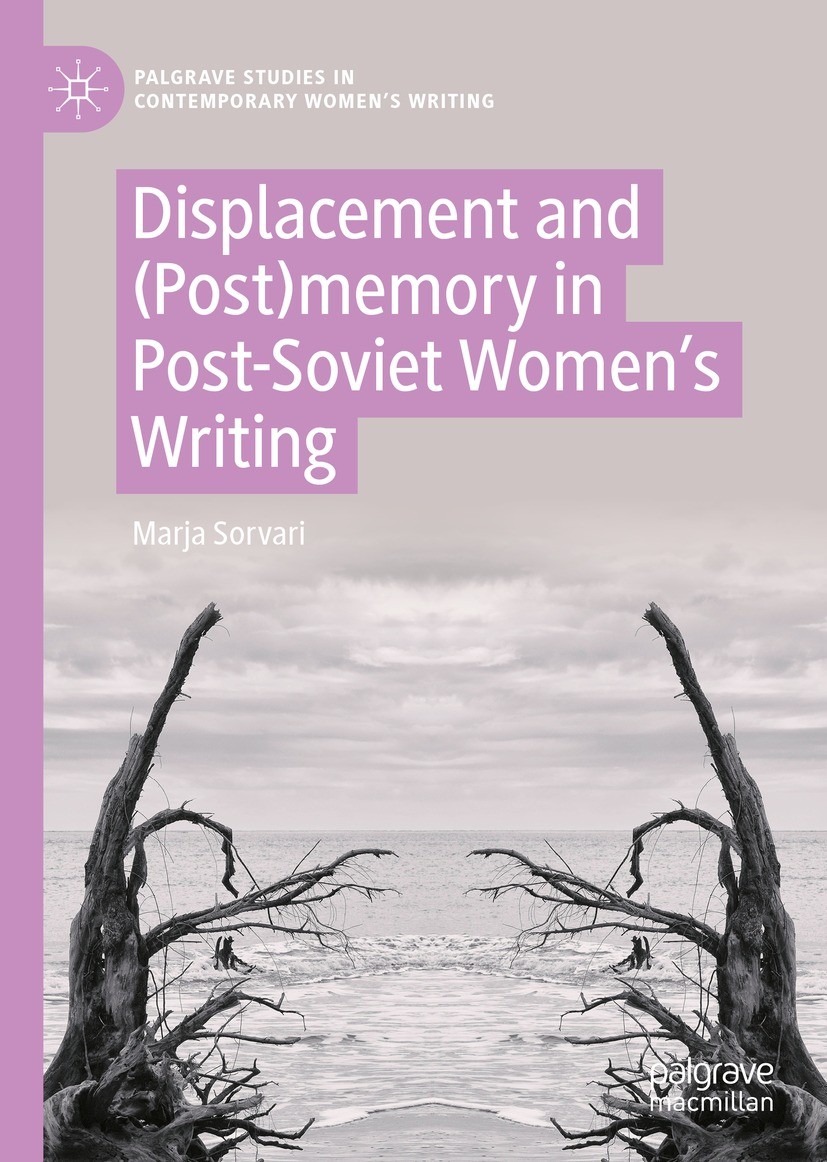
245 10|aDisplacement and (Post)memory in Post-Soviet Women’s Writing|h[electronic resource] /|cby Marja Sorvari.
250 |a1st ed. 2022.
264 1|aCham :|bSpringer International Publishing :|bImprint: Palgrave Macmillan,|c2022.
300 |aIX, 167 p.|bonline resource.
336 |atext|btxt|2rdacontent
337 |acomputer|bc|2rdamedia
338 |aonline resource|bcr|2rdacarrier
347 |atext file|bPDF|2rda
490 1 |aPalgrave Studies in Contemporary Women’s Writing,|x2523-8159
505 0 |a1 Introduction: Towards a Poetics of Displacement and Postmemory -- 2 Lived Religion, Displacement and Gender in Ludmila Ulitskaya’s Daniel Stein, Interpreter -- 3 Remembering Childhood and Reassessing the Past in Elena Chizhova’s The Time of Women -- 4 Voices of the Lost Experiences in Svetlana Alexievich’s Secondhand Time. The Last of the Soviets -- 5 In Search of Memory in Maria Stepanova’s In Memory of Memory -- 6 Conclusion: From Poetics to Politics of Displacement and Postmemory.
520 |aThe book examines prominent literary works from the past two decades by Russian women writers dealing with the Soviet past. It explores works such as Daniel Stein, Interpreter by Ludmilla Ulitskaya, The Time of Women by Elena Chizhova, Secondhand Time: The Last of the Soviets by Svetlana Alexievich, and In Memory of Memory by Maria Stepanova, and uncovers connecting thematic structures and features. Focusing on the concepts of displacement and postmemory, the book shows how these works have given voice to those on the margins of society and of ‘great history’ whose resistance was often silent. In doing so, these women writers portray the everyday experiences and trauma of displaced women and girls during the second half of the twentieth century. This study offers new insights into the importance of these women writers’ work in creating and preserving cultural memory in post-Soviet Russia. Marja Sorvari is Associate Professor of Russian Language and Culture at the University of Eastern Finland. She specializes in contemporary Russian literature and gender studies. She is author of About the Self and the Time: On Autobiographical Texts by Maria Arbatova, Elena Bonner, Ėmma Gerštejn, Tamara Petkevič and Maija Pliseckaja (2004) and has co-edited several volumes.
650 0|aLiterature, Modern|x20th century.
650 0|aLiterature, Modern|x21st century.
650 0|aLiterature|xPhilosophy.
650 0|aFeminism and literature.
650 0|aLiterature.
650 0|aRussia|xHistory.
650 0|aEurope, Eastern|xHistory.
650 0|aSoviet Union|xHistory.
650 0|aCollective memory.
650 14|aContemporary Literature.
650 24|aFeminist Literary Theory.
650 24|aWorld Literature.
650 24|aRussian, Soviet, and East European History.
650 24|aMemory Studies.
710 2 |aSpringerLink (Online service)
773 0 |tSpringer Nature eBook
776 08|iPrinted edition:|z9783030958367
776 08|iPrinted edition:|z9783030958381
776 08|iPrinted edition:|z9783030958398
830 0|aPalgrave Studies in Contemporary Women’s Writing,|x2523-8159
856 40|uhttps://doi.org/10.1007/978-3-030-95837-4
912 |aZDB-2-LCM
912 |aZDB-2-SXL
950 |aLiterature, Cultural and Media Studies (SpringerNature-41173)
950 |aLiterature, Cultural and Media Studies (R0) (SpringerNature-43723)