LEADER 03955nam a22006135i 4500
001 842575
003 TR_AnAIT
005 20260715025645
007 cr nn 008mamaa
008 220809s2022 sz | s |||| 0|eng d
020 |a9783031071591|9978-3-031-07159-1
024 7 |a10.1007/978-3-031-07159-1|2doi
041 |aeng
049 |aTürk Dil Kurumu Kütüphanesi
050 4|aPN3311-3503
072 7|aF|2bicssc
072 7|aFIC000000|2bisacsh
072 7|aF|2thema
082 04|a809.3|223
090 |aEK/5974
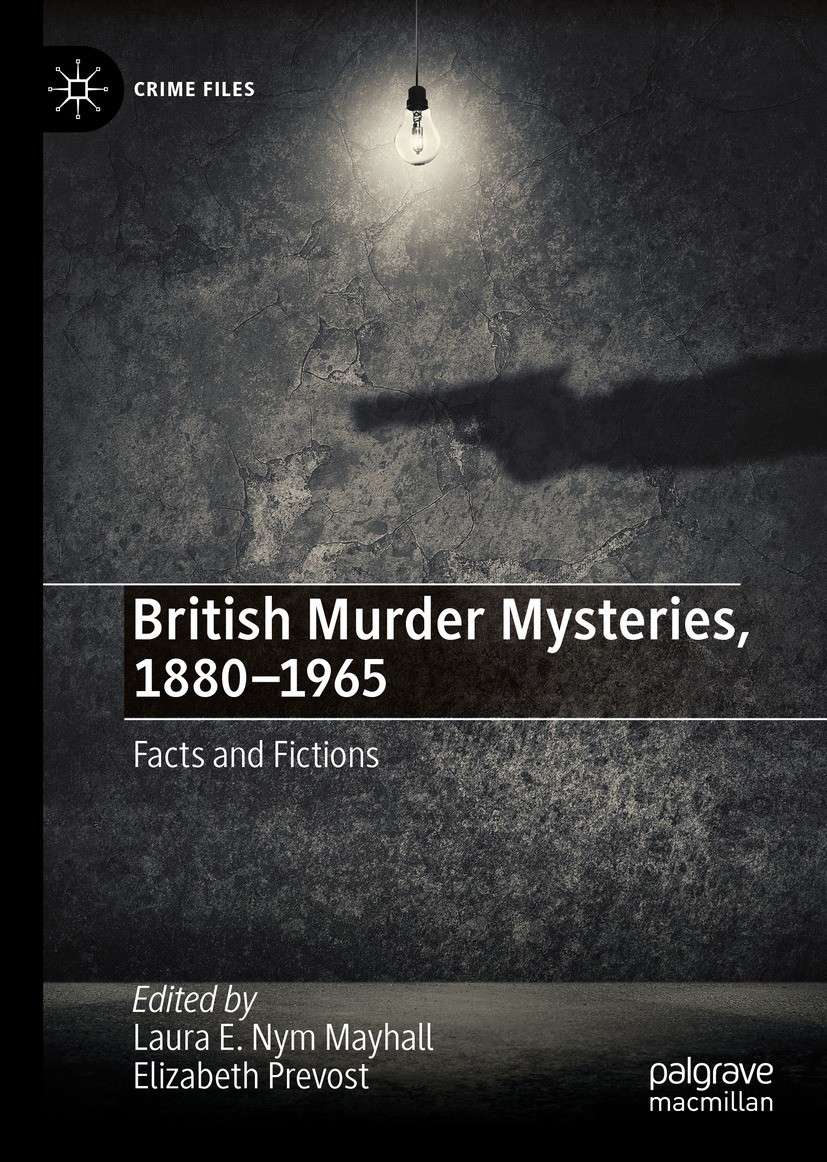
245 10|aBritish Murder Mysteries, 1880-1965|h[electronic resource] :|bFacts and Fictions /|cedited by Laura E. Nym Mayhall, Elizabeth Prevost.
250 |a1st ed. 2022.
264 1|aCham :|bSpringer International Publishing :|bImprint: Palgrave Macmillan,|c2022.
300 |aIX, 241 p.|bonline resource.
336 |atext|btxt|2rdacontent
337 |acomputer|bc|2rdamedia
338 |aonline resource|bcr|2rdacarrier
347 |atext file|bPDF|2rda
490 1 |aCrime Files,|x2947-8359
505 0 |aC hapter 1: Introduction and overview -- Chapter 2: Policing in the Shadow of Jack the Ripper: Myths, Monsters, and the Real Limits of the Late-Victorian Detective -- Chapter 3: Pot-stirring or Pot-boiling? Crises, crime, and other contexts for Mary Agnes Hamilton's Murder in the House of Commons (1932) -- Chapter 4: Domesticating the Horrors of Modern War: How Interwar Sensation and Detective Fiction Faced the War to Come -- Chapter: 5 Agatha Christie in Southern Africa -- Chapter 6: Time is always guilty’: Narratives of Progress and Decline in Interwar Detective Fiction -- Chapter 7: Death Haunts the British Hotel, 1918-1965 -- Chapter 8:Semi-Colonial Horsewifery as Detective Fiction: ‘Trinket’s Colt’ and the Mysteries of the Irish R.M -- Chapter 9: Magic is My Business’: Raymond Chandler and Detective Fiction as Fairy Tale -- Chapter 10: Indecently Preposterous’: The Interwar Press and Golden Age Detective Fiction.
520 |aBritish Murder Mysteries, 1880-1965: Facts and Fictions conceptualizes detective fiction as an archive, i.e., a trove of documents and sources to be used for historical interpretation. By framing the genre as a shifting set of values, definitions, and practices, the book historicizes the contested meanings of analytical categories like class, race, gender, nation, and empire that have been applied to the forms and functions of detection. Three organizing themes structure this investigation: fictive facticity, genre fluidity, and conservative modernity. This volume thus shows how British detective fiction from the late-nineteenth to the mid-twentieth century both shaped and was shaped by its social, cultural, and political contexts and the lived experience of its authors and readers at critical moments in time.
650 0|aFiction.
650 0|aLiterature, Modern|x20th century.
650 0|aLiterature|xHistory and criticism.
650 0|aMass media and crime.
650 0|aEthnology|xGreat Britain.
650 0|aCulture.
650 0|aEurope|xHistory.
650 14|aFiction Literature.
650 24|aTwentieth-Century Literature.
650 24|aLiterary History.
650 24|aCrime and the Media.
650 24|aBritish Culture.
650 24|aEuropean History.
700 1 |aMayhall, Laura E. Nym.|eeditor.|4edt|4http://id.loc.gov/vocabulary/relators/edt
700 1 |aPrevost, Elizabeth.|eeditor.|4edt|4http://id.loc.gov/vocabulary/relators/edt
710 2 |aSpringerLink (Online service)
773 0 |tSpringer Nature eBook
776 08|iPrinted edition:|z9783031071584
776 08|iPrinted edition:|z9783031071607
776 08|iPrinted edition:|z9783031071614
830 0|aCrime Files,|x2947-8359
856 40|uhttps://doi.org/10.1007/978-3-031-07159-1
912 |aZDB-2-LCM
912 |aZDB-2-SXL
950 |aLiterature, Cultural and Media Studies (SpringerNature-41173)
950 |aLiterature, Cultural and Media Studies (R0) (SpringerNature-43723)