

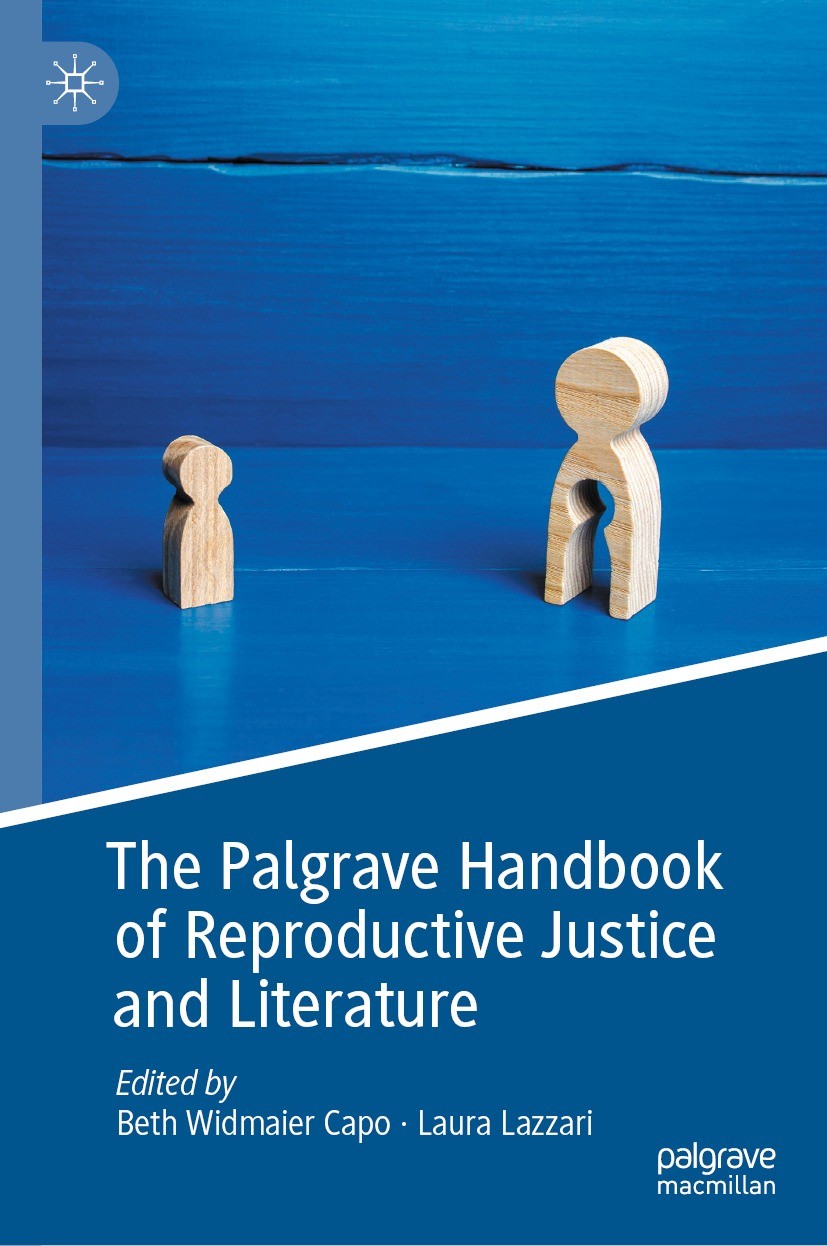
The Palgrave Handbook of Reproductive Justice and Literature [electronic resource] / edited by Beth Widmaier Capo, Laura Lazzari.
Erişim Adresi
ISBN
9783030995300
Dil Kodu
İngilizce
Yer Numarası
EK/5981
Basım Bildirimi
1st ed. 2022.
Yayın Bilgisi
Cham : Springer International Publishing : Imprint: Palgrave Macmillan, 2022.
Fiziksel Niteleme
XXII, 667 p. 16 illus., 14 illus. in color. online resource.
İçindekiler Notu
1. Introduction -- 2. Recognizing Issues of Reproductive Justice in Nineteenth-Century US Literature -- 3. “Learn and Run”: Reproductive Oppression and Resistance in the Works of Octavia E. Butler -- 4. Reading Reproductive Justice through Toni Morrison -- 5. Reproductive Justice in Ntozake Shange’s “For Colored Girls Who Have Considered Suicide/When the Rainbow is Enuf” -- 6. Reproductive Rights and Reproductive Justice in Recent German-Language Fiction and Film -- 7. Cultivating Access, Cultivating Ignorance: A Survey of Herbal Abortifacients in American Fiction -- 8. Female Narratives of Abortion in Italian Literature From the 1970s to the Present -- 9. Re-Presenting the Un-Presentable: Annie Ernaux’s L’évènement and Cristian Mungiu’s 4 Months, 3 Weeks, and Two Days -- 10. Re-conceiving the World: Dystopia and Reproductive Justice -- 11. Reproductive and Disability Justice: Deaf Peoples’ Right to be Born -- 12. Queer Argonauts for Reproductive Justice -- 13. On the One-Child Policy of China: Reading Ma Jian’s Novel The Dark Road -- 14. Pregnancy Self-Help Literature as Disembodiment: An Issue of Reproductive Justice -- 15. Birthing Bodies Delivering Power in Anglophone Literature of the Twentieth and Twenty-First Centuries -- 16. Writing and Birthing on Country: Examining Indigenous Australian Birth Stories from a Reproductive Justice Lens -- 17. Reproductive Experiences of Poor Mothers in India: An Analysis of YouTube Documentaries -- 18. Spain and Structural Infertility: Towards an Integrative Vision of Motherhood in the Novel Quién quiere ser madre by Silvia Nanclares -- 19. “Give me children, or else I die”: Baby-hunger, Surrogacy, and Family-Making by Any Means Necessary -- 20. Surrogacy or Sale: Reflecting upon Reproductive Justice through The House for Hidden Mothers and A House of Happy Mothers -- 21. Claiming Motherhood: Reproductive Justice andSurrogacy in Chinese American Literature of the New Millennium -- 22. Reimagining the Past, Present, and the Future of Reproductive Bodies in Contemporary Japanese Women’s Fiction: Mieko Kawakami’s Breasts and Eggs and Sayaka Murata’s Vanishing World -- 23. State Terror and the Destruction of Families for Reproductive “Management” in Three Argentine Films -- 24. Scroungers, Strivers, and Single Mothers: Reproductive Justice and the British Welfare State in Ken Loach’s Social Realism -- 25. Reproductive Justice in Undocumented Women’s Memoirs -- 26. Challenging Racialized Motherhood and the Sixties Scoop with Indigenous Theatre -- 27. “I’ll Never Be Ready!”: Applying a Reproductive Justice Lens in the Lower-Division Literature Classroom -- 28. Teaching Reproductive Justice: Reading Motherhood with Generations X, Y, and Z -- 29. Mayday: Rethinking Reproductive Justice Protests Utilizing Margaret Atwood’s The Handmaid’s Tale -- 30. Not an Easy Read for “Normal” “Colored” People: Conversations on Shange’s and Rooney’s Literatures of Sexual Citizenship.
Özet, vb.
This handbook offers a collection of scholarly essays that analyze questions of reproductive justice throughout its cultural representation in global literature and film. It offers analysis of specific texts carefully situated in their evolving historical, economic, and cultural contexts. Reproductive justice is taken beyond the American setting in which the theory and movement began; chapters apply concepts to international realities and literatures from different countries and cultures by covering diverse genres of cultural production, including film, television, YouTube documentaries, drama, short story, novel, memoir, and self-help literature. Each chapter analyzes texts from within the framework of reproductive justice in an interdisciplinary way, including English, Japanese, Italian, Spanish, and German language, literature and culture, comparative literature, film, South Asian fiction, Canadian theatre, writing, gender studies, Deaf studies, disability studies, global health andmedical humanities, and sociology. Academics, graduate students and advanced undergraduate students in Literature, Gender, Sexuality and Women’s Studies, Cultural Studies, Motherhood Studies, Comparative Literature, History, Sociology, the Medical Humanities, Reproductive Justice, and Human Rights are the main audience of the volume. Beth Widmaier Capo is Edward Capps Professor of Humanities and Professor of English at Illinois College, USA. She earned her M.A. and Ph.D. from Pennsylvania State University, USA. She is the author of Textual Contraception: Birth Control and Modern American Fiction (2007) and co-edited Reproductive Rights Issues in Popular Media: International Perspectives (2017). Laura Lazzari holds a Ph.D. from the University of Lausanne, Switzerland, and a Master of Studies from Oxford, UK. A scholar in Motherhood Studies, she works at the Sasso Corbaro Foundation for the Medical Humanities, Switzerland. She was the recipient of a 2015-2016 AAUW International Postdoctoral Fellowship at Georgetown University, USA, and has lectured for several universities in Switzerland and the United States.
Konu
Literature __ Philosophy.
Feminism and literature.
Literature, Modern __ 20th century.
Literature, Modern __ 21st century.
Medicine and the humanities.
Law __ History.
Ethics.
Social medicine.
Feminist Literary Theory.
Contemporary Literature.
Medical Humanities.
Legal History.
Moral Philosophy and Applied Ethics.
Health, Medicine and Society.
Feminism and literature.
Literature, Modern __ 20th century.
Literature, Modern __ 21st century.
Medicine and the humanities.
Law __ History.
Ethics.
Social medicine.
Feminist Literary Theory.
Contemporary Literature.
Medical Humanities.
Legal History.
Moral Philosophy and Applied Ethics.
Health, Medicine and Society.
Diğer Yazarlar
Kurum Adı
Eseri Alıntıla
Referansları kullanmadan önce gözden geçirmeniz ve varsa gerekli düzeltmeleri yapmanız önerilir.
Dijital Kaynak
MARC Görünümü
LEADER 08618nam a22007335i 4500
001 842577
003 TR_AnAIT
005 20260715025646
007 cr nn 008mamaa
008 220910s2022 sz | s |||| 0|eng d
020 |a9783030995300|9978-3-030-99530-0
024 7 |a10.1007/978-3-030-99530-0|2doi
041 |aeng
049 |aTürk Dil Kurumu Kütüphanesi
050 4|aPN45-57
050 4|aPN56.F46
072 7|aDSA|2bicssc
072 7|aLIT006000|2bisacsh
072 7|aDSA|2thema
082 04|a801.95082|223
090 |aEK/5981
245 14|aThe Palgrave Handbook of Reproductive Justice and Literature|h[electronic resource] /|cedited by Beth Widmaier Capo, Laura Lazzari.
250 |a1st ed. 2022.
264 1|aCham :|bSpringer International Publishing :|bImprint: Palgrave Macmillan,|c2022.
300 |aXXII, 667 p. 16 illus., 14 illus. in color.|bonline resource.
336 |atext|btxt|2rdacontent
337 |acomputer|bc|2rdamedia
338 |aonline resource|bcr|2rdacarrier
341 0 |bTable of contents navigation|2onix
341 0 |bSingle logical reading order|2onix
341 0 |bShort alternative textual descriptions|2onix
341 0 |bUse of color is not sole means of conveying information|2onix
341 0 |bUse of high contrast between text and background color|2onix
341 0 |bNext / Previous structural navigation|2onix
341 0 |bAll non-decorative content supports reading without sight|2onix
347 |atext file|bPDF|2rda
505 0 |a1. Introduction -- 2. Recognizing Issues of Reproductive Justice in Nineteenth-Century US Literature -- 3. “Learn and Run”: Reproductive Oppression and Resistance in the Works of Octavia E. Butler -- 4. Reading Reproductive Justice through Toni Morrison -- 5. Reproductive Justice in Ntozake Shange’s “For Colored Girls Who Have Considered Suicide/When the Rainbow is Enuf” -- 6. Reproductive Rights and Reproductive Justice in Recent German-Language Fiction and Film -- 7. Cultivating Access, Cultivating Ignorance: A Survey of Herbal Abortifacients in American Fiction -- 8. Female Narratives of Abortion in Italian Literature From the 1970s to the Present -- 9. Re-Presenting the Un-Presentable: Annie Ernaux’s L’évènement and Cristian Mungiu’s 4 Months, 3 Weeks, and Two Days -- 10. Re-conceiving the World: Dystopia and Reproductive Justice -- 11. Reproductive and Disability Justice: Deaf Peoples’ Right to be Born -- 12. Queer Argonauts for Reproductive Justice -- 13. On the One-Child Policy of China: Reading Ma Jian’s Novel The Dark Road -- 14. Pregnancy Self-Help Literature as Disembodiment: An Issue of Reproductive Justice -- 15. Birthing Bodies Delivering Power in Anglophone Literature of the Twentieth and Twenty-First Centuries -- 16. Writing and Birthing on Country: Examining Indigenous Australian Birth Stories from a Reproductive Justice Lens -- 17. Reproductive Experiences of Poor Mothers in India: An Analysis of YouTube Documentaries -- 18. Spain and Structural Infertility: Towards an Integrative Vision of Motherhood in the Novel Quién quiere ser madre by Silvia Nanclares -- 19. “Give me children, or else I die”: Baby-hunger, Surrogacy, and Family-Making by Any Means Necessary -- 20. Surrogacy or Sale: Reflecting upon Reproductive Justice through The House for Hidden Mothers and A House of Happy Mothers -- 21. Claiming Motherhood: Reproductive Justice andSurrogacy in Chinese American Literature of the New Millennium -- 22. Reimagining the Past, Present, and the Future of Reproductive Bodies in Contemporary Japanese Women’s Fiction: Mieko Kawakami’s Breasts and Eggs and Sayaka Murata’s Vanishing World -- 23. State Terror and the Destruction of Families for Reproductive “Management” in Three Argentine Films -- 24. Scroungers, Strivers, and Single Mothers: Reproductive Justice and the British Welfare State in Ken Loach’s Social Realism -- 25. Reproductive Justice in Undocumented Women’s Memoirs -- 26. Challenging Racialized Motherhood and the Sixties Scoop with Indigenous Theatre -- 27. “I’ll Never Be Ready!”: Applying a Reproductive Justice Lens in the Lower-Division Literature Classroom -- 28. Teaching Reproductive Justice: Reading Motherhood with Generations X, Y, and Z -- 29. Mayday: Rethinking Reproductive Justice Protests Utilizing Margaret Atwood’s The Handmaid’s Tale -- 30. Not an Easy Read for “Normal” “Colored” People: Conversations on Shange’s and Rooney’s Literatures of Sexual Citizenship.
520 |aThis handbook offers a collection of scholarly essays that analyze questions of reproductive justice throughout its cultural representation in global literature and film. It offers analysis of specific texts carefully situated in their evolving historical, economic, and cultural contexts. Reproductive justice is taken beyond the American setting in which the theory and movement began; chapters apply concepts to international realities and literatures from different countries and cultures by covering diverse genres of cultural production, including film, television, YouTube documentaries, drama, short story, novel, memoir, and self-help literature. Each chapter analyzes texts from within the framework of reproductive justice in an interdisciplinary way, including English, Japanese, Italian, Spanish, and German language, literature and culture, comparative literature, film, South Asian fiction, Canadian theatre, writing, gender studies, Deaf studies, disability studies, global health andmedical humanities, and sociology. Academics, graduate students and advanced undergraduate students in Literature, Gender, Sexuality and Women’s Studies, Cultural Studies, Motherhood Studies, Comparative Literature, History, Sociology, the Medical Humanities, Reproductive Justice, and Human Rights are the main audience of the volume. Beth Widmaier Capo is Edward Capps Professor of Humanities and Professor of English at Illinois College, USA. She earned her M.A. and Ph.D. from Pennsylvania State University, USA. She is the author of Textual Contraception: Birth Control and Modern American Fiction (2007) and co-edited Reproductive Rights Issues in Popular Media: International Perspectives (2017). Laura Lazzari holds a Ph.D. from the University of Lausanne, Switzerland, and a Master of Studies from Oxford, UK. A scholar in Motherhood Studies, she works at the Sasso Corbaro Foundation for the Medical Humanities, Switzerland. She was the recipient of a 2015-2016 AAUW International Postdoctoral Fellowship at Georgetown University, USA, and has lectured for several universities in Switzerland and the United States.
532 8 |aAccessibility summary: This PDF does not fully comply with PDF/UA standards, but does feature limited screen reader support, described non-text content (images, graphs), bookmarks for easy navigation and searchable, selectable text. Users of assistive technologies may experience difficulty navigating or interpreting content in this document. We recognize the importance of accessibility, and we welcome queries about accessibility for any of our products. If you have a question or an access need, please get in touch with us at accessibilitysupport@springernature.com.
532 8 |aNo reading system accessibility options actively disabled
532 8 |aPublisher contact for further accessibility information: accessibilitysupport@springernature.com
650 0|aLiterature|xPhilosophy.
650 0|aFeminism and literature.
650 0|aLiterature, Modern|x20th century.
650 0|aLiterature, Modern|x21st century.
650 0|aMedicine and the humanities.
650 0|aLaw|xHistory.
650 0|aEthics.
650 0|aSocial medicine.
650 14|aFeminist Literary Theory.
650 24|aContemporary Literature.
650 24|aMedical Humanities.
650 24|aLegal History.
650 24|aMoral Philosophy and Applied Ethics.
650 24|aHealth, Medicine and Society.
700 1 |aCapo, Beth Widmaier.|eeditor.|4edt|4http://id.loc.gov/vocabulary/relators/edt
700 1 |aLazzari, Laura.|eeditor.|4edt|4http://id.loc.gov/vocabulary/relators/edt
710 2 |aSpringerLink (Online service)
773 0 |tSpringer Nature eBook
776 08|iPrinted edition:|z9783030995294
776 08|iPrinted edition:|z9783030995317
776 08|iPrinted edition:|z9783030995324
856 40|uhttps://doi.org/10.1007/978-3-030-99530-0
912 |aZDB-2-LCM
912 |aZDB-2-SXL
950 |aLiterature, Cultural and Media Studies (SpringerNature-41173)
950 |aLiterature, Cultural and Media Studies (R0) (SpringerNature-43723)
001 842577
003 TR_AnAIT
005 20260715025646
007 cr nn 008mamaa
008 220910s2022 sz | s |||| 0|eng d
020 |a9783030995300|9978-3-030-99530-0
024 7 |a10.1007/978-3-030-99530-0|2doi
041 |aeng
049 |aTürk Dil Kurumu Kütüphanesi
050 4|aPN45-57
050 4|aPN56.F46
072 7|aDSA|2bicssc
072 7|aLIT006000|2bisacsh
072 7|aDSA|2thema
082 04|a801.95082|223
090 |aEK/5981
245 14|aThe Palgrave Handbook of Reproductive Justice and Literature|h[electronic resource] /|cedited by Beth Widmaier Capo, Laura Lazzari.
250 |a1st ed. 2022.
264 1|aCham :|bSpringer International Publishing :|bImprint: Palgrave Macmillan,|c2022.
300 |aXXII, 667 p. 16 illus., 14 illus. in color.|bonline resource.
336 |atext|btxt|2rdacontent
337 |acomputer|bc|2rdamedia
338 |aonline resource|bcr|2rdacarrier
341 0 |bTable of contents navigation|2onix
341 0 |bSingle logical reading order|2onix
341 0 |bShort alternative textual descriptions|2onix
341 0 |bUse of color is not sole means of conveying information|2onix
341 0 |bUse of high contrast between text and background color|2onix
341 0 |bNext / Previous structural navigation|2onix
341 0 |bAll non-decorative content supports reading without sight|2onix
347 |atext file|bPDF|2rda
505 0 |a1. Introduction -- 2. Recognizing Issues of Reproductive Justice in Nineteenth-Century US Literature -- 3. “Learn and Run”: Reproductive Oppression and Resistance in the Works of Octavia E. Butler -- 4. Reading Reproductive Justice through Toni Morrison -- 5. Reproductive Justice in Ntozake Shange’s “For Colored Girls Who Have Considered Suicide/When the Rainbow is Enuf” -- 6. Reproductive Rights and Reproductive Justice in Recent German-Language Fiction and Film -- 7. Cultivating Access, Cultivating Ignorance: A Survey of Herbal Abortifacients in American Fiction -- 8. Female Narratives of Abortion in Italian Literature From the 1970s to the Present -- 9. Re-Presenting the Un-Presentable: Annie Ernaux’s L’évènement and Cristian Mungiu’s 4 Months, 3 Weeks, and Two Days -- 10. Re-conceiving the World: Dystopia and Reproductive Justice -- 11. Reproductive and Disability Justice: Deaf Peoples’ Right to be Born -- 12. Queer Argonauts for Reproductive Justice -- 13. On the One-Child Policy of China: Reading Ma Jian’s Novel The Dark Road -- 14. Pregnancy Self-Help Literature as Disembodiment: An Issue of Reproductive Justice -- 15. Birthing Bodies Delivering Power in Anglophone Literature of the Twentieth and Twenty-First Centuries -- 16. Writing and Birthing on Country: Examining Indigenous Australian Birth Stories from a Reproductive Justice Lens -- 17. Reproductive Experiences of Poor Mothers in India: An Analysis of YouTube Documentaries -- 18. Spain and Structural Infertility: Towards an Integrative Vision of Motherhood in the Novel Quién quiere ser madre by Silvia Nanclares -- 19. “Give me children, or else I die”: Baby-hunger, Surrogacy, and Family-Making by Any Means Necessary -- 20. Surrogacy or Sale: Reflecting upon Reproductive Justice through The House for Hidden Mothers and A House of Happy Mothers -- 21. Claiming Motherhood: Reproductive Justice andSurrogacy in Chinese American Literature of the New Millennium -- 22. Reimagining the Past, Present, and the Future of Reproductive Bodies in Contemporary Japanese Women’s Fiction: Mieko Kawakami’s Breasts and Eggs and Sayaka Murata’s Vanishing World -- 23. State Terror and the Destruction of Families for Reproductive “Management” in Three Argentine Films -- 24. Scroungers, Strivers, and Single Mothers: Reproductive Justice and the British Welfare State in Ken Loach’s Social Realism -- 25. Reproductive Justice in Undocumented Women’s Memoirs -- 26. Challenging Racialized Motherhood and the Sixties Scoop with Indigenous Theatre -- 27. “I’ll Never Be Ready!”: Applying a Reproductive Justice Lens in the Lower-Division Literature Classroom -- 28. Teaching Reproductive Justice: Reading Motherhood with Generations X, Y, and Z -- 29. Mayday: Rethinking Reproductive Justice Protests Utilizing Margaret Atwood’s The Handmaid’s Tale -- 30. Not an Easy Read for “Normal” “Colored” People: Conversations on Shange’s and Rooney’s Literatures of Sexual Citizenship.
520 |aThis handbook offers a collection of scholarly essays that analyze questions of reproductive justice throughout its cultural representation in global literature and film. It offers analysis of specific texts carefully situated in their evolving historical, economic, and cultural contexts. Reproductive justice is taken beyond the American setting in which the theory and movement began; chapters apply concepts to international realities and literatures from different countries and cultures by covering diverse genres of cultural production, including film, television, YouTube documentaries, drama, short story, novel, memoir, and self-help literature. Each chapter analyzes texts from within the framework of reproductive justice in an interdisciplinary way, including English, Japanese, Italian, Spanish, and German language, literature and culture, comparative literature, film, South Asian fiction, Canadian theatre, writing, gender studies, Deaf studies, disability studies, global health andmedical humanities, and sociology. Academics, graduate students and advanced undergraduate students in Literature, Gender, Sexuality and Women’s Studies, Cultural Studies, Motherhood Studies, Comparative Literature, History, Sociology, the Medical Humanities, Reproductive Justice, and Human Rights are the main audience of the volume. Beth Widmaier Capo is Edward Capps Professor of Humanities and Professor of English at Illinois College, USA. She earned her M.A. and Ph.D. from Pennsylvania State University, USA. She is the author of Textual Contraception: Birth Control and Modern American Fiction (2007) and co-edited Reproductive Rights Issues in Popular Media: International Perspectives (2017). Laura Lazzari holds a Ph.D. from the University of Lausanne, Switzerland, and a Master of Studies from Oxford, UK. A scholar in Motherhood Studies, she works at the Sasso Corbaro Foundation for the Medical Humanities, Switzerland. She was the recipient of a 2015-2016 AAUW International Postdoctoral Fellowship at Georgetown University, USA, and has lectured for several universities in Switzerland and the United States.
532 8 |aAccessibility summary: This PDF does not fully comply with PDF/UA standards, but does feature limited screen reader support, described non-text content (images, graphs), bookmarks for easy navigation and searchable, selectable text. Users of assistive technologies may experience difficulty navigating or interpreting content in this document. We recognize the importance of accessibility, and we welcome queries about accessibility for any of our products. If you have a question or an access need, please get in touch with us at accessibilitysupport@springernature.com.
532 8 |aNo reading system accessibility options actively disabled
532 8 |aPublisher contact for further accessibility information: accessibilitysupport@springernature.com
650 0|aLiterature|xPhilosophy.
650 0|aFeminism and literature.
650 0|aLiterature, Modern|x20th century.
650 0|aLiterature, Modern|x21st century.
650 0|aMedicine and the humanities.
650 0|aLaw|xHistory.
650 0|aEthics.
650 0|aSocial medicine.
650 14|aFeminist Literary Theory.
650 24|aContemporary Literature.
650 24|aMedical Humanities.
650 24|aLegal History.
650 24|aMoral Philosophy and Applied Ethics.
650 24|aHealth, Medicine and Society.
700 1 |aCapo, Beth Widmaier.|eeditor.|4edt|4http://id.loc.gov/vocabulary/relators/edt
700 1 |aLazzari, Laura.|eeditor.|4edt|4http://id.loc.gov/vocabulary/relators/edt
710 2 |aSpringerLink (Online service)
773 0 |tSpringer Nature eBook
776 08|iPrinted edition:|z9783030995294
776 08|iPrinted edition:|z9783030995317
776 08|iPrinted edition:|z9783030995324
856 40|uhttps://doi.org/10.1007/978-3-030-99530-0
912 |aZDB-2-LCM
912 |aZDB-2-SXL
950 |aLiterature, Cultural and Media Studies (SpringerNature-41173)
950 |aLiterature, Cultural and Media Studies (R0) (SpringerNature-43723)
Materyaller
Depodan talep edilen materyal sadece kütüphane içerisinde kullanılmaktadır.
Materyal dışarıya ödünç verilmemektedir.
Materyal dışarıya ödünç verilmemektedir.
