

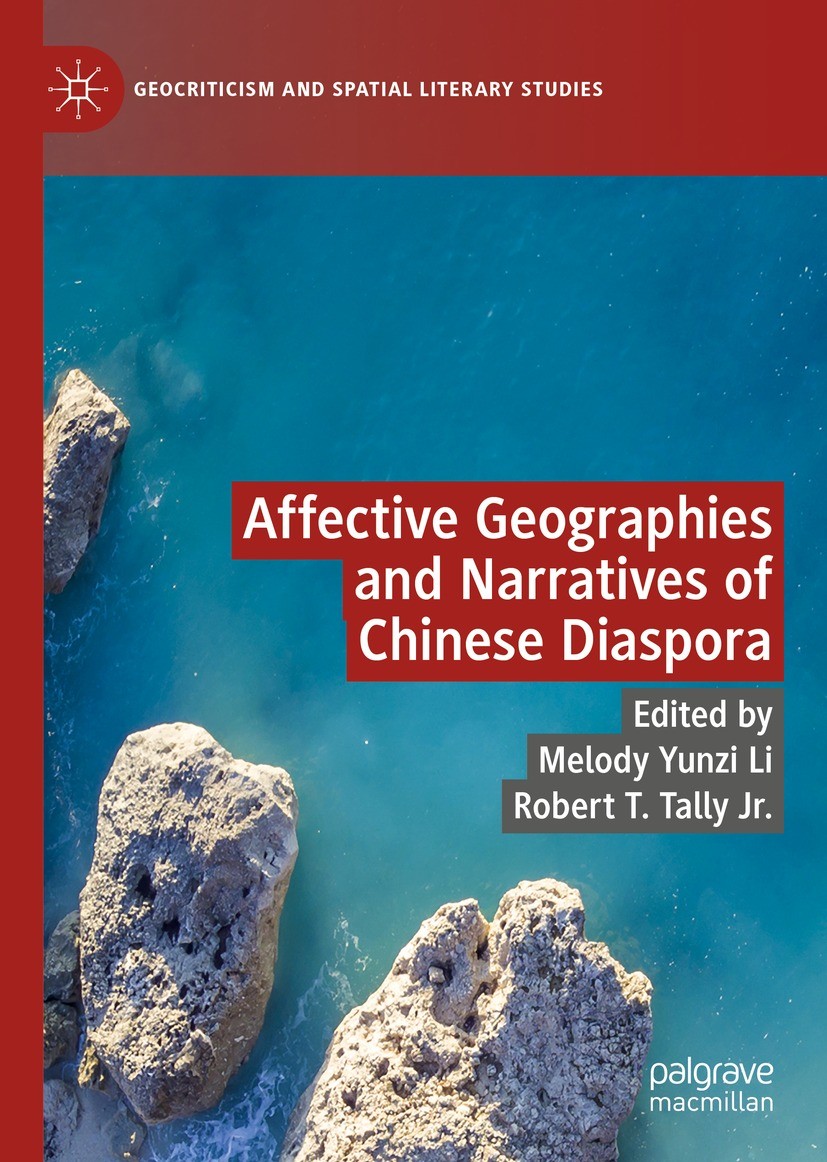
Affective Geographies and Narratives of Chinese Diaspora [electronic resource] / edited by Melody Yunzi Li, Robert T. Tally Jr.
Erişim Adresi
ISBN
9783031101571
Dil Kodu
İngilizce
Yer Numarası
EK/4879
Basım Bildirimi
1st ed. 2022.
Yayın Bilgisi
Cham : Springer International Publishing : Imprint: Palgrave Macmillan, 2022.
Fiziksel Niteleme
XVII, 171 p. online resource.
Dizi
Geocriticism and Spatial Literary Studies, 2634-5188
İçindekiler Notu
Chapter 1: Introduction. Remapping the Homeland -- Chapter 2: The geography helps”: Affective Geographies and Maps in Xiaolu Guo’s A Concise Chinese-English Dictionary for Lovers -- Chapter 3: From Rust Belt to Belleville: Two Recent Films on Chinese Migrant Sex Workers in Paris -- Chapter 4: Borderscape, Exile, Trafficking: The Geopoetics of Ying Liang’s A Family Tour and Bai Xue’s The Crossing -- Chapter 5: Displaced Nostalgia and Literary déjà vu: On the Quasi-archaic Style of Li Yongping’s Retribution: The Jiling Chronicles -- Chapter 6: Literary Exile in the Third Space: Ha Jin’s Critique of Nation-States in The Free Life -- Chapter 7: Remapping New York’s Chinatowns in the Works of Eric Liu and Ha Jin -- Chapter 8: The Holy Hole in Chinese Patriarchal Culture: Going Pop and South -- Chapter 9: This Place Which Is Not One: Diaspora, Topophrenia, and the World System. .
Özet, vb.
In various ways, Chinese diasporic communities seek to connect and re-connect with their “homelands” in literature, film, and visual culture. The essays in Affective Geographies and Narratives of Chinese Diaspora examine how diasporic bodies and emotions interact with space and place, as well as how theories of affect change our thinking of diaspora. Questions of borders and border-crossing, not to mention the public and private spheres, in diaspora literature and film raise further questions about mapping and spatial representation and the affective and geographical significance of the push-and-pull movement in diasporic communities. The unique experience is represented differently by different authors across texts and media. In an age of globalization, in “the Chinese Century,” the spatial representation and cultural experiences of mobility, displacement, settlement, and hybridity become all the more urgent. The essays in this volume respond to this urgency, and they help to frame the study of Chinese diaspora and culture today.
Konu
Oriental literature.
Literature.
Literature __ Philosophy.
Space.
Culture.
Emigration and immigration.
Emigration and immigration __ Social aspects.
Asian Literature.
World Literature.
Literary Theory.
Space and Place in Culture.
Diaspora Studies.
Sociology of Migration.
Literature.
Literature __ Philosophy.
Space.
Culture.
Emigration and immigration.
Emigration and immigration __ Social aspects.
Asian Literature.
World Literature.
Literary Theory.
Space and Place in Culture.
Diaspora Studies.
Sociology of Migration.
Diğer Yazarlar
Kurum Adı
Eseri Alıntıla
Referansları kullanmadan önce gözden geçirmeniz ve varsa gerekli düzeltmeleri yapmanız önerilir.
Dijital Kaynak
MARC Görünümü
LEADER 05460nam a22007455i 4500
001 842580
003 TR_AnAIT
005 20260715025649
007 cr nn 008mamaa
008 220921s2022 sz | s |||| 0|eng d
020 |a9783031101571|9978-3-031-10157-1
024 7 |a10.1007/978-3-031-10157-1|2doi
041 |aeng
049 |aTürk Dil Kurumu Kütüphanesi
050 4|aPJ305.2-489
072 7|aDS|2bicssc
072 7|a1F|2bicssc
072 7|aLIT008000|2bisacsh
072 7|aDS|x1F|2thema
082 04|a809.895|223
090 |aEK/4879
245 10|aAffective Geographies and Narratives of Chinese Diaspora|h[electronic resource] /|cedited by Melody Yunzi Li, Robert T. Tally Jr.
250 |a1st ed. 2022.
264 1|aCham :|bSpringer International Publishing :|bImprint: Palgrave Macmillan,|c2022.
300 |aXVII, 171 p.|bonline resource.
336 |atext|btxt|2rdacontent
337 |acomputer|bc|2rdamedia
338 |aonline resource|bcr|2rdacarrier
341 0 |bTable of contents navigation|2onix
341 0 |bSingle logical reading order|2onix
341 0 |bShort alternative textual descriptions|2onix
341 0 |bUse of color is not sole means of conveying information|2onix
341 0 |bUse of high contrast between text and background color|2onix
341 0 |bNext / Previous structural navigation|2onix
341 0 |bAll non-decorative content supports reading without sight|2onix
347 |atext file|bPDF|2rda
490 1 |aGeocriticism and Spatial Literary Studies,|x2634-5188
505 0 |aChapter 1: Introduction. Remapping the Homeland -- Chapter 2: The geography helps”: Affective Geographies and Maps in Xiaolu Guo’s A Concise Chinese-English Dictionary for Lovers -- Chapter 3: From Rust Belt to Belleville: Two Recent Films on Chinese Migrant Sex Workers in Paris -- Chapter 4: Borderscape, Exile, Trafficking: The Geopoetics of Ying Liang’s A Family Tour and Bai Xue’s The Crossing -- Chapter 5: Displaced Nostalgia and Literary déjà vu: On the Quasi-archaic Style of Li Yongping’s Retribution: The Jiling Chronicles -- Chapter 6: Literary Exile in the Third Space: Ha Jin’s Critique of Nation-States in The Free Life -- Chapter 7: Remapping New York’s Chinatowns in the Works of Eric Liu and Ha Jin -- Chapter 8: The Holy Hole in Chinese Patriarchal Culture: Going Pop and South -- Chapter 9: This Place Which Is Not One: Diaspora, Topophrenia, and the World System. .
520 |aIn various ways, Chinese diasporic communities seek to connect and re-connect with their “homelands” in literature, film, and visual culture. The essays in Affective Geographies and Narratives of Chinese Diaspora examine how diasporic bodies and emotions interact with space and place, as well as how theories of affect change our thinking of diaspora. Questions of borders and border-crossing, not to mention the public and private spheres, in diaspora literature and film raise further questions about mapping and spatial representation and the affective and geographical significance of the push-and-pull movement in diasporic communities. The unique experience is represented differently by different authors across texts and media. In an age of globalization, in “the Chinese Century,” the spatial representation and cultural experiences of mobility, displacement, settlement, and hybridity become all the more urgent. The essays in this volume respond to this urgency, and they help to frame the study of Chinese diaspora and culture today.
532 8 |aAccessibility summary: This PDF does not fully comply with PDF/UA standards, but does feature limited screen reader support, described non-text content (images, graphs), bookmarks for easy navigation and searchable, selectable text. Users of assistive technologies may experience difficulty navigating or interpreting content in this document. We recognize the importance of accessibility, and we welcome queries about accessibility for any of our products. If you have a question or an access need, please get in touch with us at accessibilitysupport@springernature.com.
532 8 |aNo reading system accessibility options actively disabled
532 8 |aPublisher contact for further accessibility information: accessibilitysupport@springernature.com
650 0|aOriental literature.
650 0|aLiterature.
650 0|aLiterature|xPhilosophy.
650 0|aSpace.
650 0|aCulture.
650 0|aEmigration and immigration.
650 0|aEmigration and immigration|xSocial aspects.
650 14|aAsian Literature.
650 24|aWorld Literature.
650 24|aLiterary Theory.
650 24|aSpace and Place in Culture.
650 24|aDiaspora Studies.
650 24|aSociology of Migration.
700 1 |aYunzi Li, Melody.|eeditor.|4edt|4http://id.loc.gov/vocabulary/relators/edt
700 1 |aTally Jr., Robert T.|eeditor.|4edt|4http://id.loc.gov/vocabulary/relators/edt
710 2 |aSpringerLink (Online service)
773 0 |tSpringer Nature eBook
776 08|iPrinted edition:|z9783031101564
776 08|iPrinted edition:|z9783031101588
776 08|iPrinted edition:|z9783031101595
830 0|aGeocriticism and Spatial Literary Studies,|x2634-5188
856 40|uhttps://doi.org/10.1007/978-3-031-10157-1
912 |aZDB-2-LCM
912 |aZDB-2-SXL
950 |aLiterature, Cultural and Media Studies (SpringerNature-41173)
950 |aLiterature, Cultural and Media Studies (R0) (SpringerNature-43723)
001 842580
003 TR_AnAIT
005 20260715025649
007 cr nn 008mamaa
008 220921s2022 sz | s |||| 0|eng d
020 |a9783031101571|9978-3-031-10157-1
024 7 |a10.1007/978-3-031-10157-1|2doi
041 |aeng
049 |aTürk Dil Kurumu Kütüphanesi
050 4|aPJ305.2-489
072 7|aDS|2bicssc
072 7|a1F|2bicssc
072 7|aLIT008000|2bisacsh
072 7|aDS|x1F|2thema
082 04|a809.895|223
090 |aEK/4879
245 10|aAffective Geographies and Narratives of Chinese Diaspora|h[electronic resource] /|cedited by Melody Yunzi Li, Robert T. Tally Jr.
250 |a1st ed. 2022.
264 1|aCham :|bSpringer International Publishing :|bImprint: Palgrave Macmillan,|c2022.
300 |aXVII, 171 p.|bonline resource.
336 |atext|btxt|2rdacontent
337 |acomputer|bc|2rdamedia
338 |aonline resource|bcr|2rdacarrier
341 0 |bTable of contents navigation|2onix
341 0 |bSingle logical reading order|2onix
341 0 |bShort alternative textual descriptions|2onix
341 0 |bUse of color is not sole means of conveying information|2onix
341 0 |bUse of high contrast between text and background color|2onix
341 0 |bNext / Previous structural navigation|2onix
341 0 |bAll non-decorative content supports reading without sight|2onix
347 |atext file|bPDF|2rda
490 1 |aGeocriticism and Spatial Literary Studies,|x2634-5188
505 0 |aChapter 1: Introduction. Remapping the Homeland -- Chapter 2: The geography helps”: Affective Geographies and Maps in Xiaolu Guo’s A Concise Chinese-English Dictionary for Lovers -- Chapter 3: From Rust Belt to Belleville: Two Recent Films on Chinese Migrant Sex Workers in Paris -- Chapter 4: Borderscape, Exile, Trafficking: The Geopoetics of Ying Liang’s A Family Tour and Bai Xue’s The Crossing -- Chapter 5: Displaced Nostalgia and Literary déjà vu: On the Quasi-archaic Style of Li Yongping’s Retribution: The Jiling Chronicles -- Chapter 6: Literary Exile in the Third Space: Ha Jin’s Critique of Nation-States in The Free Life -- Chapter 7: Remapping New York’s Chinatowns in the Works of Eric Liu and Ha Jin -- Chapter 8: The Holy Hole in Chinese Patriarchal Culture: Going Pop and South -- Chapter 9: This Place Which Is Not One: Diaspora, Topophrenia, and the World System. .
520 |aIn various ways, Chinese diasporic communities seek to connect and re-connect with their “homelands” in literature, film, and visual culture. The essays in Affective Geographies and Narratives of Chinese Diaspora examine how diasporic bodies and emotions interact with space and place, as well as how theories of affect change our thinking of diaspora. Questions of borders and border-crossing, not to mention the public and private spheres, in diaspora literature and film raise further questions about mapping and spatial representation and the affective and geographical significance of the push-and-pull movement in diasporic communities. The unique experience is represented differently by different authors across texts and media. In an age of globalization, in “the Chinese Century,” the spatial representation and cultural experiences of mobility, displacement, settlement, and hybridity become all the more urgent. The essays in this volume respond to this urgency, and they help to frame the study of Chinese diaspora and culture today.
532 8 |aAccessibility summary: This PDF does not fully comply with PDF/UA standards, but does feature limited screen reader support, described non-text content (images, graphs), bookmarks for easy navigation and searchable, selectable text. Users of assistive technologies may experience difficulty navigating or interpreting content in this document. We recognize the importance of accessibility, and we welcome queries about accessibility for any of our products. If you have a question or an access need, please get in touch with us at accessibilitysupport@springernature.com.
532 8 |aNo reading system accessibility options actively disabled
532 8 |aPublisher contact for further accessibility information: accessibilitysupport@springernature.com
650 0|aOriental literature.
650 0|aLiterature.
650 0|aLiterature|xPhilosophy.
650 0|aSpace.
650 0|aCulture.
650 0|aEmigration and immigration.
650 0|aEmigration and immigration|xSocial aspects.
650 14|aAsian Literature.
650 24|aWorld Literature.
650 24|aLiterary Theory.
650 24|aSpace and Place in Culture.
650 24|aDiaspora Studies.
650 24|aSociology of Migration.
700 1 |aYunzi Li, Melody.|eeditor.|4edt|4http://id.loc.gov/vocabulary/relators/edt
700 1 |aTally Jr., Robert T.|eeditor.|4edt|4http://id.loc.gov/vocabulary/relators/edt
710 2 |aSpringerLink (Online service)
773 0 |tSpringer Nature eBook
776 08|iPrinted edition:|z9783031101564
776 08|iPrinted edition:|z9783031101588
776 08|iPrinted edition:|z9783031101595
830 0|aGeocriticism and Spatial Literary Studies,|x2634-5188
856 40|uhttps://doi.org/10.1007/978-3-031-10157-1
912 |aZDB-2-LCM
912 |aZDB-2-SXL
950 |aLiterature, Cultural and Media Studies (SpringerNature-41173)
950 |aLiterature, Cultural and Media Studies (R0) (SpringerNature-43723)
Materyaller
Depodan talep edilen materyal sadece kütüphane içerisinde kullanılmaktadır.
Materyal dışarıya ödünç verilmemektedir.
Materyal dışarıya ödünç verilmemektedir.
