

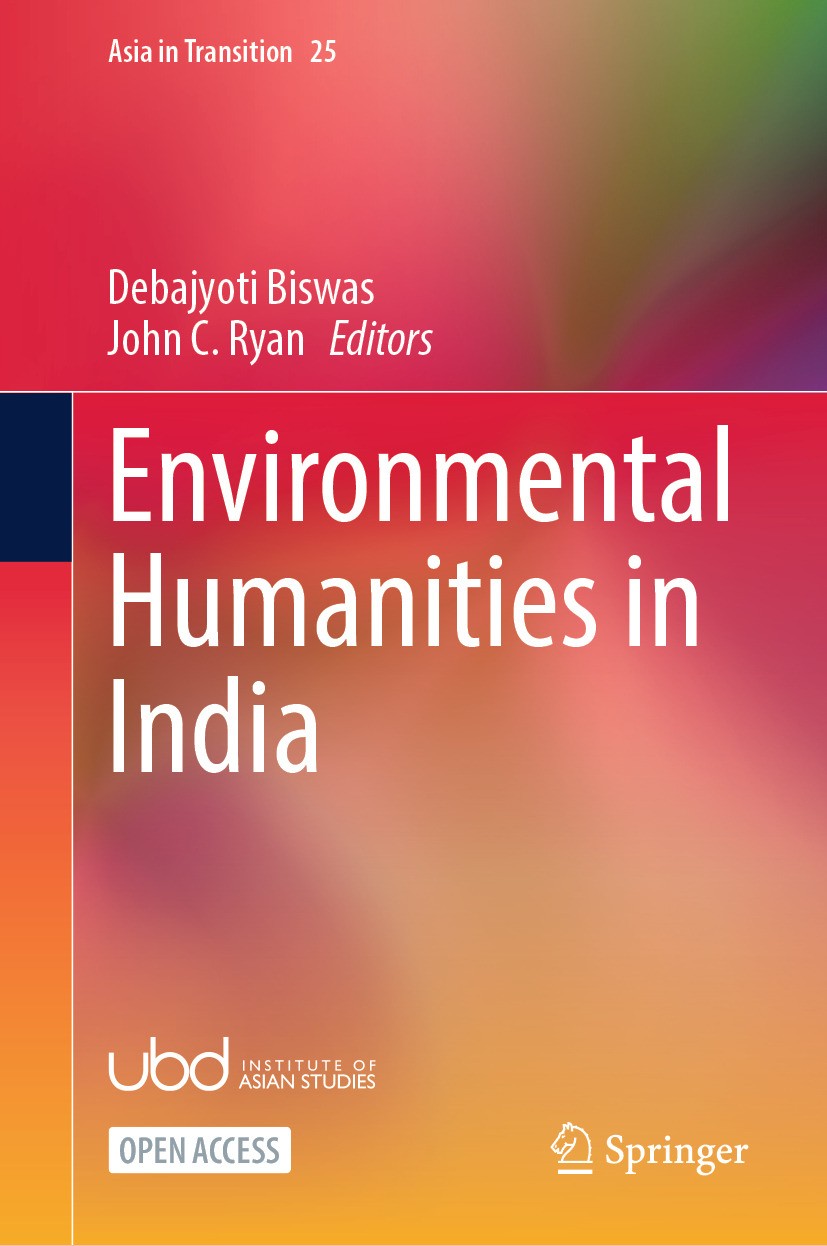
Environmental Humanities in India [electronic resource] / edited by Debajyoti Biswas, John C. Ryan.
Erişim Adresi
ISBN
9789819739332
Dil Kodu
İngilizce
Yer Numarası
EK/6034
Basım Bildirimi
1st ed. 2025.
Yayın Bilgisi
Singapore : Springer Nature Singapore : Imprint: Springer, 2025.
Fiziksel Niteleme
X, 234 p. 9 illus., 3 illus. in color. online resource.
Dizi
Asia in Transition, 2364-8260 ; 25
İçindekiler Notu
Introduction: Environmental Humanities in India -- 2. Indigenous Native Epistemology as A Model in Environmental Humanities in India -- 3. The Environment in Hindu Consciousness: Revisiting the Sacred Texts -- 4. Cultural Practices and Indigenous Traditions of the Garo and Bodo: Reinterpreting 'Man-Nature' Convergences in Wangala and Bathou -- 5. Indigenous Nature Conservation in Meghalaya: Environmental and Religious Dimensions of Tribal Land Ownership Among the Khasi Community -- 6. Philosophy for Environmental Policy and Law in India -- 7. The Secular in Ecological Consciousness -- 8. Multispecies Conviviality, Bioregionalism, And Vegetal Politics in Kodagu, India -- 9. “When The Black Half of The Kunni Seed Whitens”: Plant-Lore and The Plantationocene in Ambikasuthan Mangad’s Swarga -- 10. Mourning the Loss of Mother Earth: Reclaiming the Path of Recovery in Akkineni Kutumbarao’s Softy Dies a Lake -- 11. “Leave City, Leave Reality; Enter Forest, Enter Fantasy”: Representing Ecotopian Space as a Protest against Urbanization in Bibhutibhusan Bandyopadhyay’s Literary Oeuvre -- 12. Connecting and Creating Narratives: Interrogating Myth and Identity in Ghosh’s Gun Island -- 13. Amitav Ghosh’s Storyworlds for Environmental Dwelling: Multimodal Iterations and Performativity in/of Jungle Nama: A Story of the Sundarban -- 14. Ecomusicology in India: Voicing the Unvoiced Anthropocene through Popular Culture.
Özet, vb.
This open access book offers an introduction to the field of the environmental humanities in India. The environmental humanities, often referred to as ‘EH’, are a multifaceted, relatively new, and swiftly evolving field of scholarship that integrates the theories and approaches of various disciplines - from anthropology, art, communications, cultural studies, philosophy and ecology to history, literature, media, music, performance, politics, sociology, theology and theater. Practitioners of this considerably integrative and widely ranging field aim to address and, in certain cases, confront today's urgent ecological and cultural challenges, namely climate change, urban sustainability, biodiversity conservation, species decline, energy policy, the exigencies of the Anthropocene, environmental activism, and Indigenous peoples' justice. Although the environmental humanities have been relatively slow to gain traction in South Asia, an increasing momentum towards transdisciplinary approaches to ecology and sustainability is palpable in India. Comprising fourteen chapters, this contributed volume is the first major publication to call attention to current work in the environmental humanities in India. The volume foregrounds particular ecohumanist theories and methodologies evolving from Indian biocultural contexts. Towards this aim, the book consists of four thematic sections: Indigenous Perspectives: Conservation, Spirituality, and Language; Theoretical Grounding: Education, Law, and Ethics; Literary Formulations: Memoir, Parable, and Storyworlds; and Popular Narratives: Myth, Travel, and Music. The volume is of interest to undergraduates, postgraduates, early career scholars, and more established researchers in the environmental humanities and the allied fields of ecopoetics, ecocriticism, ecomusicology, environmental art, cultural ecology, postcolonial studies, and South Asian studies. This is an open access book.
Konu
Ecocriticism.
Oriental literature.
Sex.
Music __ History and criticism.
Art, Modern __ 21st century.
Ecocriticism.
Asian Literature.
Gender Studies.
Contemporary Music.
Contemporary Art.
Oriental literature.
Sex.
Music __ History and criticism.
Art, Modern __ 21st century.
Ecocriticism.
Asian Literature.
Gender Studies.
Contemporary Music.
Contemporary Art.
Diğer Yazarlar
Kurum Adı
Eseri Alıntıla
Referansları kullanmadan önce gözden geçirmeniz ve varsa gerekli düzeltmeleri yapmanız önerilir.
Dijital Kaynak
MARC Görünümü
LEADER 06799nam a22007215i 4500
001 842602
003 TR_AnAIT
005 20260715025716
007 cr nn 008mamaa
008 241025s2025 si | s |||| 0|eng d
020 |a9789819739332|9978-981-97-3933-2
024 7 |a10.1007/978-981-97-3933-2|2doi
041 |aeng
049 |aTürk Dil Kurumu Kütüphanesi
050 4|aPN98.E36
072 7|aDSA|2bicssc
072 7|aLIT006000|2bisacsh
072 7|aDSA|2thema
082 04|a809.933553|223
090 |aEK/6034
245 10|aEnvironmental Humanities in India|h[electronic resource] /|cedited by Debajyoti Biswas, John C. Ryan.
250 |a1st ed. 2025.
264 1|aSingapore :|bSpringer Nature Singapore :|bImprint: Springer,|c2025.
300 |aX, 234 p. 9 illus., 3 illus. in color.|bonline resource.
336 |atext|btxt|2rdacontent
337 |acomputer|bc|2rdamedia
338 |aonline resource|bcr|2rdacarrier
341 0 |bTable of contents navigation|2onix
341 0 |bSingle logical reading order|2onix
341 0 |bShort alternative textual descriptions|2onix
341 0 |bUse of color is not sole means of conveying information|2onix
341 0 |bUse of high contrast between text and background color|2onix
341 0 |bNext / Previous structural navigation|2onix
341 0 |bAll non-decorative content supports reading without sight|2onix
347 |atext file|bPDF|2rda
490 1 |aAsia in Transition,|x2364-8260 ;|v25
505 0 |aIntroduction: Environmental Humanities in India -- 2. Indigenous Native Epistemology as A Model in Environmental Humanities in India -- 3. The Environment in Hindu Consciousness: Revisiting the Sacred Texts -- 4. Cultural Practices and Indigenous Traditions of the Garo and Bodo: Reinterpreting 'Man-Nature' Convergences in Wangala and Bathou -- 5. Indigenous Nature Conservation in Meghalaya: Environmental and Religious Dimensions of Tribal Land Ownership Among the Khasi Community -- 6. Philosophy for Environmental Policy and Law in India -- 7. The Secular in Ecological Consciousness -- 8. Multispecies Conviviality, Bioregionalism, And Vegetal Politics in Kodagu, India -- 9. “When The Black Half of The Kunni Seed Whitens”: Plant-Lore and The Plantationocene in Ambikasuthan Mangad’s Swarga -- 10. Mourning the Loss of Mother Earth: Reclaiming the Path of Recovery in Akkineni Kutumbarao’s Softy Dies a Lake -- 11. “Leave City, Leave Reality; Enter Forest, Enter Fantasy”: Representing Ecotopian Space as a Protest against Urbanization in Bibhutibhusan Bandyopadhyay’s Literary Oeuvre -- 12. Connecting and Creating Narratives: Interrogating Myth and Identity in Ghosh’s Gun Island -- 13. Amitav Ghosh’s Storyworlds for Environmental Dwelling: Multimodal Iterations and Performativity in/of Jungle Nama: A Story of the Sundarban -- 14. Ecomusicology in India: Voicing the Unvoiced Anthropocene through Popular Culture.
506 0 |aOpen Access
520 |aThis open access book offers an introduction to the field of the environmental humanities in India. The environmental humanities, often referred to as ‘EH’, are a multifaceted, relatively new, and swiftly evolving field of scholarship that integrates the theories and approaches of various disciplines - from anthropology, art, communications, cultural studies, philosophy and ecology to history, literature, media, music, performance, politics, sociology, theology and theater. Practitioners of this considerably integrative and widely ranging field aim to address and, in certain cases, confront today's urgent ecological and cultural challenges, namely climate change, urban sustainability, biodiversity conservation, species decline, energy policy, the exigencies of the Anthropocene, environmental activism, and Indigenous peoples' justice. Although the environmental humanities have been relatively slow to gain traction in South Asia, an increasing momentum towards transdisciplinary approaches to ecology and sustainability is palpable in India. Comprising fourteen chapters, this contributed volume is the first major publication to call attention to current work in the environmental humanities in India. The volume foregrounds particular ecohumanist theories and methodologies evolving from Indian biocultural contexts. Towards this aim, the book consists of four thematic sections: Indigenous Perspectives: Conservation, Spirituality, and Language; Theoretical Grounding: Education, Law, and Ethics; Literary Formulations: Memoir, Parable, and Storyworlds; and Popular Narratives: Myth, Travel, and Music. The volume is of interest to undergraduates, postgraduates, early career scholars, and more established researchers in the environmental humanities and the allied fields of ecopoetics, ecocriticism, ecomusicology, environmental art, cultural ecology, postcolonial studies, and South Asian studies. This is an open access book.
532 8 |aAccessibility summary: This PDF does not fully comply with PDF/UA standards, but does feature limited screen reader support, described non-text content (images, graphs), bookmarks for easy navigation and searchable, selectable text. Users of assistive technologies may experience difficulty navigating or interpreting content in this document. We recognize the importance of accessibility, and we welcome queries about accessibility for any of our products. If you have a question or an access need, please get in touch with us at accessibilitysupport@springernature.com.
532 8 |aNo reading system accessibility options actively disabled
532 8 |aPublisher contact for further accessibility information: accessibilitysupport@springernature.com
650 0|aEcocriticism.
650 0|aOriental literature.
650 0|aSex.
650 0|aMusic|xHistory and criticism.
650 0|aArt, Modern|x21st century.
650 14|aEcocriticism.
650 24|aAsian Literature.
650 24|aGender Studies.
650 24|aContemporary Music.
650 24|aContemporary Art.
700 1 |aBiswas, Debajyoti.|eeditor.|0(orcid)0000-0001-5041-8171|1https://orcid.org/0000-0001-5041-8171|4edt|4http://id.loc.gov/vocabulary/relators/edt
700 1 |aRyan, John C.|eeditor.|4edt|4http://id.loc.gov/vocabulary/relators/edt
710 2 |aSpringerLink (Online service)
773 0 |tSpringer Nature eBook
776 08|iPrinted edition:|z9789819739325
776 08|iPrinted edition:|z9789819739349
776 08|iPrinted edition:|z9789819739356
830 0|aAsia in Transition,|x2364-8260 ;|v25
856 40|uhttps://doi.org/10.1007/978-981-97-3933-2
912 |aZDB-2-LCM
912 |aZDB-2-SXL
912 |aZDB-2-SOB
950 |aLiterature, Cultural and Media Studies (SpringerNature-41173)
950 |aLiterature, Cultural and Media Studies (R0) (SpringerNature-43723)
001 842602
003 TR_AnAIT
005 20260715025716
007 cr nn 008mamaa
008 241025s2025 si | s |||| 0|eng d
020 |a9789819739332|9978-981-97-3933-2
024 7 |a10.1007/978-981-97-3933-2|2doi
041 |aeng
049 |aTürk Dil Kurumu Kütüphanesi
050 4|aPN98.E36
072 7|aDSA|2bicssc
072 7|aLIT006000|2bisacsh
072 7|aDSA|2thema
082 04|a809.933553|223
090 |aEK/6034
245 10|aEnvironmental Humanities in India|h[electronic resource] /|cedited by Debajyoti Biswas, John C. Ryan.
250 |a1st ed. 2025.
264 1|aSingapore :|bSpringer Nature Singapore :|bImprint: Springer,|c2025.
300 |aX, 234 p. 9 illus., 3 illus. in color.|bonline resource.
336 |atext|btxt|2rdacontent
337 |acomputer|bc|2rdamedia
338 |aonline resource|bcr|2rdacarrier
341 0 |bTable of contents navigation|2onix
341 0 |bSingle logical reading order|2onix
341 0 |bShort alternative textual descriptions|2onix
341 0 |bUse of color is not sole means of conveying information|2onix
341 0 |bUse of high contrast between text and background color|2onix
341 0 |bNext / Previous structural navigation|2onix
341 0 |bAll non-decorative content supports reading without sight|2onix
347 |atext file|bPDF|2rda
490 1 |aAsia in Transition,|x2364-8260 ;|v25
505 0 |aIntroduction: Environmental Humanities in India -- 2. Indigenous Native Epistemology as A Model in Environmental Humanities in India -- 3. The Environment in Hindu Consciousness: Revisiting the Sacred Texts -- 4. Cultural Practices and Indigenous Traditions of the Garo and Bodo: Reinterpreting 'Man-Nature' Convergences in Wangala and Bathou -- 5. Indigenous Nature Conservation in Meghalaya: Environmental and Religious Dimensions of Tribal Land Ownership Among the Khasi Community -- 6. Philosophy for Environmental Policy and Law in India -- 7. The Secular in Ecological Consciousness -- 8. Multispecies Conviviality, Bioregionalism, And Vegetal Politics in Kodagu, India -- 9. “When The Black Half of The Kunni Seed Whitens”: Plant-Lore and The Plantationocene in Ambikasuthan Mangad’s Swarga -- 10. Mourning the Loss of Mother Earth: Reclaiming the Path of Recovery in Akkineni Kutumbarao’s Softy Dies a Lake -- 11. “Leave City, Leave Reality; Enter Forest, Enter Fantasy”: Representing Ecotopian Space as a Protest against Urbanization in Bibhutibhusan Bandyopadhyay’s Literary Oeuvre -- 12. Connecting and Creating Narratives: Interrogating Myth and Identity in Ghosh’s Gun Island -- 13. Amitav Ghosh’s Storyworlds for Environmental Dwelling: Multimodal Iterations and Performativity in/of Jungle Nama: A Story of the Sundarban -- 14. Ecomusicology in India: Voicing the Unvoiced Anthropocene through Popular Culture.
506 0 |aOpen Access
520 |aThis open access book offers an introduction to the field of the environmental humanities in India. The environmental humanities, often referred to as ‘EH’, are a multifaceted, relatively new, and swiftly evolving field of scholarship that integrates the theories and approaches of various disciplines - from anthropology, art, communications, cultural studies, philosophy and ecology to history, literature, media, music, performance, politics, sociology, theology and theater. Practitioners of this considerably integrative and widely ranging field aim to address and, in certain cases, confront today's urgent ecological and cultural challenges, namely climate change, urban sustainability, biodiversity conservation, species decline, energy policy, the exigencies of the Anthropocene, environmental activism, and Indigenous peoples' justice. Although the environmental humanities have been relatively slow to gain traction in South Asia, an increasing momentum towards transdisciplinary approaches to ecology and sustainability is palpable in India. Comprising fourteen chapters, this contributed volume is the first major publication to call attention to current work in the environmental humanities in India. The volume foregrounds particular ecohumanist theories and methodologies evolving from Indian biocultural contexts. Towards this aim, the book consists of four thematic sections: Indigenous Perspectives: Conservation, Spirituality, and Language; Theoretical Grounding: Education, Law, and Ethics; Literary Formulations: Memoir, Parable, and Storyworlds; and Popular Narratives: Myth, Travel, and Music. The volume is of interest to undergraduates, postgraduates, early career scholars, and more established researchers in the environmental humanities and the allied fields of ecopoetics, ecocriticism, ecomusicology, environmental art, cultural ecology, postcolonial studies, and South Asian studies. This is an open access book.
532 8 |aAccessibility summary: This PDF does not fully comply with PDF/UA standards, but does feature limited screen reader support, described non-text content (images, graphs), bookmarks for easy navigation and searchable, selectable text. Users of assistive technologies may experience difficulty navigating or interpreting content in this document. We recognize the importance of accessibility, and we welcome queries about accessibility for any of our products. If you have a question or an access need, please get in touch with us at accessibilitysupport@springernature.com.
532 8 |aNo reading system accessibility options actively disabled
532 8 |aPublisher contact for further accessibility information: accessibilitysupport@springernature.com
650 0|aEcocriticism.
650 0|aOriental literature.
650 0|aSex.
650 0|aMusic|xHistory and criticism.
650 0|aArt, Modern|x21st century.
650 14|aEcocriticism.
650 24|aAsian Literature.
650 24|aGender Studies.
650 24|aContemporary Music.
650 24|aContemporary Art.
700 1 |aBiswas, Debajyoti.|eeditor.|0(orcid)0000-0001-5041-8171|1https://orcid.org/0000-0001-5041-8171|4edt|4http://id.loc.gov/vocabulary/relators/edt
700 1 |aRyan, John C.|eeditor.|4edt|4http://id.loc.gov/vocabulary/relators/edt
710 2 |aSpringerLink (Online service)
773 0 |tSpringer Nature eBook
776 08|iPrinted edition:|z9789819739325
776 08|iPrinted edition:|z9789819739349
776 08|iPrinted edition:|z9789819739356
830 0|aAsia in Transition,|x2364-8260 ;|v25
856 40|uhttps://doi.org/10.1007/978-981-97-3933-2
912 |aZDB-2-LCM
912 |aZDB-2-SXL
912 |aZDB-2-SOB
950 |aLiterature, Cultural and Media Studies (SpringerNature-41173)
950 |aLiterature, Cultural and Media Studies (R0) (SpringerNature-43723)
Materyaller
Depodan talep edilen materyal sadece kütüphane içerisinde kullanılmaktadır.
Materyal dışarıya ödünç verilmemektedir.
Materyal dışarıya ödünç verilmemektedir.
