

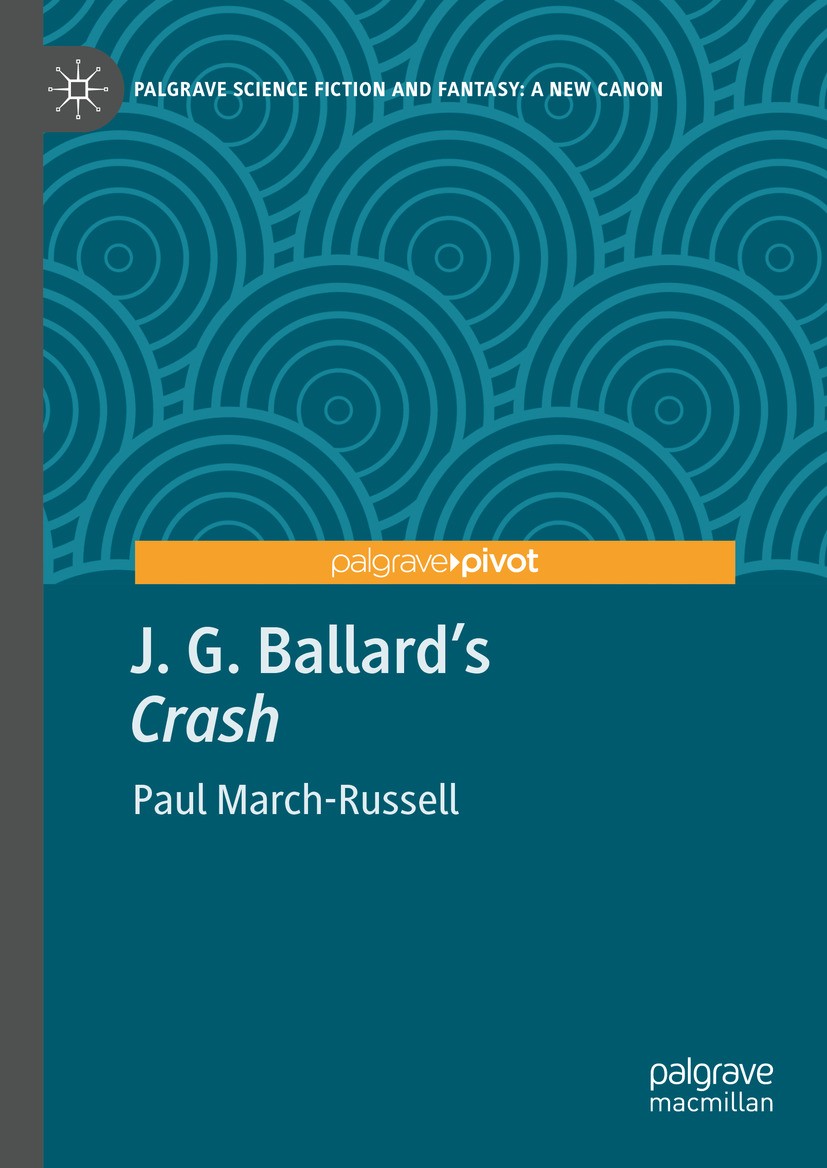
J. G. Ballard's "Crash" [electronic resource] / by Paul March-Russell.
Erişim Adresi
ISBN
9783031730948
Dil Kodu
İngilizce
Yer Numarası
EK/5982
Basım Bildirimi
1st ed. 2025.
Yayın Bilgisi
Cham : Springer Nature Switzerland : Imprint: Palgrave Macmillan, 2025.
Fiziksel Niteleme
IX, 89 p. online resource.
Dizi
Palgrave Science Fiction and Fantasy: A New Canon, 2662-8570
İçindekiler Notu
1. Introduction: Crash and Canonicity -- 2. Reading Crash: The Making of a Modern Myth -- 3. Writing Crash: Modernism/Science Fiction/New Worlds -- 4. Rogue Anthropology: Crash, Surrealism, and The Independent Group -- 5. Vicissitudes of the Body: Cyborgs and Animots -- 6. Moral Pornograopy: "The Woman of the Future" -- 7. Conclusion: Crash and Petromodernity.
Özet, vb.
“Paul March-Russell writes with an air of quiet authority and moves around the field of Ballard and New Wave science fiction with evident expertise.” —Roger Luckhurst, Geoffrey Tillotson Chair of Nineteenth-Century Studies, Birkbeck, University of London, UK Crash (1973) by the British novelist, J.G. Ballard, is an iconic yet troubling work of the New Wave in science fiction, primarily associated with the London-based magazine New Worlds, and regarded as a pivotal moment in the history of the genre. This study not only introduces the major critical arguments about the novel but also takes them to task as part of a detailed thesis that reads Crash back into the legacy of modernism in science fiction. This critique makes a strategic intervention into how twentieth-century literary history has been (falsely) divided into modernist and postmodern periods – as well as into divisions between “high” (modernist) literature and “low” popular culture (SF). The book therefore contributes to both SF studies and the expanding field of the New Modernist Studies. Each chapter builds successively upon its predecessor, so as to offer a coherent yet wide-ranging thesis across literature, critical theory, the visual arts, and popular media. Besides offering a critical introduction to the novel and the theories with which it has been read, the book also raises questions of ethics, feminism, and race with which Crash has not usually been identified. The aim is an interdisciplinary text that appeals to a wide variety of readers and provide points of departure for further research. Paul March-Russell is an independent scholar and the current editor of Foundation: The International Review of Science Fiction and co-founder of the intersectional feminist imprint Gold SF (Goldsmiths Press). He is one of the UK representatives for the Science Fiction Research Association. He has published on Ballard and the New Wave several times, most notably in Modernism and Science Fiction (Palgrave Macmillan, 2015) and The Cambridge History of the English Short Story, ed. Dominic Head (2016). His most recent book publication, with Andrew M. Butler, is Rendezvous with Arthur C. Clarke: Centenrary Essays (2022).
Konu
Literature, Modern __ 20th century.
Literature, Modern __ 21st century.
Popular Culture.
Communication in science.
Contemporary Literature.
Popular Culture.
Science Communication.
Literature, Modern __ 21st century.
Popular Culture.
Communication in science.
Contemporary Literature.
Popular Culture.
Science Communication.
Kurum Adı
Eseri Alıntıla
Referansları kullanmadan önce gözden geçirmeniz ve varsa gerekli düzeltmeleri yapmanız önerilir.
Dijital Kaynak
MARC Görünümü
LEADER 04565nam a22005295i 4500
001 842604
003 TR_AnAIT
005 20260715025718
007 cr nn 008mamaa
008 241101s2025 sz | s |||| 0|eng d
020 |a9783031730948|9978-3-031-73094-8
024 7 |a10.1007/978-3-031-73094-8|2doi
041 |aeng
049 |aTürk Dil Kurumu Kütüphanesi
050 4|aPN695-779
072 7|aDSBH|2bicssc
072 7|aLIT024000|2bisacsh
072 7|aDSBH|2thema
082 04|a809.05|223
090 |aEK/5982
100 1 |aMarch-Russell, Paul.|eauthor.|0(orcid)0000-0002-0490-2533|1https://orcid.org/0000-0002-0490-2533|4aut|4http://id.loc.gov/vocabulary/relators/aut
245 10|aJ. G. Ballard's "Crash"|h[electronic resource] /|cby Paul March-Russell.
250 |a1st ed. 2025.
264 1|aCham :|bSpringer Nature Switzerland :|bImprint: Palgrave Macmillan,|c2025.
300 |aIX, 89 p.|bonline resource.
336 |atext|btxt|2rdacontent
337 |acomputer|bc|2rdamedia
338 |aonline resource|bcr|2rdacarrier
347 |atext file|bPDF|2rda
490 1 |aPalgrave Science Fiction and Fantasy: A New Canon,|x2662-8570
505 0 |a1. Introduction: Crash and Canonicity -- 2. Reading Crash: The Making of a Modern Myth -- 3. Writing Crash: Modernism/Science Fiction/New Worlds -- 4. Rogue Anthropology: Crash, Surrealism, and The Independent Group -- 5. Vicissitudes of the Body: Cyborgs and Animots -- 6. Moral Pornograopy: "The Woman of the Future" -- 7. Conclusion: Crash and Petromodernity.
520 |a“Paul March-Russell writes with an air of quiet authority and moves around the field of Ballard and New Wave science fiction with evident expertise.” —Roger Luckhurst, Geoffrey Tillotson Chair of Nineteenth-Century Studies, Birkbeck, University of London, UK Crash (1973) by the British novelist, J.G. Ballard, is an iconic yet troubling work of the New Wave in science fiction, primarily associated with the London-based magazine New Worlds, and regarded as a pivotal moment in the history of the genre. This study not only introduces the major critical arguments about the novel but also takes them to task as part of a detailed thesis that reads Crash back into the legacy of modernism in science fiction. This critique makes a strategic intervention into how twentieth-century literary history has been (falsely) divided into modernist and postmodern periods – as well as into divisions between “high” (modernist) literature and “low” popular culture (SF). The book therefore contributes to both SF studies and the expanding field of the New Modernist Studies. Each chapter builds successively upon its predecessor, so as to offer a coherent yet wide-ranging thesis across literature, critical theory, the visual arts, and popular media. Besides offering a critical introduction to the novel and the theories with which it has been read, the book also raises questions of ethics, feminism, and race with which Crash has not usually been identified. The aim is an interdisciplinary text that appeals to a wide variety of readers and provide points of departure for further research. Paul March-Russell is an independent scholar and the current editor of Foundation: The International Review of Science Fiction and co-founder of the intersectional feminist imprint Gold SF (Goldsmiths Press). He is one of the UK representatives for the Science Fiction Research Association. He has published on Ballard and the New Wave several times, most notably in Modernism and Science Fiction (Palgrave Macmillan, 2015) and The Cambridge History of the English Short Story, ed. Dominic Head (2016). His most recent book publication, with Andrew M. Butler, is Rendezvous with Arthur C. Clarke: Centenrary Essays (2022).
650 0|aLiterature, Modern|x20th century.
650 0|aLiterature, Modern|x21st century.
650 0|aPopular Culture.
650 0|aCommunication in science.
650 14|aContemporary Literature.
650 24|aPopular Culture.
650 24|aScience Communication.
710 2 |aSpringerLink (Online service)
773 0 |tSpringer Nature eBook
776 08|iPrinted edition:|z9783031730931
776 08|iPrinted edition:|z9783031730955
776 08|iPrinted edition:|z9783031730962
830 0|aPalgrave Science Fiction and Fantasy: A New Canon,|x2662-8570
856 40|uhttps://doi.org/10.1007/978-3-031-73094-8
912 |aZDB-2-LCM
912 |aZDB-2-SXL
950 |aLiterature, Cultural and Media Studies (SpringerNature-41173)
950 |aLiterature, Cultural and Media Studies (R0) (SpringerNature-43723)
001 842604
003 TR_AnAIT
005 20260715025718
007 cr nn 008mamaa
008 241101s2025 sz | s |||| 0|eng d
020 |a9783031730948|9978-3-031-73094-8
024 7 |a10.1007/978-3-031-73094-8|2doi
041 |aeng
049 |aTürk Dil Kurumu Kütüphanesi
050 4|aPN695-779
072 7|aDSBH|2bicssc
072 7|aLIT024000|2bisacsh
072 7|aDSBH|2thema
082 04|a809.05|223
090 |aEK/5982
100 1 |aMarch-Russell, Paul.|eauthor.|0(orcid)0000-0002-0490-2533|1https://orcid.org/0000-0002-0490-2533|4aut|4http://id.loc.gov/vocabulary/relators/aut
245 10|aJ. G. Ballard's "Crash"|h[electronic resource] /|cby Paul March-Russell.
250 |a1st ed. 2025.
264 1|aCham :|bSpringer Nature Switzerland :|bImprint: Palgrave Macmillan,|c2025.
300 |aIX, 89 p.|bonline resource.
336 |atext|btxt|2rdacontent
337 |acomputer|bc|2rdamedia
338 |aonline resource|bcr|2rdacarrier
347 |atext file|bPDF|2rda
490 1 |aPalgrave Science Fiction and Fantasy: A New Canon,|x2662-8570
505 0 |a1. Introduction: Crash and Canonicity -- 2. Reading Crash: The Making of a Modern Myth -- 3. Writing Crash: Modernism/Science Fiction/New Worlds -- 4. Rogue Anthropology: Crash, Surrealism, and The Independent Group -- 5. Vicissitudes of the Body: Cyborgs and Animots -- 6. Moral Pornograopy: "The Woman of the Future" -- 7. Conclusion: Crash and Petromodernity.
520 |a“Paul March-Russell writes with an air of quiet authority and moves around the field of Ballard and New Wave science fiction with evident expertise.” —Roger Luckhurst, Geoffrey Tillotson Chair of Nineteenth-Century Studies, Birkbeck, University of London, UK Crash (1973) by the British novelist, J.G. Ballard, is an iconic yet troubling work of the New Wave in science fiction, primarily associated with the London-based magazine New Worlds, and regarded as a pivotal moment in the history of the genre. This study not only introduces the major critical arguments about the novel but also takes them to task as part of a detailed thesis that reads Crash back into the legacy of modernism in science fiction. This critique makes a strategic intervention into how twentieth-century literary history has been (falsely) divided into modernist and postmodern periods – as well as into divisions between “high” (modernist) literature and “low” popular culture (SF). The book therefore contributes to both SF studies and the expanding field of the New Modernist Studies. Each chapter builds successively upon its predecessor, so as to offer a coherent yet wide-ranging thesis across literature, critical theory, the visual arts, and popular media. Besides offering a critical introduction to the novel and the theories with which it has been read, the book also raises questions of ethics, feminism, and race with which Crash has not usually been identified. The aim is an interdisciplinary text that appeals to a wide variety of readers and provide points of departure for further research. Paul March-Russell is an independent scholar and the current editor of Foundation: The International Review of Science Fiction and co-founder of the intersectional feminist imprint Gold SF (Goldsmiths Press). He is one of the UK representatives for the Science Fiction Research Association. He has published on Ballard and the New Wave several times, most notably in Modernism and Science Fiction (Palgrave Macmillan, 2015) and The Cambridge History of the English Short Story, ed. Dominic Head (2016). His most recent book publication, with Andrew M. Butler, is Rendezvous with Arthur C. Clarke: Centenrary Essays (2022).
650 0|aLiterature, Modern|x20th century.
650 0|aLiterature, Modern|x21st century.
650 0|aPopular Culture.
650 0|aCommunication in science.
650 14|aContemporary Literature.
650 24|aPopular Culture.
650 24|aScience Communication.
710 2 |aSpringerLink (Online service)
773 0 |tSpringer Nature eBook
776 08|iPrinted edition:|z9783031730931
776 08|iPrinted edition:|z9783031730955
776 08|iPrinted edition:|z9783031730962
830 0|aPalgrave Science Fiction and Fantasy: A New Canon,|x2662-8570
856 40|uhttps://doi.org/10.1007/978-3-031-73094-8
912 |aZDB-2-LCM
912 |aZDB-2-SXL
950 |aLiterature, Cultural and Media Studies (SpringerNature-41173)
950 |aLiterature, Cultural and Media Studies (R0) (SpringerNature-43723)
Materyaller
Depodan talep edilen materyal sadece kütüphane içerisinde kullanılmaktadır.
Materyal dışarıya ödünç verilmemektedir.
Materyal dışarıya ödünç verilmemektedir.
