LEADER 02693nam a22005295i 4500
001 842635
003 TR_AnAIT
005 20260715025749
007 cr nn 008mamaa
008 171007s2017 sz | s |||| 0|eng d
020 |a9783319651156|9978-3-319-65115-6
024 7 |a10.1007/978-3-319-65115-6|2doi
041 |aeng
049 |aTürk Dil Kurumu Kütüphanesi
050 4|aPN661-694
072 7|aDSBB|2bicssc
072 7|aLIT011000|2bisacsh
072 7|aDSBB|2thema
082 04|a809.02|223
090 |aEK/6066
100 1 |aAndrei, Filippo.|eauthor.|4aut|4http://id.loc.gov/vocabulary/relators/aut
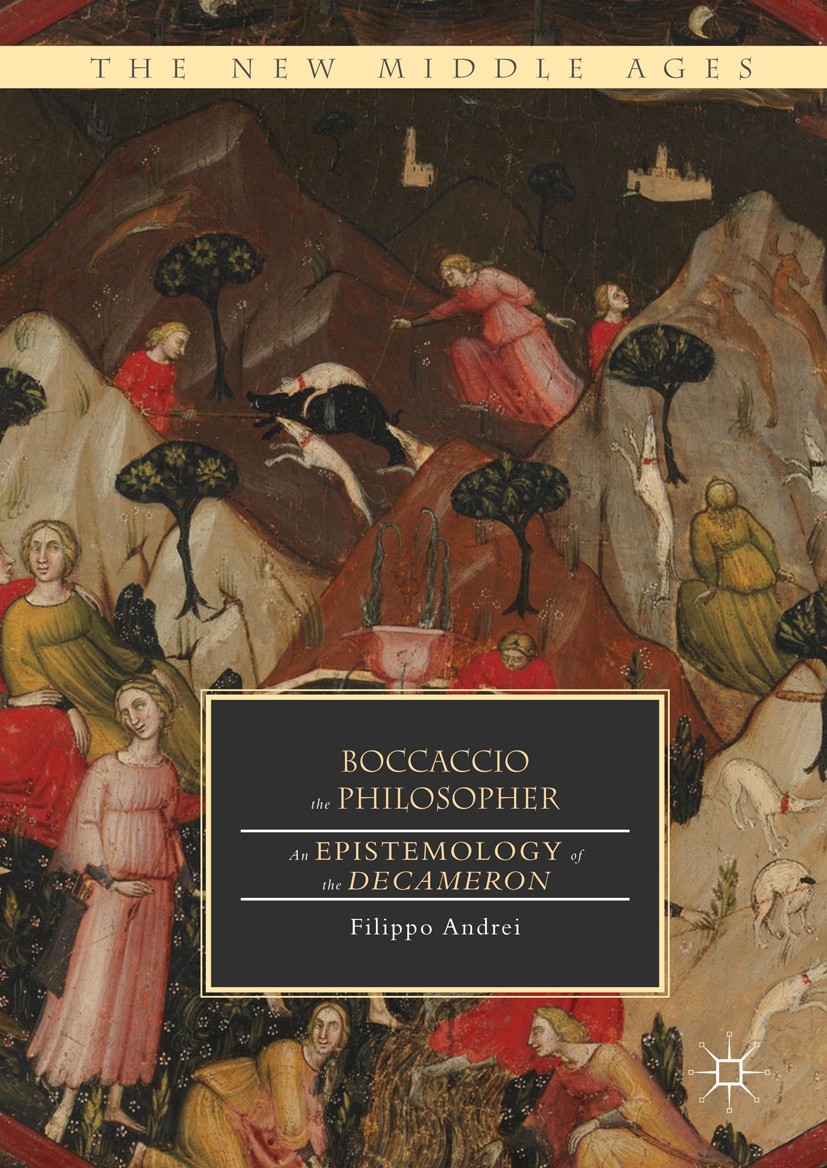
245 10|aBoccaccio the Philosopher|h[electronic resource] :|bAn Epistemology of the Decameron /|cby Filippo Andrei.
250 |a1st ed. 2017.
264 1|aCham :|bSpringer International Publishing :|bImprint: Palgrave Macmillan,|c2017.
300 |aXI, 259 p.|bonline resource.
336 |atext|btxt|2rdacontent
337 |acomputer|bc|2rdamedia
338 |aonline resource|bcr|2rdacarrier
347 |atext file|bPDF|2rda
490 1 |aThe New Middle Ages,|x2945-5944
520 |aThis book explores the tangled relationship between literary production and epistemological foundation as exemplified in one of the masterpieces of Italian literature. Filippo Andrei argues that Giovanni Boccaccio's Decameron has a significant though concealed engagement with philosophy, and that the philosophical implications of its narratives can be understood through an epistemological approach to the text. He analyzes the influence of Dante, Petrarch, Thomas Aquinas, Aristotle, and other classical and medieval thinkers on Boccaccio's attitudes towards ethics and knowledge-seeking. Beyond providing an epistemological reading of the Decameron, this book also evaluates how a theoretical reflection on the nature of rhetoric and poetic imagination can ultimately elicit a theory of knowledge. .
650 0|aLiterature, Medieval.
650 0|aEuropean literature.
650 0|aKnowledge, Theory of.
650 0|aPhilosophy, Medieval.
650 14|aMedieval Literature.
650 24|aEuropean Literature.
650 24|aEpistemology.
650 24|aMedieval Philosophy.
710 2 |aSpringerLink (Online service)
773 0 |tSpringer Nature eBook
776 08|iPrinted edition:|z9783319651149
776 08|iPrinted edition:|z9783319651163
776 08|iPrinted edition:|z9783319879536
830 0|aThe New Middle Ages,|x2945-5944
856 40|uhttps://doi.org/10.1007/978-3-319-65115-6
912 |aZDB-2-LCM
912 |aZDB-2-SXL
950 |aLiterature, Cultural and Media Studies (SpringerNature-41173)
950 |aLiterature, Cultural and Media Studies (R0) (SpringerNature-43723)