

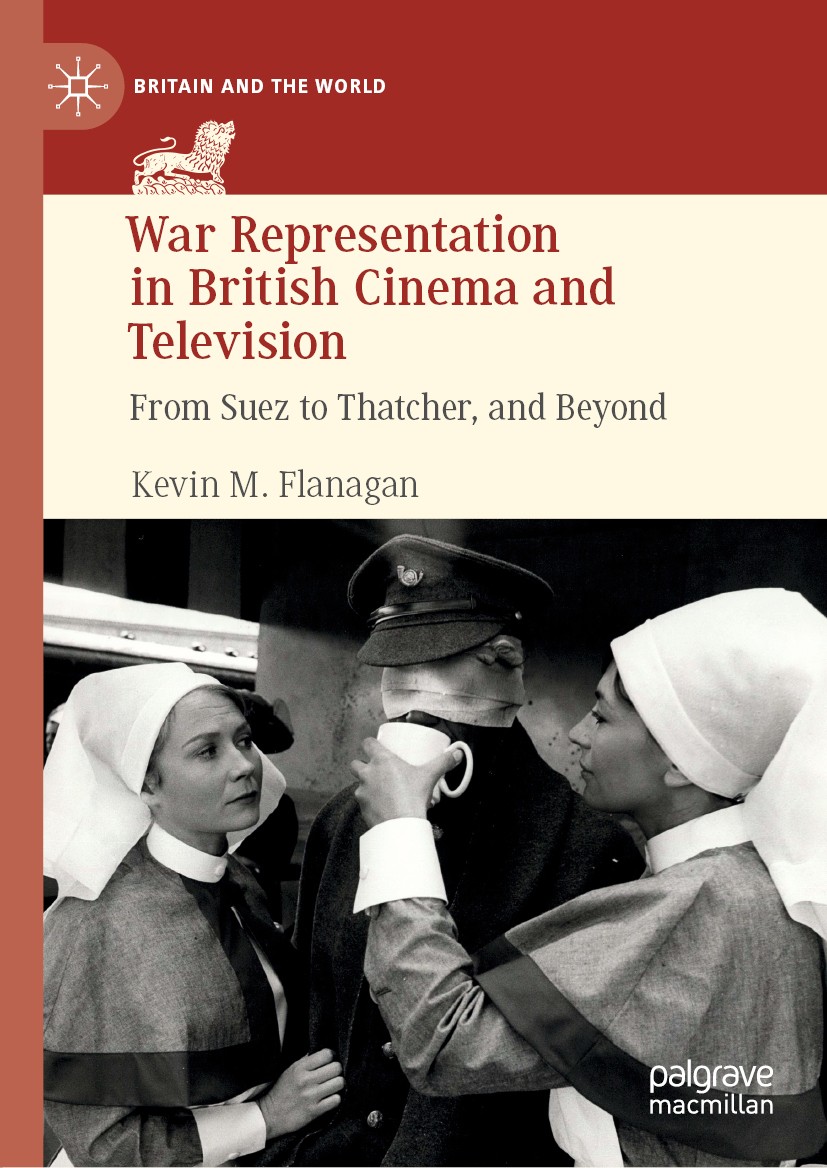
War Representation in British Cinema and Television [electronic resource] : From Suez to Thatcher, and Beyond / by Kevin M. Flanagan.
Erişim Adresi
ISBN
9783030302030
Dil Kodu
İngilizce
Yer Numarası
EK/6000
Yazar
Basım Bildirimi
1st ed. 2019.
Yayın Bilgisi
Cham : Springer International Publishing : Imprint: Palgrave Macmillan, 2019.
Fiziksel Niteleme
XI, 225 p. 14 illus., 8 illus. in color. online resource.
Dizi
Britain and the World, 2947-7190
İçindekiler Notu
Chapter 1. Introduction: Towards an Alternative Tradition of War Representation -- Chapter 2. “For Christ’s Sake, We’re Surrounded!”: Tragedy, Bleakness, Cynicism and Existentialism in British War Cinema, 1957-1977 -- Chapter 3. Comic Alternatives to the “Pleasure Culture of War” -- Chapter 4. On Screen and at Arm’s Length: Social Class and the Simulation of Combat -- Chapter 5. The Bomb and After: Fantasies of Apocalypse and Decline -- Chapter 6. Conclusion: The Legacies of the 1960s and 1970s War Representation, From Thatcher to Brexit.
Özet, vb.
"A highly original addition to the growing literature on war and film, Kevin Flanagan's welcome new study ranges beyond the narrow confines of the 'war film' to consider how war imagery and narratives are present across a wide range of British genres. Flanagan proves himself a perceptive cultural critic with a wide-ranging knowledge and deep understanding of British cinema and television. He has produced a study that is thoughtful and thought-provoking in equal measure, and which is not afraid to challenge dominant myths and existing preconceptions." James Chapman, Professor of Film Studies at the University of Leicester and editor of the Historical Journal of Film, Radio and Television. This book explores alternatives to realist, triumphalist, and heroic representations of war in British film and television. Focusing on the period between the Suez Crisis of 1956 and the Falkland War but offering connections to the moment of Brexit, it argues that the“lost continent” of existential, satirical, simulated, and abstractly traumatic war stories is as central to understanding Britain’s martial history as the mainstream inheritance. The book features case studies that stress the contribution of exiled or expatriate directors and outsider sensibilities, with particular emphasis on Peter Watkins, Joseph Losey, and Richard Lester. At the same time, it demonstrates concerns and stylistic emphases that continue to the present in television series and films by directors such as Lone Scherfig and Christopher Nolan. Encompassing everything from features to government information films, the book explores related trends in the British film industry, popular culture, and film criticism, while offering a sense of how these contexts contribute to historical memory. Kevin M. Flanagan is Term Assistant Professor of English at George Mason University, USA. He is the editor of Ken Russell: Re-Viewing England’s Last Mannerist (2009) and has published essays in Screen, Framework, Critical Quarterly, and the Journal of British Cinema and Television, as well as in many edited collections and reference works.
Konu
Motion pictures __ Great Britain.
Ethnology __ Great Britain.
Culture.
World War, 1939-1945.
Great Britain __ History.
British Film and TV.
British Culture.
History of World War II and the Holocaust.
History of Britain and Ireland.
Ethnology __ Great Britain.
Culture.
World War, 1939-1945.
Great Britain __ History.
British Film and TV.
British Culture.
History of World War II and the Holocaust.
History of Britain and Ireland.
Kurum Adı
Eseri Alıntıla
Referansları kullanmadan önce gözden geçirmeniz ve varsa gerekli düzeltmeleri yapmanız önerilir.
Dijital Kaynak
MARC Görünümü
LEADER 04757nam a22005655i 4500
001 842659
003 TR_AnAIT
005 20260715025816
007 cr nn 008mamaa
008 191025s2019 sz | s |||| 0|eng d
020 |a9783030302030|9978-3-030-30203-0
024 7 |a10.1007/978-3-030-30203-0|2doi
041 |aeng
049 |aTürk Dil Kurumu Kütüphanesi
050 4|aPN1993-1999
072 7|aAP|2bicssc
072 7|a1DDU|2bicssc
072 7|aPER004000|2bisacsh
072 7|aAT|x1DDU|2thema
082 04|a791.40941|223
090 |aEK/6000
100 1 |aFlanagan, Kevin M.|eauthor.|4aut|4http://id.loc.gov/vocabulary/relators/aut
245 10|aWar Representation in British Cinema and Television|h[electronic resource] :|bFrom Suez to Thatcher, and Beyond /|cby Kevin M. Flanagan.
250 |a1st ed. 2019.
264 1|aCham :|bSpringer International Publishing :|bImprint: Palgrave Macmillan,|c2019.
300 |aXI, 225 p. 14 illus., 8 illus. in color.|bonline resource.
336 |atext|btxt|2rdacontent
337 |acomputer|bc|2rdamedia
338 |aonline resource|bcr|2rdacarrier
347 |atext file|bPDF|2rda
490 1 |aBritain and the World,|x2947-7190
505 0 |aChapter 1. Introduction: Towards an Alternative Tradition of War Representation -- Chapter 2. “For Christ’s Sake, We’re Surrounded!”: Tragedy, Bleakness, Cynicism and Existentialism in British War Cinema, 1957-1977 -- Chapter 3. Comic Alternatives to the “Pleasure Culture of War” -- Chapter 4. On Screen and at Arm’s Length: Social Class and the Simulation of Combat -- Chapter 5. The Bomb and After: Fantasies of Apocalypse and Decline -- Chapter 6. Conclusion: The Legacies of the 1960s and 1970s War Representation, From Thatcher to Brexit.
520 |a"A highly original addition to the growing literature on war and film, Kevin Flanagan's welcome new study ranges beyond the narrow confines of the 'war film' to consider how war imagery and narratives are present across a wide range of British genres. Flanagan proves himself a perceptive cultural critic with a wide-ranging knowledge and deep understanding of British cinema and television. He has produced a study that is thoughtful and thought-provoking in equal measure, and which is not afraid to challenge dominant myths and existing preconceptions." James Chapman, Professor of Film Studies at the University of Leicester and editor of the Historical Journal of Film, Radio and Television. This book explores alternatives to realist, triumphalist, and heroic representations of war in British film and television. Focusing on the period between the Suez Crisis of 1956 and the Falkland War but offering connections to the moment of Brexit, it argues that the“lost continent” of existential, satirical, simulated, and abstractly traumatic war stories is as central to understanding Britain’s martial history as the mainstream inheritance. The book features case studies that stress the contribution of exiled or expatriate directors and outsider sensibilities, with particular emphasis on Peter Watkins, Joseph Losey, and Richard Lester. At the same time, it demonstrates concerns and stylistic emphases that continue to the present in television series and films by directors such as Lone Scherfig and Christopher Nolan. Encompassing everything from features to government information films, the book explores related trends in the British film industry, popular culture, and film criticism, while offering a sense of how these contexts contribute to historical memory. Kevin M. Flanagan is Term Assistant Professor of English at George Mason University, USA. He is the editor of Ken Russell: Re-Viewing England’s Last Mannerist (2009) and has published essays in Screen, Framework, Critical Quarterly, and the Journal of British Cinema and Television, as well as in many edited collections and reference works.
650 0|aMotion pictures|xGreat Britain.
650 0|aEthnology|xGreat Britain.
650 0|aCulture.
650 0|aWorld War, 1939-1945.
650 0|aGreat Britain|xHistory.
650 14|aBritish Film and TV.
650 24|aBritish Culture.
650 24|aHistory of World War II and the Holocaust.
650 24|aHistory of Britain and Ireland.
710 2 |aSpringerLink (Online service)
773 0 |tSpringer Nature eBook
776 08|iPrinted edition:|z9783030302023
776 08|iPrinted edition:|z9783030302047
776 08|iPrinted edition:|z9783030302054
830 0|aBritain and the World,|x2947-7190
856 40|uhttps://doi.org/10.1007/978-3-030-30203-0
912 |aZDB-2-LCM
912 |aZDB-2-SXL
950 |aLiterature, Cultural and Media Studies (SpringerNature-41173)
950 |aLiterature, Cultural and Media Studies (R0) (SpringerNature-43723)
001 842659
003 TR_AnAIT
005 20260715025816
007 cr nn 008mamaa
008 191025s2019 sz | s |||| 0|eng d
020 |a9783030302030|9978-3-030-30203-0
024 7 |a10.1007/978-3-030-30203-0|2doi
041 |aeng
049 |aTürk Dil Kurumu Kütüphanesi
050 4|aPN1993-1999
072 7|aAP|2bicssc
072 7|a1DDU|2bicssc
072 7|aPER004000|2bisacsh
072 7|aAT|x1DDU|2thema
082 04|a791.40941|223
090 |aEK/6000
100 1 |aFlanagan, Kevin M.|eauthor.|4aut|4http://id.loc.gov/vocabulary/relators/aut
245 10|aWar Representation in British Cinema and Television|h[electronic resource] :|bFrom Suez to Thatcher, and Beyond /|cby Kevin M. Flanagan.
250 |a1st ed. 2019.
264 1|aCham :|bSpringer International Publishing :|bImprint: Palgrave Macmillan,|c2019.
300 |aXI, 225 p. 14 illus., 8 illus. in color.|bonline resource.
336 |atext|btxt|2rdacontent
337 |acomputer|bc|2rdamedia
338 |aonline resource|bcr|2rdacarrier
347 |atext file|bPDF|2rda
490 1 |aBritain and the World,|x2947-7190
505 0 |aChapter 1. Introduction: Towards an Alternative Tradition of War Representation -- Chapter 2. “For Christ’s Sake, We’re Surrounded!”: Tragedy, Bleakness, Cynicism and Existentialism in British War Cinema, 1957-1977 -- Chapter 3. Comic Alternatives to the “Pleasure Culture of War” -- Chapter 4. On Screen and at Arm’s Length: Social Class and the Simulation of Combat -- Chapter 5. The Bomb and After: Fantasies of Apocalypse and Decline -- Chapter 6. Conclusion: The Legacies of the 1960s and 1970s War Representation, From Thatcher to Brexit.
520 |a"A highly original addition to the growing literature on war and film, Kevin Flanagan's welcome new study ranges beyond the narrow confines of the 'war film' to consider how war imagery and narratives are present across a wide range of British genres. Flanagan proves himself a perceptive cultural critic with a wide-ranging knowledge and deep understanding of British cinema and television. He has produced a study that is thoughtful and thought-provoking in equal measure, and which is not afraid to challenge dominant myths and existing preconceptions." James Chapman, Professor of Film Studies at the University of Leicester and editor of the Historical Journal of Film, Radio and Television. This book explores alternatives to realist, triumphalist, and heroic representations of war in British film and television. Focusing on the period between the Suez Crisis of 1956 and the Falkland War but offering connections to the moment of Brexit, it argues that the“lost continent” of existential, satirical, simulated, and abstractly traumatic war stories is as central to understanding Britain’s martial history as the mainstream inheritance. The book features case studies that stress the contribution of exiled or expatriate directors and outsider sensibilities, with particular emphasis on Peter Watkins, Joseph Losey, and Richard Lester. At the same time, it demonstrates concerns and stylistic emphases that continue to the present in television series and films by directors such as Lone Scherfig and Christopher Nolan. Encompassing everything from features to government information films, the book explores related trends in the British film industry, popular culture, and film criticism, while offering a sense of how these contexts contribute to historical memory. Kevin M. Flanagan is Term Assistant Professor of English at George Mason University, USA. He is the editor of Ken Russell: Re-Viewing England’s Last Mannerist (2009) and has published essays in Screen, Framework, Critical Quarterly, and the Journal of British Cinema and Television, as well as in many edited collections and reference works.
650 0|aMotion pictures|xGreat Britain.
650 0|aEthnology|xGreat Britain.
650 0|aCulture.
650 0|aWorld War, 1939-1945.
650 0|aGreat Britain|xHistory.
650 14|aBritish Film and TV.
650 24|aBritish Culture.
650 24|aHistory of World War II and the Holocaust.
650 24|aHistory of Britain and Ireland.
710 2 |aSpringerLink (Online service)
773 0 |tSpringer Nature eBook
776 08|iPrinted edition:|z9783030302023
776 08|iPrinted edition:|z9783030302047
776 08|iPrinted edition:|z9783030302054
830 0|aBritain and the World,|x2947-7190
856 40|uhttps://doi.org/10.1007/978-3-030-30203-0
912 |aZDB-2-LCM
912 |aZDB-2-SXL
950 |aLiterature, Cultural and Media Studies (SpringerNature-41173)
950 |aLiterature, Cultural and Media Studies (R0) (SpringerNature-43723)
Materyaller
Depodan talep edilen materyal sadece kütüphane içerisinde kullanılmaktadır.
Materyal dışarıya ödünç verilmemektedir.
Materyal dışarıya ödünç verilmemektedir.
