

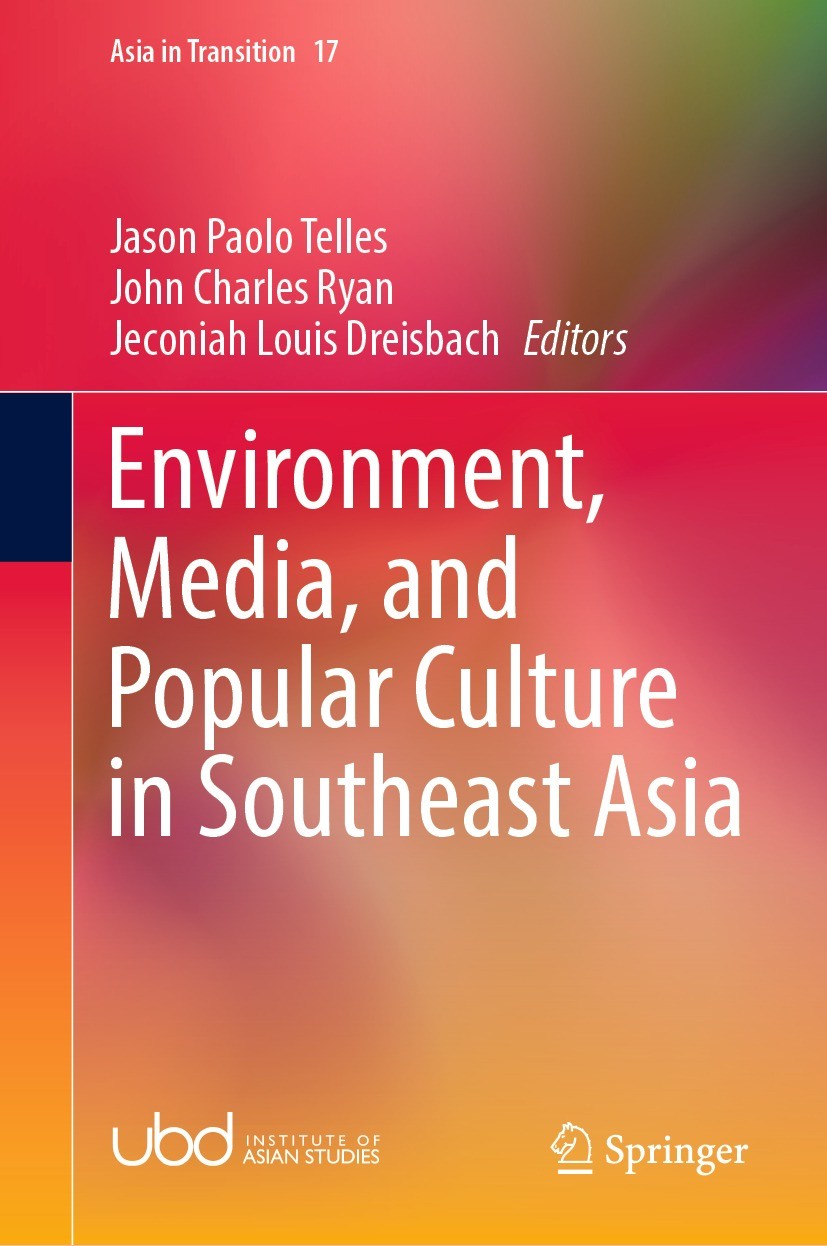
Environment, Media, and Popular Culture in Southeast Asia [electronic resource] / edited by Jason Paolo Telles, John Charles Ryan, Jeconiah Louis Dreisbach.
Erişim Adresi
ISBN
9789811911309
Dil Kodu
İngilizce
Yer Numarası
EK/6005
Basım Bildirimi
1st ed. 2022.
Yayın Bilgisi
Singapore : Springer Nature Singapore : Imprint: Springer, 2022.
Fiziksel Niteleme
X, 348 p. 45 illus., 40 illus. in color. online resource.
Dizi
Asia in Transition, 2364-8260 ; 17
İçindekiler Notu
Chapter 1. Introduction: Ecologies of Southeast Asian Media and Popular Culture (Jason Paolo Telles) -- Part 1. Activism, Environment, and Indigeneity -- Chapter 2.Sons of Soil: Reconstituting Bumiputeraism Indigeneity, Tanah Melayu, and Tanah Adat Orang Asli (Yvonne Tan) -- Chapter 3. Reading the Novel Sarongge through the Eyes of Female Environmental Activists in Indonesia (Meredian Alam) -- Chapter 4. Nguyen Trinh Thi’s Ecocinema: An Artistic Response to Environmental Problems in Vietnam (Tran Ngoc Hieu) -- Chapter 5. Vietnamese Cinema and Ecological Issues: The Story of Pao and Black Forest (Lê Thị Dương) -- Chapter 6. “Greatest Prodigy of the Vegetable World:” The Mediation of Rafflesia, the Corpse Flower of Southeast Asia (John Charles Ryan) -- Part 2. Political Ecologies and Urban Spaces -- Chapter 7. The Nightcrawlers and the Optics of Death: Documenting Duterte’s Necro-Politics (Jose Kervin Calabias) -- Chapter 8. Intervening in the Indonesian Election through Ecodocumentary: The Caseof Sexy Killers (Agung Wardana) -- Chapter 9. The Village as a Space of Rights: The Political Ecology of Mangroves and Fish Farming in an Island Village in Central Philippines (Eulalio Guieb) -- Chapter 10. The West Philippine Sea Dispute and Memefied Fish on Facebook (Jason Paolo Telles) -- Chapter 11. Telegraphic Poetics in Anxiety Myths by Afrizal Malna: Re-envisioning Human Interconnection with Material Ambience in the Digital Millennium (Henrikus Joko Yulianto) -- Part 3. Narratives, Discourses, and Aesthetics -- Chapter 12. Against DomiNation: Intersectional Aesthetics in U. Raksasad's Fictional Documentary Agrarian Utopia (Natalie Boheler) -- Chapter 13. The Littoral Zone as Guerilla Zone: The Hydroaesthetics of Revolutionary Music for Filipino Fisherfolk (Jose Monfred Sy) -- Chapter 14. Maps and Shifting Power Relations in the Mekong Delta Region (Tami Banh) -- Chapter 15. The Trend of “Movies as Tourism Promotion:” From Picturesque Landscapes to Eco-Consciousness (Hoang Cam Giang) -- Chapter 16. The Reporting of Climate-Related News by the National Broadcast Media of Brunei Darussalam (Sharifah Nurulhuda Alkaff) -- Chapter 17.Ecocentric Underpinnings in the My Village Children's TV Program in Laos (Jason Paolo Telles) -- Part 4. Imperialism, Nationalism, and Islands -- Chapter 18. Singapore, Colonialism, and the Environment (Marcella Polain) -- Chapter 19. Archipelagic Choreography: Movement and Intertwining Bodies in Emiliana Kampilan’s Dead Balagtas (Maria Karaan) -- Chapter 20. National Properties, National Ecologies: Postcolonial and Ecocritical Engagements with Mikhail Red’s Birdshot (2016) (Trish Remetir) -- Chapter 21. Wild Honey: Caring for Bees in a Divided Land (Balthasar Kehi) -- Chapter 22. Slow Cinema, Filipino Epistemology, and Nature in Lav Diaz’s From What Is Before (Stefan Torralba) -- Chapter 23. Escaping Paradise, Returning this Island: Examining Representations of Siargao and Islandic Space (Leonard Thomas Shaw).
Özet, vb.
This book addresses the increasingly important subject of ecomedia by critically examining the interconnections between environment, ecology, media forms, and popular culture in the Southeast Asian region, exploring methods such as textual analysis, thematic analysis, content analysis, participatory ethnography, auto ethnography, and semi-structured interviewing. It is divided into four sections: I. Activism, Environment, and Indigeneity; II. Political, Ecologies and Urban Spaces; III. Narratives, Discourses, and Aesthetics; and IV. Imperialism, Nationalism, and Islands, covering topics such as broadcast media (radio and TV) and the environment; green cinema and ecodocumentaries, ecodigital art, digital environmental literature. It is of great interest to researchers, students, practitioners and scholars working in the area of humanities, media, communications, cultural studies, environmental humanities, environmental studies, and sustainability.
Konu
Mass media and culture.
Communication in the environmental sciences.
Communication.
Media Culture.
Environmental Communication.
Media and Communication.
Communication in the environmental sciences.
Communication.
Media Culture.
Environmental Communication.
Media and Communication.
Kurum Adı
Eseri Alıntıla
Referansları kullanmadan önce gözden geçirmeniz ve varsa gerekli düzeltmeleri yapmanız önerilir.
Dijital Kaynak
MARC Görünümü
LEADER 06091nam a22005415i 4500
001 842677
003 TR_AnAIT
005 20260715025831
007 cr nn 008mamaa
008 220530s2022 si | s |||| 0|eng d
020 |a9789811911309|9978-981-19-1130-9
024 7 |a10.1007/978-981-19-1130-9|2doi
041 |aeng
049 |aTürk Dil Kurumu Kütüphanesi
050 4|aP94.6-.65
072 7|aJFD|2bicssc
072 7|aSOC052000|2bisacsh
072 7|aJBCT|2thema
082 04|a302.23|223
090 |aEK/6005
245 10|aEnvironment, Media, and Popular Culture in Southeast Asia|h[electronic resource] /|cedited by Jason Paolo Telles, John Charles Ryan, Jeconiah Louis Dreisbach.
250 |a1st ed. 2022.
264 1|aSingapore :|bSpringer Nature Singapore :|bImprint: Springer,|c2022.
300 |aX, 348 p. 45 illus., 40 illus. in color.|bonline resource.
336 |atext|btxt|2rdacontent
337 |acomputer|bc|2rdamedia
338 |aonline resource|bcr|2rdacarrier
347 |atext file|bPDF|2rda
490 1 |aAsia in Transition,|x2364-8260 ;|v17
505 0 |aChapter 1. Introduction: Ecologies of Southeast Asian Media and Popular Culture (Jason Paolo Telles) -- Part 1. Activism, Environment, and Indigeneity -- Chapter 2.Sons of Soil: Reconstituting Bumiputeraism Indigeneity, Tanah Melayu, and Tanah Adat Orang Asli (Yvonne Tan) -- Chapter 3. Reading the Novel Sarongge through the Eyes of Female Environmental Activists in Indonesia (Meredian Alam) -- Chapter 4. Nguyen Trinh Thi’s Ecocinema: An Artistic Response to Environmental Problems in Vietnam (Tran Ngoc Hieu) -- Chapter 5. Vietnamese Cinema and Ecological Issues: The Story of Pao and Black Forest (Lê Thị Dương) -- Chapter 6. “Greatest Prodigy of the Vegetable World:” The Mediation of Rafflesia, the Corpse Flower of Southeast Asia (John Charles Ryan) -- Part 2. Political Ecologies and Urban Spaces -- Chapter 7. The Nightcrawlers and the Optics of Death: Documenting Duterte’s Necro-Politics (Jose Kervin Calabias) -- Chapter 8. Intervening in the Indonesian Election through Ecodocumentary: The Caseof Sexy Killers (Agung Wardana) -- Chapter 9. The Village as a Space of Rights: The Political Ecology of Mangroves and Fish Farming in an Island Village in Central Philippines (Eulalio Guieb) -- Chapter 10. The West Philippine Sea Dispute and Memefied Fish on Facebook (Jason Paolo Telles) -- Chapter 11. Telegraphic Poetics in Anxiety Myths by Afrizal Malna: Re-envisioning Human Interconnection with Material Ambience in the Digital Millennium (Henrikus Joko Yulianto) -- Part 3. Narratives, Discourses, and Aesthetics -- Chapter 12. Against DomiNation: Intersectional Aesthetics in U. Raksasad's Fictional Documentary Agrarian Utopia (Natalie Boheler) -- Chapter 13. The Littoral Zone as Guerilla Zone: The Hydroaesthetics of Revolutionary Music for Filipino Fisherfolk (Jose Monfred Sy) -- Chapter 14. Maps and Shifting Power Relations in the Mekong Delta Region (Tami Banh) -- Chapter 15. The Trend of “Movies as Tourism Promotion:” From Picturesque Landscapes to Eco-Consciousness (Hoang Cam Giang) -- Chapter 16. The Reporting of Climate-Related News by the National Broadcast Media of Brunei Darussalam (Sharifah Nurulhuda Alkaff) -- Chapter 17.Ecocentric Underpinnings in the My Village Children's TV Program in Laos (Jason Paolo Telles) -- Part 4. Imperialism, Nationalism, and Islands -- Chapter 18. Singapore, Colonialism, and the Environment (Marcella Polain) -- Chapter 19. Archipelagic Choreography: Movement and Intertwining Bodies in Emiliana Kampilan’s Dead Balagtas (Maria Karaan) -- Chapter 20. National Properties, National Ecologies: Postcolonial and Ecocritical Engagements with Mikhail Red’s Birdshot (2016) (Trish Remetir) -- Chapter 21. Wild Honey: Caring for Bees in a Divided Land (Balthasar Kehi) -- Chapter 22. Slow Cinema, Filipino Epistemology, and Nature in Lav Diaz’s From What Is Before (Stefan Torralba) -- Chapter 23. Escaping Paradise, Returning this Island: Examining Representations of Siargao and Islandic Space (Leonard Thomas Shaw).
520 |aThis book addresses the increasingly important subject of ecomedia by critically examining the interconnections between environment, ecology, media forms, and popular culture in the Southeast Asian region, exploring methods such as textual analysis, thematic analysis, content analysis, participatory ethnography, auto ethnography, and semi-structured interviewing. It is divided into four sections: I. Activism, Environment, and Indigeneity; II. Political, Ecologies and Urban Spaces; III. Narratives, Discourses, and Aesthetics; and IV. Imperialism, Nationalism, and Islands, covering topics such as broadcast media (radio and TV) and the environment; green cinema and ecodocumentaries, ecodigital art, digital environmental literature. It is of great interest to researchers, students, practitioners and scholars working in the area of humanities, media, communications, cultural studies, environmental humanities, environmental studies, and sustainability.
650 0|aMass media and culture.
650 0|aCommunication in the environmental sciences.
650 0|aCommunication.
650 14|aMedia Culture.
650 24|aEnvironmental Communication.
650 24|aMedia and Communication.
700 1 |aTelles, Jason Paolo.|eeditor.|4edt|4http://id.loc.gov/vocabulary/relators/edt
700 1 |aRyan, John Charles.|eeditor.|4edt|4http://id.loc.gov/vocabulary/relators/edt
700 1 |aDreisbach, Jeconiah Louis.|eeditor.|4edt|4http://id.loc.gov/vocabulary/relators/edt
710 2 |aSpringerLink (Online service)
773 0 |tSpringer Nature eBook
776 08|iPrinted edition:|z9789811911293
776 08|iPrinted edition:|z9789811911316
776 08|iPrinted edition:|z9789811911323
830 0|aAsia in Transition,|x2364-8260 ;|v17
856 40|uhttps://doi.org/10.1007/978-981-19-1130-9
912 |aZDB-2-LCM
912 |aZDB-2-SXL
950 |aLiterature, Cultural and Media Studies (SpringerNature-41173)
950 |aLiterature, Cultural and Media Studies (R0) (SpringerNature-43723)
001 842677
003 TR_AnAIT
005 20260715025831
007 cr nn 008mamaa
008 220530s2022 si | s |||| 0|eng d
020 |a9789811911309|9978-981-19-1130-9
024 7 |a10.1007/978-981-19-1130-9|2doi
041 |aeng
049 |aTürk Dil Kurumu Kütüphanesi
050 4|aP94.6-.65
072 7|aJFD|2bicssc
072 7|aSOC052000|2bisacsh
072 7|aJBCT|2thema
082 04|a302.23|223
090 |aEK/6005
245 10|aEnvironment, Media, and Popular Culture in Southeast Asia|h[electronic resource] /|cedited by Jason Paolo Telles, John Charles Ryan, Jeconiah Louis Dreisbach.
250 |a1st ed. 2022.
264 1|aSingapore :|bSpringer Nature Singapore :|bImprint: Springer,|c2022.
300 |aX, 348 p. 45 illus., 40 illus. in color.|bonline resource.
336 |atext|btxt|2rdacontent
337 |acomputer|bc|2rdamedia
338 |aonline resource|bcr|2rdacarrier
347 |atext file|bPDF|2rda
490 1 |aAsia in Transition,|x2364-8260 ;|v17
505 0 |aChapter 1. Introduction: Ecologies of Southeast Asian Media and Popular Culture (Jason Paolo Telles) -- Part 1. Activism, Environment, and Indigeneity -- Chapter 2.Sons of Soil: Reconstituting Bumiputeraism Indigeneity, Tanah Melayu, and Tanah Adat Orang Asli (Yvonne Tan) -- Chapter 3. Reading the Novel Sarongge through the Eyes of Female Environmental Activists in Indonesia (Meredian Alam) -- Chapter 4. Nguyen Trinh Thi’s Ecocinema: An Artistic Response to Environmental Problems in Vietnam (Tran Ngoc Hieu) -- Chapter 5. Vietnamese Cinema and Ecological Issues: The Story of Pao and Black Forest (Lê Thị Dương) -- Chapter 6. “Greatest Prodigy of the Vegetable World:” The Mediation of Rafflesia, the Corpse Flower of Southeast Asia (John Charles Ryan) -- Part 2. Political Ecologies and Urban Spaces -- Chapter 7. The Nightcrawlers and the Optics of Death: Documenting Duterte’s Necro-Politics (Jose Kervin Calabias) -- Chapter 8. Intervening in the Indonesian Election through Ecodocumentary: The Caseof Sexy Killers (Agung Wardana) -- Chapter 9. The Village as a Space of Rights: The Political Ecology of Mangroves and Fish Farming in an Island Village in Central Philippines (Eulalio Guieb) -- Chapter 10. The West Philippine Sea Dispute and Memefied Fish on Facebook (Jason Paolo Telles) -- Chapter 11. Telegraphic Poetics in Anxiety Myths by Afrizal Malna: Re-envisioning Human Interconnection with Material Ambience in the Digital Millennium (Henrikus Joko Yulianto) -- Part 3. Narratives, Discourses, and Aesthetics -- Chapter 12. Against DomiNation: Intersectional Aesthetics in U. Raksasad's Fictional Documentary Agrarian Utopia (Natalie Boheler) -- Chapter 13. The Littoral Zone as Guerilla Zone: The Hydroaesthetics of Revolutionary Music for Filipino Fisherfolk (Jose Monfred Sy) -- Chapter 14. Maps and Shifting Power Relations in the Mekong Delta Region (Tami Banh) -- Chapter 15. The Trend of “Movies as Tourism Promotion:” From Picturesque Landscapes to Eco-Consciousness (Hoang Cam Giang) -- Chapter 16. The Reporting of Climate-Related News by the National Broadcast Media of Brunei Darussalam (Sharifah Nurulhuda Alkaff) -- Chapter 17.Ecocentric Underpinnings in the My Village Children's TV Program in Laos (Jason Paolo Telles) -- Part 4. Imperialism, Nationalism, and Islands -- Chapter 18. Singapore, Colonialism, and the Environment (Marcella Polain) -- Chapter 19. Archipelagic Choreography: Movement and Intertwining Bodies in Emiliana Kampilan’s Dead Balagtas (Maria Karaan) -- Chapter 20. National Properties, National Ecologies: Postcolonial and Ecocritical Engagements with Mikhail Red’s Birdshot (2016) (Trish Remetir) -- Chapter 21. Wild Honey: Caring for Bees in a Divided Land (Balthasar Kehi) -- Chapter 22. Slow Cinema, Filipino Epistemology, and Nature in Lav Diaz’s From What Is Before (Stefan Torralba) -- Chapter 23. Escaping Paradise, Returning this Island: Examining Representations of Siargao and Islandic Space (Leonard Thomas Shaw).
520 |aThis book addresses the increasingly important subject of ecomedia by critically examining the interconnections between environment, ecology, media forms, and popular culture in the Southeast Asian region, exploring methods such as textual analysis, thematic analysis, content analysis, participatory ethnography, auto ethnography, and semi-structured interviewing. It is divided into four sections: I. Activism, Environment, and Indigeneity; II. Political, Ecologies and Urban Spaces; III. Narratives, Discourses, and Aesthetics; and IV. Imperialism, Nationalism, and Islands, covering topics such as broadcast media (radio and TV) and the environment; green cinema and ecodocumentaries, ecodigital art, digital environmental literature. It is of great interest to researchers, students, practitioners and scholars working in the area of humanities, media, communications, cultural studies, environmental humanities, environmental studies, and sustainability.
650 0|aMass media and culture.
650 0|aCommunication in the environmental sciences.
650 0|aCommunication.
650 14|aMedia Culture.
650 24|aEnvironmental Communication.
650 24|aMedia and Communication.
700 1 |aTelles, Jason Paolo.|eeditor.|4edt|4http://id.loc.gov/vocabulary/relators/edt
700 1 |aRyan, John Charles.|eeditor.|4edt|4http://id.loc.gov/vocabulary/relators/edt
700 1 |aDreisbach, Jeconiah Louis.|eeditor.|4edt|4http://id.loc.gov/vocabulary/relators/edt
710 2 |aSpringerLink (Online service)
773 0 |tSpringer Nature eBook
776 08|iPrinted edition:|z9789811911293
776 08|iPrinted edition:|z9789811911316
776 08|iPrinted edition:|z9789811911323
830 0|aAsia in Transition,|x2364-8260 ;|v17
856 40|uhttps://doi.org/10.1007/978-981-19-1130-9
912 |aZDB-2-LCM
912 |aZDB-2-SXL
950 |aLiterature, Cultural and Media Studies (SpringerNature-41173)
950 |aLiterature, Cultural and Media Studies (R0) (SpringerNature-43723)
Materyaller
Depodan talep edilen materyal sadece kütüphane içerisinde kullanılmaktadır.
Materyal dışarıya ödünç verilmemektedir.
Materyal dışarıya ödünç verilmemektedir.
