

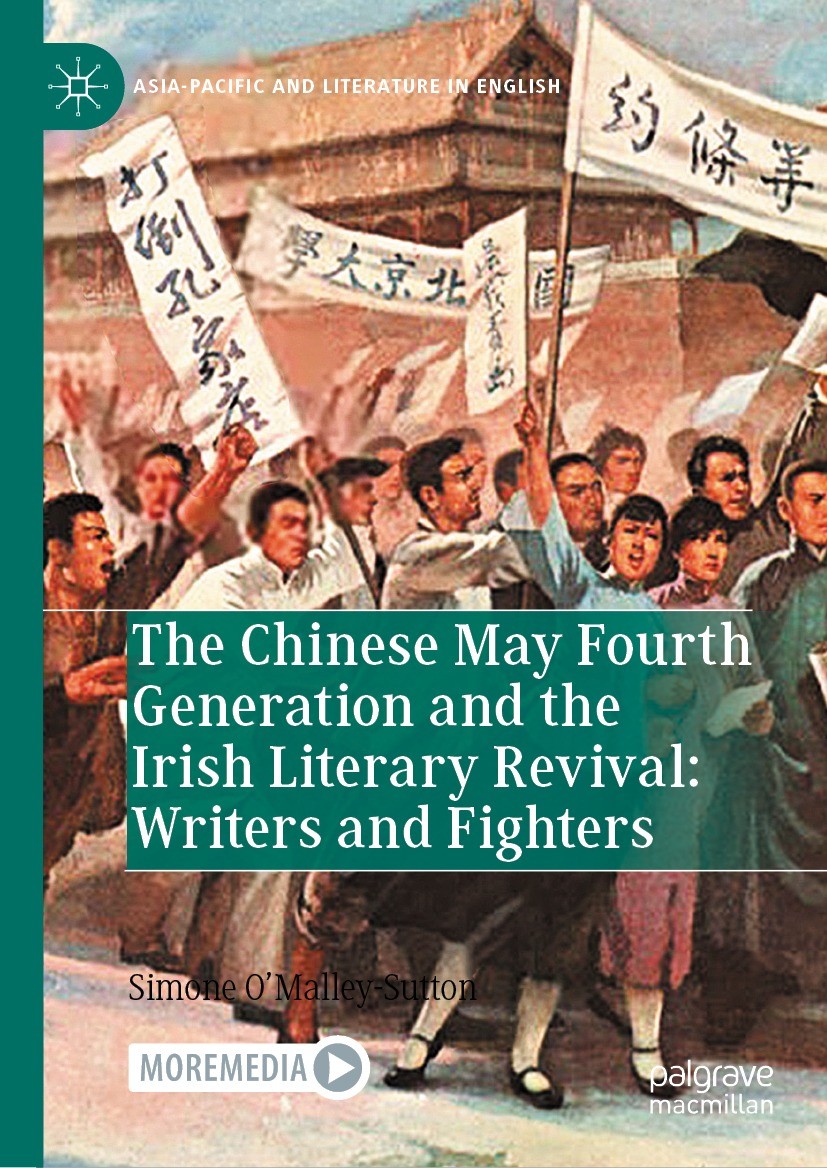
The Chinese May Fourth Generation and the Irish Literary Revival: Writers and Fighters [electronic resource] / by Simone O’Malley-Sutton.
Erişim Adresi
ISBN
9789819952694
Dil Kodu
İngilizce
Yer Numarası
EK/6107
Yazar
Basım Bildirimi
1st ed. 2023.
Yayın Bilgisi
Singapore : Springer Nature Singapore : Imprint: Palgrave Macmillan, 2023.
Fiziksel Niteleme
XXXI, 425 p. 25 illus., 7 illus. in color. online resource.
Dizi
Asia-Pacific and Literature in English, 2524-7646
İçindekiler Notu
1. Introduction -- 2. Yeats and Lu Xun: Postcolonised Modernists? -- 3.How Lu Xun translated Yeats and the Irish Revival -- 4. Yeats’s Reception in China: How Chinese May Fourth Writers Translated Yeats and the Irish Revival -- 5. Tempests in Tenements and Teahouses: A Comparison of Irish Revivalist Seán O’Casey’s trilogy of plays with Lao She’s Teahouse -- 6. Spreading the News Lady Gregory’s Plays Made it all the Way to China! A Gendered Comparison of “Founding Mothers” Lady Gregory in Revivalist Ireland and Qiu Jin in China -- 7. How Was the New Woman Constructed in Revivalist Ireland and May Fourth China? A Comparison of Socialist and Feminist Writers Ding Ling and Eva Gore-Booth -- 8. Irish Revivalist J. M. Synge and Chinese May Fourth Playwright Cao Yu: ‘Boys’ Who ‘Play’ in the Postcolonised Wilderness? -- 9. Did Ye Ever Hear of the Christmas Rising by Liu Bannong? Receptions of the 1916 Irish Easter Rising in Republican era China -- 10. Conclusion.
Özet, vb.
This book examines how the early twentieth-century Irish Renaissance (Irish Literary Revival) inspired the Chinese Renaissance (the May Fourth generation) of writers to make agentic choices and translingual exchanges. It sheds a new light on “May Fourth” and on the Irish Renaissance by establishing that the Irish Literary Revival (1900-1922) provided an alternative decolonizing model of resistance for the Chinese Renaissance to that provided by the western imperial center. The book also argues that Chinese May Fourth intellectuals translated Irish Revivalist plays by W. B. Yeats, Lady Gregory, Seán O’Casey and Synge and that Chinese peasants performed these plays throughout China during the 1920s and 1930s as a form of anti-imperial resistance. Yet this literary exchange was not simply going one way, since Yeats, Lady Gregory, Synge and O’Casey were also influenced by Chinese developments in literature and politics. Therefore this was a reciprocal encounter based on the circulation ofAnti-colonial ideals and mutual transformation.
Konu
Comparative literature.
China __ History.
Literature.
Comparative Literature.
History of China.
Literature.
China __ History.
Literature.
Comparative Literature.
History of China.
Literature.
Kurum Adı
Eseri Alıntıla
Referansları kullanmadan önce gözden geçirmeniz ve varsa gerekli düzeltmeleri yapmanız önerilir.
Dijital Kaynak
MARC Görünümü
LEADER 05189nam a22006375i 4500
001 842703
003 TR_AnAIT
005 20260715025858
007 cr nn 008mamaa
008 231006s2023 si | s |||| 0|eng d
020 |a9789819952694|9978-981-99-5269-4
024 7 |a10.1007/978-981-99-5269-4|2doi
041 |aeng
049 |aTürk Dil Kurumu Kütüphanesi
050 4|aPN851-884
072 7|aDS|2bicssc
072 7|aLIT020000|2bisacsh
072 7|aDSM|2thema
082 04|a809|223
090 |aEK/6107
100 1 |aO’Malley-Sutton, Simone.|eauthor.|4aut|4http://id.loc.gov/vocabulary/relators/aut
245 14|aThe Chinese May Fourth Generation and the Irish Literary Revival: Writers and Fighters|h[electronic resource] /|cby Simone O’Malley-Sutton.
250 |a1st ed. 2023.
264 1|aSingapore :|bSpringer Nature Singapore :|bImprint: Palgrave Macmillan,|c2023.
300 |aXXXI, 425 p. 25 illus., 7 illus. in color.|bonline resource.
336 |atext|btxt|2rdacontent
337 |acomputer|bc|2rdamedia
338 |aonline resource|bcr|2rdacarrier
341 0 |bTable of contents navigation|2onix
341 0 |bSingle logical reading order|2onix
341 0 |bShort alternative textual descriptions|2onix
341 0 |bUse of color is not sole means of conveying information|2onix
341 0 |bUse of high contrast between text and background color|2onix
341 0 |bNext / Previous structural navigation|2onix
341 0 |bAll non-decorative content supports reading without sight|2onix
347 |atext file|bPDF|2rda
490 1 |aAsia-Pacific and Literature in English,|x2524-7646
505 0 |a1. Introduction -- 2. Yeats and Lu Xun: Postcolonised Modernists? -- 3.How Lu Xun translated Yeats and the Irish Revival -- 4. Yeats’s Reception in China: How Chinese May Fourth Writers Translated Yeats and the Irish Revival -- 5. Tempests in Tenements and Teahouses: A Comparison of Irish Revivalist Seán O’Casey’s trilogy of plays with Lao She’s Teahouse -- 6. Spreading the News Lady Gregory’s Plays Made it all the Way to China! A Gendered Comparison of “Founding Mothers” Lady Gregory in Revivalist Ireland and Qiu Jin in China -- 7. How Was the New Woman Constructed in Revivalist Ireland and May Fourth China? A Comparison of Socialist and Feminist Writers Ding Ling and Eva Gore-Booth -- 8. Irish Revivalist J. M. Synge and Chinese May Fourth Playwright Cao Yu: ‘Boys’ Who ‘Play’ in the Postcolonised Wilderness? -- 9. Did Ye Ever Hear of the Christmas Rising by Liu Bannong? Receptions of the 1916 Irish Easter Rising in Republican era China -- 10. Conclusion.
520 |aThis book examines how the early twentieth-century Irish Renaissance (Irish Literary Revival) inspired the Chinese Renaissance (the May Fourth generation) of writers to make agentic choices and translingual exchanges. It sheds a new light on “May Fourth” and on the Irish Renaissance by establishing that the Irish Literary Revival (1900-1922) provided an alternative decolonizing model of resistance for the Chinese Renaissance to that provided by the western imperial center. The book also argues that Chinese May Fourth intellectuals translated Irish Revivalist plays by W. B. Yeats, Lady Gregory, Seán O’Casey and Synge and that Chinese peasants performed these plays throughout China during the 1920s and 1930s as a form of anti-imperial resistance. Yet this literary exchange was not simply going one way, since Yeats, Lady Gregory, Synge and O’Casey were also influenced by Chinese developments in literature and politics. Therefore this was a reciprocal encounter based on the circulation ofAnti-colonial ideals and mutual transformation.
532 8 |aAccessibility summary: This PDF does not fully comply with PDF/UA standards, but does feature limited screen reader support, described non-text content (images, graphs), bookmarks for easy navigation and searchable, selectable text. Users of assistive technologies may experience difficulty navigating or interpreting content in this document. We recognize the importance of accessibility, and we welcome queries about accessibility for any of our products. If you have a question or an access need, please get in touch with us at accessibilitysupport@springernature.com.
532 8 |aNo reading system accessibility options actively disabled
532 8 |aPublisher contact for further accessibility information: accessibilitysupport@springernature.com
650 0|aComparative literature.
650 0|aChina|xHistory.
650 0|aLiterature.
650 14|aComparative Literature.
650 24|aHistory of China.
650 24|aLiterature.
710 2 |aSpringerLink (Online service)
773 0 |tSpringer Nature eBook
776 08|iPrinted edition:|z9789819952687
776 08|iPrinted edition:|z9789819952700
776 08|iPrinted edition:|z9789819952717
830 0|aAsia-Pacific and Literature in English,|x2524-7646
856 40|uhttps://doi.org/10.1007/978-981-99-5269-4
912 |aZDB-2-LCM
912 |aZDB-2-SXL
950 |aLiterature, Cultural and Media Studies (SpringerNature-41173)
950 |aLiterature, Cultural and Media Studies (R0) (SpringerNature-43723)
001 842703
003 TR_AnAIT
005 20260715025858
007 cr nn 008mamaa
008 231006s2023 si | s |||| 0|eng d
020 |a9789819952694|9978-981-99-5269-4
024 7 |a10.1007/978-981-99-5269-4|2doi
041 |aeng
049 |aTürk Dil Kurumu Kütüphanesi
050 4|aPN851-884
072 7|aDS|2bicssc
072 7|aLIT020000|2bisacsh
072 7|aDSM|2thema
082 04|a809|223
090 |aEK/6107
100 1 |aO’Malley-Sutton, Simone.|eauthor.|4aut|4http://id.loc.gov/vocabulary/relators/aut
245 14|aThe Chinese May Fourth Generation and the Irish Literary Revival: Writers and Fighters|h[electronic resource] /|cby Simone O’Malley-Sutton.
250 |a1st ed. 2023.
264 1|aSingapore :|bSpringer Nature Singapore :|bImprint: Palgrave Macmillan,|c2023.
300 |aXXXI, 425 p. 25 illus., 7 illus. in color.|bonline resource.
336 |atext|btxt|2rdacontent
337 |acomputer|bc|2rdamedia
338 |aonline resource|bcr|2rdacarrier
341 0 |bTable of contents navigation|2onix
341 0 |bSingle logical reading order|2onix
341 0 |bShort alternative textual descriptions|2onix
341 0 |bUse of color is not sole means of conveying information|2onix
341 0 |bUse of high contrast between text and background color|2onix
341 0 |bNext / Previous structural navigation|2onix
341 0 |bAll non-decorative content supports reading without sight|2onix
347 |atext file|bPDF|2rda
490 1 |aAsia-Pacific and Literature in English,|x2524-7646
505 0 |a1. Introduction -- 2. Yeats and Lu Xun: Postcolonised Modernists? -- 3.How Lu Xun translated Yeats and the Irish Revival -- 4. Yeats’s Reception in China: How Chinese May Fourth Writers Translated Yeats and the Irish Revival -- 5. Tempests in Tenements and Teahouses: A Comparison of Irish Revivalist Seán O’Casey’s trilogy of plays with Lao She’s Teahouse -- 6. Spreading the News Lady Gregory’s Plays Made it all the Way to China! A Gendered Comparison of “Founding Mothers” Lady Gregory in Revivalist Ireland and Qiu Jin in China -- 7. How Was the New Woman Constructed in Revivalist Ireland and May Fourth China? A Comparison of Socialist and Feminist Writers Ding Ling and Eva Gore-Booth -- 8. Irish Revivalist J. M. Synge and Chinese May Fourth Playwright Cao Yu: ‘Boys’ Who ‘Play’ in the Postcolonised Wilderness? -- 9. Did Ye Ever Hear of the Christmas Rising by Liu Bannong? Receptions of the 1916 Irish Easter Rising in Republican era China -- 10. Conclusion.
520 |aThis book examines how the early twentieth-century Irish Renaissance (Irish Literary Revival) inspired the Chinese Renaissance (the May Fourth generation) of writers to make agentic choices and translingual exchanges. It sheds a new light on “May Fourth” and on the Irish Renaissance by establishing that the Irish Literary Revival (1900-1922) provided an alternative decolonizing model of resistance for the Chinese Renaissance to that provided by the western imperial center. The book also argues that Chinese May Fourth intellectuals translated Irish Revivalist plays by W. B. Yeats, Lady Gregory, Seán O’Casey and Synge and that Chinese peasants performed these plays throughout China during the 1920s and 1930s as a form of anti-imperial resistance. Yet this literary exchange was not simply going one way, since Yeats, Lady Gregory, Synge and O’Casey were also influenced by Chinese developments in literature and politics. Therefore this was a reciprocal encounter based on the circulation ofAnti-colonial ideals and mutual transformation.
532 8 |aAccessibility summary: This PDF does not fully comply with PDF/UA standards, but does feature limited screen reader support, described non-text content (images, graphs), bookmarks for easy navigation and searchable, selectable text. Users of assistive technologies may experience difficulty navigating or interpreting content in this document. We recognize the importance of accessibility, and we welcome queries about accessibility for any of our products. If you have a question or an access need, please get in touch with us at accessibilitysupport@springernature.com.
532 8 |aNo reading system accessibility options actively disabled
532 8 |aPublisher contact for further accessibility information: accessibilitysupport@springernature.com
650 0|aComparative literature.
650 0|aChina|xHistory.
650 0|aLiterature.
650 14|aComparative Literature.
650 24|aHistory of China.
650 24|aLiterature.
710 2 |aSpringerLink (Online service)
773 0 |tSpringer Nature eBook
776 08|iPrinted edition:|z9789819952687
776 08|iPrinted edition:|z9789819952700
776 08|iPrinted edition:|z9789819952717
830 0|aAsia-Pacific and Literature in English,|x2524-7646
856 40|uhttps://doi.org/10.1007/978-981-99-5269-4
912 |aZDB-2-LCM
912 |aZDB-2-SXL
950 |aLiterature, Cultural and Media Studies (SpringerNature-41173)
950 |aLiterature, Cultural and Media Studies (R0) (SpringerNature-43723)
Materyaller
Depodan talep edilen materyal sadece kütüphane içerisinde kullanılmaktadır.
Materyal dışarıya ödünç verilmemektedir.
Materyal dışarıya ödünç verilmemektedir.
