

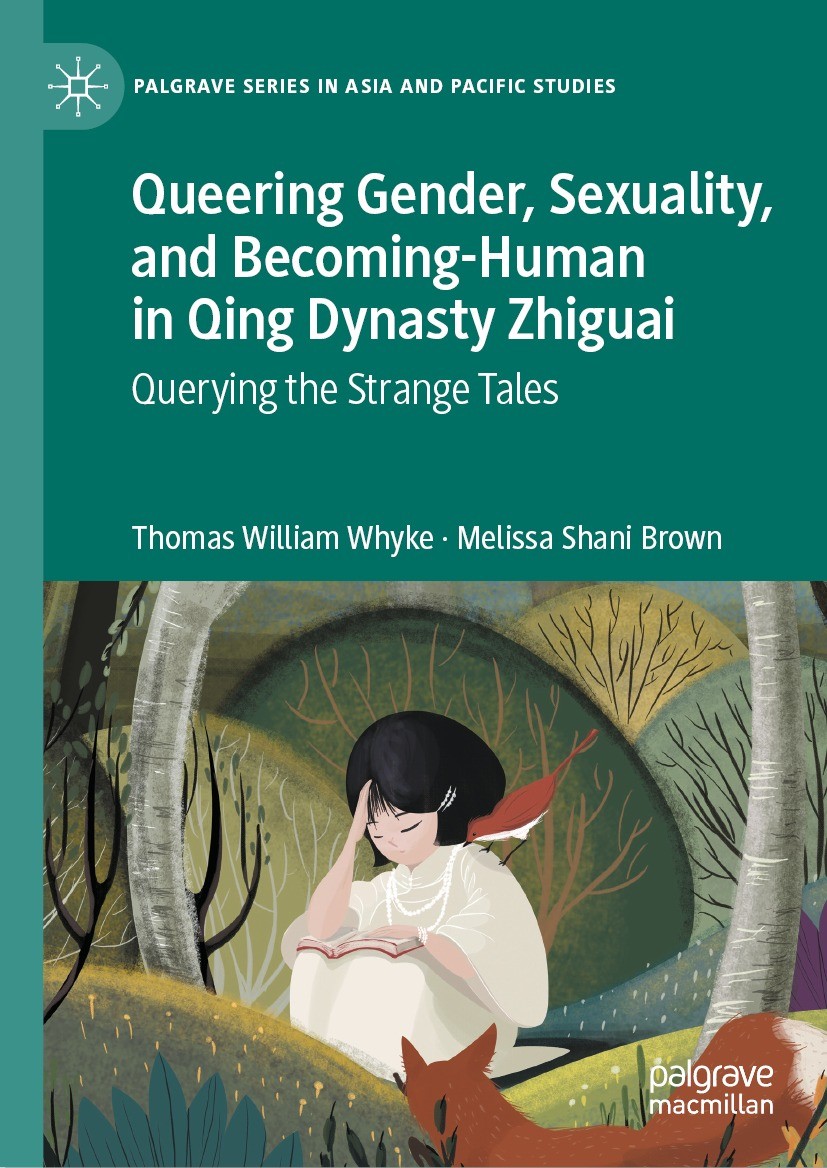
Queering Gender, Sexuality, and Becoming-Human in Qing Dynasty Zhiguai [electronic resource] : Querying the Strange Tales / by Thomas William Whyke, Melissa Shani Brown.
Erişim Adresi
ISBN
9789819942589
Dil Kodu
İngilizce
Yer Numarası
EK/6126
Basım Bildirimi
1st ed. 2023.
Yayın Bilgisi
Singapore : Springer Nature Singapore : Imprint: Palgrave Macmillan, 2023.
Fiziksel Niteleme
XIV, 246 p. 1 illus. online resource.
Dizi
Palgrave Series in Asia and Pacific Studies, 2662-7930
İçindekiler Notu
1. Introduction – Reading the Strange Tales Queerly -- 2. Queerying Identity – Intersecting Identities in Qing Dynasty China -- 3. Transformation as the Nature of Things – Queering the Non/Human in Qing Dynasty Zhiguai -- 4. Alternating States – Queerying Non/Binary Gender in Qing Dynasty Zhiguai -- 5. Strange Women – Queerying Female Sexuality in Qing Dynasty Zhiguai -- 6. Strange Men – Queerying Male Sexuality in Qing Dynasty Zhiguai -- 7. Becoming Perverse – Pornography and Queer Equality in Zhiguai -- 8. Coda – The Resilience of the Strange.
Özet, vb.
“What can we learn from classical Chinese short stories about nonhuman relationships, about gender, sexuality, and desire? How can queer theory benefit from a global historical perspective? This innovative study brings together nuanced reading of classical Chinese texts and sophisticated theoretical discussion. It asks vital questions such as what queerness is, why Chinese historic literatures matter to queer theory, and how animals, ghosts, spirits can haunt contemporary queer theorisation. It compels us to rethink how we can relate to the world less hierarchically, more ethically, and in intimate – and indeed queer – entanglements.” - Hongwei Bao, author of Queer China: Lesbian and Gay Literature and Visual Culture under Postsocialism “Shape-changing animals, un-wooable swordswomen, gender-fluid beings, sex-hungry ghosts, supernatural shadows avenging past lives, cannibalism, and pornographic ‘perverts’- Qing Dynasty zhiguai boasts them all. Insightfully reading ‘against the grain,’ this book offers analysis of the teeming intersectional potentialities undergirding Qing-era literature and identity, and how these weirdly resonate with contemporary becomings and culture.” - David H. Fleming, author of Chinese Urban Shi-nema This book offers queer readings of Chinese Qing Dynasty zhiguai, ‘strange tales’, a genre featuring supernatural characters and events. In a unique approach interweaving Chinese philosophies alongside critical theories, this book explores tales which speak to contemporary debates around identity and power. Depictions of porous boundaries between humans and animals, transformations between genders, diverse sexualities, and contextually unusual masculinities and femininities, lend such tales to queer readings. Unlike previous scholarship on characters as allegorical figures or stories as morality tales, this book draws on queer theory, animal studies, feminism, and Deleuzian philosophy, to explore the ‘strange’ and its potential for social critique. Examining such tales enriches the scope of historic queer world literatures, offering culturally situated stories of relationships, desires, and ways of being, that both speak to and challenge contemporary debates. Thomas William Whyke is an Assistant Professor at the University of Nottingham, Ningbo China. Melissa Shani Brown is affiliated with the Faculty of East Asian Studies, Ruhr-Universität Bochum, Germany.
Konu
Oriental literature.
Culture __ Study and teaching.
Psychology.
Asian Literature.
Cultural Studies.
Behavioral Sciences and Psychology.
Culture __ Study and teaching.
Psychology.
Asian Literature.
Cultural Studies.
Behavioral Sciences and Psychology.
Diğer Yazarlar
Kurum Adı
Eseri Alıntıla
Referansları kullanmadan önce gözden geçirmeniz ve varsa gerekli düzeltmeleri yapmanız önerilir.
Dijital Kaynak
MARC Görünümü
LEADER 06291nam a22006495i 4500
001 842731
003 TR_AnAIT
005 20260715025955
007 cr nn 008mamaa
008 230823s2023 si | s |||| 0|eng d
020 |a9789819942589|9978-981-99-4258-9
024 7 |a10.1007/978-981-99-4258-9|2doi
041 |aeng
049 |aTürk Dil Kurumu Kütüphanesi
050 4|aPJ305.2-489
072 7|aDS|2bicssc
072 7|a1F|2bicssc
072 7|aLIT008000|2bisacsh
072 7|aDS|x1F|2thema
082 04|a809.895|223
090 |aEK/6126
100 1 |aWhyke, Thomas William.|eauthor.|0(orcid)0000-0002-9771-3626|1https://orcid.org/0000-0002-9771-3626|4aut|4http://id.loc.gov/vocabulary/relators/aut
245 10|aQueering Gender, Sexuality, and Becoming-Human in Qing Dynasty Zhiguai|h[electronic resource] :|bQuerying the Strange Tales /|cby Thomas William Whyke, Melissa Shani Brown.
250 |a1st ed. 2023.
264 1|aSingapore :|bSpringer Nature Singapore :|bImprint: Palgrave Macmillan,|c2023.
300 |aXIV, 246 p. 1 illus.|bonline resource.
336 |atext|btxt|2rdacontent
337 |acomputer|bc|2rdamedia
338 |aonline resource|bcr|2rdacarrier
341 0 |bTable of contents navigation|2onix
341 0 |bSingle logical reading order|2onix
341 0 |bUse of color is not sole means of conveying information|2onix
341 0 |bUse of high contrast between text and background color|2onix
341 0 |bNext / Previous structural navigation|2onix
341 0 |bAll non-decorative content supports reading without sight|2onix
347 |atext file|bPDF|2rda
490 1 |aPalgrave Series in Asia and Pacific Studies,|x2662-7930
505 0 |a1. Introduction – Reading the Strange Tales Queerly -- 2. Queerying Identity – Intersecting Identities in Qing Dynasty China -- 3. Transformation as the Nature of Things – Queering the Non/Human in Qing Dynasty Zhiguai -- 4. Alternating States – Queerying Non/Binary Gender in Qing Dynasty Zhiguai -- 5. Strange Women – Queerying Female Sexuality in Qing Dynasty Zhiguai -- 6. Strange Men – Queerying Male Sexuality in Qing Dynasty Zhiguai -- 7. Becoming Perverse – Pornography and Queer Equality in Zhiguai -- 8. Coda – The Resilience of the Strange.
520 |a“What can we learn from classical Chinese short stories about nonhuman relationships, about gender, sexuality, and desire? How can queer theory benefit from a global historical perspective? This innovative study brings together nuanced reading of classical Chinese texts and sophisticated theoretical discussion. It asks vital questions such as what queerness is, why Chinese historic literatures matter to queer theory, and how animals, ghosts, spirits can haunt contemporary queer theorisation. It compels us to rethink how we can relate to the world less hierarchically, more ethically, and in intimate – and indeed queer – entanglements.” - Hongwei Bao, author of Queer China: Lesbian and Gay Literature and Visual Culture under Postsocialism “Shape-changing animals, un-wooable swordswomen, gender-fluid beings, sex-hungry ghosts, supernatural shadows avenging past lives, cannibalism, and pornographic ‘perverts’- Qing Dynasty zhiguai boasts them all. Insightfully reading ‘against the grain,’ this book offers analysis of the teeming intersectional potentialities undergirding Qing-era literature and identity, and how these weirdly resonate with contemporary becomings and culture.” - David H. Fleming, author of Chinese Urban Shi-nema This book offers queer readings of Chinese Qing Dynasty zhiguai, ‘strange tales’, a genre featuring supernatural characters and events. In a unique approach interweaving Chinese philosophies alongside critical theories, this book explores tales which speak to contemporary debates around identity and power. Depictions of porous boundaries between humans and animals, transformations between genders, diverse sexualities, and contextually unusual masculinities and femininities, lend such tales to queer readings. Unlike previous scholarship on characters as allegorical figures or stories as morality tales, this book draws on queer theory, animal studies, feminism, and Deleuzian philosophy, to explore the ‘strange’ and its potential for social critique. Examining such tales enriches the scope of historic queer world literatures, offering culturally situated stories of relationships, desires, and ways of being, that both speak to and challenge contemporary debates. Thomas William Whyke is an Assistant Professor at the University of Nottingham, Ningbo China. Melissa Shani Brown is affiliated with the Faculty of East Asian Studies, Ruhr-Universität Bochum, Germany.
532 8 |aAccessibility summary: This PDF does not fully comply with PDF/UA standards, but does feature limited screen reader support, bookmarks for easy navigation and searchable, selectable text. Users of assistive technologies may experience difficulty navigating or interpreting content in this document. We recognize the importance of accessibility, and we welcome queries about accessibility for any of our products. If you have a question or an access need, please get in touch with us at accessibilitysupport@springernature.com.
532 8 |aNo reading system accessibility options actively disabled
532 8 |aPublisher contact for further accessibility information: accessibilitysupport@springernature.com
650 0|aOriental literature.
650 0|aCulture|xStudy and teaching.
650 0|aPsychology.
650 14|aAsian Literature.
650 24|aCultural Studies.
650 24|aBehavioral Sciences and Psychology.
700 1 |aBrown, Melissa Shani.|eauthor.|4aut|4http://id.loc.gov/vocabulary/relators/aut
710 2 |aSpringerLink (Online service)
773 0 |tSpringer Nature eBook
776 08|iPrinted edition:|z9789819942572
776 08|iPrinted edition:|z9789819942596
776 08|iPrinted edition:|z9789819942602
830 0|aPalgrave Series in Asia and Pacific Studies,|x2662-7930
856 40|uhttps://doi.org/10.1007/978-981-99-4258-9
912 |aZDB-2-LCM
912 |aZDB-2-SXL
950 |aLiterature, Cultural and Media Studies (SpringerNature-41173)
950 |aLiterature, Cultural and Media Studies (R0) (SpringerNature-43723)
001 842731
003 TR_AnAIT
005 20260715025955
007 cr nn 008mamaa
008 230823s2023 si | s |||| 0|eng d
020 |a9789819942589|9978-981-99-4258-9
024 7 |a10.1007/978-981-99-4258-9|2doi
041 |aeng
049 |aTürk Dil Kurumu Kütüphanesi
050 4|aPJ305.2-489
072 7|aDS|2bicssc
072 7|a1F|2bicssc
072 7|aLIT008000|2bisacsh
072 7|aDS|x1F|2thema
082 04|a809.895|223
090 |aEK/6126
100 1 |aWhyke, Thomas William.|eauthor.|0(orcid)0000-0002-9771-3626|1https://orcid.org/0000-0002-9771-3626|4aut|4http://id.loc.gov/vocabulary/relators/aut
245 10|aQueering Gender, Sexuality, and Becoming-Human in Qing Dynasty Zhiguai|h[electronic resource] :|bQuerying the Strange Tales /|cby Thomas William Whyke, Melissa Shani Brown.
250 |a1st ed. 2023.
264 1|aSingapore :|bSpringer Nature Singapore :|bImprint: Palgrave Macmillan,|c2023.
300 |aXIV, 246 p. 1 illus.|bonline resource.
336 |atext|btxt|2rdacontent
337 |acomputer|bc|2rdamedia
338 |aonline resource|bcr|2rdacarrier
341 0 |bTable of contents navigation|2onix
341 0 |bSingle logical reading order|2onix
341 0 |bUse of color is not sole means of conveying information|2onix
341 0 |bUse of high contrast between text and background color|2onix
341 0 |bNext / Previous structural navigation|2onix
341 0 |bAll non-decorative content supports reading without sight|2onix
347 |atext file|bPDF|2rda
490 1 |aPalgrave Series in Asia and Pacific Studies,|x2662-7930
505 0 |a1. Introduction – Reading the Strange Tales Queerly -- 2. Queerying Identity – Intersecting Identities in Qing Dynasty China -- 3. Transformation as the Nature of Things – Queering the Non/Human in Qing Dynasty Zhiguai -- 4. Alternating States – Queerying Non/Binary Gender in Qing Dynasty Zhiguai -- 5. Strange Women – Queerying Female Sexuality in Qing Dynasty Zhiguai -- 6. Strange Men – Queerying Male Sexuality in Qing Dynasty Zhiguai -- 7. Becoming Perverse – Pornography and Queer Equality in Zhiguai -- 8. Coda – The Resilience of the Strange.
520 |a“What can we learn from classical Chinese short stories about nonhuman relationships, about gender, sexuality, and desire? How can queer theory benefit from a global historical perspective? This innovative study brings together nuanced reading of classical Chinese texts and sophisticated theoretical discussion. It asks vital questions such as what queerness is, why Chinese historic literatures matter to queer theory, and how animals, ghosts, spirits can haunt contemporary queer theorisation. It compels us to rethink how we can relate to the world less hierarchically, more ethically, and in intimate – and indeed queer – entanglements.” - Hongwei Bao, author of Queer China: Lesbian and Gay Literature and Visual Culture under Postsocialism “Shape-changing animals, un-wooable swordswomen, gender-fluid beings, sex-hungry ghosts, supernatural shadows avenging past lives, cannibalism, and pornographic ‘perverts’- Qing Dynasty zhiguai boasts them all. Insightfully reading ‘against the grain,’ this book offers analysis of the teeming intersectional potentialities undergirding Qing-era literature and identity, and how these weirdly resonate with contemporary becomings and culture.” - David H. Fleming, author of Chinese Urban Shi-nema This book offers queer readings of Chinese Qing Dynasty zhiguai, ‘strange tales’, a genre featuring supernatural characters and events. In a unique approach interweaving Chinese philosophies alongside critical theories, this book explores tales which speak to contemporary debates around identity and power. Depictions of porous boundaries between humans and animals, transformations between genders, diverse sexualities, and contextually unusual masculinities and femininities, lend such tales to queer readings. Unlike previous scholarship on characters as allegorical figures or stories as morality tales, this book draws on queer theory, animal studies, feminism, and Deleuzian philosophy, to explore the ‘strange’ and its potential for social critique. Examining such tales enriches the scope of historic queer world literatures, offering culturally situated stories of relationships, desires, and ways of being, that both speak to and challenge contemporary debates. Thomas William Whyke is an Assistant Professor at the University of Nottingham, Ningbo China. Melissa Shani Brown is affiliated with the Faculty of East Asian Studies, Ruhr-Universität Bochum, Germany.
532 8 |aAccessibility summary: This PDF does not fully comply with PDF/UA standards, but does feature limited screen reader support, bookmarks for easy navigation and searchable, selectable text. Users of assistive technologies may experience difficulty navigating or interpreting content in this document. We recognize the importance of accessibility, and we welcome queries about accessibility for any of our products. If you have a question or an access need, please get in touch with us at accessibilitysupport@springernature.com.
532 8 |aNo reading system accessibility options actively disabled
532 8 |aPublisher contact for further accessibility information: accessibilitysupport@springernature.com
650 0|aOriental literature.
650 0|aCulture|xStudy and teaching.
650 0|aPsychology.
650 14|aAsian Literature.
650 24|aCultural Studies.
650 24|aBehavioral Sciences and Psychology.
700 1 |aBrown, Melissa Shani.|eauthor.|4aut|4http://id.loc.gov/vocabulary/relators/aut
710 2 |aSpringerLink (Online service)
773 0 |tSpringer Nature eBook
776 08|iPrinted edition:|z9789819942572
776 08|iPrinted edition:|z9789819942596
776 08|iPrinted edition:|z9789819942602
830 0|aPalgrave Series in Asia and Pacific Studies,|x2662-7930
856 40|uhttps://doi.org/10.1007/978-981-99-4258-9
912 |aZDB-2-LCM
912 |aZDB-2-SXL
950 |aLiterature, Cultural and Media Studies (SpringerNature-41173)
950 |aLiterature, Cultural and Media Studies (R0) (SpringerNature-43723)
Materyaller
Depodan talep edilen materyal sadece kütüphane içerisinde kullanılmaktadır.
Materyal dışarıya ödünç verilmemektedir.
Materyal dışarıya ödünç verilmemektedir.
