

Performing Artists and Precarity [electronic resource] : Work in the Contemporary Entertainment Industries / by Philip Hancock, Melissa Tyler.
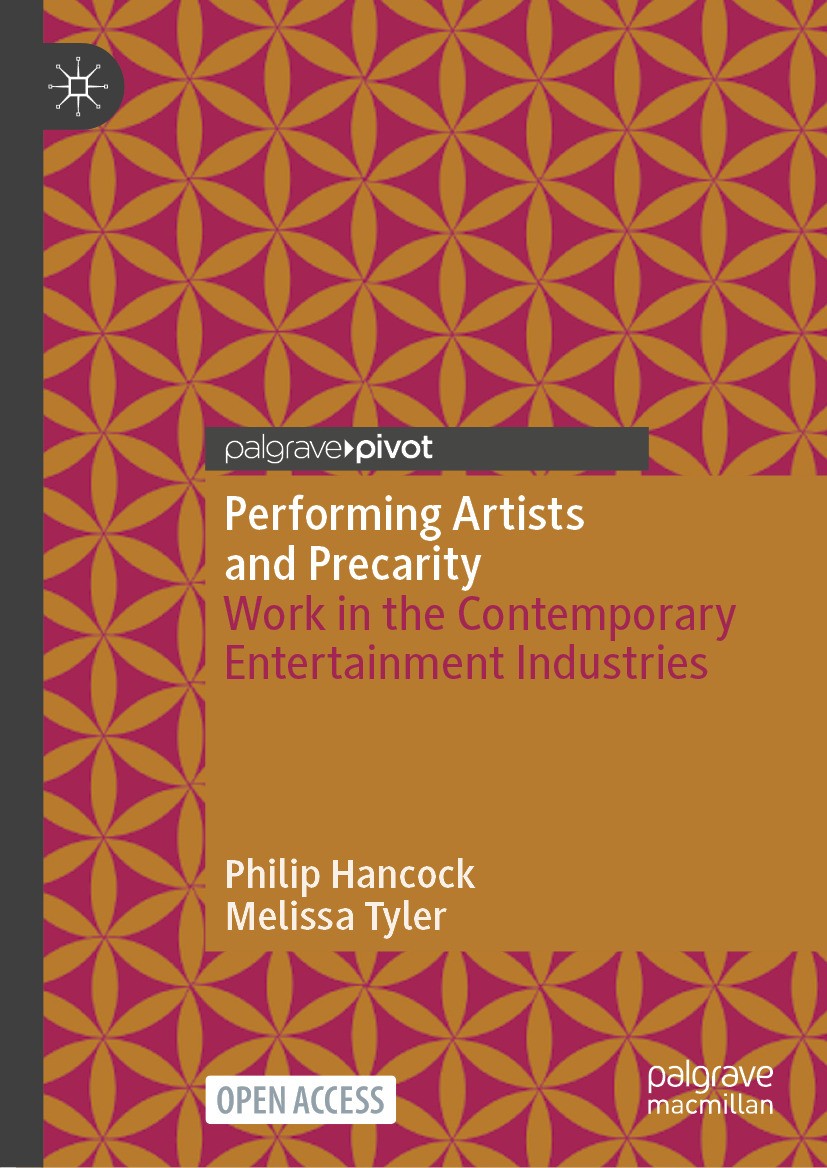
Erişim Adresi
ISBN
9783031661198
Dil Kodu
İngilizce
Yer Numarası
EK/6131
Basım Bildirimi
1st ed. 2025.
Yayın Bilgisi
Cham : Springer Nature Switzerland : Imprint: Palgrave Macmillan, 2025.
Fiziksel Niteleme
XI, 133 p. 1 illus. online resource.
İçindekiler Notu
Introduction -- Precarity in Freelance Work and Self-Employment -- Precarity and Work in The UK Cultural and Creative Sector -- Researching Precarious Work Experiences -- COVID-19 and Its Impact -- The Challenges of Financial and Operational Precarity -- Precarity, Identity and the Meaning of Cultural and Creative Work -- Live Entertainers and Extended Forms of Precarity -- Beyond Precarity? Towards a Fairer Future for Live Performers.
Özet, vb.
This open access book focuses on the distinctive experiences of freelance and self-employed live performers in the UK’s live entertainment industries It provides an in-depth account of their working lives during COVID-19, showing how their experiences of the pandemic provide insight into the different types of precarity shaping what it means to be a live performer. A growing body of academic research has focused on the meaning, experience, and nature of precarity for those working in the cultural and creative sector, highlighting the problem of socio-economic precarity. This book demonstrates how a constant struggle for recognition also shapes the contours and lived experiences of live performance work. It emphasizes how, combined with affective and socio-economic forms of precarity, this recognitive precarity creates a distinctive and challenging set of working conditions. Drawing on original data generated through a national survey of self-employed and freelance performers across the live entertainment industries, combined with insights derived from a series of in-depth semi-structured interviews, this book presents an empirically rich insight into the struggles and opportunities presented by the multiple forms of precarity that the pandemic brought to the fore. It gives voice to a precarious workforce that remains integral to one of the UK’s most economically buoyant sectors but whose experiences are often marginalized in academic research, and in policy and practice. It will, therefore, offer a unique insight for both students and scholars of work and employment, and for those working in the cultural and creative sector, into the distinctive nature of work as a freelance or self-employed live performer. Philp Hancock is a Professor of Work and Organization Studies at Essex Business School, University of Essex, UK. Melissa Tyler is a Professor of Work and Organization Studies at Essex Business School, University of Essex, UK.
Konu
Service industries.
Industrial sociology.
Entertainment Industry.
Sociology of Work.
Industrial sociology.
Entertainment Industry.
Sociology of Work.
Diğer Yazarlar
Kurum Adı
Eseri Alıntıla
Referansları kullanmadan önce gözden geçirmeniz ve varsa gerekli düzeltmeleri yapmanız önerilir.
Dijital Kaynak
MARC Görünümü
LEADER 04381nam a22005055i 4500
001 842739
003 TR_AnAIT
005 20260715030010
007 cr nn 008mamaa
008 241017s2025 sz | s |||| 0|eng d
020 |a9783031661198|9978-3-031-66119-8
024 7 |a10.1007/978-3-031-66119-8|2doi
041 |aeng
049 |aTürk Dil Kurumu Kütüphanesi
050 4|aHD9980-9990
072 7|aKNT|2bicssc
072 7|aBUS070060|2bisacsh
072 7|aKNT|2thema
082 04|a338.47791|223
090 |aEK/6131
100 1 |aHancock, Philip.|eauthor.|0(orcid)0000-0003-0229-5669|1https://orcid.org/0000-0003-0229-5669|4aut|4http://id.loc.gov/vocabulary/relators/aut
245 10|aPerforming Artists and Precarity|h[electronic resource] :|bWork in the Contemporary Entertainment Industries /|cby Philip Hancock, Melissa Tyler.
250 |a1st ed. 2025.
264 1|aCham :|bSpringer Nature Switzerland :|bImprint: Palgrave Macmillan,|c2025.
300 |aXI, 133 p. 1 illus.|bonline resource.
336 |atext|btxt|2rdacontent
337 |acomputer|bc|2rdamedia
338 |aonline resource|bcr|2rdacarrier
347 |atext file|bPDF|2rda
505 0 |aIntroduction -- Precarity in Freelance Work and Self-Employment -- Precarity and Work in The UK Cultural and Creative Sector -- Researching Precarious Work Experiences -- COVID-19 and Its Impact -- The Challenges of Financial and Operational Precarity -- Precarity, Identity and the Meaning of Cultural and Creative Work -- Live Entertainers and Extended Forms of Precarity -- Beyond Precarity? Towards a Fairer Future for Live Performers.
506 0 |aOpen Access
520 |aThis open access book focuses on the distinctive experiences of freelance and self-employed live performers in the UK’s live entertainment industries It provides an in-depth account of their working lives during COVID-19, showing how their experiences of the pandemic provide insight into the different types of precarity shaping what it means to be a live performer. A growing body of academic research has focused on the meaning, experience, and nature of precarity for those working in the cultural and creative sector, highlighting the problem of socio-economic precarity. This book demonstrates how a constant struggle for recognition also shapes the contours and lived experiences of live performance work. It emphasizes how, combined with affective and socio-economic forms of precarity, this recognitive precarity creates a distinctive and challenging set of working conditions. Drawing on original data generated through a national survey of self-employed and freelance performers across the live entertainment industries, combined with insights derived from a series of in-depth semi-structured interviews, this book presents an empirically rich insight into the struggles and opportunities presented by the multiple forms of precarity that the pandemic brought to the fore. It gives voice to a precarious workforce that remains integral to one of the UK’s most economically buoyant sectors but whose experiences are often marginalized in academic research, and in policy and practice. It will, therefore, offer a unique insight for both students and scholars of work and employment, and for those working in the cultural and creative sector, into the distinctive nature of work as a freelance or self-employed live performer. Philp Hancock is a Professor of Work and Organization Studies at Essex Business School, University of Essex, UK. Melissa Tyler is a Professor of Work and Organization Studies at Essex Business School, University of Essex, UK.
650 0|aService industries.
650 0|aIndustrial sociology.
650 14|aEntertainment Industry.
650 24|aSociology of Work.
700 1 |aTyler, Melissa.|eauthor.|0(orcid)0000-0002-4481-3543|1https://orcid.org/0000-0002-4481-3543|4aut|4http://id.loc.gov/vocabulary/relators/aut
710 2 |aSpringerLink (Online service)
773 0 |tSpringer Nature eBook
776 08|iPrinted edition:|z9783031661181
776 08|iPrinted edition:|z9783031661204
776 08|iPrinted edition:|z9783031661211
856 40|uhttps://doi.org/10.1007/978-3-031-66119-8
912 |aZDB-2-LCM
912 |aZDB-2-SXL
912 |aZDB-2-SOB
950 |aLiterature, Cultural and Media Studies (SpringerNature-41173)
950 |aLiterature, Cultural and Media Studies (R0) (SpringerNature-43723)
001 842739
003 TR_AnAIT
005 20260715030010
007 cr nn 008mamaa
008 241017s2025 sz | s |||| 0|eng d
020 |a9783031661198|9978-3-031-66119-8
024 7 |a10.1007/978-3-031-66119-8|2doi
041 |aeng
049 |aTürk Dil Kurumu Kütüphanesi
050 4|aHD9980-9990
072 7|aKNT|2bicssc
072 7|aBUS070060|2bisacsh
072 7|aKNT|2thema
082 04|a338.47791|223
090 |aEK/6131
100 1 |aHancock, Philip.|eauthor.|0(orcid)0000-0003-0229-5669|1https://orcid.org/0000-0003-0229-5669|4aut|4http://id.loc.gov/vocabulary/relators/aut
245 10|aPerforming Artists and Precarity|h[electronic resource] :|bWork in the Contemporary Entertainment Industries /|cby Philip Hancock, Melissa Tyler.
250 |a1st ed. 2025.
264 1|aCham :|bSpringer Nature Switzerland :|bImprint: Palgrave Macmillan,|c2025.
300 |aXI, 133 p. 1 illus.|bonline resource.
336 |atext|btxt|2rdacontent
337 |acomputer|bc|2rdamedia
338 |aonline resource|bcr|2rdacarrier
347 |atext file|bPDF|2rda
505 0 |aIntroduction -- Precarity in Freelance Work and Self-Employment -- Precarity and Work in The UK Cultural and Creative Sector -- Researching Precarious Work Experiences -- COVID-19 and Its Impact -- The Challenges of Financial and Operational Precarity -- Precarity, Identity and the Meaning of Cultural and Creative Work -- Live Entertainers and Extended Forms of Precarity -- Beyond Precarity? Towards a Fairer Future for Live Performers.
506 0 |aOpen Access
520 |aThis open access book focuses on the distinctive experiences of freelance and self-employed live performers in the UK’s live entertainment industries It provides an in-depth account of their working lives during COVID-19, showing how their experiences of the pandemic provide insight into the different types of precarity shaping what it means to be a live performer. A growing body of academic research has focused on the meaning, experience, and nature of precarity for those working in the cultural and creative sector, highlighting the problem of socio-economic precarity. This book demonstrates how a constant struggle for recognition also shapes the contours and lived experiences of live performance work. It emphasizes how, combined with affective and socio-economic forms of precarity, this recognitive precarity creates a distinctive and challenging set of working conditions. Drawing on original data generated through a national survey of self-employed and freelance performers across the live entertainment industries, combined with insights derived from a series of in-depth semi-structured interviews, this book presents an empirically rich insight into the struggles and opportunities presented by the multiple forms of precarity that the pandemic brought to the fore. It gives voice to a precarious workforce that remains integral to one of the UK’s most economically buoyant sectors but whose experiences are often marginalized in academic research, and in policy and practice. It will, therefore, offer a unique insight for both students and scholars of work and employment, and for those working in the cultural and creative sector, into the distinctive nature of work as a freelance or self-employed live performer. Philp Hancock is a Professor of Work and Organization Studies at Essex Business School, University of Essex, UK. Melissa Tyler is a Professor of Work and Organization Studies at Essex Business School, University of Essex, UK.
650 0|aService industries.
650 0|aIndustrial sociology.
650 14|aEntertainment Industry.
650 24|aSociology of Work.
700 1 |aTyler, Melissa.|eauthor.|0(orcid)0000-0002-4481-3543|1https://orcid.org/0000-0002-4481-3543|4aut|4http://id.loc.gov/vocabulary/relators/aut
710 2 |aSpringerLink (Online service)
773 0 |tSpringer Nature eBook
776 08|iPrinted edition:|z9783031661181
776 08|iPrinted edition:|z9783031661204
776 08|iPrinted edition:|z9783031661211
856 40|uhttps://doi.org/10.1007/978-3-031-66119-8
912 |aZDB-2-LCM
912 |aZDB-2-SXL
912 |aZDB-2-SOB
950 |aLiterature, Cultural and Media Studies (SpringerNature-41173)
950 |aLiterature, Cultural and Media Studies (R0) (SpringerNature-43723)
Materyaller
Depodan talep edilen materyal sadece kütüphane içerisinde kullanılmaktadır.
Materyal dışarıya ödünç verilmemektedir.
Materyal dışarıya ödünç verilmemektedir.
