

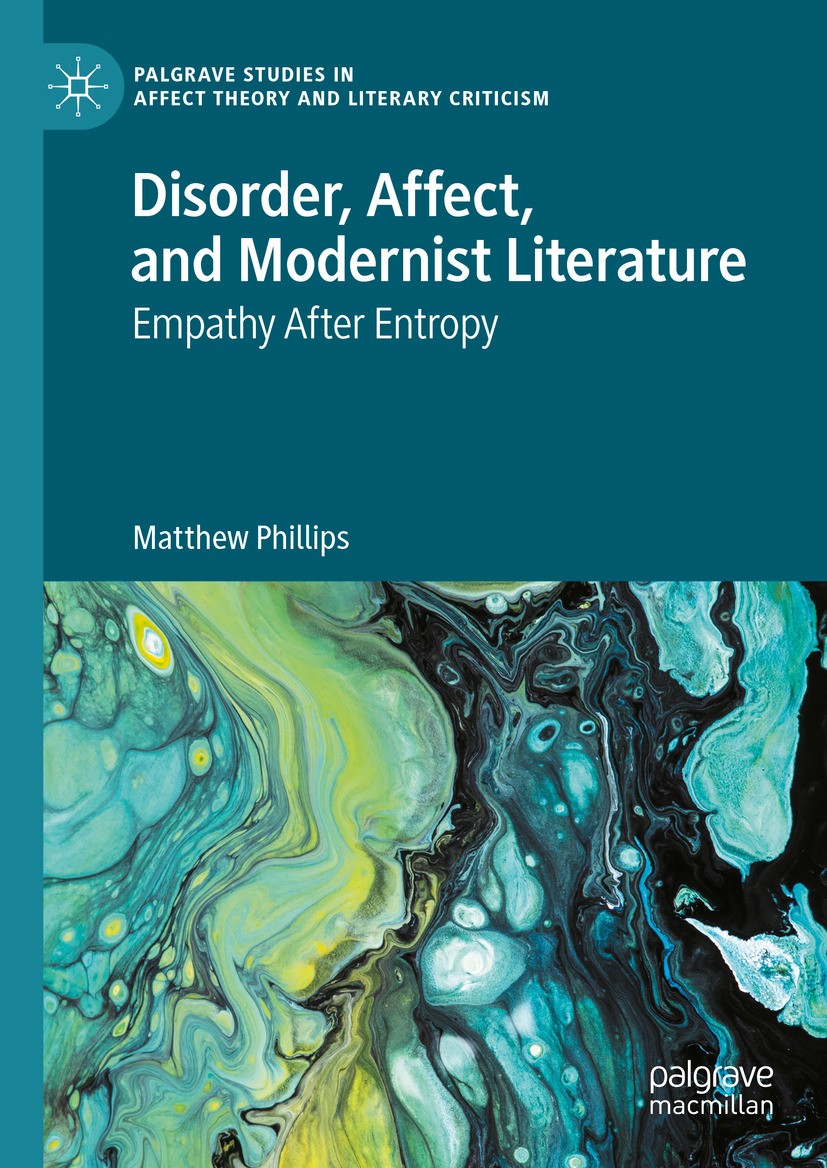
Disorder, Affect, and Modernist Literature [electronic resource] : Empathy After Entropy / by Matthew Phillips.
Erişim Adresi
ISBN
9783031924637
Dil Kodu
İngilizce
Yer Numarası
EK/3065
Yazar
Basım Bildirimi
1st ed. 2025.
Yayın Bilgisi
Cham : Springer Nature Switzerland : Imprint: Palgrave Macmillan, 2025.
Fiziksel Niteleme
V, 78 p. online resource.
Dizi
Palgrave Studies in Affect Theory and Literary Criticism, 2634-632X
İçindekiler Notu
Introduction -- Chapter I “Lower and Lower, and Down”: Entropy, Empathy, and Art in Stephen Crane’s “The Open Boat” -- Chapter 2 “Dreams of Leaves Decaying for a Vernal Stalk”: Entropy and Empathy in Jean Toomer's “Withered Skin of Berries” -- Chapter 3 “Things Must Spoil”: Necessary Entropy in Virginia Woolf's To The Lighthouse -- Chapter 4 Darkening Entropy and Empathy in Eugene O'Neill's Long Day's Journey into Night -- Chapter 5 Epilogue.
Özet, vb.
Modernist literature is defined by entropic characteristics. Its common themes include fragmentation, uncertainty, distrust, and misunderstanding. Alongside these themes, however, exists a desire to rebuild, to distill elements of past constructs into something that can provide stability in the chaotic present. Historically, modernist studies has focused on the former, without ample attention given to how entropic circumstances alter human emotion and affect. This book offers a new way of conceptualizing the modernist experience of alienation, disorder, and system deterioration as not merely negative, but productive in facilitating new structures of feeling and social adhesion. It pushes extant literary evaluations of entropy into a new realm by interrogating the human cost of entropic circumstances, and shows that we can use the process of entropy as a metaphorical lens through which to further understand the human connections and shared experiences reflected in modernist literature. Matthew Phillips is a Lecturer at UNC Greensboro, USA, where he has designed and taught courses on "Empathy and Imagination" and "Quarantine Literature". Matthew’s existing and forthcoming publications exhibit a wide-ranging research portfolio. Most recently, he has used the scientific principal of entropy as a metaphorical lens to study the phenomenon of the entropy/empathy paradigm, arguing that in works by Jean Toomer and Virginia Woolf, as well as in those temporally bookending modernism by Stephen Crane and Eugene O'Neill, an accumulation of entropy unpredictably results in an increase in empathic potential. Matthew has also published on Evelyn Waugh and Richard Hakluyt in an article that interrogates divergent depictions of empathy and religion in their respective work.
Konu
Literature, Modern __ 20th century.
Literature __ History and criticism.
Literature __ Philosophy.
Twentieth-Century Literature.
Literary Criticism.
Literary Theory.
Literature __ History and criticism.
Literature __ Philosophy.
Twentieth-Century Literature.
Literary Criticism.
Literary Theory.
Kurum Adı
Eseri Alıntıla
Referansları kullanmadan önce gözden geçirmeniz ve varsa gerekli düzeltmeleri yapmanız önerilir.
Dijital Kaynak
MARC Görünümü
LEADER 05480nam a22006495i 4500
001 842807
003 TR_AnAIT
005 20260715030421
007 cr nn 008mamaa
008 250701s2025 sz | s |||| 0|eng d
020 |a9783031924637|9978-3-031-92463-7
024 7 |a10.1007/978-3-031-92463-7|2doi
041 |aeng
049 |aTürk Dil Kurumu Kütüphanesi
050 4|aPN770-779
072 7|aDSBH|2bicssc
072 7|aLIT024050|2bisacsh
072 7|aDSBH|2thema
082 04|a809.04|223
090 |aEK/3065
100 1 |aPhillips, Matthew.|eauthor.|4aut|4http://id.loc.gov/vocabulary/relators/aut
245 10|aDisorder, Affect, and Modernist Literature|h[electronic resource] :|bEmpathy After Entropy /|cby Matthew Phillips.
250 |a1st ed. 2025.
264 1|aCham :|bSpringer Nature Switzerland :|bImprint: Palgrave Macmillan,|c2025.
300 |aV, 78 p.|bonline resource.
336 |atext|btxt|2rdacontent
337 |acomputer|bc|2rdamedia
338 |aonline resource|bcr|2rdacarrier
341 0 |bPDF/UA-1|2onix
341 0 |bTable of contents navigation|2onix
341 0 |bSingle logical reading order|2onix
341 0 |bShort alternative textual descriptions|2onix
341 0 |bUse of color is not sole means of conveying information|2onix
341 0 |bUse of high contrast between text and background color|2onix
341 0 |bNext / Previous structural navigation|2onix
341 0 |bAll non-decorative content supports reading without sight|2onix
347 |atext file|bPDF|2rda
490 1 |aPalgrave Studies in Affect Theory and Literary Criticism,|x2634-632X
505 0 |aIntroduction -- Chapter I “Lower and Lower, and Down”: Entropy, Empathy, and Art in Stephen Crane’s “The Open Boat” -- Chapter 2 “Dreams of Leaves Decaying for a Vernal Stalk”: Entropy and Empathy in Jean Toomer's “Withered Skin of Berries” -- Chapter 3 “Things Must Spoil”: Necessary Entropy in Virginia Woolf's To The Lighthouse -- Chapter 4 Darkening Entropy and Empathy in Eugene O'Neill's Long Day's Journey into Night -- Chapter 5 Epilogue.
520 |aModernist literature is defined by entropic characteristics. Its common themes include fragmentation, uncertainty, distrust, and misunderstanding. Alongside these themes, however, exists a desire to rebuild, to distill elements of past constructs into something that can provide stability in the chaotic present. Historically, modernist studies has focused on the former, without ample attention given to how entropic circumstances alter human emotion and affect. This book offers a new way of conceptualizing the modernist experience of alienation, disorder, and system deterioration as not merely negative, but productive in facilitating new structures of feeling and social adhesion. It pushes extant literary evaluations of entropy into a new realm by interrogating the human cost of entropic circumstances, and shows that we can use the process of entropy as a metaphorical lens through which to further understand the human connections and shared experiences reflected in modernist literature. Matthew Phillips is a Lecturer at UNC Greensboro, USA, where he has designed and taught courses on "Empathy and Imagination" and "Quarantine Literature". Matthew’s existing and forthcoming publications exhibit a wide-ranging research portfolio. Most recently, he has used the scientific principal of entropy as a metaphorical lens to study the phenomenon of the entropy/empathy paradigm, arguing that in works by Jean Toomer and Virginia Woolf, as well as in those temporally bookending modernism by Stephen Crane and Eugene O'Neill, an accumulation of entropy unpredictably results in an increase in empathic potential. Matthew has also published on Evelyn Waugh and Richard Hakluyt in an article that interrogates divergent depictions of empathy and religion in their respective work.
532 8 |aAccessibility summary: This PDF has been created in accordance with the PDF/UA-1 standard to enhance accessibility, including screen reader support, described non-text content (images, graphs), bookmarks for easy navigation, keyboard-friendly links and forms and searchable, selectable text. We recognize the importance of accessibility, and we welcome queries about accessibility for any of our products. If you have a question or an access need, please get in touch with us at accessibilitysupport@springernature.com. Please note that a more accessible version of this eBook is available as ePub.
532 8 |aNo reading system accessibility options actively disabled
532 8 |aPublisher contact for further accessibility information: accessibilitysupport@springernature.com
650 0|aLiterature, Modern|x20th century.
650 0|aLiterature|xHistory and criticism.
650 0|aLiterature|xPhilosophy.
650 14|aTwentieth-Century Literature.
650 24|aLiterary Criticism.
650 24|aLiterary Theory.
710 2 |aSpringerLink (Online service)
773 0 |tSpringer Nature eBook
776 08|iPrinted edition:|z9783031924620
776 08|iPrinted edition:|z9783031924644
776 08|iPrinted edition:|z9783031924651
830 0|aPalgrave Studies in Affect Theory and Literary Criticism,|x2634-632X
856 40|uhttps://doi.org/10.1007/978-3-031-92463-7
912 |aZDB-2-LCM
912 |aZDB-2-SXL
950 |aLiterature, Cultural and Media Studies (SpringerNature-41173)
950 |aLiterature, Cultural and Media Studies (R0) (SpringerNature-43723)
001 842807
003 TR_AnAIT
005 20260715030421
007 cr nn 008mamaa
008 250701s2025 sz | s |||| 0|eng d
020 |a9783031924637|9978-3-031-92463-7
024 7 |a10.1007/978-3-031-92463-7|2doi
041 |aeng
049 |aTürk Dil Kurumu Kütüphanesi
050 4|aPN770-779
072 7|aDSBH|2bicssc
072 7|aLIT024050|2bisacsh
072 7|aDSBH|2thema
082 04|a809.04|223
090 |aEK/3065
100 1 |aPhillips, Matthew.|eauthor.|4aut|4http://id.loc.gov/vocabulary/relators/aut
245 10|aDisorder, Affect, and Modernist Literature|h[electronic resource] :|bEmpathy After Entropy /|cby Matthew Phillips.
250 |a1st ed. 2025.
264 1|aCham :|bSpringer Nature Switzerland :|bImprint: Palgrave Macmillan,|c2025.
300 |aV, 78 p.|bonline resource.
336 |atext|btxt|2rdacontent
337 |acomputer|bc|2rdamedia
338 |aonline resource|bcr|2rdacarrier
341 0 |bPDF/UA-1|2onix
341 0 |bTable of contents navigation|2onix
341 0 |bSingle logical reading order|2onix
341 0 |bShort alternative textual descriptions|2onix
341 0 |bUse of color is not sole means of conveying information|2onix
341 0 |bUse of high contrast between text and background color|2onix
341 0 |bNext / Previous structural navigation|2onix
341 0 |bAll non-decorative content supports reading without sight|2onix
347 |atext file|bPDF|2rda
490 1 |aPalgrave Studies in Affect Theory and Literary Criticism,|x2634-632X
505 0 |aIntroduction -- Chapter I “Lower and Lower, and Down”: Entropy, Empathy, and Art in Stephen Crane’s “The Open Boat” -- Chapter 2 “Dreams of Leaves Decaying for a Vernal Stalk”: Entropy and Empathy in Jean Toomer's “Withered Skin of Berries” -- Chapter 3 “Things Must Spoil”: Necessary Entropy in Virginia Woolf's To The Lighthouse -- Chapter 4 Darkening Entropy and Empathy in Eugene O'Neill's Long Day's Journey into Night -- Chapter 5 Epilogue.
520 |aModernist literature is defined by entropic characteristics. Its common themes include fragmentation, uncertainty, distrust, and misunderstanding. Alongside these themes, however, exists a desire to rebuild, to distill elements of past constructs into something that can provide stability in the chaotic present. Historically, modernist studies has focused on the former, without ample attention given to how entropic circumstances alter human emotion and affect. This book offers a new way of conceptualizing the modernist experience of alienation, disorder, and system deterioration as not merely negative, but productive in facilitating new structures of feeling and social adhesion. It pushes extant literary evaluations of entropy into a new realm by interrogating the human cost of entropic circumstances, and shows that we can use the process of entropy as a metaphorical lens through which to further understand the human connections and shared experiences reflected in modernist literature. Matthew Phillips is a Lecturer at UNC Greensboro, USA, where he has designed and taught courses on "Empathy and Imagination" and "Quarantine Literature". Matthew’s existing and forthcoming publications exhibit a wide-ranging research portfolio. Most recently, he has used the scientific principal of entropy as a metaphorical lens to study the phenomenon of the entropy/empathy paradigm, arguing that in works by Jean Toomer and Virginia Woolf, as well as in those temporally bookending modernism by Stephen Crane and Eugene O'Neill, an accumulation of entropy unpredictably results in an increase in empathic potential. Matthew has also published on Evelyn Waugh and Richard Hakluyt in an article that interrogates divergent depictions of empathy and religion in their respective work.
532 8 |aAccessibility summary: This PDF has been created in accordance with the PDF/UA-1 standard to enhance accessibility, including screen reader support, described non-text content (images, graphs), bookmarks for easy navigation, keyboard-friendly links and forms and searchable, selectable text. We recognize the importance of accessibility, and we welcome queries about accessibility for any of our products. If you have a question or an access need, please get in touch with us at accessibilitysupport@springernature.com. Please note that a more accessible version of this eBook is available as ePub.
532 8 |aNo reading system accessibility options actively disabled
532 8 |aPublisher contact for further accessibility information: accessibilitysupport@springernature.com
650 0|aLiterature, Modern|x20th century.
650 0|aLiterature|xHistory and criticism.
650 0|aLiterature|xPhilosophy.
650 14|aTwentieth-Century Literature.
650 24|aLiterary Criticism.
650 24|aLiterary Theory.
710 2 |aSpringerLink (Online service)
773 0 |tSpringer Nature eBook
776 08|iPrinted edition:|z9783031924620
776 08|iPrinted edition:|z9783031924644
776 08|iPrinted edition:|z9783031924651
830 0|aPalgrave Studies in Affect Theory and Literary Criticism,|x2634-632X
856 40|uhttps://doi.org/10.1007/978-3-031-92463-7
912 |aZDB-2-LCM
912 |aZDB-2-SXL
950 |aLiterature, Cultural and Media Studies (SpringerNature-41173)
950 |aLiterature, Cultural and Media Studies (R0) (SpringerNature-43723)
Materyaller
Depodan talep edilen materyal sadece kütüphane içerisinde kullanılmaktadır.
Materyal dışarıya ödünç verilmemektedir.
Materyal dışarıya ödünç verilmemektedir.
