

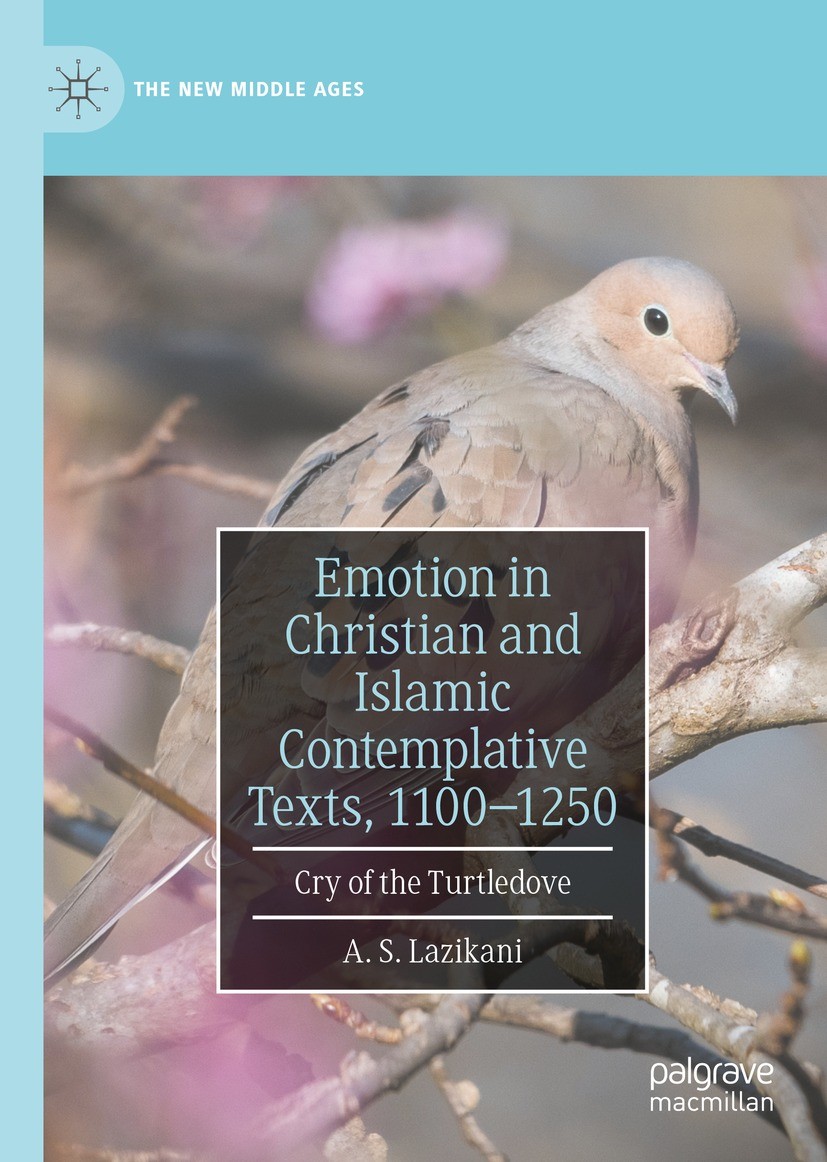
Emotion in Christian and Islamic Contemplative Texts, 1100–1250 [electronic resource] : Cry of the Turtledove / by A. S. Lazikani.
Erişim Adresi
ISBN
9783030599249
Dil Kodu
İngilizce
Yer Numarası
EK/6164
Yazar
Basım Bildirimi
1st ed. 2021.
Yayın Bilgisi
Cham : Springer International Publishing : Imprint: Palgrave Macmillan, 2021.
Fiziksel Niteleme
XVII, 271 p. online resource.
Dizi
The New Middle Ages, 2945-5944
İçindekiler Notu
Birds Beneath the Eaves: An Introduction -- Section I: Paradigms of Love -- Chapter 1 Jesus the Beloved, Jesus the Lover -- Chapter 2 The Many Shapes of the Heart -- Section II: Embodied Affect -- Chapter 3 The Body -- Chapter 4 Blood -- Section III: Affective Semiotics -- Chapter 5 Absence -- Chapter 6 Secrecy -- Birds’ Ascent: Conclusions. .
Özet, vb.
This book offers a comparative study of emotion in Arabic Islamic and English Christian contemplative texts, c. 1110-1250, contributing to the emerging interest in ‘globalization’ in medieval studies. A.S.Lazikani argues for the necessity of placing medieval English devotional texts in a more global context and seeks to modify influential narratives on the ‘history of emotions’ to enable this more wide-ranging critical outlook. Across eight chapters, the book examines the dialogic encounters generated by comparative readings of Muhyddin Ibn ‘Arabi (1165-1240), ‘Umar Ibn al-Fārid (1181-1235), Abu al-Hasan al-Shushtarī (d. 1269), Ancrene Wisse (c. 1225), and the Wooing Group (c. 1225). Investigating the two-fold ‘paradigms of love’ in the figure of Jesus and in the image of the heart, the (dis)embodied language of affect, and the affective semiotics of absence and secrecy, Lazikani demonstrates an interconnection between thereligious traditions of early Christianity and Islam.
Konu
Literature, Medieval.
Comparative literature.
Philosophy, Medieval.
Middle Eastern literature.
Islam __ Study and teaching.
Christianity.
Medieval Literature.
Comparative Literature.
Medieval Philosophy.
Middle Eastern Literature.
Islamic Studies.
Christianity.
Comparative literature.
Philosophy, Medieval.
Middle Eastern literature.
Islam __ Study and teaching.
Christianity.
Medieval Literature.
Comparative Literature.
Medieval Philosophy.
Middle Eastern Literature.
Islamic Studies.
Christianity.
Kurum Adı
