

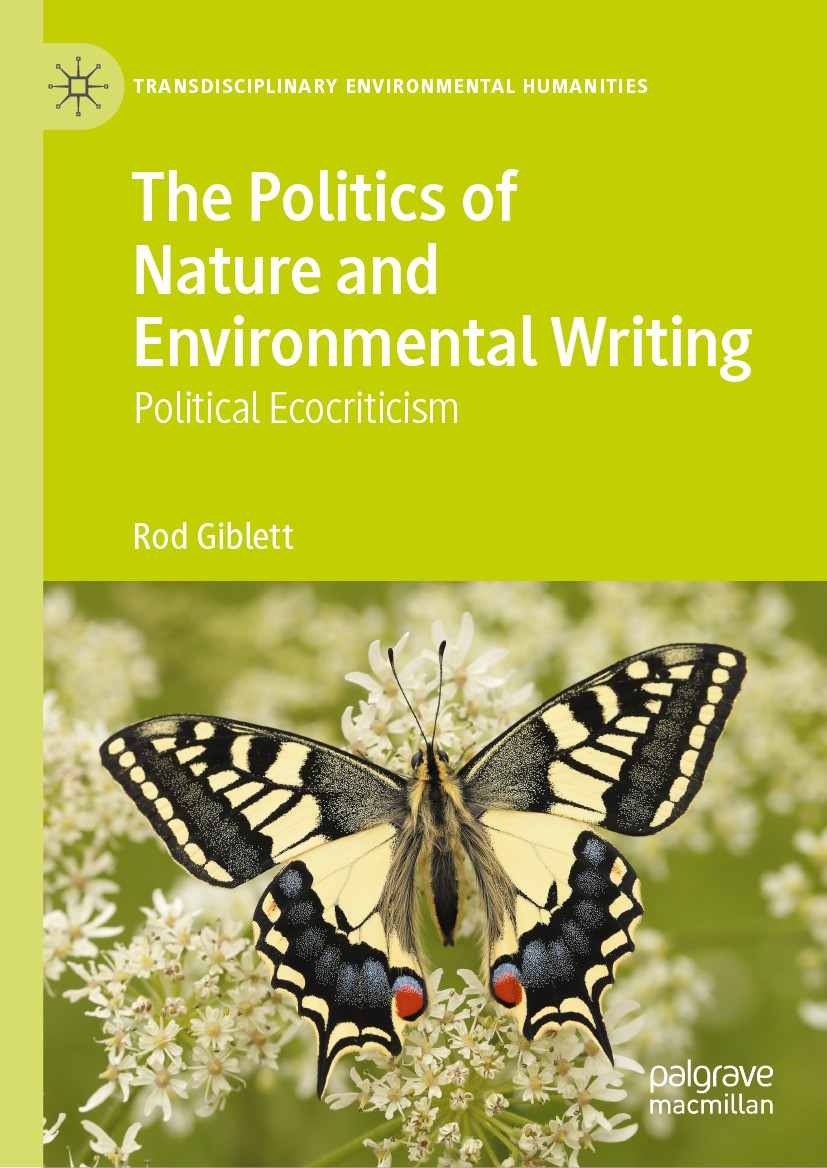
The Politics of Nature and Environmental Writing [electronic resource] : Political Ecocriticism / by Rod Giblett.
Erişim Adresi
ISBN
9783032044273
Dil Kodu
İngilizce
Yer Numarası
EK/3597
Basım Bildirimi
1st ed. 2025.
Yayın Bilgisi
Cham : Springer Nature Switzerland : Imprint: Palgrave Macmillan, 2025.
Fiziksel Niteleme
XI, 252 p. 1 illus. online resource.
Dizi
Transdisciplinary Environmental Humanities, 3091-4000 ; 1
İçindekiler Notu
1. Introduction to Nature and Environmental Writing -- Part 1: Nature Writing is -- 2. Not Natural History -- 3. Minor Literature -- 4. Prosaic and Poetic -- 5. Dialogic and Polyphonic -- 6. Multi-Generic and Heterogenic -- 7. Carnivalesque about the Grotesque and the Monstrous -- 8. 'Non-Fiction' (Faction) -- Part 2: Nature Writing of -- 9. Swamps and Marshes -- 10. National Parks and the Sublime -- 11. Environmental Conservation and its Politics -- Part 3: 'The New Nature Writing' and Environmental Writing of -- 12. People and Places in the City and the Country -- 13. Landscape Politics and the Exquisite: Rebecca Solnit and the Future of Nature and Environmental Writing.
Özet, vb.
This book defines nature writing as the creative practice of tracing the bodily and sensory enjoyment of nature—in the broad sense of the processes and places of land, air, and water—in prose poetry and poetic prose. In so doing, it celebrates the creative practice of selected nature and environmental writing, as well as related cultural critique. Giblett draws on the work of Gilles Deleuze, Felix Guattari, and Mikhail Bakhtin to establish what nature writing is and on Michel Foucault to distinguish what it is not. He discusses Aboriginal storytelling as well as the work of "classic" nature writers, including Henry David Thoreau, Aldo Leopold, and John Muir. He also considers writing on environmental conservation and politics, as well as "the new nature writing" found in the work of authors such as Richard Mabey, Robert Macfarlane, Caroline Crampton, and Rachel Lichenstein. Through all of this contemplation, the book invites readers to love their local places, plants, and animals through creative practice. Rod Giblett is Honorary Associate Professor of Writing and Literature at Deakin University, Australia. He has authored thirty books consisting of both fiction and non-fiction, including his most recent book for Palgrave Macmillan: Wetland Cultures: Ancient, Traditional, Contemporary (2024).
Konu
Ecocriticism.
Communication in the environmental sciences.
Literature __ Philosophy.
Prose literature.
Human ecology __ Study and teaching.
Creative writing.
Ecocriticism.
Environmental Communication.
Literary Theory.
Narrative Text and Prose.
Environmental Studies.
Creative Writing.
Communication in the environmental sciences.
Literature __ Philosophy.
Prose literature.
Human ecology __ Study and teaching.
Creative writing.
Ecocriticism.
Environmental Communication.
Literary Theory.
Narrative Text and Prose.
Environmental Studies.
Creative Writing.
Kurum Adı
Eseri Alıntıla
Referansları kullanmadan önce gözden geçirmeniz ve varsa gerekli düzeltmeleri yapmanız önerilir.
Dijital Kaynak
MARC Görünümü
LEADER 05498nam a22007215i 4500
001 842902
003 TR_AnAIT
005 20260715031023
007 cr nn 008mamaa
008 251001s2025 sz | s |||| 0|eng d
020 |a9783032044273|9978-3-032-04427-3
024 7 |a10.1007/978-3-032-04427-3|2doi
041 |aeng
049 |aTürk Dil Kurumu Kütüphanesi
050 4|aPN98.E36
072 7|aDSA|2bicssc
072 7|aLIT006000|2bisacsh
072 7|aDSA|2thema
082 04|a809.933553|223
090 |aEK/3597
100 1 |aGiblett, Rod.|eauthor.|0(orcid)0000-0002-7155-6116|1https://orcid.org/0000-0002-7155-6116|4aut|4http://id.loc.gov/vocabulary/relators/aut
245 14|aThe Politics of Nature and Environmental Writing|h[electronic resource] :|bPolitical Ecocriticism /|cby Rod Giblett.
250 |a1st ed. 2025.
264 1|aCham :|bSpringer Nature Switzerland :|bImprint: Palgrave Macmillan,|c2025.
300 |aXI, 252 p. 1 illus.|bonline resource.
336 |atext|btxt|2rdacontent
337 |acomputer|bc|2rdamedia
338 |aonline resource|bcr|2rdacarrier
341 0 |bPDF/UA-1|2onix
341 0 |bTable of contents navigation|2onix
341 0 |bSingle logical reading order|2onix
341 0 |bShort alternative textual descriptions|2onix
341 0 |bUse of color is not sole means of conveying information|2onix
341 0 |bUse of high contrast between text and background color|2onix
341 0 |bNext / Previous structural navigation|2onix
341 0 |bAll non-decorative content supports reading without sight|2onix
347 |atext file|bPDF|2rda
490 1 |aTransdisciplinary Environmental Humanities,|x3091-4000 ;|v1
505 0 |a1. Introduction to Nature and Environmental Writing -- Part 1: Nature Writing is -- 2. Not Natural History -- 3. Minor Literature -- 4. Prosaic and Poetic -- 5. Dialogic and Polyphonic -- 6. Multi-Generic and Heterogenic -- 7. Carnivalesque about the Grotesque and the Monstrous -- 8. 'Non-Fiction' (Faction) -- Part 2: Nature Writing of -- 9. Swamps and Marshes -- 10. National Parks and the Sublime -- 11. Environmental Conservation and its Politics -- Part 3: 'The New Nature Writing' and Environmental Writing of -- 12. People and Places in the City and the Country -- 13. Landscape Politics and the Exquisite: Rebecca Solnit and the Future of Nature and Environmental Writing.
520 |aThis book defines nature writing as the creative practice of tracing the bodily and sensory enjoyment of nature—in the broad sense of the processes and places of land, air, and water—in prose poetry and poetic prose. In so doing, it celebrates the creative practice of selected nature and environmental writing, as well as related cultural critique. Giblett draws on the work of Gilles Deleuze, Felix Guattari, and Mikhail Bakhtin to establish what nature writing is and on Michel Foucault to distinguish what it is not. He discusses Aboriginal storytelling as well as the work of "classic" nature writers, including Henry David Thoreau, Aldo Leopold, and John Muir. He also considers writing on environmental conservation and politics, as well as "the new nature writing" found in the work of authors such as Richard Mabey, Robert Macfarlane, Caroline Crampton, and Rachel Lichenstein. Through all of this contemplation, the book invites readers to love their local places, plants, and animals through creative practice. Rod Giblett is Honorary Associate Professor of Writing and Literature at Deakin University, Australia. He has authored thirty books consisting of both fiction and non-fiction, including his most recent book for Palgrave Macmillan: Wetland Cultures: Ancient, Traditional, Contemporary (2024).
532 8 |aAccessibility summary: This PDF has been created in accordance with the PDF/UA-1 standard to enhance accessibility, including screen reader support, described non-text content (images, graphs), bookmarks for easy navigation, keyboard-friendly links and forms and searchable, selectable text. We recognize the importance of accessibility, and we welcome queries about accessibility for any of our products. If you have a question or an access need, please get in touch with us at accessibilitysupport@springernature.com. Please note that a more accessible version of this eBook is available as ePub.
532 8 |aNo reading system accessibility options actively disabled
532 8 |aPublisher contact for further accessibility information: accessibilitysupport@springernature.com
650 0|aEcocriticism.
650 0|aCommunication in the environmental sciences.
650 0|aLiterature|xPhilosophy.
650 0|aProse literature.
650 0|aHuman ecology|xStudy and teaching.
650 0|aCreative writing.
650 14|aEcocriticism.
650 24|aEnvironmental Communication.
650 24|aLiterary Theory.
650 24|aNarrative Text and Prose.
650 24|aEnvironmental Studies.
650 24|aCreative Writing.
710 2 |aSpringerLink (Online service)
773 0 |tSpringer Nature eBook
776 08|iPrinted edition:|z9783032044266
776 08|iPrinted edition:|z9783032044280
776 08|iPrinted edition:|z9783032044297
830 0|aTransdisciplinary Environmental Humanities,|x3091-4000 ;|v1
856 40|uhttps://doi.org/10.1007/978-3-032-04427-3
912 |aZDB-2-LCM
912 |aZDB-2-SXL
950 |aLiterature, Cultural and Media Studies (SpringerNature-41173)
950 |aLiterature, Cultural and Media Studies (R0) (SpringerNature-43723)
001 842902
003 TR_AnAIT
005 20260715031023
007 cr nn 008mamaa
008 251001s2025 sz | s |||| 0|eng d
020 |a9783032044273|9978-3-032-04427-3
024 7 |a10.1007/978-3-032-04427-3|2doi
041 |aeng
049 |aTürk Dil Kurumu Kütüphanesi
050 4|aPN98.E36
072 7|aDSA|2bicssc
072 7|aLIT006000|2bisacsh
072 7|aDSA|2thema
082 04|a809.933553|223
090 |aEK/3597
100 1 |aGiblett, Rod.|eauthor.|0(orcid)0000-0002-7155-6116|1https://orcid.org/0000-0002-7155-6116|4aut|4http://id.loc.gov/vocabulary/relators/aut
245 14|aThe Politics of Nature and Environmental Writing|h[electronic resource] :|bPolitical Ecocriticism /|cby Rod Giblett.
250 |a1st ed. 2025.
264 1|aCham :|bSpringer Nature Switzerland :|bImprint: Palgrave Macmillan,|c2025.
300 |aXI, 252 p. 1 illus.|bonline resource.
336 |atext|btxt|2rdacontent
337 |acomputer|bc|2rdamedia
338 |aonline resource|bcr|2rdacarrier
341 0 |bPDF/UA-1|2onix
341 0 |bTable of contents navigation|2onix
341 0 |bSingle logical reading order|2onix
341 0 |bShort alternative textual descriptions|2onix
341 0 |bUse of color is not sole means of conveying information|2onix
341 0 |bUse of high contrast between text and background color|2onix
341 0 |bNext / Previous structural navigation|2onix
341 0 |bAll non-decorative content supports reading without sight|2onix
347 |atext file|bPDF|2rda
490 1 |aTransdisciplinary Environmental Humanities,|x3091-4000 ;|v1
505 0 |a1. Introduction to Nature and Environmental Writing -- Part 1: Nature Writing is -- 2. Not Natural History -- 3. Minor Literature -- 4. Prosaic and Poetic -- 5. Dialogic and Polyphonic -- 6. Multi-Generic and Heterogenic -- 7. Carnivalesque about the Grotesque and the Monstrous -- 8. 'Non-Fiction' (Faction) -- Part 2: Nature Writing of -- 9. Swamps and Marshes -- 10. National Parks and the Sublime -- 11. Environmental Conservation and its Politics -- Part 3: 'The New Nature Writing' and Environmental Writing of -- 12. People and Places in the City and the Country -- 13. Landscape Politics and the Exquisite: Rebecca Solnit and the Future of Nature and Environmental Writing.
520 |aThis book defines nature writing as the creative practice of tracing the bodily and sensory enjoyment of nature—in the broad sense of the processes and places of land, air, and water—in prose poetry and poetic prose. In so doing, it celebrates the creative practice of selected nature and environmental writing, as well as related cultural critique. Giblett draws on the work of Gilles Deleuze, Felix Guattari, and Mikhail Bakhtin to establish what nature writing is and on Michel Foucault to distinguish what it is not. He discusses Aboriginal storytelling as well as the work of "classic" nature writers, including Henry David Thoreau, Aldo Leopold, and John Muir. He also considers writing on environmental conservation and politics, as well as "the new nature writing" found in the work of authors such as Richard Mabey, Robert Macfarlane, Caroline Crampton, and Rachel Lichenstein. Through all of this contemplation, the book invites readers to love their local places, plants, and animals through creative practice. Rod Giblett is Honorary Associate Professor of Writing and Literature at Deakin University, Australia. He has authored thirty books consisting of both fiction and non-fiction, including his most recent book for Palgrave Macmillan: Wetland Cultures: Ancient, Traditional, Contemporary (2024).
532 8 |aAccessibility summary: This PDF has been created in accordance with the PDF/UA-1 standard to enhance accessibility, including screen reader support, described non-text content (images, graphs), bookmarks for easy navigation, keyboard-friendly links and forms and searchable, selectable text. We recognize the importance of accessibility, and we welcome queries about accessibility for any of our products. If you have a question or an access need, please get in touch with us at accessibilitysupport@springernature.com. Please note that a more accessible version of this eBook is available as ePub.
532 8 |aNo reading system accessibility options actively disabled
532 8 |aPublisher contact for further accessibility information: accessibilitysupport@springernature.com
650 0|aEcocriticism.
650 0|aCommunication in the environmental sciences.
650 0|aLiterature|xPhilosophy.
650 0|aProse literature.
650 0|aHuman ecology|xStudy and teaching.
650 0|aCreative writing.
650 14|aEcocriticism.
650 24|aEnvironmental Communication.
650 24|aLiterary Theory.
650 24|aNarrative Text and Prose.
650 24|aEnvironmental Studies.
650 24|aCreative Writing.
710 2 |aSpringerLink (Online service)
773 0 |tSpringer Nature eBook
776 08|iPrinted edition:|z9783032044266
776 08|iPrinted edition:|z9783032044280
776 08|iPrinted edition:|z9783032044297
830 0|aTransdisciplinary Environmental Humanities,|x3091-4000 ;|v1
856 40|uhttps://doi.org/10.1007/978-3-032-04427-3
912 |aZDB-2-LCM
912 |aZDB-2-SXL
950 |aLiterature, Cultural and Media Studies (SpringerNature-41173)
950 |aLiterature, Cultural and Media Studies (R0) (SpringerNature-43723)
Materyaller
Depodan talep edilen materyal sadece kütüphane içerisinde kullanılmaktadır.
Materyal dışarıya ödünç verilmemektedir.
Materyal dışarıya ödünç verilmemektedir.
