LEADER 03517nam a22005535i 4500
001 842905
003 TR_AnAIT
005 20260715031026
007 cr nn 008mamaa
008 251002s2025 si | s |||| 0|eng d
020 |a9789819512218|9978-981-95-1221-8
024 7 |a10.1007/978-981-95-1221-8|2doi
041 |aeng
049 |aTürk Dil Kurumu Kütüphanesi
050 4|aP306-310
072 7|aCFP|2bicssc
072 7|aLAN023000|2bisacsh
072 7|aCFP|2thema
082 04|a418.02|223
090 |aEK/3611
100 1 |aWu, Kan.|eauthor.|0(orcid)0000-0002-4411-1410|1https://orcid.org/0000-0002-4411-1410|4aut|4http://id.loc.gov/vocabulary/relators/aut
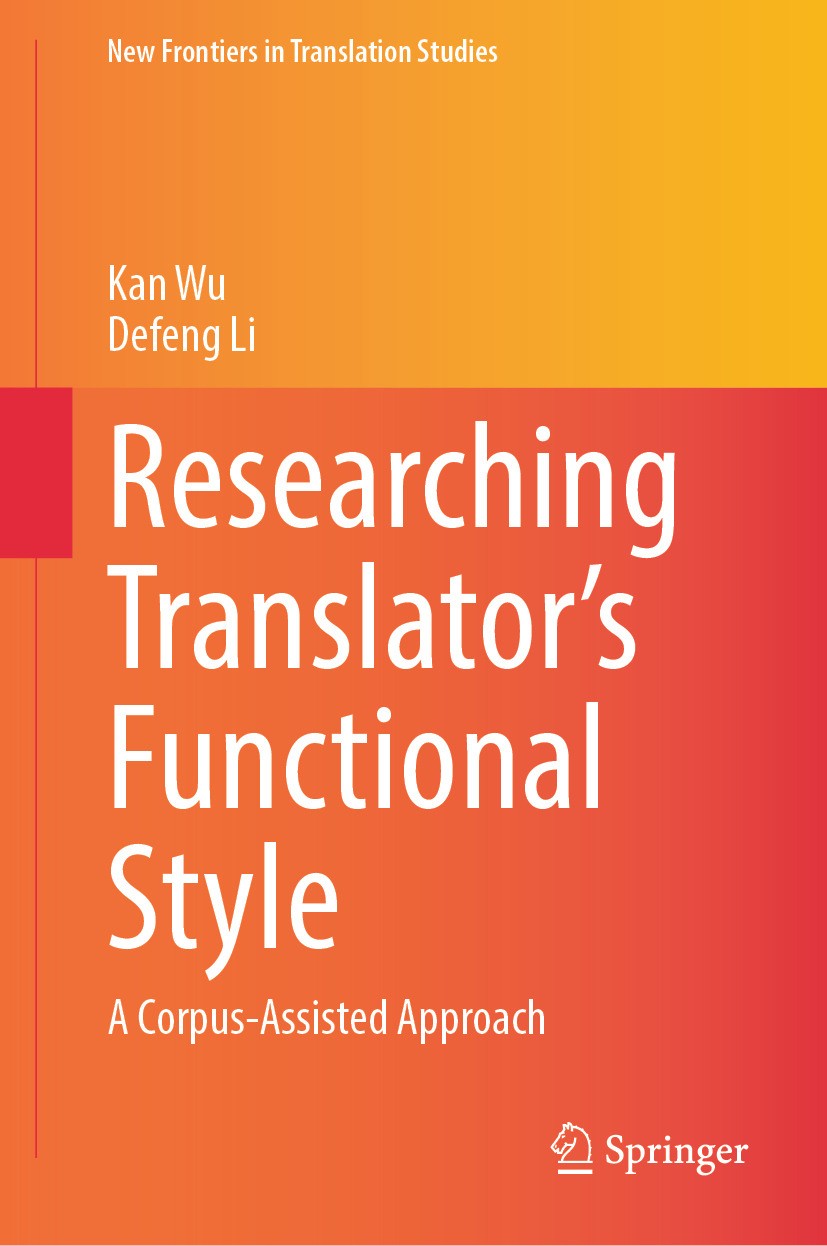
245 10|aResearching Translator's Functional Style|h[electronic resource] :|bA Corpus-Assisted Approach /|cby Kan Wu, Defeng Li.
250 |a1st ed. 2025.
264 1|aSingapore :|bSpringer Nature Singapore :|bImprint: Springer,|c2025.
300 |aXVII, 189 p. 63 illus., 43 illus. in color.|bonline resource.
336 |atext|btxt|2rdacontent
337 |acomputer|bc|2rdamedia
338 |aonline resource|bcr|2rdacarrier
347 |atext file|bPDF|2rda
490 1 |aNew Frontiers in Translation Studies,|x2197-8697
505 0 |aPart I. Theoretical Foundations -- Chapter 1. Introduction -- Chapter 2. Corpus-assisted Translator Style Research -- Chapter 3. Corpus Stylistics -- Chapter 4. The Functional Aspect of Translator Style -- Part II. Case Study -- Chapter 5. Lao She and His Story of Er Ma -- Chapter 6. Corpora and Methodology -- Chapter 7. Keywords in Er Ma -- Chapter 8. Functional Style as Reconstruction of Literary Themes -- Chapter 9. Functional Style as Recharacterization of Story Figures -- Chapter 10. Functional Style as Textual Panorama Building -- Chapter 11. Functional Styles and Beyond -- Chapter 12. Conclusion.
520 |aThis book introduces an innovative approach to studying translator style through the lens of functional linguistics and corpus stylistics. It examines how translators recreate essential textual functions in target texts, focusing on three key aspects: thematic reconstruction, recharacterization, and textual panorama building. Through a detailed case study of Chinese-English translations of Lao She's Er Ma, the book demonstrates how translators' functional styles manifest in their strategic linguistic choices. This work advances corpus-assisted translation studies by shifting focus from formal linguistic features to their functional roles in shaping translated texts.
650 0|aTranslating and interpreting.
650 0|aLinguistics|xMethodology.
650 0|aComputational linguistics.
650 0|aInterpretation, Literary.
650 14|aLanguage Translation.
650 24|aResearch Methods in Language and Linguistics.
650 24|aComputational Linguistics.
650 24|aLiterary Interpretation.
700 1 |aLi, Defeng.|eauthor.|0(orcid)0000-0002-9316-3313|1https://orcid.org/0000-0002-9316-3313|4aut|4http://id.loc.gov/vocabulary/relators/aut
710 2 |aSpringerLink (Online service)
773 0 |tSpringer Nature eBook
776 08|iPrinted edition:|z9789819512201
776 08|iPrinted edition:|z9789819512225
776 08|iPrinted edition:|z9789819512232
830 0|aNew Frontiers in Translation Studies,|x2197-8697
856 40|uhttps://doi.org/10.1007/978-981-95-1221-8
912 |aZDB-2-LCM
912 |aZDB-2-SXL
950 |aLiterature, Cultural and Media Studies (SpringerNature-41173)
950 |aLiterature, Cultural and Media Studies (R0) (SpringerNature-43723)