

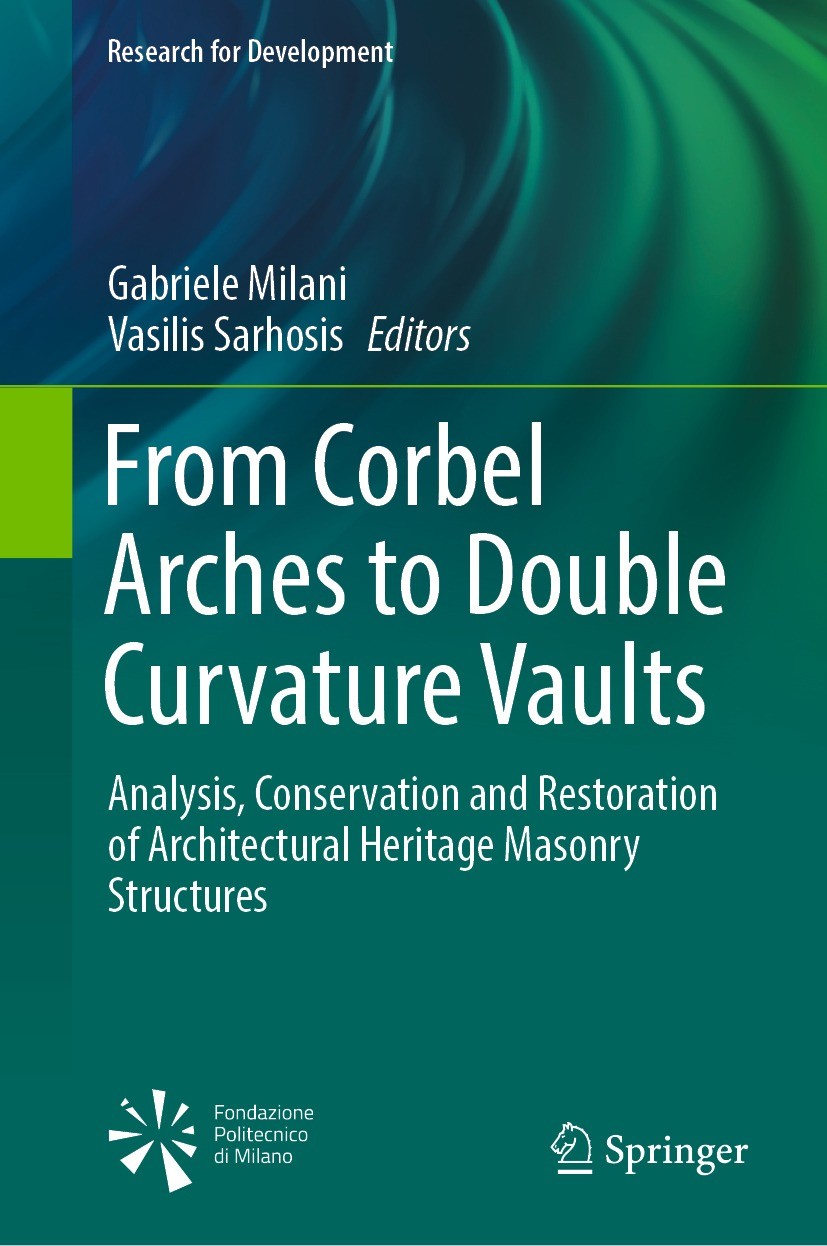
From Corbel Arches to Double Curvature Vaults [electronic resource] : Analysis, Conservation and Restoration of Architectural Heritage Masonry Structures / edited by Gabriele Milani, Vasilis Sarhosis.
Erişim Adresi
ISBN
9783031128738
Dil Kodu
İngilizce
Yer Numarası
EK/6212
Basım Bildirimi
1st ed. 2022.
Yayın Bilgisi
Cham : Springer International Publishing : Imprint: Springer, 2022.
Fiziksel Niteleme
VI, 281 p. 217 illus., 147 illus. in color. online resource.
Dizi
Research for Development, 2198-7319
İçindekiler Notu
Introduction -- Trends in historic preservation and relevance of understanding curved masonry structures -- Revisiting classic mechanical methods for the equilibrium analysis of masonry arches and domes -- Building without framework -- Documentation, inspection and accurate surveying.
Özet, vb.
The book focuses on all typological aspects of arches and vaults within the heritage of design and construction, while bringing attention to new “green” materials, promoting a circular economy informed by limitations caused by global warming. The multidisciplinary approach involves several different competences in architecture, structural engineering, conservation and restoration, geomatics, BIM, building engineering, the technology and history of construction, graphical methods of assessment, and innovative design that utilizes non-polluting materials. After an overview of the technical and aesthetic advantages of masonry vaults, there is a review of the most up-to-date trends in historic preservation. Classic methods of static assessment and innovative building technologies are detailed. Surveying methods and data acquisition are discussed, particularly laser scanning technology and its applications in heritage masonry curved structures. Next comes the experimental static and dymanicbehavior of masonry vaults, followed by a critical revision of Distinct Element innovative computerized Methods. An explanation as to how to pass from classic stability analysis to an adaptive Finite Element Method limit analysis procedure is offered. Reinterpretation of the past is then undertaken, with an eye towards emphasizing sustainability. Finally, the conclusion examines still existing gaps in knowledge and recommends avenues of future research.
Konu
Civil engineering.
Architecture __ History.
Building materials.
Cultural property.
Civil Engineering.
Architectural History and Theory.
Building Materials.
Cultural Heritage.
Architecture __ History.
Building materials.
Cultural property.
Civil Engineering.
Architectural History and Theory.
Building Materials.
Cultural Heritage.
Diğer Yazarlar
Kurum Adı
Eseri Alıntıla
Referansları kullanmadan önce gözden geçirmeniz ve varsa gerekli düzeltmeleri yapmanız önerilir.
Dijital Kaynak
MARC Görünümü
LEADER 05231nam a22006735i 4500
001 842980
003 TR_AnAIT
005 20260715031522
007 cr nn 008mamaa
008 221121s2022 sz | s |||| 0|eng d
020 |a9783031128738|9978-3-031-12873-8
024 7 |a10.1007/978-3-031-12873-8|2doi
041 |aeng
049 |aTürk Dil Kurumu Kütüphanesi
050 4|aTA1-2040
072 7|aTN|2bicssc
072 7|aTEC009020|2bisacsh
072 7|aTN|2thema
082 04|a624|223
090 |aEK/6212
245 10|aFrom Corbel Arches to Double Curvature Vaults|h[electronic resource] :|bAnalysis, Conservation and Restoration of Architectural Heritage Masonry Structures /|cedited by Gabriele Milani, Vasilis Sarhosis.
250 |a1st ed. 2022.
264 1|aCham :|bSpringer International Publishing :|bImprint: Springer,|c2022.
300 |aVI, 281 p. 217 illus., 147 illus. in color.|bonline resource.
336 |atext|btxt|2rdacontent
337 |acomputer|bc|2rdamedia
338 |aonline resource|bcr|2rdacarrier
341 0 |bTable of contents navigation|2onix
341 0 |bSingle logical reading order|2onix
341 0 |bShort alternative textual descriptions|2onix
341 0 |bUse of color is not sole means of conveying information|2onix
341 0 |bUse of high contrast between text and background color|2onix
341 0 |bNext / Previous structural navigation|2onix
341 0 |bAll non-decorative content supports reading without sight|2onix
347 |atext file|bPDF|2rda
490 1 |aResearch for Development,|x2198-7319
505 0 |a Introduction -- Trends in historic preservation and relevance of understanding curved masonry structures -- Revisiting classic mechanical methods for the equilibrium analysis of masonry arches and domes -- Building without framework -- Documentation, inspection and accurate surveying.
520 |aThe book focuses on all typological aspects of arches and vaults within the heritage of design and construction, while bringing attention to new “green” materials, promoting a circular economy informed by limitations caused by global warming. The multidisciplinary approach involves several different competences in architecture, structural engineering, conservation and restoration, geomatics, BIM, building engineering, the technology and history of construction, graphical methods of assessment, and innovative design that utilizes non-polluting materials. After an overview of the technical and aesthetic advantages of masonry vaults, there is a review of the most up-to-date trends in historic preservation. Classic methods of static assessment and innovative building technologies are detailed. Surveying methods and data acquisition are discussed, particularly laser scanning technology and its applications in heritage masonry curved structures. Next comes the experimental static and dymanicbehavior of masonry vaults, followed by a critical revision of Distinct Element innovative computerized Methods. An explanation as to how to pass from classic stability analysis to an adaptive Finite Element Method limit analysis procedure is offered. Reinterpretation of the past is then undertaken, with an eye towards emphasizing sustainability. Finally, the conclusion examines still existing gaps in knowledge and recommends avenues of future research.
532 8 |aAccessibility summary: This PDF does not fully comply with PDF/UA standards, but does feature limited screen reader support, described non-text content (images, graphs), bookmarks for easy navigation and searchable, selectable text. Users of assistive technologies may experience difficulty navigating or interpreting content in this document. We recognize the importance of accessibility, and we welcome queries about accessibility for any of our products. If you have a question or an access need, please get in touch with us at accessibilitysupport@springernature.com.
532 8 |aNo reading system accessibility options actively disabled
532 8 |aPublisher contact for further accessibility information: accessibilitysupport@springernature.com
650 0|aCivil engineering.
650 0|aArchitecture|xHistory.
650 0|aBuilding materials.
650 0|aCultural property.
650 14|aCivil Engineering.
650 24|aArchitectural History and Theory.
650 24|aBuilding Materials.
650 24|aCultural Heritage.
700 1 |aMilani, Gabriele.|eeditor.|0(orcid)0000-0001-5462-3420|1https://orcid.org/0000-0001-5462-3420|4edt|4http://id.loc.gov/vocabulary/relators/edt
700 1 |aSarhosis, Vasilis.|eeditor.|0(orcid)0000-0002-5748-7679|1https://orcid.org/0000-0002-5748-7679|4edt|4http://id.loc.gov/vocabulary/relators/edt
710 2 |aSpringerLink (Online service)
773 0 |tSpringer Nature eBook
776 08|iPrinted edition:|z9783031128721
776 08|iPrinted edition:|z9783031128745
776 08|iPrinted edition:|z9783031128752
830 0|aResearch for Development,|x2198-7319
856 40|uhttps://doi.org/10.1007/978-3-031-12873-8
912 |aZDB-2-LCM
912 |aZDB-2-SXL
950 |aLiterature, Cultural and Media Studies (SpringerNature-41173)
950 |aLiterature, Cultural and Media Studies (R0) (SpringerNature-43723)
001 842980
003 TR_AnAIT
005 20260715031522
007 cr nn 008mamaa
008 221121s2022 sz | s |||| 0|eng d
020 |a9783031128738|9978-3-031-12873-8
024 7 |a10.1007/978-3-031-12873-8|2doi
041 |aeng
049 |aTürk Dil Kurumu Kütüphanesi
050 4|aTA1-2040
072 7|aTN|2bicssc
072 7|aTEC009020|2bisacsh
072 7|aTN|2thema
082 04|a624|223
090 |aEK/6212
245 10|aFrom Corbel Arches to Double Curvature Vaults|h[electronic resource] :|bAnalysis, Conservation and Restoration of Architectural Heritage Masonry Structures /|cedited by Gabriele Milani, Vasilis Sarhosis.
250 |a1st ed. 2022.
264 1|aCham :|bSpringer International Publishing :|bImprint: Springer,|c2022.
300 |aVI, 281 p. 217 illus., 147 illus. in color.|bonline resource.
336 |atext|btxt|2rdacontent
337 |acomputer|bc|2rdamedia
338 |aonline resource|bcr|2rdacarrier
341 0 |bTable of contents navigation|2onix
341 0 |bSingle logical reading order|2onix
341 0 |bShort alternative textual descriptions|2onix
341 0 |bUse of color is not sole means of conveying information|2onix
341 0 |bUse of high contrast between text and background color|2onix
341 0 |bNext / Previous structural navigation|2onix
341 0 |bAll non-decorative content supports reading without sight|2onix
347 |atext file|bPDF|2rda
490 1 |aResearch for Development,|x2198-7319
505 0 |a Introduction -- Trends in historic preservation and relevance of understanding curved masonry structures -- Revisiting classic mechanical methods for the equilibrium analysis of masonry arches and domes -- Building without framework -- Documentation, inspection and accurate surveying.
520 |aThe book focuses on all typological aspects of arches and vaults within the heritage of design and construction, while bringing attention to new “green” materials, promoting a circular economy informed by limitations caused by global warming. The multidisciplinary approach involves several different competences in architecture, structural engineering, conservation and restoration, geomatics, BIM, building engineering, the technology and history of construction, graphical methods of assessment, and innovative design that utilizes non-polluting materials. After an overview of the technical and aesthetic advantages of masonry vaults, there is a review of the most up-to-date trends in historic preservation. Classic methods of static assessment and innovative building technologies are detailed. Surveying methods and data acquisition are discussed, particularly laser scanning technology and its applications in heritage masonry curved structures. Next comes the experimental static and dymanicbehavior of masonry vaults, followed by a critical revision of Distinct Element innovative computerized Methods. An explanation as to how to pass from classic stability analysis to an adaptive Finite Element Method limit analysis procedure is offered. Reinterpretation of the past is then undertaken, with an eye towards emphasizing sustainability. Finally, the conclusion examines still existing gaps in knowledge and recommends avenues of future research.
532 8 |aAccessibility summary: This PDF does not fully comply with PDF/UA standards, but does feature limited screen reader support, described non-text content (images, graphs), bookmarks for easy navigation and searchable, selectable text. Users of assistive technologies may experience difficulty navigating or interpreting content in this document. We recognize the importance of accessibility, and we welcome queries about accessibility for any of our products. If you have a question or an access need, please get in touch with us at accessibilitysupport@springernature.com.
532 8 |aNo reading system accessibility options actively disabled
532 8 |aPublisher contact for further accessibility information: accessibilitysupport@springernature.com
650 0|aCivil engineering.
650 0|aArchitecture|xHistory.
650 0|aBuilding materials.
650 0|aCultural property.
650 14|aCivil Engineering.
650 24|aArchitectural History and Theory.
650 24|aBuilding Materials.
650 24|aCultural Heritage.
700 1 |aMilani, Gabriele.|eeditor.|0(orcid)0000-0001-5462-3420|1https://orcid.org/0000-0001-5462-3420|4edt|4http://id.loc.gov/vocabulary/relators/edt
700 1 |aSarhosis, Vasilis.|eeditor.|0(orcid)0000-0002-5748-7679|1https://orcid.org/0000-0002-5748-7679|4edt|4http://id.loc.gov/vocabulary/relators/edt
710 2 |aSpringerLink (Online service)
773 0 |tSpringer Nature eBook
776 08|iPrinted edition:|z9783031128721
776 08|iPrinted edition:|z9783031128745
776 08|iPrinted edition:|z9783031128752
830 0|aResearch for Development,|x2198-7319
856 40|uhttps://doi.org/10.1007/978-3-031-12873-8
912 |aZDB-2-LCM
912 |aZDB-2-SXL
950 |aLiterature, Cultural and Media Studies (SpringerNature-41173)
950 |aLiterature, Cultural and Media Studies (R0) (SpringerNature-43723)
Materyaller
Depodan talep edilen materyal sadece kütüphane içerisinde kullanılmaktadır.
Materyal dışarıya ödünç verilmemektedir.
Materyal dışarıya ödünç verilmemektedir.
