

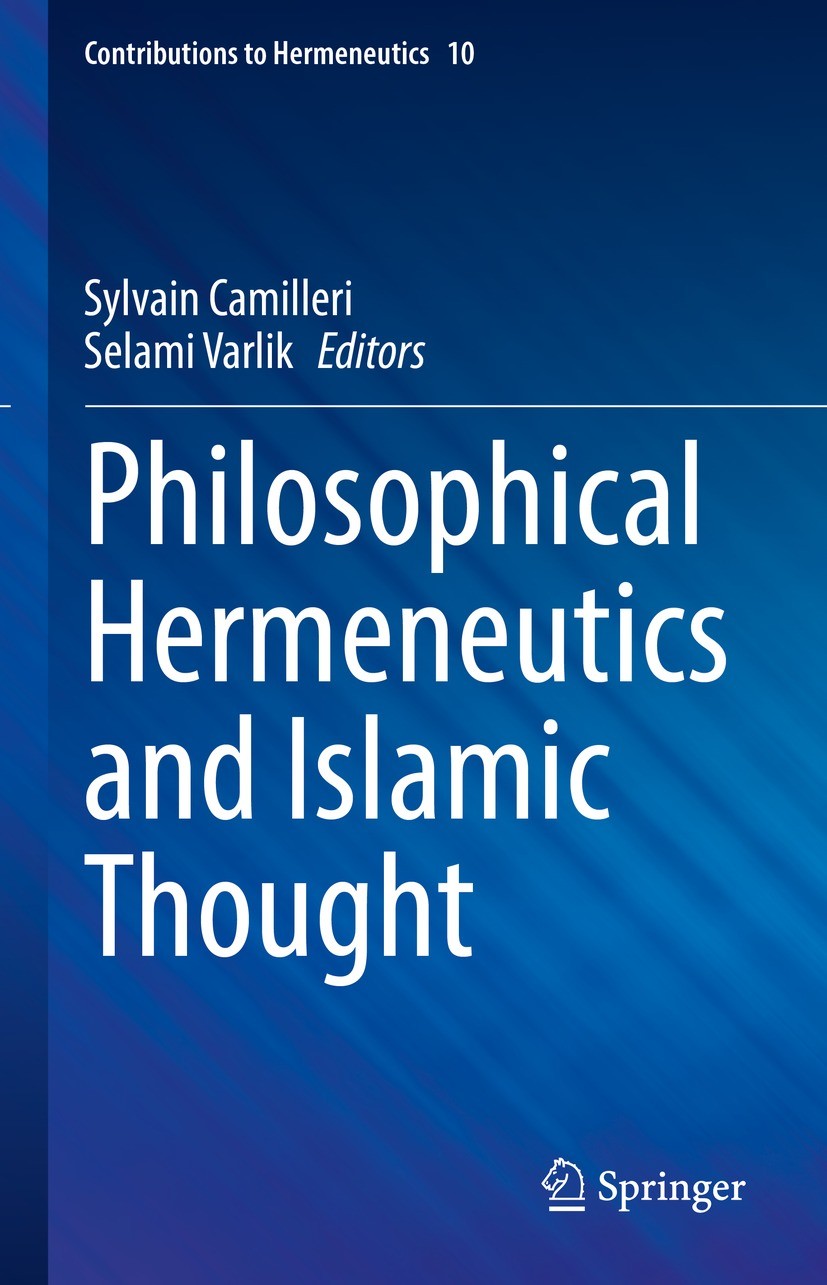
Philosophical Hermeneutics and Islamic Thought [electronic resource] / edited by Sylvain Camilleri, Selami Varlik.
Erişim Adresi
ISBN
9783030927547
Dil Kodu
İngilizce
Yer Numarası
EK/6236
Basım Bildirimi
1st ed. 2022.
Yayın Bilgisi
Cham : Springer International Publishing : Imprint: Springer, 2022.
Fiziksel Niteleme
XVIII, 205 p. online resource.
Dizi
Contributions to Hermeneutics, 2509-6095 ; 10
İçindekiler Notu
Phenomenological Hermeneutics of Falsafa? -- L’image est-elle traduisible en concept ? Discours poétique et plaisir intellectuel chez Avicenne -- An Idea of Political Hermeneutics in Fārābī’s Philosophy -- Interpréter ou ne pas interpréter. La question herméneutique de la « docte ignorance » chez Ibn ‘Arabī -- The “Veil of Glory”: Perplexity (ḥayra) and Revelation in the Qur’ānic Hermeneutics of Ibn ʿArabī -- Cosmic Hermeneutics: A Critical Appraisal of Henry Corbin’s Hermeneutical Approach -- Building Islamic Thought on New Foundations: Shabestari’s Manifold Use of Hermeneutics -- Revelation, Prophetic Reading of the World, and the End of Fiqh. Shabestari’s Hermeneutical Approach to the Qur’ān -- Retrieving the Foundations and Future of Islamic Modernism: Rahman and Shabestari on Hermeneutics, Prophetic Epistemology, and the Modern Islamic State -- Twentieth Century Commentary of the Qur’ān: From Hermeneutics to Praxis: Maqāṣid al-Shari‘aand Maqāṣid al-Qur’ān -- Hermeneutics and Islamic Liberation Theologies: Hasan Hanafi and Hamid Dabashi -- On the Limits of Islamist Heideggerianism: A Critique of Sayyidian Onto-Theology -- Naskh as a Key to the Ontology of the Qur’ān -- Toward a “Devilish” Hermeneutics of the Qur’ān.
Özet, vb.
This book investigates the methodological issues raised by the encounter between Islamic thought and contemporary philosophical hermeneutics. It features essays that examine why and how current Muslim thinkers refer to Continental philosophy. The contributors put the universality of the hermeneutic order to the test with three different approaches. The first looks at exegetical aspects. It addresses contemporary thinkers from the Islamicate world who have engaged critically or not with main representatives or key concepts of philosophical hermeneutics. The second presents an interpretative analysis. The essays here present attempts at using philosophical hermeneutics in order to develop new interpretations of canonical or traditional ensembles of texts such as the Qur’an and the Hadith as well as legal, spiritual, and philosophical corpuses from the Islamicate world. The third looks at different political and critical issues. The clear and sound reference to religion ofIslamic thought makes its entanglement with philosophical hermeneutics a burning challenge for all parties involved. Is it true, as some contend, that philosophical hermeneutics can help interpret Islamic thought anew? This book reveals how the two philosophies are likely to expand each other’s horizons and influence each other’s conceptual frameworks. It features revised papers from an International Conference.
Konu
Hermeneutics.
Islam.
Religion __ Philosophy.
Hermeneutics.
Islam.
Philosophy of Religion.
Islam.
Religion __ Philosophy.
Hermeneutics.
Islam.
Philosophy of Religion.
Diğer Yazarlar
Kurum Adı
Eseri Alıntıla
Referansları kullanmadan önce gözden geçirmeniz ve varsa gerekli düzeltmeleri yapmanız önerilir.
Dijital Kaynak
MARC Görünümü
LEADER 04618nam a22005295i 4500
001 843034
003 TR_AnAIT
005 20260715031909
007 cr nn 008mamaa
008 220503s2022 sz | s |||| 0|eng d
020 |a9783030927547|9978-3-030-92754-7
024 7 |a10.1007/978-3-030-92754-7|2doi
041 |aeng
049 |aTürk Dil Kurumu Kütüphanesi
050 4|aBD239.2-265
072 7|aHPK|2bicssc
072 7|aPHI036000|2bisacsh
072 7|aQDTK|2thema
082 04|a121.686|223
090 |aEK/6236
245 10|aPhilosophical Hermeneutics and Islamic Thought|h[electronic resource] /|cedited by Sylvain Camilleri, Selami Varlik.
250 |a1st ed. 2022.
264 1|aCham :|bSpringer International Publishing :|bImprint: Springer,|c2022.
300 |aXVIII, 205 p.|bonline resource.
336 |atext|btxt|2rdacontent
337 |acomputer|bc|2rdamedia
338 |aonline resource|bcr|2rdacarrier
347 |atext file|bPDF|2rda
490 1 |aContributions to Hermeneutics,|x2509-6095 ;|v10
505 0 |aPhenomenological Hermeneutics of Falsafa? -- L’image est-elle traduisible en concept ? Discours poétique et plaisir intellectuel chez Avicenne -- An Idea of Political Hermeneutics in Fārābī’s Philosophy -- Interpréter ou ne pas interpréter. La question herméneutique de la « docte ignorance » chez Ibn ‘Arabī -- The “Veil of Glory”: Perplexity (ḥayra) and Revelation in the Qur’ānic Hermeneutics of Ibn ʿArabī -- Cosmic Hermeneutics: A Critical Appraisal of Henry Corbin’s Hermeneutical Approach -- Building Islamic Thought on New Foundations: Shabestari’s Manifold Use of Hermeneutics -- Revelation, Prophetic Reading of the World, and the End of Fiqh. Shabestari’s Hermeneutical Approach to the Qur’ān -- Retrieving the Foundations and Future of Islamic Modernism: Rahman and Shabestari on Hermeneutics, Prophetic Epistemology, and the Modern Islamic State -- Twentieth Century Commentary of the Qur’ān: From Hermeneutics to Praxis: Maqāṣid al-Shari‘aand Maqāṣid al-Qur’ān -- Hermeneutics and Islamic Liberation Theologies: Hasan Hanafi and Hamid Dabashi -- On the Limits of Islamist Heideggerianism: A Critique of Sayyidian Onto-Theology -- Naskh as a Key to the Ontology of the Qur’ān -- Toward a “Devilish” Hermeneutics of the Qur’ān.
520 |aThis book investigates the methodological issues raised by the encounter between Islamic thought and contemporary philosophical hermeneutics. It features essays that examine why and how current Muslim thinkers refer to Continental philosophy. The contributors put the universality of the hermeneutic order to the test with three different approaches. The first looks at exegetical aspects. It addresses contemporary thinkers from the Islamicate world who have engaged critically or not with main representatives or key concepts of philosophical hermeneutics. The second presents an interpretative analysis. The essays here present attempts at using philosophical hermeneutics in order to develop new interpretations of canonical or traditional ensembles of texts such as the Qur’an and the Hadith as well as legal, spiritual, and philosophical corpuses from the Islamicate world. The third looks at different political and critical issues. The clear and sound reference to religion ofIslamic thought makes its entanglement with philosophical hermeneutics a burning challenge for all parties involved. Is it true, as some contend, that philosophical hermeneutics can help interpret Islamic thought anew? This book reveals how the two philosophies are likely to expand each other’s horizons and influence each other’s conceptual frameworks. It features revised papers from an International Conference.
650 0|aHermeneutics.
650 0|aIslam.
650 0|aReligion|xPhilosophy.
650 14|aHermeneutics.
650 24|aIslam.
650 24|aPhilosophy of Religion.
700 1 |aCamilleri, Sylvain.|eeditor.|4edt|4http://id.loc.gov/vocabulary/relators/edt
700 1 |aVarlik, Selami.|eeditor.|4edt|4http://id.loc.gov/vocabulary/relators/edt
710 2 |aSpringerLink (Online service)
773 0 |tSpringer Nature eBook
776 08|iPrinted edition:|z9783030927530
776 08|iPrinted edition:|z9783030927554
776 08|iPrinted edition:|z9783030927561
830 0|aContributions to Hermeneutics,|x2509-6095 ;|v10
856 40|uhttps://doi.org/10.1007/978-3-030-92754-7
912 |aZDB-2-LCM
912 |aZDB-2-SXL
950 |aLiterature, Cultural and Media Studies (SpringerNature-41173)
950 |aLiterature, Cultural and Media Studies (R0) (SpringerNature-43723)
Materyaller
Depodan talep edilen materyal sadece kütüphane içerisinde kullanılmaktadır.
Materyal dışarıya ödünç verilmemektedir.
Materyal dışarıya ödünç verilmemektedir.
