

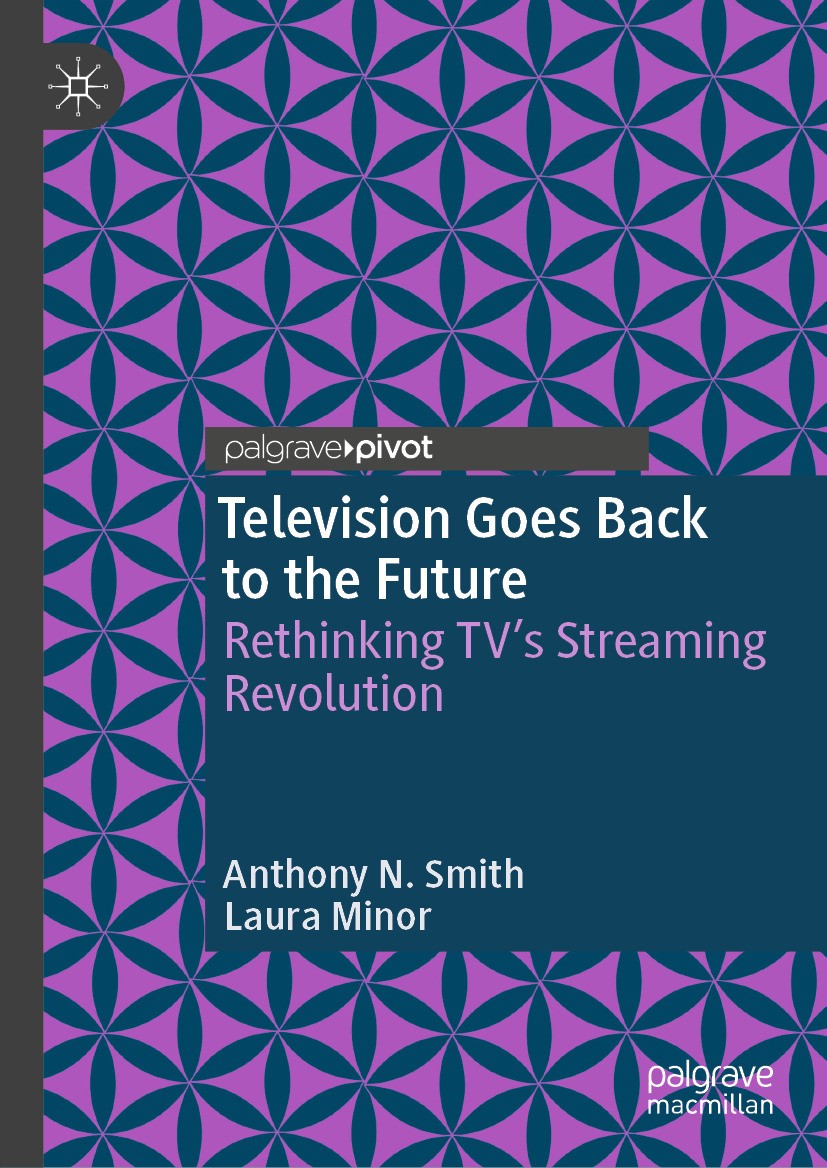
Television Goes Back to the Future [electronic resource] : Rethinking TV’s Streaming Revolution / by Anthony N. Smith, Laura Minor.
Erişim Adresi
ISBN
9783032016096
Dil Kodu
İngilizce
Yer Numarası
EK/6282
Yazar
Basım Bildirimi
1st ed. 2025.
Yayın Bilgisi
Cham : Springer Nature Switzerland : Imprint: Palgrave Macmillan, 2025.
Fiziksel Niteleme
VII, 147 p. 1 illus. online resource.
İçindekiler Notu
Chapter 1: Introduction: Exploring Discourses of Streaming Television’s Exceptionalism -- Chapter 2: Return to the Old Ways: Instituting Broadcast Practices of Programme Dissemination on American Online Television Platforms -- Chapter 3: Properties of Episodicity: Structuring American Television Drama Narratives for SVOD services -- Chapter 4: Digital Pilots from YouTube to Television: Short-Form Comedy and the Persistence of British Broadcasting Practices -- Chapter 5: Beyond Cultural Homogenisation: Korean Television on Netflix and the Endurance of National Identity in Global Streaming -- Chapter 6: Conclusions.
Özet, vb.
“Television Goes Back to the Future provides a necessary and insightful counter to persistent claims that digital technologies are revolutionary. Smith and Minor offer an essential exploration of how television is as much about continuity as it is about change.” -Professor Elizabeth Evans, University of Nottingham, UK This book examines the extent to which the practices of television’s past are shaping its online future. Challenging industry and scholarly claims of digital disruption, it demonstrates how streaming giants like Netflix, Disney+, and Amazon Prime Video, alongside public service broadcasters like the BBC and Channel 4, maintain deep continuities with television history, adapting established industry practices online rather than abandoning them. The authors look at how media institutions have applied conventional broadcast television practices around live transmissions, linear scheduling, commercial interruption, and episode release cadences to streaming platforms; how narrative and genre norms continue to underpin American television drama and British TV sitcoms in online contexts; and how globalised streaming services cultivate country specific programming and retain close ties to traditional practices of national broadcasting systems in South Korea. Dr. Anthony N. Smith is a lecturer in television theory at the University of Salford, UK. He is the author of Storytelling Industries (Palgrave, 2018), co-author of Transmedia/Genre (2023), and co-editor of Storytelling in the Media Convergence Age (2014). Dr. Laura Minor is a lecturer in television studies at the University of Salford, UK. She is the author of Reclaiming Female Authorship in UK Television Comedy (2024) and serves as Co-Investigator on the AHRC-funded project ‘What's on? Rethinking Class in the TV Industry’ (2023-26).
Konu
Television broadcasting.
Motion picture industry.
Motion pictures __ Production and direction.
Television Studies.
Film and Television Industry.
Film and Television Production.
Motion picture industry.
Motion pictures __ Production and direction.
Television Studies.
Film and Television Industry.
Film and Television Production.
Diğer Yazarlar
Kurum Adı
Eseri Alıntıla
Referansları kullanmadan önce gözden geçirmeniz ve varsa gerekli düzeltmeleri yapmanız önerilir.
Dijital Kaynak
MARC Görünümü
LEADER 05650nam a22006375i 4500
001 843121
003 TR_AnAIT
005 20260715032513
007 cr nn 008mamaa
008 251109s2025 sz | s |||| 0|eng d
020 |a9783032016096|9978-3-032-01609-6
024 7 |a10.1007/978-3-032-01609-6|2doi
041 |aeng
049 |aTürk Dil Kurumu Kütüphanesi
050 4|aPN1992-1992.92
072 7|aAPT|2bicssc
072 7|aPER010000|2bisacsh
072 7|aATJ|2thema
082 04|a791.45|223
090 |aEK/6282
100 1 |aSmith, Anthony N.|eauthor.|4aut|4http://id.loc.gov/vocabulary/relators/aut
245 10|aTelevision Goes Back to the Future|h[electronic resource] :|bRethinking TV’s Streaming Revolution /|cby Anthony N. Smith, Laura Minor.
250 |a1st ed. 2025.
264 1|aCham :|bSpringer Nature Switzerland :|bImprint: Palgrave Macmillan,|c2025.
300 |aVII, 147 p. 1 illus.|bonline resource.
336 |atext|btxt|2rdacontent
337 |acomputer|bc|2rdamedia
338 |aonline resource|bcr|2rdacarrier
341 0 |bPDF/UA-1|2onix
341 0 |bTable of contents navigation|2onix
341 0 |bSingle logical reading order|2onix
341 0 |bShort alternative textual descriptions|2onix
341 0 |bUse of color is not sole means of conveying information|2onix
341 0 |bUse of high contrast between text and background color|2onix
341 0 |bNext / Previous structural navigation|2onix
341 0 |bAll non-decorative content supports reading without sight|2onix
347 |atext file|bPDF|2rda
505 0 |aChapter 1: Introduction: Exploring Discourses of Streaming Television’s Exceptionalism -- Chapter 2: Return to the Old Ways: Instituting Broadcast Practices of Programme Dissemination on American Online Television Platforms -- Chapter 3: Properties of Episodicity: Structuring American Television Drama Narratives for SVOD services -- Chapter 4: Digital Pilots from YouTube to Television: Short-Form Comedy and the Persistence of British Broadcasting Practices -- Chapter 5: Beyond Cultural Homogenisation: Korean Television on Netflix and the Endurance of National Identity in Global Streaming -- Chapter 6: Conclusions.
520 |a“Television Goes Back to the Future provides a necessary and insightful counter to persistent claims that digital technologies are revolutionary. Smith and Minor offer an essential exploration of how television is as much about continuity as it is about change.” -Professor Elizabeth Evans, University of Nottingham, UK This book examines the extent to which the practices of television’s past are shaping its online future. Challenging industry and scholarly claims of digital disruption, it demonstrates how streaming giants like Netflix, Disney+, and Amazon Prime Video, alongside public service broadcasters like the BBC and Channel 4, maintain deep continuities with television history, adapting established industry practices online rather than abandoning them. The authors look at how media institutions have applied conventional broadcast television practices around live transmissions, linear scheduling, commercial interruption, and episode release cadences to streaming platforms; how narrative and genre norms continue to underpin American television drama and British TV sitcoms in online contexts; and how globalised streaming services cultivate country specific programming and retain close ties to traditional practices of national broadcasting systems in South Korea. Dr. Anthony N. Smith is a lecturer in television theory at the University of Salford, UK. He is the author of Storytelling Industries (Palgrave, 2018), co-author of Transmedia/Genre (2023), and co-editor of Storytelling in the Media Convergence Age (2014). Dr. Laura Minor is a lecturer in television studies at the University of Salford, UK. She is the author of Reclaiming Female Authorship in UK Television Comedy (2024) and serves as Co-Investigator on the AHRC-funded project ‘What's on? Rethinking Class in the TV Industry’ (2023-26).
532 8 |aAccessibility summary: This PDF has been created in accordance with the PDF/UA-1 standard to enhance accessibility, including screen reader support, described non-text content (images, graphs), bookmarks for easy navigation, keyboard-friendly links and forms and searchable, selectable text. We recognize the importance of accessibility, and we welcome queries about accessibility for any of our products. If you have a question or an access need, please get in touch with us at accessibilitysupport@springernature.com. Please note that a more accessible version of this eBook is available as ePub.
532 8 |aNo reading system accessibility options actively disabled
532 8 |aPublisher contact for further accessibility information: accessibilitysupport@springernature.com
650 0|aTelevision broadcasting.
650 0|aMotion picture industry.
650 0|aMotion pictures|xProduction and direction.
650 14|aTelevision Studies.
650 24|aFilm and Television Industry.
650 24|aFilm and Television Production.
700 1 |aMinor, Laura.|eauthor.|4aut|4http://id.loc.gov/vocabulary/relators/aut
710 2 |aSpringerLink (Online service)
773 0 |tSpringer Nature eBook
776 08|iPrinted edition:|z9783032016089
776 08|iPrinted edition:|z9783032016102
776 08|iPrinted edition:|z9783032016119
856 40|uhttps://doi.org/10.1007/978-3-032-01609-6
912 |aZDB-2-LCM
912 |aZDB-2-SXL
950 |aLiterature, Cultural and Media Studies (SpringerNature-41173)
950 |aLiterature, Cultural and Media Studies (R0) (SpringerNature-43723)
001 843121
003 TR_AnAIT
005 20260715032513
007 cr nn 008mamaa
008 251109s2025 sz | s |||| 0|eng d
020 |a9783032016096|9978-3-032-01609-6
024 7 |a10.1007/978-3-032-01609-6|2doi
041 |aeng
049 |aTürk Dil Kurumu Kütüphanesi
050 4|aPN1992-1992.92
072 7|aAPT|2bicssc
072 7|aPER010000|2bisacsh
072 7|aATJ|2thema
082 04|a791.45|223
090 |aEK/6282
100 1 |aSmith, Anthony N.|eauthor.|4aut|4http://id.loc.gov/vocabulary/relators/aut
245 10|aTelevision Goes Back to the Future|h[electronic resource] :|bRethinking TV’s Streaming Revolution /|cby Anthony N. Smith, Laura Minor.
250 |a1st ed. 2025.
264 1|aCham :|bSpringer Nature Switzerland :|bImprint: Palgrave Macmillan,|c2025.
300 |aVII, 147 p. 1 illus.|bonline resource.
336 |atext|btxt|2rdacontent
337 |acomputer|bc|2rdamedia
338 |aonline resource|bcr|2rdacarrier
341 0 |bPDF/UA-1|2onix
341 0 |bTable of contents navigation|2onix
341 0 |bSingle logical reading order|2onix
341 0 |bShort alternative textual descriptions|2onix
341 0 |bUse of color is not sole means of conveying information|2onix
341 0 |bUse of high contrast between text and background color|2onix
341 0 |bNext / Previous structural navigation|2onix
341 0 |bAll non-decorative content supports reading without sight|2onix
347 |atext file|bPDF|2rda
505 0 |aChapter 1: Introduction: Exploring Discourses of Streaming Television’s Exceptionalism -- Chapter 2: Return to the Old Ways: Instituting Broadcast Practices of Programme Dissemination on American Online Television Platforms -- Chapter 3: Properties of Episodicity: Structuring American Television Drama Narratives for SVOD services -- Chapter 4: Digital Pilots from YouTube to Television: Short-Form Comedy and the Persistence of British Broadcasting Practices -- Chapter 5: Beyond Cultural Homogenisation: Korean Television on Netflix and the Endurance of National Identity in Global Streaming -- Chapter 6: Conclusions.
520 |a“Television Goes Back to the Future provides a necessary and insightful counter to persistent claims that digital technologies are revolutionary. Smith and Minor offer an essential exploration of how television is as much about continuity as it is about change.” -Professor Elizabeth Evans, University of Nottingham, UK This book examines the extent to which the practices of television’s past are shaping its online future. Challenging industry and scholarly claims of digital disruption, it demonstrates how streaming giants like Netflix, Disney+, and Amazon Prime Video, alongside public service broadcasters like the BBC and Channel 4, maintain deep continuities with television history, adapting established industry practices online rather than abandoning them. The authors look at how media institutions have applied conventional broadcast television practices around live transmissions, linear scheduling, commercial interruption, and episode release cadences to streaming platforms; how narrative and genre norms continue to underpin American television drama and British TV sitcoms in online contexts; and how globalised streaming services cultivate country specific programming and retain close ties to traditional practices of national broadcasting systems in South Korea. Dr. Anthony N. Smith is a lecturer in television theory at the University of Salford, UK. He is the author of Storytelling Industries (Palgrave, 2018), co-author of Transmedia/Genre (2023), and co-editor of Storytelling in the Media Convergence Age (2014). Dr. Laura Minor is a lecturer in television studies at the University of Salford, UK. She is the author of Reclaiming Female Authorship in UK Television Comedy (2024) and serves as Co-Investigator on the AHRC-funded project ‘What's on? Rethinking Class in the TV Industry’ (2023-26).
532 8 |aAccessibility summary: This PDF has been created in accordance with the PDF/UA-1 standard to enhance accessibility, including screen reader support, described non-text content (images, graphs), bookmarks for easy navigation, keyboard-friendly links and forms and searchable, selectable text. We recognize the importance of accessibility, and we welcome queries about accessibility for any of our products. If you have a question or an access need, please get in touch with us at accessibilitysupport@springernature.com. Please note that a more accessible version of this eBook is available as ePub.
532 8 |aNo reading system accessibility options actively disabled
532 8 |aPublisher contact for further accessibility information: accessibilitysupport@springernature.com
650 0|aTelevision broadcasting.
650 0|aMotion picture industry.
650 0|aMotion pictures|xProduction and direction.
650 14|aTelevision Studies.
650 24|aFilm and Television Industry.
650 24|aFilm and Television Production.
700 1 |aMinor, Laura.|eauthor.|4aut|4http://id.loc.gov/vocabulary/relators/aut
710 2 |aSpringerLink (Online service)
773 0 |tSpringer Nature eBook
776 08|iPrinted edition:|z9783032016089
776 08|iPrinted edition:|z9783032016102
776 08|iPrinted edition:|z9783032016119
856 40|uhttps://doi.org/10.1007/978-3-032-01609-6
912 |aZDB-2-LCM
912 |aZDB-2-SXL
950 |aLiterature, Cultural and Media Studies (SpringerNature-41173)
950 |aLiterature, Cultural and Media Studies (R0) (SpringerNature-43723)
Materyaller
Depodan talep edilen materyal sadece kütüphane içerisinde kullanılmaktadır.
Materyal dışarıya ödünç verilmemektedir.
Materyal dışarıya ödünç verilmemektedir.
