

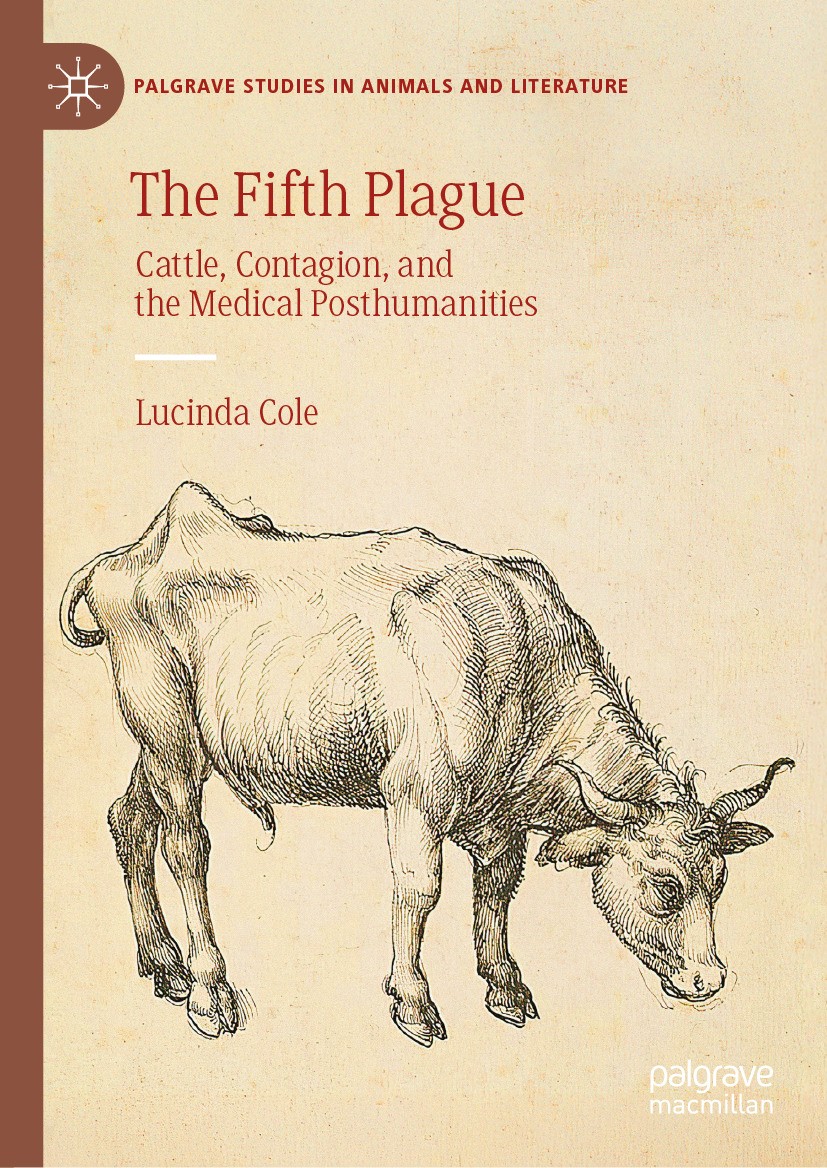
The Fifth Plague [electronic resource] : Cattle, Contagion, and the Medical Posthumanities / by Lucinda Cole.
Erişim Adresi
ISBN
9783031927935
Dil Kodu
İngilizce
Yer Numarası
EK/6283
Yazar
Basım Bildirimi
1st ed. 2025.
Yayın Bilgisi
Cham : Springer Nature Switzerland : Imprint: Palgrave Macmillan, 2025.
Fiziksel Niteleme
XII, 260 p. 10 illus., 1 illus. in color. online resource.
Dizi
Palgrave Studies in Animals and Literature, 2634-6346
İçindekiler Notu
Chapter 1-Cattle, Disease, and the Stories We Tell.-Chapter 2- Dire Plague Creeping: Vermin, De Mortibus Boum, and Christian Disease Ecologies -- Chapter 3-Zoonotic Shakespeare: Merchants and Livestock in Venice -- Chapter 4-Journals of the Plague Years: Flesh Markets and Easterly Winds.-Chapter 5-Bovine Elegies and Bioinsecurities, 1740-1790 -- Chapter 6-Steppe Disease and Cholera During Britain’s Last Great Outbreak.
Özet, vb.
This book examines murrain, or mass mortalities of cattle, in ways that bridge the gap between animal studies and the health humanities. Beginning with early modern European disease ecologies but informed by contemporary epidemiological and ecological concerns, The Fifth Plague offers a new historical approach to literary plague studies, one taking seriously real and imagined relationships between human outbreaks, such as bubonic plague and cholera, and a series of even more mysterious animal diseases that killed in equally great numbers. Chapters include careful readings of literary texts by, among others, William Shakespeare, John Dryden, Daniel Defoe, and Sophie Amelia Prosser. Uniting these readings is a shared history of murrains recorded in Virgil, but also the powerful legacy of the Ten Plagues of Egypt narrative, in which human and non-human afflictions are materially and theologically bound. “Great mortalities” of cattle, Cole argues, brought with them feelings of individual and collective vulnerability. As scientists and humanists face increasingly politicized information networks, this book calls for an exploration of the past, present, and future of humanity’s decidedly interdependent and zoonotic existence. Lucinda Cole is Associate Professor in the Department of English at University of Illinois Urbana-Champaign, USA. She previously published Imperfect Creatures: Vermin, Literature, and the Sciences of Life, 1600-1740 (2016).
Konu
European literature.
Veterinary medicine.
Literature, Modern __ 17th century.
Literature, Modern __ 18th century.
European literature __ Renaissance, 1450-1600.
Literature, Modern __ 19th century.
European Literature.
Veterinary Science.
Seventeenth-Century Literature.
Eighteenth-Century Literature.
Early Modern and Renaissance Literature.
Nineteenth-Century Literature.
Veterinary medicine.
Literature, Modern __ 17th century.
Literature, Modern __ 18th century.
European literature __ Renaissance, 1450-1600.
Literature, Modern __ 19th century.
European Literature.
Veterinary Science.
Seventeenth-Century Literature.
Eighteenth-Century Literature.
Early Modern and Renaissance Literature.
Nineteenth-Century Literature.
Kurum Adı
Eseri Alıntıla
Referansları kullanmadan önce gözden geçirmeniz ve varsa gerekli düzeltmeleri yapmanız önerilir.
Dijital Kaynak
MARC Görünümü
LEADER 05451nam a22007335i 4500
001 843126
003 TR_AnAIT
005 20260715032522
007 cr nn 008mamaa
008 251119s2025 sz | s |||| 0|eng d
020 |a9783031927935|9978-3-031-92793-5
024 7 |a10.1007/978-3-031-92793-5|2doi
041 |aeng
049 |aTürk Dil Kurumu Kütüphanesi
050 4|aPN849.E87-.E872
072 7|aDS|2bicssc
072 7|a1D|2bicssc
072 7|aLIT004130|2bisacsh
072 7|aDS|x1D|2thema
082 04|a809.894|223
090 |aEK/6283
100 1 |aCole, Lucinda.|eauthor.|4aut|4http://id.loc.gov/vocabulary/relators/aut
245 14|aThe Fifth Plague|h[electronic resource] :|bCattle, Contagion, and the Medical Posthumanities /|cby Lucinda Cole.
250 |a1st ed. 2025.
264 1|aCham :|bSpringer Nature Switzerland :|bImprint: Palgrave Macmillan,|c2025.
300 |aXII, 260 p. 10 illus., 1 illus. in color.|bonline resource.
336 |atext|btxt|2rdacontent
337 |acomputer|bc|2rdamedia
338 |aonline resource|bcr|2rdacarrier
341 0 |bPDF/UA-1|2onix
341 0 |bTable of contents navigation|2onix
341 0 |bSingle logical reading order|2onix
341 0 |bShort alternative textual descriptions|2onix
341 0 |bUse of color is not sole means of conveying information|2onix
341 0 |bUse of high contrast between text and background color|2onix
341 0 |bNext / Previous structural navigation|2onix
341 0 |bAll non-decorative content supports reading without sight|2onix
347 |atext file|bPDF|2rda
490 1 |aPalgrave Studies in Animals and Literature,|x2634-6346
505 0 |aChapter 1-Cattle, Disease, and the Stories We Tell.-Chapter 2- Dire Plague Creeping: Vermin, De Mortibus Boum, and Christian Disease Ecologies -- Chapter 3-Zoonotic Shakespeare: Merchants and Livestock in Venice -- Chapter 4-Journals of the Plague Years: Flesh Markets and Easterly Winds.-Chapter 5-Bovine Elegies and Bioinsecurities, 1740-1790 -- Chapter 6-Steppe Disease and Cholera During Britain’s Last Great Outbreak.
520 |aThis book examines murrain, or mass mortalities of cattle, in ways that bridge the gap between animal studies and the health humanities. Beginning with early modern European disease ecologies but informed by contemporary epidemiological and ecological concerns, The Fifth Plague offers a new historical approach to literary plague studies, one taking seriously real and imagined relationships between human outbreaks, such as bubonic plague and cholera, and a series of even more mysterious animal diseases that killed in equally great numbers. Chapters include careful readings of literary texts by, among others, William Shakespeare, John Dryden, Daniel Defoe, and Sophie Amelia Prosser. Uniting these readings is a shared history of murrains recorded in Virgil, but also the powerful legacy of the Ten Plagues of Egypt narrative, in which human and non-human afflictions are materially and theologically bound. “Great mortalities” of cattle, Cole argues, brought with them feelings of individual and collective vulnerability. As scientists and humanists face increasingly politicized information networks, this book calls for an exploration of the past, present, and future of humanity’s decidedly interdependent and zoonotic existence. Lucinda Cole is Associate Professor in the Department of English at University of Illinois Urbana-Champaign, USA. She previously published Imperfect Creatures: Vermin, Literature, and the Sciences of Life, 1600-1740 (2016).
532 8 |aAccessibility summary: This PDF has been created in accordance with the PDF/UA-1 standard to enhance accessibility, including screen reader support, described non-text content (images, graphs), bookmarks for easy navigation, keyboard-friendly links and forms and searchable, selectable text. We recognize the importance of accessibility, and we welcome queries about accessibility for any of our products. If you have a question or an access need, please get in touch with us at accessibilitysupport@springernature.com. Please note that a more accessible version of this eBook is available as ePub.
532 8 |aNo reading system accessibility options actively disabled
532 8 |aPublisher contact for further accessibility information: accessibilitysupport@springernature.com
650 0|aEuropean literature.
650 0|aVeterinary medicine.
650 0|aLiterature, Modern|x17th century.
650 0|aLiterature, Modern|x18th century.
650 0|aEuropean literature|xRenaissance, 1450-1600.
650 0|aLiterature, Modern|x19th century.
650 14|aEuropean Literature.
650 24|aVeterinary Science.
650 24|aSeventeenth-Century Literature.
650 24|aEighteenth-Century Literature.
650 24|aEarly Modern and Renaissance Literature.
650 24|aNineteenth-Century Literature.
710 2 |aSpringerLink (Online service)
773 0 |tSpringer Nature eBook
776 08|iPrinted edition:|z9783031927928
776 08|iPrinted edition:|z9783031927942
776 08|iPrinted edition:|z9783031927959
830 0|aPalgrave Studies in Animals and Literature,|x2634-6346
856 40|uhttps://doi.org/10.1007/978-3-031-92793-5
912 |aZDB-2-LCM
912 |aZDB-2-SXL
950 |aLiterature, Cultural and Media Studies (SpringerNature-41173)
950 |aLiterature, Cultural and Media Studies (R0) (SpringerNature-43723)
001 843126
003 TR_AnAIT
005 20260715032522
007 cr nn 008mamaa
008 251119s2025 sz | s |||| 0|eng d
020 |a9783031927935|9978-3-031-92793-5
024 7 |a10.1007/978-3-031-92793-5|2doi
041 |aeng
049 |aTürk Dil Kurumu Kütüphanesi
050 4|aPN849.E87-.E872
072 7|aDS|2bicssc
072 7|a1D|2bicssc
072 7|aLIT004130|2bisacsh
072 7|aDS|x1D|2thema
082 04|a809.894|223
090 |aEK/6283
100 1 |aCole, Lucinda.|eauthor.|4aut|4http://id.loc.gov/vocabulary/relators/aut
245 14|aThe Fifth Plague|h[electronic resource] :|bCattle, Contagion, and the Medical Posthumanities /|cby Lucinda Cole.
250 |a1st ed. 2025.
264 1|aCham :|bSpringer Nature Switzerland :|bImprint: Palgrave Macmillan,|c2025.
300 |aXII, 260 p. 10 illus., 1 illus. in color.|bonline resource.
336 |atext|btxt|2rdacontent
337 |acomputer|bc|2rdamedia
338 |aonline resource|bcr|2rdacarrier
341 0 |bPDF/UA-1|2onix
341 0 |bTable of contents navigation|2onix
341 0 |bSingle logical reading order|2onix
341 0 |bShort alternative textual descriptions|2onix
341 0 |bUse of color is not sole means of conveying information|2onix
341 0 |bUse of high contrast between text and background color|2onix
341 0 |bNext / Previous structural navigation|2onix
341 0 |bAll non-decorative content supports reading without sight|2onix
347 |atext file|bPDF|2rda
490 1 |aPalgrave Studies in Animals and Literature,|x2634-6346
505 0 |aChapter 1-Cattle, Disease, and the Stories We Tell.-Chapter 2- Dire Plague Creeping: Vermin, De Mortibus Boum, and Christian Disease Ecologies -- Chapter 3-Zoonotic Shakespeare: Merchants and Livestock in Venice -- Chapter 4-Journals of the Plague Years: Flesh Markets and Easterly Winds.-Chapter 5-Bovine Elegies and Bioinsecurities, 1740-1790 -- Chapter 6-Steppe Disease and Cholera During Britain’s Last Great Outbreak.
520 |aThis book examines murrain, or mass mortalities of cattle, in ways that bridge the gap between animal studies and the health humanities. Beginning with early modern European disease ecologies but informed by contemporary epidemiological and ecological concerns, The Fifth Plague offers a new historical approach to literary plague studies, one taking seriously real and imagined relationships between human outbreaks, such as bubonic plague and cholera, and a series of even more mysterious animal diseases that killed in equally great numbers. Chapters include careful readings of literary texts by, among others, William Shakespeare, John Dryden, Daniel Defoe, and Sophie Amelia Prosser. Uniting these readings is a shared history of murrains recorded in Virgil, but also the powerful legacy of the Ten Plagues of Egypt narrative, in which human and non-human afflictions are materially and theologically bound. “Great mortalities” of cattle, Cole argues, brought with them feelings of individual and collective vulnerability. As scientists and humanists face increasingly politicized information networks, this book calls for an exploration of the past, present, and future of humanity’s decidedly interdependent and zoonotic existence. Lucinda Cole is Associate Professor in the Department of English at University of Illinois Urbana-Champaign, USA. She previously published Imperfect Creatures: Vermin, Literature, and the Sciences of Life, 1600-1740 (2016).
532 8 |aAccessibility summary: This PDF has been created in accordance with the PDF/UA-1 standard to enhance accessibility, including screen reader support, described non-text content (images, graphs), bookmarks for easy navigation, keyboard-friendly links and forms and searchable, selectable text. We recognize the importance of accessibility, and we welcome queries about accessibility for any of our products. If you have a question or an access need, please get in touch with us at accessibilitysupport@springernature.com. Please note that a more accessible version of this eBook is available as ePub.
532 8 |aNo reading system accessibility options actively disabled
532 8 |aPublisher contact for further accessibility information: accessibilitysupport@springernature.com
650 0|aEuropean literature.
650 0|aVeterinary medicine.
650 0|aLiterature, Modern|x17th century.
650 0|aLiterature, Modern|x18th century.
650 0|aEuropean literature|xRenaissance, 1450-1600.
650 0|aLiterature, Modern|x19th century.
650 14|aEuropean Literature.
650 24|aVeterinary Science.
650 24|aSeventeenth-Century Literature.
650 24|aEighteenth-Century Literature.
650 24|aEarly Modern and Renaissance Literature.
650 24|aNineteenth-Century Literature.
710 2 |aSpringerLink (Online service)
773 0 |tSpringer Nature eBook
776 08|iPrinted edition:|z9783031927928
776 08|iPrinted edition:|z9783031927942
776 08|iPrinted edition:|z9783031927959
830 0|aPalgrave Studies in Animals and Literature,|x2634-6346
856 40|uhttps://doi.org/10.1007/978-3-031-92793-5
912 |aZDB-2-LCM
912 |aZDB-2-SXL
950 |aLiterature, Cultural and Media Studies (SpringerNature-41173)
950 |aLiterature, Cultural and Media Studies (R0) (SpringerNature-43723)
Materyaller
Depodan talep edilen materyal sadece kütüphane içerisinde kullanılmaktadır.
Materyal dışarıya ödünç verilmemektedir.
Materyal dışarıya ödünç verilmemektedir.
