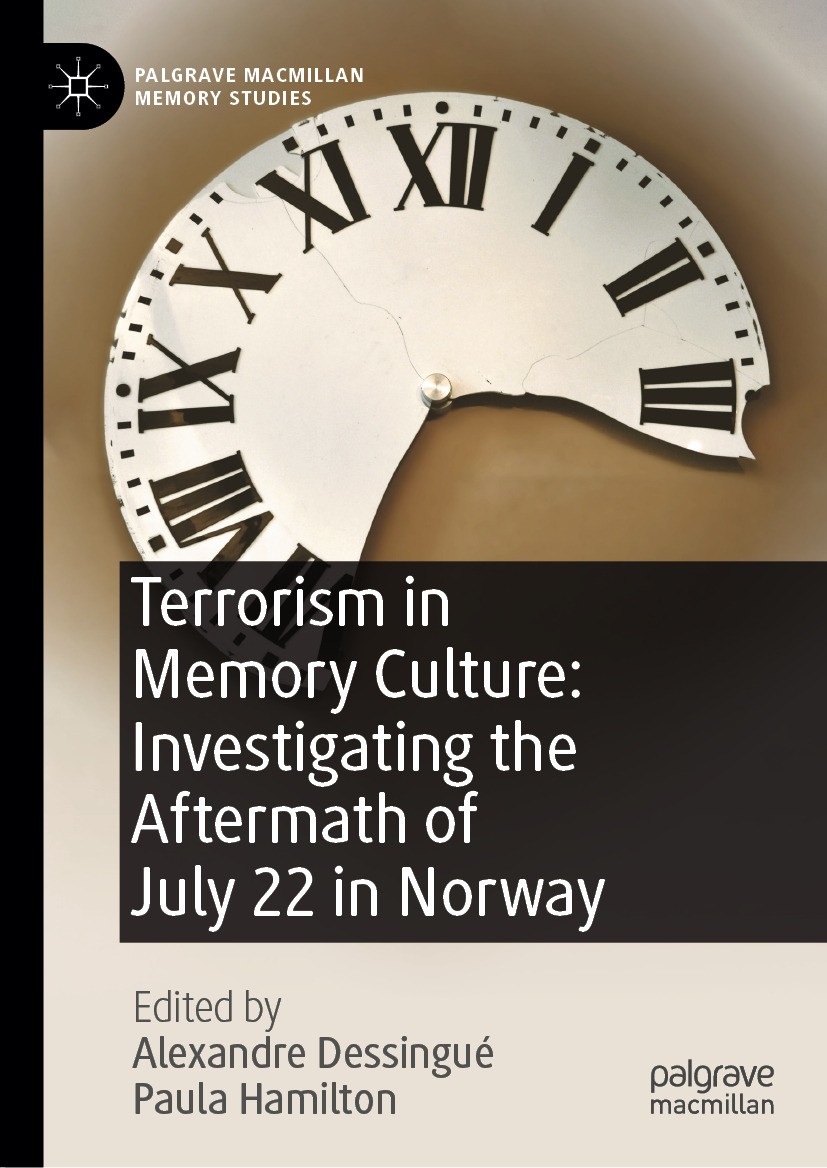
Terrorism in Memory Culture: Investigating the Aftermath of July 22 in Norway [electronic resource] / edited by Alexandre Dessingué, Paula Hamilton.
Erişim Adresi
ISBN
9783031825200
Dil Kodu
İngilizce
Yer Numarası
EK/6289
Basım Bildirimi
1st ed. 2025.
Yayın Bilgisi
Cham : Springer Nature Switzerland : Imprint: Palgrave Macmillan, 2025.
Fiziksel Niteleme
XXIII, 400 p. 39 illus., 30 illus. in color. online resource.
Dizi
Palgrave Macmillan Memory Studies, 2634-6265
İçindekiler Notu
Chapter 1: Investigating memory culture after the 2011 terrorist attacks in Norway -- Part I: Remembering the Aftermath -- Chapter 2: Utøya and Norway’s July 22 Memorial Process: The Memory of Terror -- Chapter 3: Psychological and psychiatric aspects of the July 22, 2011, terrorist attacks -- Chapter 4: Collective trauma and archetypal meaning making -- Chapter 5: Time Broken and Time Repaired -- Chapter 6: From Tragedy to Trial: The Ripple Effect of Breivik's Legal Actions on Survivors and Bereaved Families -- Part II: The Spatialization of Memory -- Chapter 7: Together in grief? Space and conflict in the establishment of a national July 22 memorial in Hole Municipality -- Chapter 8: Mapping mnemonic traces from the 2011 terrorist attack on Oslo’s Government Quarter -- Chapter 9: Reclaiming the Path: Kjærlighetsstien and the Course of History -- Part III: Representations and Perceptions of July 22 in Arts -- Chapter 10: Theatrical approaches to July 22: the use (and non-use) of spaces and institutions -- Chapter 11: Remembering violence. The vulnerable ‘we’ in Endre Ruset’s poem ‘Prosjektil -- Chapter 12: July 22 in Literature and Arts: Åsne Seierstad, Britt Bildøen and Edvard Munch -- Chapter 13: Cinematic Representations of Crisis. Comparing Cinematic Treatments of the July 22 Terror Attacks -- Chapter 14: Memory in Transition: Norway’s Shifting Approach to Memorial Creation after the 2011 Terror Attacks -- Chapter 15: From the psychological to the ideological? Shifts in the memorialisation of Norway’s 22 terrorist attacks as refracted through popular literature -- Chapter 16: Linking contemporary and historical terror: July 22 in the context of WWII -- Chapter 17: Mythology of the authentic: Sacralization and depoliticization of July 22 in education -- Chapter 18: A promising approach to complexity? A case study investigating lower secondary students’ dialogues about July 22 -- Chapter 19: Dynamics of remembrance and implication in the aftermath of July 22.
Özet, vb.
Chapters 10, 13 and 16 are available open access under a Creative Commons Attribution 4.0 International License via link.springer.com.
Konu
Collective memory.
Ethnology __ Europe.
Culture.
Terrorism.
Political violence.
Cultural property.
Memory Studies.
European Culture.
Terrorism and Political Violence.
Cultural Heritage.
Ethnology __ Europe.
Culture.
Terrorism.
Political violence.
Cultural property.
Memory Studies.
European Culture.
Terrorism and Political Violence.
Cultural Heritage.
Diğer Yazarlar
Kurum Adı

Eseri Alıntıla
Referansları kullanmadan önce gözden geçirmeniz ve varsa gerekli düzeltmeleri yapmanız önerilir.
Dijital Kaynak
MARC Görünümü
LEADER 05522nam a22006975i 4500
001 843132
003 TR_AnAIT
005 20260715032527
007 cr nn 008mamaa
008 250313s2025 sz | s |||| 0|eng d
020 |a9783031825200|9978-3-031-82520-0
024 7 |a10.1007/978-3-031-82520-0|2doi
041 |aeng
049 |aTürk Dil Kurumu Kütüphanesi
050 4|aD16.9
072 7|aHBAH|2bicssc
072 7|aHIS016000|2bisacsh
072 7|aNHAH|2thema
082 04|a907.2|223
090 |aEK/6289
245 10|aTerrorism in Memory Culture: Investigating the Aftermath of July 22 in Norway|h[electronic resource] /|cedited by Alexandre Dessingué, Paula Hamilton.
250 |a1st ed. 2025.
264 1|aCham :|bSpringer Nature Switzerland :|bImprint: Palgrave Macmillan,|c2025.
300 |aXXIII, 400 p. 39 illus., 30 illus. in color.|bonline resource.
336 |atext|btxt|2rdacontent
337 |acomputer|bc|2rdamedia
338 |aonline resource|bcr|2rdacarrier
341 0 |bTable of contents navigation|2onix
341 0 |bSingle logical reading order|2onix
341 0 |bShort alternative textual descriptions|2onix
341 0 |bUse of color is not sole means of conveying information|2onix
341 0 |bUse of high contrast between text and background color|2onix
341 0 |bNext / Previous structural navigation|2onix
341 0 |bAll non-decorative content supports reading without sight|2onix
347 |atext file|bPDF|2rda
490 1 |aPalgrave Macmillan Memory Studies,|x2634-6265
505 0 |aChapter 1: Investigating memory culture after the 2011 terrorist attacks in Norway -- Part I: Remembering the Aftermath -- Chapter 2: Utøya and Norway’s July 22 Memorial Process: The Memory of Terror -- Chapter 3: Psychological and psychiatric aspects of the July 22, 2011, terrorist attacks -- Chapter 4: Collective trauma and archetypal meaning making -- Chapter 5: Time Broken and Time Repaired -- Chapter 6: From Tragedy to Trial: The Ripple Effect of Breivik's Legal Actions on Survivors and Bereaved Families -- Part II: The Spatialization of Memory -- Chapter 7: Together in grief? Space and conflict in the establishment of a national July 22 memorial in Hole Municipality -- Chapter 8: Mapping mnemonic traces from the 2011 terrorist attack on Oslo’s Government Quarter -- Chapter 9: Reclaiming the Path: Kjærlighetsstien and the Course of History -- Part III: Representations and Perceptions of July 22 in Arts -- Chapter 10: Theatrical approaches to July 22: the use (and non-use) of spaces and institutions -- Chapter 11: Remembering violence. The vulnerable ‘we’ in Endre Ruset’s poem ‘Prosjektil -- Chapter 12: July 22 in Literature and Arts: Åsne Seierstad, Britt Bildøen and Edvard Munch -- Chapter 13: Cinematic Representations of Crisis. Comparing Cinematic Treatments of the July 22 Terror Attacks -- Chapter 14: Memory in Transition: Norway’s Shifting Approach to Memorial Creation after the 2011 Terror Attacks -- Chapter 15: From the psychological to the ideological? Shifts in the memorialisation of Norway’s 22 terrorist attacks as refracted through popular literature -- Chapter 16: Linking contemporary and historical terror: July 22 in the context of WWII -- Chapter 17: Mythology of the authentic: Sacralization and depoliticization of July 22 in education -- Chapter 18: A promising approach to complexity? A case study investigating lower secondary students’ dialogues about July 22 -- Chapter 19: Dynamics of remembrance and implication in the aftermath of July 22.
520 |aChapters 10, 13 and 16 are available open access under a Creative Commons Attribution 4.0 International License via link.springer.com.
532 8 |aAccessibility summary: This PDF does not fully comply with PDF/UA standards, but does feature limited screen reader support, described non-text content (images, graphs), bookmarks for easy navigation and searchable, selectable text. Users of assistive technologies may experience difficulty navigating or interpreting content in this document. We recognize the importance of accessibility, and we welcome queries about accessibility for any of our products. If you have a question or an access need, please get in touch with us at accessibilitysupport@springernature.com.
532 8 |aNo reading system accessibility options actively disabled
532 8 |aPublisher contact for further accessibility information: accessibilitysupport@springernature.com
650 0|aCollective memory.
650 0|aEthnology|xEurope.
650 0|aCulture.
650 0|aTerrorism.
650 0|aPolitical violence.
650 0|aCultural property.
650 14|aMemory Studies.
650 24|aEuropean Culture.
650 24|aTerrorism and Political Violence.
650 24|aCultural Heritage.
700 1 |aDessingué, Alexandre.|eeditor.|4edt|4http://id.loc.gov/vocabulary/relators/edt
700 1 |aHamilton, Paula.|eeditor.|4edt|4http://id.loc.gov/vocabulary/relators/edt
710 2 |aSpringerLink (Online service)
773 0 |tSpringer Nature eBook
776 08|iPrinted edition:|z9783031825194
776 08|iPrinted edition:|z9783031825217
776 08|iPrinted edition:|z9783031825224
830 0|aPalgrave Macmillan Memory Studies,|x2634-6265
856 40|uhttps://doi.org/10.1007/978-3-031-82520-0
912 |aZDB-2-LCM
912 |aZDB-2-SXL
950 |aLiterature, Cultural and Media Studies (SpringerNature-41173)
950 |aLiterature, Cultural and Media Studies (R0) (SpringerNature-43723)
001 843132
003 TR_AnAIT
005 20260715032527
007 cr nn 008mamaa
008 250313s2025 sz | s |||| 0|eng d
020 |a9783031825200|9978-3-031-82520-0
024 7 |a10.1007/978-3-031-82520-0|2doi
041 |aeng
049 |aTürk Dil Kurumu Kütüphanesi
050 4|aD16.9
072 7|aHBAH|2bicssc
072 7|aHIS016000|2bisacsh
072 7|aNHAH|2thema
082 04|a907.2|223
090 |aEK/6289
245 10|aTerrorism in Memory Culture: Investigating the Aftermath of July 22 in Norway|h[electronic resource] /|cedited by Alexandre Dessingué, Paula Hamilton.
250 |a1st ed. 2025.
264 1|aCham :|bSpringer Nature Switzerland :|bImprint: Palgrave Macmillan,|c2025.
300 |aXXIII, 400 p. 39 illus., 30 illus. in color.|bonline resource.
336 |atext|btxt|2rdacontent
337 |acomputer|bc|2rdamedia
338 |aonline resource|bcr|2rdacarrier
341 0 |bTable of contents navigation|2onix
341 0 |bSingle logical reading order|2onix
341 0 |bShort alternative textual descriptions|2onix
341 0 |bUse of color is not sole means of conveying information|2onix
341 0 |bUse of high contrast between text and background color|2onix
341 0 |bNext / Previous structural navigation|2onix
341 0 |bAll non-decorative content supports reading without sight|2onix
347 |atext file|bPDF|2rda
490 1 |aPalgrave Macmillan Memory Studies,|x2634-6265
505 0 |aChapter 1: Investigating memory culture after the 2011 terrorist attacks in Norway -- Part I: Remembering the Aftermath -- Chapter 2: Utøya and Norway’s July 22 Memorial Process: The Memory of Terror -- Chapter 3: Psychological and psychiatric aspects of the July 22, 2011, terrorist attacks -- Chapter 4: Collective trauma and archetypal meaning making -- Chapter 5: Time Broken and Time Repaired -- Chapter 6: From Tragedy to Trial: The Ripple Effect of Breivik's Legal Actions on Survivors and Bereaved Families -- Part II: The Spatialization of Memory -- Chapter 7: Together in grief? Space and conflict in the establishment of a national July 22 memorial in Hole Municipality -- Chapter 8: Mapping mnemonic traces from the 2011 terrorist attack on Oslo’s Government Quarter -- Chapter 9: Reclaiming the Path: Kjærlighetsstien and the Course of History -- Part III: Representations and Perceptions of July 22 in Arts -- Chapter 10: Theatrical approaches to July 22: the use (and non-use) of spaces and institutions -- Chapter 11: Remembering violence. The vulnerable ‘we’ in Endre Ruset’s poem ‘Prosjektil -- Chapter 12: July 22 in Literature and Arts: Åsne Seierstad, Britt Bildøen and Edvard Munch -- Chapter 13: Cinematic Representations of Crisis. Comparing Cinematic Treatments of the July 22 Terror Attacks -- Chapter 14: Memory in Transition: Norway’s Shifting Approach to Memorial Creation after the 2011 Terror Attacks -- Chapter 15: From the psychological to the ideological? Shifts in the memorialisation of Norway’s 22 terrorist attacks as refracted through popular literature -- Chapter 16: Linking contemporary and historical terror: July 22 in the context of WWII -- Chapter 17: Mythology of the authentic: Sacralization and depoliticization of July 22 in education -- Chapter 18: A promising approach to complexity? A case study investigating lower secondary students’ dialogues about July 22 -- Chapter 19: Dynamics of remembrance and implication in the aftermath of July 22.
520 |aChapters 10, 13 and 16 are available open access under a Creative Commons Attribution 4.0 International License via link.springer.com.
532 8 |aAccessibility summary: This PDF does not fully comply with PDF/UA standards, but does feature limited screen reader support, described non-text content (images, graphs), bookmarks for easy navigation and searchable, selectable text. Users of assistive technologies may experience difficulty navigating or interpreting content in this document. We recognize the importance of accessibility, and we welcome queries about accessibility for any of our products. If you have a question or an access need, please get in touch with us at accessibilitysupport@springernature.com.
532 8 |aNo reading system accessibility options actively disabled
532 8 |aPublisher contact for further accessibility information: accessibilitysupport@springernature.com
650 0|aCollective memory.
650 0|aEthnology|xEurope.
650 0|aCulture.
650 0|aTerrorism.
650 0|aPolitical violence.
650 0|aCultural property.
650 14|aMemory Studies.
650 24|aEuropean Culture.
650 24|aTerrorism and Political Violence.
650 24|aCultural Heritage.
700 1 |aDessingué, Alexandre.|eeditor.|4edt|4http://id.loc.gov/vocabulary/relators/edt
700 1 |aHamilton, Paula.|eeditor.|4edt|4http://id.loc.gov/vocabulary/relators/edt
710 2 |aSpringerLink (Online service)
773 0 |tSpringer Nature eBook
776 08|iPrinted edition:|z9783031825194
776 08|iPrinted edition:|z9783031825217
776 08|iPrinted edition:|z9783031825224
830 0|aPalgrave Macmillan Memory Studies,|x2634-6265
856 40|uhttps://doi.org/10.1007/978-3-031-82520-0
912 |aZDB-2-LCM
912 |aZDB-2-SXL
950 |aLiterature, Cultural and Media Studies (SpringerNature-41173)
950 |aLiterature, Cultural and Media Studies (R0) (SpringerNature-43723)
Materyaller
Depodan talep edilen materyal sadece kütüphane içerisinde kullanılmaktadır.
Materyal dışarıya ödünç verilmemektedir.
